BY: JAMES F. O’NEIL
PART I: TRAINS
“One of the things the government can’t do is run anything. The only things our government runs are the post office and the railroads, and both of them are bankrupt.” — Lee Iacocca
***
Once upon a time, a long time ago, after my Grandpa Cummings had retired from many years with the Pennsylvania Railroad,  he took me to visit a friend of his at a switching yard on the South Side of Chicago. The three of us walked through the roundhouse, walked among the rails, and even watched to see the railroad turntable in operation.
In rail terminology, a railway turntable or wheelhouse is a device for turning railroad rolling stock, usually locomotives, so that they can be moved back in the direction from which they came. Railroads needed a way to turn steam locomotives around for return trips as their controls were often not  configured for extended periods of running in reverse, and in many locomotives the top speed was lower in reverse motion. In the case of diesel locomotives, though most can be operated in either direction, they are treated as having “front ends” and “rear ends” (often determined by reference to the location of the crew cab). When operated as a single unit, the railway company often prefers, or requires, that a diesel locomotive be run “front end” first. All this is visually and masterfully shown in the movie with Denzel Washington, Unstoppable.
So, the three of us, walking up to a diesel whose engine was running, climbed aboard. I sat on my Grandpa’s lap for a bit, then stood at the controls. And he moved the control my hand was on. We moved. Forward, ever so slowly, down a length of track. Surely, I did not wet my pants, but surely, my rheumatic-fever heart was racing in excitement. Yes, I sat at the engineer’s controls, with my grandfather standing next to me, and we powered the engine forward. Slowly, I pushed the control lever forward (or sideways). I was eleven or twelve, maybe 1951 or 1952. Those ages and dates are not part of the details. I was there. The smell of fuel, the motors’ noises, the motion of the train engine I cannot forget. How many young boys have had such an experience to talk about? (Don’t tell Homeland Security that I actually “drove” a diesel engine in a switching yard on the South Side of Chicago.)
 Pennsylvania RR diesel
I have had an on-again, off-again love affair for trains. I did have a Christmas-present American Flyer electric train set that never seemed to work properly: maybe parts, maybe the rugs or the floor or the connections. Lionel-boys always had more success with theirs; we Flyer-types were not as lucky with our two-track system  (though that was not always the problem). Lionel had the heavier three-track, more expensive gauge sets, parts, transformers–all the right “stuff.”
  So my frustration abounded, as trains were taken out and put away; I never had a basement with a large open space for a board for a train layout. [An interesting bit of Wiki-history: During the 1950s, Lionel outsold its closest competitor, American Flyer, by nearly 2:1, peaking in 1953. Some Lionel company histories say Lionel (more than just trains) was the largest toy company in the world by the early 1950s. The 1946–1956 decade was Lionel’s Golden Age. The Lionel 2333 Diesel locomotive, an EMD F3 in the colorful Santa Fe “Warbonnet” paint scheme that was introduced in 1948,
 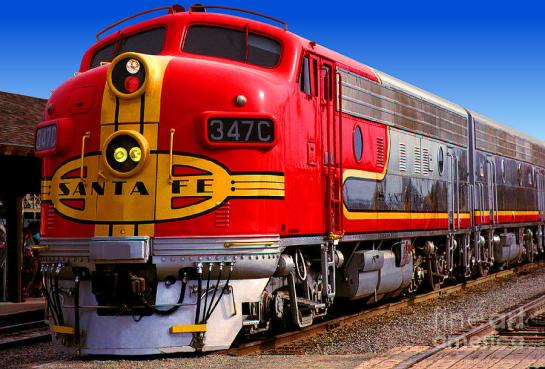 became the Lionel company icon and the icon of the era, yet Lionel declined rapidly after 1956. Hobbyists preferred the smaller but more realistic HO scale trains, and children’s interest shifted from toy trains to toy cars. Efforts to increase train set profitability and/or sales by cheaper manufacture (largely by replacing castings and folded sheet metal with unpainted injected-molded colored plastic) were largely unsuccessful; 1957 was Lionel’s last profitable post-war year. In 1959, the business direction of the Lionel company changed: it added subsidiary companies unrelated to toy train sets. The company lost more money. See more in Wikipedia.]
Trains have continued to be part of my transporting life.
Back in the ‘50s, our family vacationed for many years for a week or two at the Shubat’s Resort. That was cabin livin’ 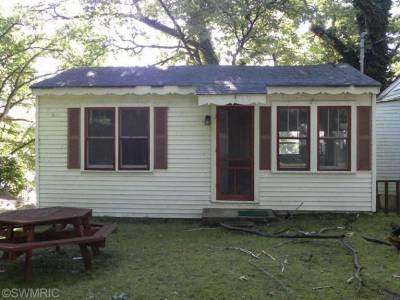
though with indoor plumbing and beautiful water and great fishin’,
at Sisters Lakes, Michigan.  Not well known, but better recognized if I say “near Dowagiac,” or Benton Harbor. Those were great growing-up summers with my cousins and siblings, and “friend-girls” from different neighborhoods in Chicago.
One memorable summer of my hormonal youth, a sophomore in college, I was on a train, going to that Michigan Paradise with Laverne, meeting our families who were already there. She and I had grown-up conversations; she was the grown up, the neighbor lady to my aunt, the Eloise to me-Abelard-sans letters, the Isolde to me-Tristan, my Guinevere, my courtly-loved. She was married with kids. I was young, naive, infatuated. So much to think about on that train ride. That so special train ride…from Chicago to Michigan.
During the summer of 1968, I spent time in Delta House! On the campus of the University of Minnesota, taking a few post-grad grad courses. Three courses, small room with bed and dresser, shared bath and shower and fridge and cereal cabinet. Delicious library, smoking in the classrooms, considering how my light (time) was spent with John Milton and a totally delightful professor, but unfortunately also with a totally boring Shakespeare scholar. The other peak experiences were the bus rides to the train station to board and train-ride south to Winona to visit wife and kids for a weekender, with them and no books. And then back again on Sunday night or early Monday morning. Those train rides that held the memories of the weekend activities, loving and familial.
Though my train-love has given way to airplanes, I still am fascinated by the sounds, and sights, and history, and large-sized picture books of trains. And have still used the rails in my life of travel.
I did have a horribly uncomfortable coach- ride to Richmond, Virginia, not many years past, S-L-O-W, CREAKY, AND UNSLEEPABLE. “It will be some time before I board a train again!” you might have heard me say. Those trains in Europe? We’ve seen Jason Bourne speed across European countryside on the TGV. 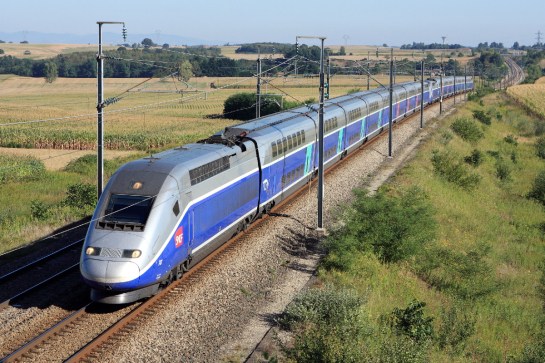 Yes, I have done that too. And the “Chunnel” Eurostar, London to Paris? Yup, that too. London to Carlisle, to Cambridge, to Oxford. Never yet to Cornwall or Land’s End, or to see Doc Martin’s place. Mostly–mostly–friendly, delightful, memorable.
I’ve waited for a train on Platform 9 ¾ in London, at King’s Cross Station…and waitied…and waited…
And in 2013, Paris to Chartres… That’s how I want to travel by train. Maybe someday on the Orient Express? Probably, not.
However, I’ve heard the Canadian Pacific has a beautiful train route… 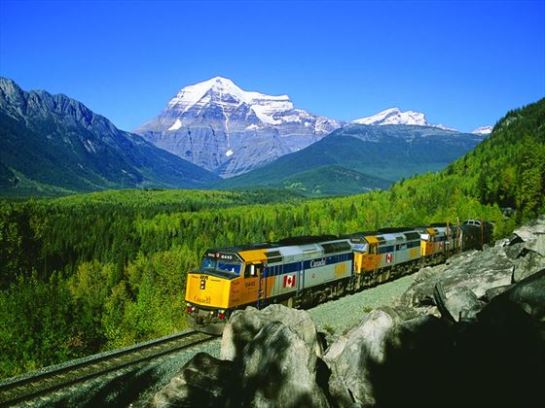
Perhaps…
© JAMES F. O’NEIL 2017





 Memories of a Time