Archive

EDUCATION AND LEARNING

“Let’s get some clarification here before we vote….”

“So all of what we have here is THE KNOWN.” Science can/does deal with the KNOWN.

“But then we have THE UNKNOWN, the not known.”   Maybe.

“So all of that could be THE KNOW-ABLE?” Science can/will/might deal with the KNOWABLE.

“But what about the other unknown, THE UN-KNOW-ABLE?” Science cannot, through/by theory, assumption, or and scientific principles, deal with the UNKNOWABLE.

“So all of that may have to do with theology, philosophy, psychology, anthropology, sociology?”  Maybe.

In our thinking, reasoning, problem solving, the KNOWN or KNOWLEDGE–by societal agreement–becomes the basis for the thinking about a subject or problem under study.

“Like global warming?” Yes, knowing what to know. “Like ‘Why are we here?’”

SO: “Somewhere, something incredible is waiting to be known.” –Carl Sagan

* * *

 “Get your facts first, and then you can distort them as much as you please.” –Mark Twain

“Hey, look. Here are the facts.”

“The fact of the matter is…”

“Let’s look at the facts.”

“Just the facts, Ma’am.”

“Well, look, I like the fact that…”–Gov. John Kasich

* * *

 “Everything we hear is an opinion, not a fact. Everything we see is a perspective, not the truth.” –Marcus Aurelius

FACT = a bit of information, verifiable; something known with certainty or asserted as certain; objectively verified; something having real, demonstrable existence. (However, “facts” can change, are not ALWAYS immutable, are necessarily incomplete, dependent upon science and uses of technology.)

OPINION = a belief or conclusion held with confidence, but not substantiated by positive KNOWLEDGE or proof.

JUDGMENT is an opinion based upon reasoning or evaluation; a feeling or sentiment; any conclusion to which one adheres without ruling out the possibility of debate.

TRUTH = conformity to KNOWLEDGE, fact, actuality, logic; or a statement proven to be accepted as true.

BELIEF = a conclusion, not necessarily derived first hand, to which a person subscribes strongly. [Sometimes is explained as “What I stand up for”; whereas a VALUE is sometimes explained as “What I stand around in.”]

CONVICTION = a belief that excludes doubt and usually proceeds from weight of evidence. [a mental construct]

PERSUASION = a strong belief, but not based necessarily on the intellectual. [an emotional construct]

CONCEPT = a general idea or understanding; a thought or notion; a representation formed by generalizing from particulars.

IDEA = that which exists in the mind, actually or potentially, as a product of mental activity (thought or KNOWLEDGE).

LAW = a generalization based upon the observation of respected events [Gravity must be caused by an Agent acting constantly according to certain laws, but whether this Agent be material or immaterial I have left to the consideration of my readers.” –Isaac Newton]; a rule established; a PRINCIPLE or rule obeyed in all cases to which it is applicable. [Gravity]

PRINCIPLE = an accepted or professed rule of action or conduct; a fundamental, primary, or general law or truth from which others are derived; a fundamental doctrine or tenet; a distinctive ruling opinion; a personal or specific basis of conduct or management; a guiding sense of the requirements and obligations of right conduct; an adopted rule or method for application in action; a rule or law exemplified in natural phenomena or the working of a system; an actuating agency in the mind or character, as an instinct, faculty, or natural tendency. [Bernoulli’s principle]

VALIDITY = being sound, supportable, correctly inferred from a premise; whereas RELIABILITY = dependable.

SCIENCE = the body of interrelated superordinated, subordinated statements, which are generalizations which deal with realities. [Generalizations are in the form of theories.] SCIENCE is observation, identification, description, experimental investigation, and theoretical explanation of natural phenomena. [A science is any methodological activity, discipline, or study.]

ASSUMPTION = a statement accepted or proposed as TRUE without proof or demonstration. It can be used as or become the basis for drawing hypotheses that can be investigated.

HYPOTHESIS = an assertion subject to verification or proof; a premise from which a conclusion can be drawn; an ASSUMPTION used as the basis for an action; a conjecture; a basis for further investigation.

AND

THEORY = systematically organized KNOWLEDGE applicable in a relatively wide variety of circumstances, especially a system of ASSUMPTIONS, accepted PRINCIPLES, and rules of procedure devised to analyze, predict, or explain the nature or behavior of a specified set of phenomena.

Question_mark_(black_on_white)

“DO I UNDERSTAND THIS?”


“A gem cannot be polished without friction, nor man perfected without trials.”–Chinese proverb

THEORY: a set of assumptions from which a set of empirical laws (or principles) may be derived.

Good theory leads to new knowledge, serves as a guide to new knowledge by suggesting testable hypotheses. (Theory does produce hypotheses.)

See: Germ theory, Atomic theory, Maslow’s Theory of need.

Theory: is a tool for inquiry; provides a general explanation for phenomena; provides a method of investigation; organizes logically by selecting facts; orders observations and experiences.

Theory DESCRIBES, ANALYZES, PREDICTS

THEORY is what I learn; PRACTICE is what I do.

Properties of theory: generalizability, longevity, reliability, dynamic, adaptability, stimulating (for further knowledge), objectivity, useful (utilitarian), predictability, not true or false but useful or not.

Theory is difficult to define; it is even often difficult to have agreement on the concepts of the definitions.

Theory is not a law, but is a set of assumptions from which a set of empirical laws or principles may be derived–derived by purely logico-mathematical procedures.

Theory is a set of assumptions or generalizations supported by related philosophical assumptions and scientific principles.

Theories serve as a basis for PROJECTING hypotheses which suggest a course of action; the hypotheses are then subjected to scientific investigation; the findings are evaluated to validate NEW scientific principles and philosophical assumptions. [Theory in Action]

Theories tell us what facts to look for, select facts, allow (help) us to ask the right questions.

“Well, that’s all fine and good. But it’s just theoretical.”

Question_mark_(black_on_white)


BY: JAMES F. O’NEIL

“You can get help from teachers, but you are going to have to learn a lot by yourself, sitting alone in a room.” –Dr. Seuss

During my senior year in college, I walked into a theology and philosophy class, with a teacher who was to discuss eschatology, cosmology, and proofs for the “Uncaused Cause.” (In that class, I was using the Art and Scholasticism text by Jacques Maritain.)

For a moment, as I look back on those memories of a time, I wonder what that teacher might have asked me what influenced my decision to take his class. An interesting (philosophical?) question.

I would have said that here’s a person who has been able to see some relationships between his subject and his life, trying “to make sense of it all.”

I was so naive when I got to that point in my life, trying to make sense of it all. I was twenty-one years old. One year later, I was that very person, standing before a group of students who might have been wondering what I was doing there? And what did I know? Where did I learn to make relationships? I was just an English teacher.

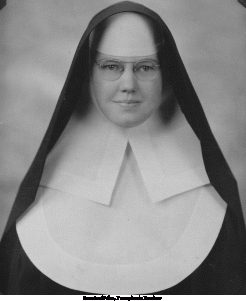
 There was Sister Mary Georgine, RSM, in my sixth grade.

 sisters-of-mercy

She helped me learn about reading, how to read, more than any other teacher before her. After, Sister Mary Philip, who took me aside and had me read Ben-Hur–“just because.” Did she think I was something or someone special? Was I?

And then there was Father Cahill in high school, always smelling of cigar ( a good smell), with dandruff on his shoulders and chalk dust on his sleeves, having us read Don Camillo stories; Father O’Donnell, taking us to The Bridge of San Luis Rey.  

Of course, there were the readings and the tests–and even some poetry. And dramas:

william shakespeare 2015

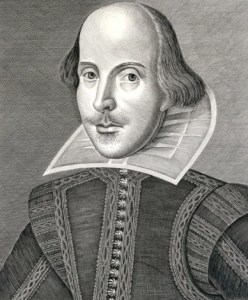
The Merchant of Venice (with the quality of mercy not being strained); Julius Caesar (with “yon Cassius” and his lean and hungry look); Macbeth (with witches, cauldrons, and “Will all the water in the ocean wash this blood from my hands?”).

I cannot forget Our Town, Huck Finn and his raft (and life on the M-I-S-S-I-S-S-I-P-P-I); Treasure Island, and “Elementary” Watson. “The Man Who Would Be King” (later in film with Sean Connery and Michael Caine); and that “Most Dangerous Game,” and Maupassant’s sad story of the lost necklace: “Oh, my poor Mathilde! Why, my necklace was paste!”

Memorable pieces I was taught, as one teacher emphasized, for enjoyment, for enrichment, and for insight. I liked that (though I did not like The Scarlet Letter and that Deerslayer-stuff: “I do not like them Sam-I-am.”)

 green eggs and ham

And then in college? And grad school? So much work, so much reading, so many pieces rushed through “to get it done by the end of the term.”

I learned from Dr. Lavon Rasco how to close read American novels, modern and contemporary (like Dos Passos, Heller, Hemingway, Faulkner, Nathaniel West). Who explained Freudian interpretations, as he walked around the classroom playing with the change in his pocket.

There was Dr. Margaret “Ma” Neville (who looked like a smiling and happy Jonathan Winters) who engaged me with Chaucer (and how “the droghte of March hath perced to the roote”) and the Beowulf (and later how I was able to understand John Gardner’s Grendel); and the beginnings and the end of Arthurian legends. (I wrote that “winner” paper, about adultery and the destruction of the Round Table.)

Dr. Harold Guthrie brought Emily D. into our classroom as no one had ever done before for me; I even followed him through the grass with Walt Whitman. I was nobody; who are you? I camped, later then, with Thoreau at Walden Pond, reading my Emerson and the doctrine of divine compensation (“Life invests itself with inevitable conditions…”).

Each of these unique teachers expected much of me; often I enjoyed and was enriched. With some others, I was disenchanted–or the works did not interest me. They became chores, tiresome. (Medieval drama and Victorian poets: No.) My likes and dislikes were my insights: “Love surfeits not, Lust like a glutton dies; // Love is all truth, Lust full of forgéd lies.” (Ah, my insightful 1968 research essay about Othello and Venus and Adonis by William Shakespeare! Now one can read about the topics in Shakespeare on Love and Lust by Maurice Charney, Columbia, 2000).

Yes, I had to put up with the rigors of schooling, the tests and exams, myriad essays and the research papers (which I mostly enjoyed doing). Yet it was not all rigor: some humor and laughter; and some scary Poe and Angela Carter; and the divine, Milton and Blake. A graduate professor at the University of Minnesota took me to Paradise, lost and regained: Dr. Lonnie Durham, riding his bicycle into class, that cold, stark, desk-filled tiered room of 120 seats. I drank deeply from the well of mythology, from a front row seat, gathering up as many pearls of wisdom that came my way. I was a careful Stephen Daedalus, trying not to get burned like Icarus.

So, after a few years as a teacher, I learned that being a teacher itself is an education.

Joseph Epstein [Aristides] wrote in American Scholar, many years ago, that teaching is really a second kind of learning, “a fine chance for a second draft on one’s inevitably inadequate initial education. . . that we are not ready for education, at any rate of the kind that leads on to wisdom, until we are sixty, or seventy, or beyond.”

Absolutely.

“A little learning is a dang’rous thing;

Drink deep, or taste not the Pierian spring:

There shallow draughts intoxicate the brain,

And drinking largely sobers us again.”–Alexander Pope.

[In Greek mythology, it was believed that drinking from the Pierian Spring would bring great knowledge and inspiration. Thus, Pope is explaining how if a person only learns a little, it can “intoxicate” in such a way that makes one feel as though he or she knows a great deal. However, “drinking largely” sobers one to become aware of how little she or he truly knows. –Wikipedia’s brief explanation.]

© James F. O’Neil 2015

 pope's spring by turner.jpgTurner’s Vision of the Spring


James Stockdale, an eight-year prisoner of war in Vietnam, a vice admiral, a college professor, a college president, and a vice presidential candidate, proposed a “discipline founded by Socrates–a discipline committed to the position that there is such a thing as central, objective truth and that what is ‘just’ transcends self interest.”

What will it take to get a worker, student, soldier, follower to reach a conclusion, to see the “vision” of a Stockdale leader?

The leader (or leader to be) must endorse the following:

1. You are your brother’s keeper
2. Life is not fair
3. Duty comes before defiance
4. Compulsion and free will can co exist
5. Every man can be more than he is
6. Freedom and absolute equality are a trade off
7. People do not like to be programmed
8. Living in harmonious “ant heaps” is contrary to man’s nature
9. The self-discipline of stoicism has everyday applications
10. Moral responsibility cannot be escaped.

It all seems so simple, simply put, clear. But it is not easy to be the moral leaders Stockdale wants. (Having a clear conscience is the foundation of Stockdale’s presentation.)

Question_mark_(black_on_white)