Archive

EVENTS

By:  James F. O’Neil

When we sorted out our wedding gifts in October 1963, my wife and I had received some nice dishes, stainless tableware, pots and pans, and enough cash to allow us to enjoy a comfortable wedding night and honeymoon. 

And so we began our marriage.  And the cooking of meals.  Our pots and pans provided their usefulness, as needed.  Sometime after 1972, however, we acquired “the incomparable, the original” Rival Crock-Pot, a new item of interest for the cooks of the ‘70s. 

The original slow-cooker pot was actually known as a “beanery” and was made for cooking up a pot of beans.  The item was marketed as “The Naxon Beanery All-Purpose Cooker.”  (See Whoguides.com for more information and Wikipedia for a history of the cooker.)
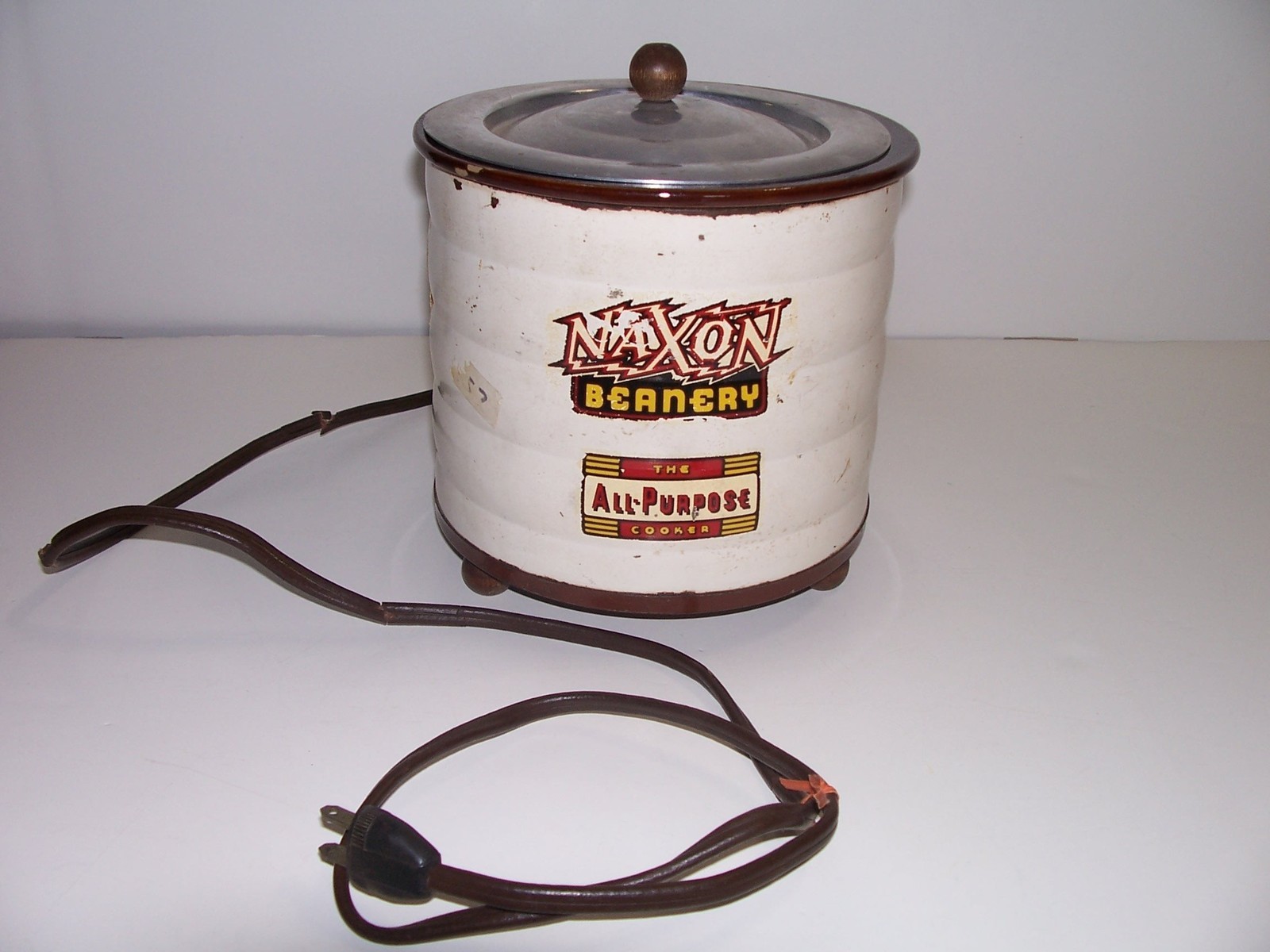
naxon beanery all-purpose cooker  (Photo courtesy of an eBay seller)

As often happens with many good inventions, larger companies see a greater audience and “want in on the deal.”  Eventually, Naxon was bought out by the Rival Company in 1971.

And so it goes.  Yet for the better for us, a target audience who needed to have meals prepared by a cooker that “cooks all day while the cook’s away.”  The burnt-orange-colored Rival Crock-Pot, Model No. 3100, Capacity 3 ½ qt, was the answer.

 (Photo: freshveggiesinthedesert.wordpress)

(Photo: freshveggiesinthedesert.wordpress)


Over time, the crock-pot became a “modern marvel” for our busy family.  It first allowed both of us working parents to make the Favorite Chili and the special Beef Stew for our kids in school.  Then other recipes, like Stuffed Peppers, became the new favorites–in fact, still one of the best food items to be done in the crock-pot.

The boys going to games and practices, after-play-rehearsals, high school graduation parties (in 1982 and 1985), wedding anniversaries, and just plain-old family gatherings  activated the recipes for the best B-B-Q ’s and Sloppy Joe’s, well done in our Vintage Rival Crock-Pot.

But change came–and for whatever reason, we purchased a bigger, newer model.  The old favorite was put into storage, and nearly forgotten.

In summer 2005, the Vintage happy crock-pot made its way to Cottage #66 in Epworth Park, Bethesda, Ohio.  The well-worn recipe book is still being splattered with sauce, and continues to provide guidance for delicious meals in the cottage kitchen–now for busy vacationers.  The cooker still “cooks all day while the cook’s away.”
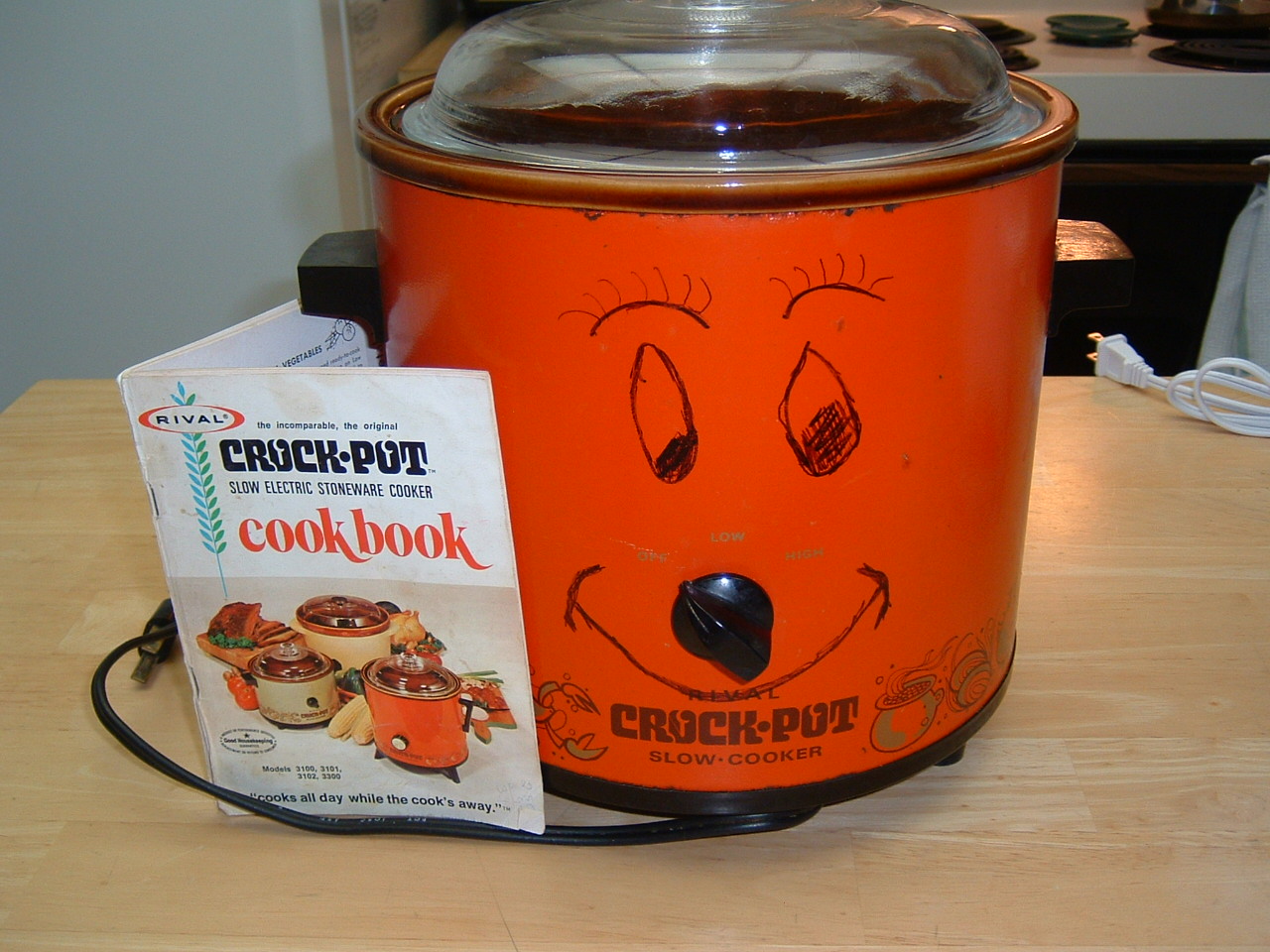
(The O'Neil Crock-Pot)

(The O’Neil Crock-Pot)

 © James F. O’Neil 2013
By: James F. O’Neil

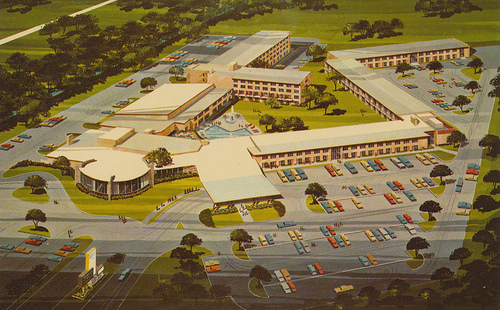
Many seasonal jobs and temporary positions rely upon college students to apply, especially fast-food establishments.  I have never worked at a fast-food restaurant with fast-food menus.  My restaurant experience, however, took place at the O’Hare Inn in Des Plaines, Illinois.  The Henrici’s Restaurant there had a large dining room with an outstanding menu, and large activity halls for weddings and parties.

Photo credit: Chuckman’s Collection of Postcards

As a college student, I needed part-time work to help with usual expenses and summer activities (including gas for the car to go to the beach or to visit with friends in the area).

I began my new job as a bus boy in the large celebration dining room and halls, doing the usual chores, helping servers with distribution of dinner plates of food, clearing tables, then handing out desserts.  After the last wedding song or dance, or after the last speech–when guests left–the real work began: removing the detritus of celebratory gatherings.  Knives, forks, plates, table cloths, glasses, flowers and flower vases, ash trays, empty bottles and cups and saucers–uneaten cake, half-empty glasses of wine,  partially-filled wine bottles, and on and on: the aftermath of partying was cleared away.

Occasionally, were the festivities long lasting, the servers ate together, usually in three-quarter time, whatever happened to be on the menu.  Good food I soon learned.

I enjoyed the work, but not the rush, not the stress.  Working during the summer did give me a change of pace from studies, however, an opportunity to mingle with workers and even customers, and a time to try to determine what my schooling and life-as-cliché “were really all about.”  What I enjoyed mostly was working with the women servers and hostesses.  I had not had much contact with females in my away-at-college jobs, since I was attending an all-male school.

I had become good at my work, made friends, and learned my sense of duty–so much so that I was recommended (by the women, as a matter of fact) to the assistant manager to “move up.”  This was the “big time,” the “show,” the place of the black-vest-and-tuxedo-jacket-uniform of only males in the dining room.  I was a classy bus boy–with “other duties as assigned.”  I would train to be a “flamer,” then a wine steward.  No females were allowed to perform like this in the dining room (as I remember).

The flamer had to cook at table side those various Henrici’s specialties like shish kebab, filet mignon (Chateaubriand), frog legs; and cherries jubilee or bananas Foster.  It was show; for the chefs cooked, then sent me out to heat and serve, with the twists of the wrists, or the holding of forks-and-spoons-as-one, to baste in butter, or seasoned juices, to cut and serve the meat, with red-to-pink centers of pepper-encrusted aged beef tenderloins.  I did the show, then did the serving, with the twists of my wrists.  (I recall dropping a frog leg only once–hopped right out of the hot butter onto the carpet…)

I opened wine bottles, mostly without crumbling a cork; I twisted open bottles of champagne without the cinematic geysers that spoil effervescence.  I was careful, having learned to make not even a “Pop.”     

So there I was, wearing my best, with corkscrew and flamer cart and all the needed preparations, ready to ignite brandy or cognac or whatever other liqueurs I used, trying carefully not to ignite myself or a customer.  (That “Whoosh!” sound surprised me time after time, the instant ignition, sound-with-yellow-flame-and-heat, capable of singeing hairs on a customer’s neck or arm…  I…did…singe…) 

I finished my tenure at Henrici’s and returned to graduate from college.

Once, soon after we were married, I took my new bride to Henrici’s at the O’Hare Inn, to eat a fancy meal with wine and Chateaubriand for two.  And a flamed dessert.  I simply had to take her there to show off–to show her what I used to do before we met.  The dining room looked smaller, though, than it did when I was bustling around from table to table. 

Perhaps it was always thus, though I was too occupied to recognize that the restaurant was a great place to go and be seen–and to have excellent food.  With the ambiance of upscale dining and with upper-shelf alcohol served, the Inn became an oasis in a growing community, an oasis for those who did not need to travel to Downtown Chicago for dining pleasure.

Oh, I have never had frog legs (though they are supposed to taste like chicken).

© James F. O’Neil  2013


By: James F. O’Neil

“What I Did Last Summer”

BETHESDA, OH:  Chautauqua Days** are over for this year.  The hot dogs are eaten; vendors have packed up their woodcarvings, and the quilts that went unsold.  Homemade candles sold out; the trophies for the fishing contest now sit on a shelf in some lucky child’s bedroom or in the living room.

 Photo credit: E.K. SchneiderPhoto credit: E.K. Schneider

The Cottage Tour in Epworth Park in Bethesda brought visitors from the area and from a distance, excited to view owners’ renovations and decor, especially those cottages being put into their original turn-of-the-century style.  The park, since 1878, has been the site for vacationers and summer visitors–in addition to the festivities associated with the Chautauqua Movement.

And for nine summers I have been a partaker of cool Ohio weather, over-bearing heat, summer thunder storms, lake stillness, fireflies (who seem to appear on time on clear evenings at 8:20), hummingbirds, poison ivy, ducks and Canada geese, non-air conditioned sleeping, candlelight suppers, mosquitos, on-the-porch Happy Hours, Saturday weddings in the open-air steel-roofed Auditorium (read “Chapel” that seats over three hundred), community pot-luck suppers (the community of 100 original cottages now numbers 66) for those owners and guests who remain after mid-July–and, the Bluegrass concerts, with much pickin’ and grinning’ taking place on stage.

What summers I have experienced here–as an adult.

If one were to ask me, “Think of your favorite place,” I return to Epworth Park and onto my cottage swing.

porch swing My Favorite Place provides me calm and recollected-ness.  And the swing allows me the opportunity to remember good summer times, those real mid-summers of July (long after the “cruelest month” of April).  I become the child in me.  The swing does that.  The Park does that.  Chautauqua Days do that: bring so many memories that remain over time.  (But, of course, there were those bad summer days, too: sunburns, injuries, working days while in high school, automobile problems, unrequited loves).

Rainbow Beach in Chicago: endless sand, hot dogs, and forever swimming.  Pullman Park Pool: everlasting swimming (indoors).

Sister Lakes, Michigan: family, and friendships–and swimming (where I did first learn to             swim, being able to make it to the oil-barrel raft away from our cottage shore).

Boy Scout Camp: swimming and crafts and…outdoor “plumbing” (ugh!).

Summers with my sister’s boyfriends–and their hot cars (especially that ’57 Merc            convertible).

O’Neil Picnics, 3rd Sunday in July (of course), rain or shine, with hot dogs and KFC and kids and aunts and uncles, train rides, and swimming (and crossing the train trestle over the Fox River in Pottawatomie Park: “Double-dare ya’!”  Stand by Me in reality?).

Garfield Boulevard and Halstead with its parkway, cool evenings, motorcycle Park Police, everlasting softball games).

Then, suddenly, it seems, I was no longer a child–“and now I have put away the childish things” (Paul. 1 Cor. 13.11).

No, Saint Paul, I cannot do it: The child in me is alive, comes alive, while I sit on my swing, while I walk through the Park.  And though I no longer put fireflies into Mason jars with bits of grass and leaves (how childish?), I watch the glow-bugs alive, throughout the trees, with a few “high-fliers” sometimes three stories above my cottage porch.

Chautauqua Summer will soon end.  The Park will soon become quiet as closing time approaches November 1st.  I will leave soon.  However, I will have another Chautauqua Summer captured, placed within my memory jar filled with Everlasting Summers.

 Photos Public Domain.com

Photos Public Domain.com

**Chautauqua [shu-TAW-kwuh]: a movement which flourished in the United States in the late 19th and early 20th centuries, including assemblies (sometimes religious), educational lectures, concerts, entertainments, and, unfortunately, no hot dogs!  [See The Chautauqua Institution of Western New York; Chautauqua Lake, in New York.]

BTW:  Rick Atkinson writes in his An Army at Dawn that “[Gen. Mark] Clark, as a young captain between the world wars had been detailed to a Chautauqua tour, spreading the gospel of Army life . . . .”

 Epworth Park Lake

Epworth Park Lake

© James F. O’Neil 2013

By: James F. O’Neil

Shredding the past can be traumatic: a violent act.  Placing a special document, such as a letter of application or a letter of resignation–or a letter presenting some award or gift–into a machine, then hearing the gears and chopping blades turn a piece of paper into cute, ruffled shredded-paper-documents-600x400strips of nondescript pieces of chaff, with now-unintelligible markings that looked like some ancient alphabets, can hurt.       

What was once a flat piece of 8 ½” x 11” or 11” x 14” now    becomes colored fluff,  expanded, with new life, now taking up more space, and more volume in a large black trash bag.   to be received unceremoniously, un-holily, by “The Garbage Men.”   

(Photo courtesy: photos-public-domain.com)

“The horror!  The horror!”

When I planned to retire, I knew the inevitable: I had to clean out and vacate the office I had for twenty years.  While an office occupier, I became the Collector, the Accumulator, the Filing Expert, the Organizer, the Archivist, a Librarian for many years.  During that twenty-year period, I had accumulated

  • A thousand books
  • Files and papers enough to fill five large 40-gallon trash barrels which I personally carted to the dumpster
  • Eighteen bankers’ boxes of “stuff.”

And what to do with “stuff”?  Books could be given away, donated, re-shelved at home.

But the stuff?

Class notes from college, course outlines, lecture notes, correspondences, newspaper and magazine clippings and articles, my term papers dating back to 1959, including a paper on the G.I. Bill, one on Fleming and penicillin, another on Froebel, the founder of the kindergarten.  [My C+ paper from graduate school on James Joyce and water imagery, in A Portrait of the Artist as a Young Man, was thrown away.]

These papers had to be preserved in memoriam, et in saecula saeculorum: forever! 

It could not happen: I had to shred that “stuff.”

So I shredded, while watching old movies or football or whatever was available to me to distract me from the task at hand: destroying history.  Hours and hours of shredding, placing the fluff into those unmarked black plastic trash bags–33-gallon, for sure–then neatly piling the bags at the curb to await their fate at the hands of Waste Management. 

When the truck and its three workers arrived, I felt guilty for giving them so much un-normal work to do.  I helped them toss away some of my past by picking up and flinging a bag or two.  (The bags were not all that heavy, despite some philosophy and psychology within their contents.)  Then, as if magically, the piles disappeared.  I could not watch as the truck pulled away.

I was not yet finished, though.  In the next few weeks, I had a second and then a third shredding, the last pile of “stuff” put down into the awaiting jaws of the killing machine.  I did the shredding slowly, nostalgically, pensively, silently–except for the sound of The Shredder: for two minutes at a time, to overheating, then the quiet of the four-minute auto shut-off.  Then more chewing and grinding and swallowing.  Little by little, the deed was done.

I thought it would be more painful, but it was not.  In fact, it was not painful at all–except when I had to clean out paper jams caught in the tiny blades, and scratched or nicked my fingers.  No pain at all, generally.  I felt mostly satisfaction, and relief.  As I looked at the fluffed piles of my life that I gently emptied from shredder into the trash bags, a sense of calm came over me: A full life, bagged, tied, and waste managed.

Like Forrest Gump often says, “That’s all I’m gonna say about that.”

But about those undergraduate and graduate papers I wrote?  The ones with red ink, grades, and maybe some comments?  Maybe I should have saved that Milton paper?

a.milton works © James F. O’Neil 2013