Archive

GROWING UP

BY: JAMES F. O’NEIL

“The Emperor of Ice-Cream” by Wallace Stevens:  “The only emperor is the emperor of ice-cream.”

“Why the emperor of ice cream?  It’s an odd combination: an absolute, imperial power and a benign, sweet treat.  Ice cream is a sensuous delight, eagerly anticipated and gleefully consumed.  If you wait too long to eat it, it’ll melt.  So much for the ice cream–now what about the emperor?

“Ice cream is like life: sweet, or at least hungrily indulged in, while it lasts.  It’s also like the dead: cold and destined to be consumed or to dissipate away.  Perhaps, then, the line that closes each stanza is a wake-up call to readers.  If the “only emperor” or dominant principle of the world is the one we’re reminded of when we see ice cream melting–(or, in a different way, when we attend a funeral  [shown in the poem])–we’d be well advised to heed it and make each moment count.”  –Austin Allen, Poetry [magazine] Foundation

Once upon a time: Rainbow cones on the South Side: 93rd and Western in Chicago.

RAINBOW CONE chicago

There see the giant cone, with five or six colors in slices–not scoops–of ice cream piled on top of one another. 

We screamed with excitement for ice cream as our family made its special way farther south of our Marshfield home.  It was a drive from Marquette Boulevard.  No quick 45-mph trip like today.  Probably in the green ’52 Chevy, 25-30 mph, with plenty of stoplights interrupting the special occasion.

Now when it comes to memories in time about flavors, I don’t recall any special Rainbow offerings, but the colors were vibrant.  This is embedded in me.  And in days before Rainbow–and after–ice cream has been a special weakness of mine.  Not as an addiction, like anything-chocolate, but as that special “Good Nutrition My Plate” (nestled within the perfect food container that not only holds but is eaten) with its various food groups which include NUTS (coco-nut and chocolate peanut butter, pistachio and black walnut); FRUITS (like White House Cherry and rum raisin); DAIRY (lemon gelato and butter pecan);  PROTEIN (egg nog and phish food, and chunky monkey and chocolate Moose-tracks); VEGETABLES (carrot-cake and chocolate malted and mint chocolate chip); GRAINS (chocolate cookie dough, and Grape-nuts).
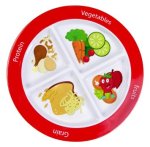
my plate image

However, Rainbow was but one special source of providing me with melting gustatory delights.  No doubt about it, Good Humor was like no other.

good-humor

The bells of the truck signaled the Coming of the Man in White. He enticed us kids to come outside our homes or from our apartments, or made us stop dead in our playing-tracks.  If we had the twenty or twenty-five cents, our saved nickels and dimes, we made our purchases.

good-humor-man good humor dot comAnd?  “Coconut for me, please.”  The delicious-tasting ice cream bar on a stick, covered completely with a thin coat of white-something loaded with coconuts pieces.  Heaven as I ate it.  Heavenly.  If my favorite was not available, I had to settle for something like chocolate cake or perhaps succumb to savoring an orange creamsickle:

good humor orange creamsickle

Good Humor exists today, in supermarkets, in 7-11, in other places, and even with a few trucks in certain neighborhood locations.  “But it’s not the same.”  Yet I would never turn down a chocolate eclair, a toasted almond, or even a strawberry shortcake bar.

Howard Johnson’s at some time was a place I remember first seeing coconut milk on the menu.  I thought that it would provide me with a special ice cream treat: a coconut milk milkshake.  O YES!  YES!  YES!  And then, later, I asked, “A coconut malted milkshake, please.”  The nectar of the gods for sure!

Gus Pappas died in 1987.  He was 83–and that was a long-ago moment.  In 1953, “Mr. Pappas” (“Gus”) bought a corner confectionery in the Byrne Building, at Garfield (55th) and Halsted: Pappas Sweet Shop.  We just knew it as the ice cream shop.  It was a hangout for me and my friend Bill Manion, or with Joe Balint.  My sister and her friends found time to have their ice cream and their teen-age talk-sessions there.
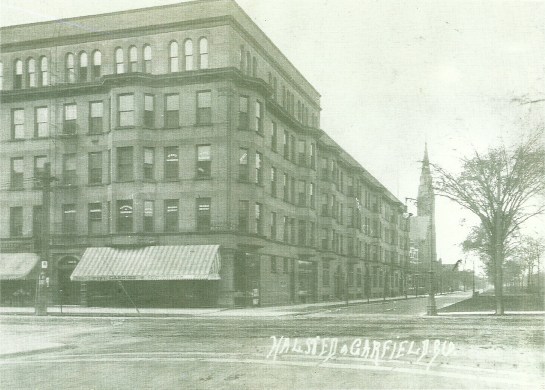
BURNS BUILDING Pat Telios Reagan BYRNE BUILDING WITH PAPPAS CORNER

No matter how warm outside, I remember the store was always cool inside, with its white tile floors and marble counter-tops.  Cool was needed to keep the dipped, rolled, and wrapped delicacies fresh and tasty (Oh, those chocolate-covered cherries!): Who needed Fannie May candies when we had Pappas on the corner?

Gus had a son, James (“Jimmy” to us), who worked in the store.  In my time, Jimmy began singing with the Chicago Metropolitan Opera.  Though his first role was in the chorus (My mother and I saw him in La Boheme.), he was a star to me.  He brought music and fun-with-music into my life, and an appreciation of opera that I do cherish.  And there is nothing today that compares to my savoring a Green River Malted Milkshake, with homemade ice cream, that Jimmy Pappas made for me.  Yum!

green river malt

GREEN RIVER MALTED MILKSHAKE

©  James F. O’Neil  2016

 Vanilla-Coconut-Milkshake-Silk-PureCoconut COCONUT MILK

Major Ingredient of a Homemade Coconut Milkshake


BY: JAMES F. O’NEIL

“A lot of parents pack up their troubles and send them off to summer camp.”  — Raymond Duncan

[Music plays]: Hello Muddah, Hello Fadduh.  Here I am at Camp Granada.

 . . .

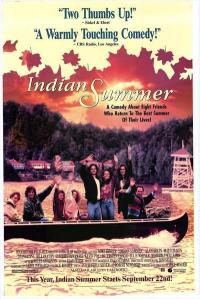
Summer camp.  Often looked forward to, by kids and adults both.  Most campers fondly recall the experiences long after they reach adulthood.  [Make sure you find and see the 1993 film Indian Summer to fondly recall some awakening memoriesofatime: “Indian Summer starts out like one of those reunion movies where friends from long ago gather again, to settle old scores, sort out old romances, open old wounds, and make new beginnings.  All of those rituals have been performed by the end of the film, but curiously enough, the movie isn’t really about what happens.  It’s about how it feels.  This is a story more interested in tone and mood than in big plot points.”  –Roger Ebert, April 23, 1993]

indian summer cover

NOT ALL HAPPY CAMPERS

Camp is usually a time to make new friends, try new things, come face-to-face with animals, bugs, unusual weather, strange sleeping conditions, and many new responsibilities.

Experiential:  Arts and crafts:  Yes, potholders, and key fobs.  Field trips.  Flowers and weeds’ identification.

Music: sing-a longs, campfire songs: “She waded in the water and she got her feet all wet….”; mysterious drum poundings and even dancing.

Water: swimming, boating, rescue; leeches, water bugs, and small water snakes.

Health: Nutrition, meal preparation, outdoor cooking (and camping)–and clean-up duties.

Safety: First Aid, wood carving, rock climbing, sailing.

Potty Training: Constipation from inability to utilize outhouses, or hating Porta Potty/Port-O-Let facilities.  (Does eating an entire can of whipped cream really work as a laxative?)  I confess here: I dreaded summer Scout Camp for this very reason: I am potty trained, but I need a clean flushing toilet, with my quiet time, my reading time for TIME magazine.

time magazine cover

QUIET-TIME BATHROOM READER

After my experiences in summer camp (some of which I have written about previously: https://memoriesofatime.com/2015/05/30/you-are-such-a-boy-scout/), camping was never high on my bucket list.  I did some with the family when the boys were young, making sure we camped in a park with adequate running water, and clean toilets.  I hope they were never scarred from their own summer camp experiences.  One did attend Scout camp, and, later, high school Band Camp.  The other experienced summer ROTC camp, and a real “summer camp” in Afghan-Land.  (I have learned little about the toilet facilities there.) 

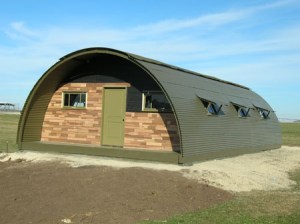
Overall, as an old fart looking back at my scouting summer camps, I know it wasn’t that bad.  One time we were housed in old military Quonset huts:

quanset hut Absolutely the best summer dorms for me–except for the loud snorers who sometimes kept me from falling asleep.  Spacious.  Lighted (some electricity).  And cleaner floors, for some reason.
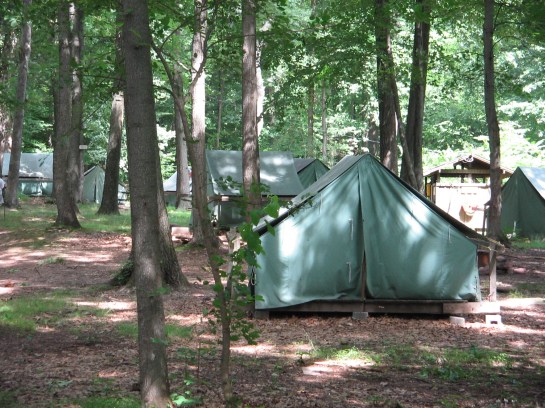
The other camp facility I liked had a screen door, wood floor, bunk beds; canvas roof, wood sides halfway up, then screening to the top.  The canvas roof could be rolled up or down, for heat or light or air, depending on the needs of the resident scouts.  Heavy rain could be a problem, however, with overspray into the “cabin.”

Then, of course, the tents.  Not tents, as we think tents, but tents with hard floors, soft canvas sides, soft tops.  Hot, when Chicago-area summer temperatures were high.  But no grass underfoot. 

scout tents padutchbsa.org

SCOUT FACILITY PICTURE PADUTCHBSA.ORG: THANKS

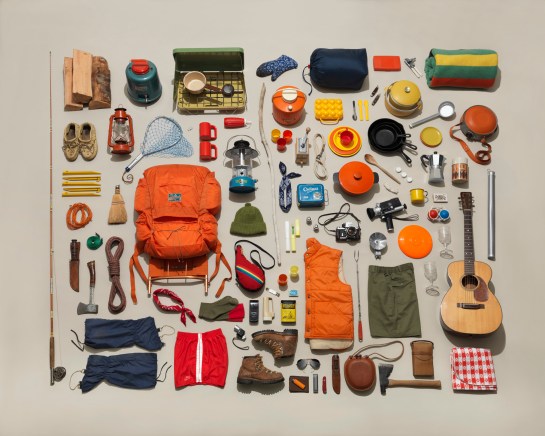
For excursions, and overnighters, we had those fold-up tents that were put up and taken down in the usual way–the kind that most people associate with camping, bugs, snakes, bears, cold, rain, romantic wilderness trips, bucolics, starry-starry nights, shooting stars, “sitting around the campfire singing Girl Scout songs”–and our sleeping bags, with other Abercrombie and Fitch, Coleman-Stove equipment:

CAMPING-COLLECTION photo by jim golden

EVERYTHING PICTURE BY JIM GOLDEN

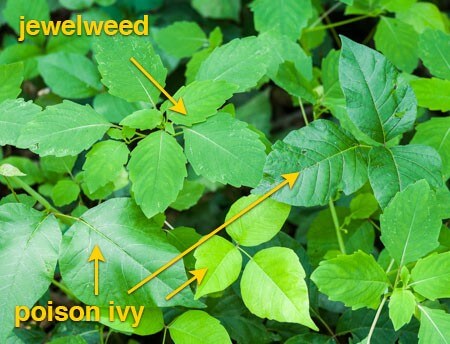
Camp counselors planned our days well: the events were structured to help us get our different merit badges: Camping, First Aid, Botany.  I did not do well with plant recognition.  To this day, everything is poison ivy; I herbicide anything that looks like a hand.

poison ivy jewel-weed-poison-ivy

SEE THE DIFFERENCES?

(I do recognize beautiful Queen Anne’s Lace.)  The meals were healthy and pretty good–especially, for me, the hot dogs grilled on the campfire.  I’m not a fussy eater; I liked nearly everything they put in front of me.  I had no trouble with KP duty, cleaning up and doing dishes: my mother taught me well at home. 

We arrived at camp on a Sunday; we departed for home on a Saturday morning–unless we were Senior scouts or Eagle Scouts staying for two weeks or more.  Parents came on Thursday night for Visitor Night: Campfire, songfest, and crying time by those young’uns who had been away from home for the first time.  (I was one of those who cried, but did not want to leave early; some did.)

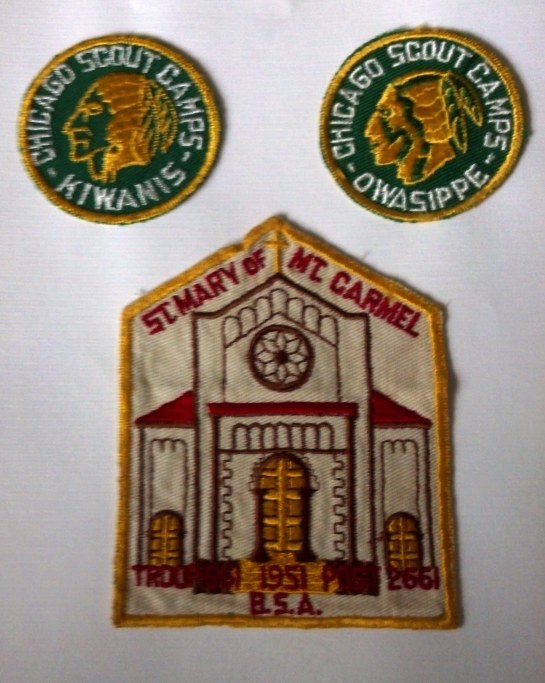
Glued into my Journal #35, I have this sacred piece of memory, dated 8/11/52, written in ink, in cursive [I was 11]: “Dear Mom, I miss you very much.  I wish I was home with you.  I lost my new raincoat, we were doing the dishes and I ran out and forgot it.  I have so many mosquitoe [sic] bites it isn’t funny.  Please come out Thursday and visit me.  We are having very good meals.  We have to wash the dishes and wait on the Scouts.  I washed today at dinner and I serve tommorrow [sic].  I am going for second class.  I will be second class (Chuck said) [Chuck was our Assistant Scout Leader] by the time we are out of camp.  I miss you very much.  With Love, Jimmy XXXXXXXX P.S.  I got my Kiwanis Patch  Jim XXXXX”

This says it all about Summer Scout Camp 1952.

©  James F. O’Neil  2016

scouts at st mary's 1951

 MY SCOUT PATCHES AND SUMMER CAMP BADGES


BY: JAMES FRANCIS CUMMINGS O’NEIL NEE ČAPEK

“I know my father and my mother, but beyond that I cannot go. My ancestry is blurred.” –V. S. Naipaul

* * *

Once upon a time, from my interviewing my mother, and thus it is written (here), I learned that the beautiful young maiden (of course!) …

KATRINA VON KOENIG, Great Grandma Katrina, a worker in the Barony of Luxembourg (it’s sounding so romantic and mysterious) met

FRANK ČAPEK [b. 1834], a laborer who was (maybe) in the Prussian Army (that would be romantic, like in Elvira Madigan), later turned anarchist, and (perhaps) a bomb manufacturer, in Chicago, for the eight Accused Conspirator Workingmen in the Haymarket Affair (Riot), May 4, 1886.

HaymarketRiot-Harpers

Drawing from Harper’s Magazine and Wikipedia

I heard about this man when I was a child. I grew up believing I was related to a famous anarchist, because Grandma Schuma said so, and because my mom told me so.

I couldn’t wait to see my Great Grandpa Čapek’s picture in the newspapers.

Frank Capek (Great Grandpa)

I spent hours at the beautiful Chicago Public Library on Michigan Boulevard, using the actual newspapers and microfilms of the events of May 4, 1886. (At one time later, my Uncle Elmer told me he studied, too, about his grandfather, and claimed he recognized pictures. He lived with Great Grandpa at 5431 South Seeley Avenue [I remember that house across Garfield Boulevard] until the Prussian soldier died.)  Great Grandpa Čapek was a talented watchmaker. He died in 1930.

* * *

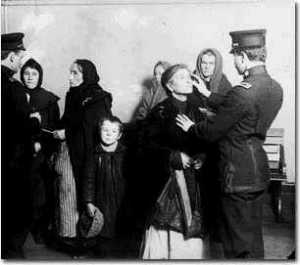
Frank and Katrina, whom I did not ever know, had eight children, with beautiful ethnic Bohemian names: Emilie [b. 1886], Mike, John, Frank, Joe [b. 1884], Theresa, Katherine, and Mary. I could never understand why my Bohemian relatives chose these names. But when I thought about emperors and empresses, presidents and monarchs, like Franz Josef and Maria Theresa, or King John, maybe the “common” names were more special emulations than Leopold or Vlad the Destroyer. (Not many songs about Leopold, but Emily? Maria? and Joe? or Meet John Doe?–or A Guy Named Joe–or, even better, “What a good Joe he is!,” the compliment.)

immigrants at ellis island

Bohemian immigrants on Ellis Island

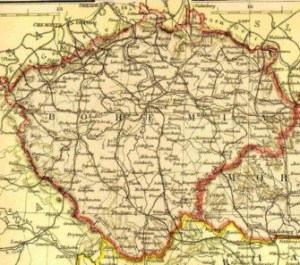
There they were, these Bohemian kids (not CZECHS!, not Slovaks, not Slovenes, but Bohacs, or Bohunks–Hunkies or Honkies!). Czechoslovakia was formed in 1918. Bohemia was a kingdom, from “way back when,” like before A.D. 600–those days of Beowulf….

bohemia in 1882

Bohemia in 1882

I learned–and was reminded often–that I was a Bohemian, because “Mom said so.” There I was, growing up in the ethnic South Side of Chicago: Damen and Seeley and Garfield Boulevard (55th Street), and Back of the Yards. Some neighbors were postal workers; others, electricians, tradesmen, homemakers. Family people. Neighborhood people. [Emilie worked in Upton Sinclair’s The Jungle. She was a meat packer for Libby Foods.]

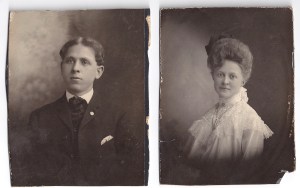
JOE ČAPEK married ANNA JARYKOVIC.

Joseph Capek and  Anna Jarykovic

JOE AND ANNA WEDDING PICTURE

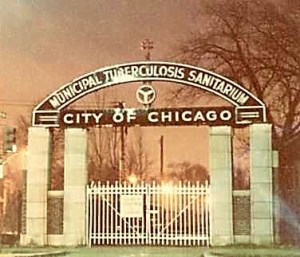
Anna–of course, it had to be “AH-NAH”–died in 1924. In 1918 she had contracted the flu–the world influenza pandemic that occurred near the end of World War I. (More died from the disease than died in the war. I learned that in school.) She then contracted and succumbed to TB. Growing up, I remember many trips to the North Side, to Bohemian National Cemetery, and the graves and headstones.

Bohemian_National_Cemetery

Bohemian National Cemetery Entrance

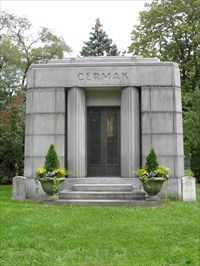
And Mayor Anton Cermak’s mausoleum

cermak tomb

Cermak Tomb

–and the nearby restaurant that had the best roasted duck, with mashed potatoes and gravy. On the way, we sometimes passed the TB Sanitarium….

tb sanitarium in chicago Jennifer A. Stix 1974 photo

Photo by Jennifer A. Stix 1974

Joe and Anna begot: Herbert (Uncle Herbie, who went with Aunt Flo); Joe (Uncle Joe, who went with Aunt Aggie); Elmer (Uncle Elmer, who went with Aunt Gladys) —I knew them all; and LILLIAN CATHERINE [b. November 16, 1918] (my mom).

Lillian C. Capek Schuma

LILLIAN C. CAPEK

Mother Katrina, while helping Anna with the children, died of a heart attack: November 1918….

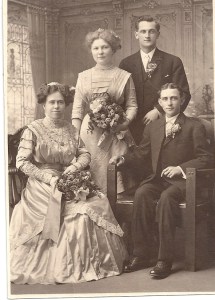
In June 1910, having fallen (madly?) in love, Emilie Čapek (Joe’s sister), while working at Libby Foods, married her handsome supervisor, Edward Albert Šuma [Schuma] [b. 1884]. I have the wedding pictures. My, what a handsome couple they were!

Edward Suma-Schuma and Emilie Capek

Edward Suma-Schuma and Emilie Capek (seated)

* * *

My Grandpa Schuma was hospitalized, was dying. In Evangelical Lutheran Hospital cafeteria, in 1956, on the South Side of Chicago, I came to know who really begot whom. I heard a beautiful story from my mother, a story of family and love. I heard of the love of a mother for a daughter, and a grandmother’s love. Then illness and death. How could all these children have comprehended it all?

Family togetherness, and the love of a generous aunt and uncle (Emilie and Ed), “begot” Lillian as “parents” and for me were my Grandma and Grandpa Schuma. They took the little girl. “Uncle Joe” kept the boys. I never knew that Joseph Capek was my real grandfather–until 1956. I knew my “grandparents” helped raise me when my father (Francis Cummings) was overseas with the Army. Their house was the first I can recall, at 5644 South Seeley Avenue.

5644 South Seeley, Chicago Grandma s Place

5644 South Seeley Chicago (current)

I grew up there with them: with their daughter, my “Aunt” Emily, and with my sister and with my (2nd) cousin Marilyn (who was begot by “Uncle” Bill Knoch).

So I learned the family “secret.” Yet it was never meant to hide or deceive. Life went on. I learned the facts, the “truth.” My mother said it was so.

Nothing changed after that. Except for my awareness. After Grandma Schuma died, I was present for the reading of her will, in 1958. Then the lawyer stated the “where-from?” that began in 1924: “My niece Lillian,…” when they took in that little girl. Nothing really changed for me.

How does one ever begin to tell a story of ancestry? The more I work with the lives and the connections, however, the more I realize the story was really the beginning of how my sister, my cousin, and I–three little kids–became part of the family story. I never looked at it this way before. Those earliest of pictures I have of me alone show a cute happy baby in my mother’s arms.

jimmy loved b

Jimmy Loved

Later pictures begin to show three little children, each a year apart, with smiling faces.


jan jim marilyn january 1944

January 1944 THREE FRIENDS [Janice, Jimmy, Marilyn]

Then, standing together, holding hands.

GRANDMA'S PORCH 1945 B

Grandma’s Porch  5644 S Seeley 1945  [Marilyn, Jimmy, Janice]

In  the beginning,… Janice [b. 1939], Marilyn [b. 1940], and Jimmy [b. 1941]….

Little did these women, sister and cousin, who begat my formation, who made me laugh, who taught me some funny-ness–little did they know they’d become the main characters in an important story:

“Where ya’ from?”

© James F. O’Neil 2016

kim novak bohemian daughter

Kim Novak famous Chicago Bohemian


BY: JAMES F. O’NEIL

“Music is a moral law. It gives soul to the universe, wings to the mind, flight to the imagination, and charm and gaiety to life and to everything.” –Plato

* * *

In my studies of John Milton and Paradise Lost, I learned best about his cosmology, his use of the heavenly bodies, and the music of the spheres. That was Plato stuff.

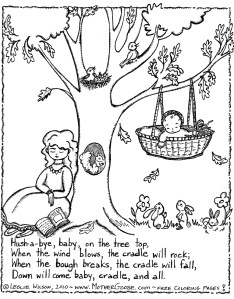
How far I have come from

Rock-a-bye baby, in the treetop
When the wind blows, the cradle will rock
When the bough breaks, the cradle will fall
And down will come baby, cradle and all.

cradle lullabye cartoon

Lullaby–of course

I have grown up with music and cannot stand to have quiet! (When the music is too loud for “others,” I am told to turn it down. I have told my wife that perhaps some of my intense desire for sound has to do with my former life in the seminary when I had to observe the Magnum silentium: The Great Quiet.)

Music is me. It’s part of my life. I have to have it!

* * *

MUSIC: A sound, or the study of such sounds, organized in time:  ‎

  1. Any pleasing or interesting sounds
  2. An art form, created by organizing of pitch, rhythm, and sounds made using musical instruments and sometimes singing
  3. A guide to playing or singing a particular tune; sheet music.

 * * *

The hills are alive with the sounds of music; and I walk among the lush growths, listening whenever and wherever I can. I love it (most of it). And it shows:

I have a radio (or music source) available to me when I need it: my Bose sound machine, and TEAC CD player, in the living room; a shower radio plus portable radio in my bath room; a bedside radio; Pandora in my man-cave on the TV, computer, and smart phone. In the car, I have 36 pre-sets on the Sirius XM: rock, New Age, “Chill,” and other favorites.

I have Shazam on my smart phone to help me capture sounds and songs I like, then download them to my Pandora stations. And the CD collection? More than enough.

* * *

“Music is often overlooked as a therapeutic intervention: singing, listening, and creating music of any kind will provide an immediate biological and psychological benefit for everyone. In fact, music can be a salvation and antidote to most psychological challenges: that’s why people sing in the shower and while driving the car, or simply listen to music that’s inspiring and distracting from emotional upset.” —Wikipedia

* * *

Some research has been completed which holds that children who are involved with music programs grow up to have lower rates of addictive behaviors, demonstrate better academic performance, and are greater prepared for college and the work force. I am one of those kids.

We always had music in elementary school, and for church services. Hymnbooks and songbooks were always–and still are–around me. Our home encouraged music, with our 45-rpm records, our classical music recordings on 33 1/3 Red Label RCA’s, “His Master’s Voice,” and with the purchase of our beautiful Grundig Majestic radio and record player:

Grundig Majestic in Texas

Still Working Grundig in Texas

[Our 1958 “Grundig Majestic Shortwave, AM, FM Phonograph Compact Stereo Console” was a tube-type radio and amplifier. FM was new to the US, but had been widely used in Europe since 1948. Only the phonograph was true stereo; stereo broadcasting was yet a long way off anywhere. The cabinet was highly polished with a Vertical Magic Eye tuning indicator. The phonograph had a 45-rpm adapter, stacking automatic record changer, 16, 33, 45, &78 rpm speeds. “Made in West Germany.”

grundig-majestic-console-stereo

[Max Grundig (1908-1989) was a simple radio dealer up to 1947, then founding the “Grundig-Radiowerke mbH in Fürth, Bavaria, Germany in July 1948. Max Grundig was also well known for portable radios and fabricated one of the first portable radios after WW2 in 1950 as Grundig Boy.–Ernst Erb, http://www.radiomuseum.org]    

* * *

My income from various jobs provided spending money to buy records.

I had two main sources for my record collection: Kroger’s, near 54th and Halstead in Chicago, always had bargains, and 33 1/3rd classical records. I received a “stamp” for every record I purchased; so many stamps gave me a free record. Tower Records downtown was Mecca: walls filled with copies of anything and everything, with catalogs for locating what was available–or for what could be ordered.

There were, also, local record stores, along Halstead, with booths for listening to potential purchases. That was a fun experience that could not be duplicated in Tower Mecca. I could spend hours carefully listening through earphones, taking care not to scratch any special LP (“long playing,” 33 1/3rd) record.

booth for listening with connie francis

Connie Francis in Listening Booth

* * *

College life brought studies and quiet time, with little recreation time for music interests. My record collection remained at home. But the college library: music to soothe men’s souls. As often as I could, I made my way to the library and the listening rooms, with their turntables and headphones. Here I glommed onto Beethoven’s Fifth Symphony, Tchaikovsky’s piano concertos, and Porgy and Bess especially. Oh, of course, there were many other musical pieces for me to become familiar with.

After college, my LP record collection grew; then digital recordings–and finally, I became the first of many first patrons of Stereo World to purchase the ultimate sound machine, a Yamaha CD Player! (Well, there were other “ultimates” available.) With my electronic component system, I purchased the right wires and connections to provide the “best” digital sounds: Music for the Royal Fireworks by Handel; piano music by George Winston; Gabriel Faure’s Requiem; Allegri’s “Miserere.”

I was now in music heaven, mecca, paradise, on Mount Olympus, in Elysium or in the Elysian Fields [the Ancient Greek conception of the afterlife]. I was chosen by the music muse Euterpe, chosen to live a blessed and happy life with music. AAAHHHH!

* * *

I LOVE MY MUSIC!

* * *

Even though some research findings suggest psychological and medical benefits of music, like increased happiness, less stress, reduced depression symptoms, along with increased competence, hope, and optimism, I can vouch for certain music making me depressed if I listen long enough, like the requiems–or “sickened,” like rap. Or angry music in the car can make me angry, road-raged if prompted.

I must be careful while listening. “Blues” can be “blue.” Or some depressing country-divorce material; or “break-up songs”: “I Can’t Get Used to Losing You.” I could end up with marital difficulties if I “can’t be with the one you love, then love the one you’re with.”

So I embrace music; I don’t want to turn it down. I want to hear. BIG! LOUD!

Yet I so do know, as I am told by Mick Jagger and the Stones,

“You can’t always get what you want

But if you try sometimes you just might find

You get what you need.”


© James F. O’Neil 2016


music-notes-on-staff-clipart-nTBG8dyEc