Archive

MEMOIRS

By: James F. O’Neil

Shredding the past can be traumatic: a violent act.  Placing a special document, such as a letter of application or a letter of resignation–or a letter presenting some award or gift–into a machine, then hearing the gears and chopping blades turn a piece of paper into cute, ruffled shredded-paper-documents-600x400strips of nondescript pieces of chaff, with now-unintelligible markings that looked like some ancient alphabets, can hurt.       

What was once a flat piece of 8 ½” x 11” or 11” x 14” now    becomes colored fluff,  expanded, with new life, now taking up more space, and more volume in a large black trash bag.   to be received unceremoniously, un-holily, by “The Garbage Men.”   

(Photo courtesy: photos-public-domain.com)

“The horror!  The horror!”

When I planned to retire, I knew the inevitable: I had to clean out and vacate the office I had for twenty years.  While an office occupier, I became the Collector, the Accumulator, the Filing Expert, the Organizer, the Archivist, a Librarian for many years.  During that twenty-year period, I had accumulated

  • A thousand books
  • Files and papers enough to fill five large 40-gallon trash barrels which I personally carted to the dumpster
  • Eighteen bankers’ boxes of “stuff.”

And what to do with “stuff”?  Books could be given away, donated, re-shelved at home.

But the stuff?

Class notes from college, course outlines, lecture notes, correspondences, newspaper and magazine clippings and articles, my term papers dating back to 1959, including a paper on the G.I. Bill, one on Fleming and penicillin, another on Froebel, the founder of the kindergarten.  [My C+ paper from graduate school on James Joyce and water imagery, in A Portrait of the Artist as a Young Man, was thrown away.]

These papers had to be preserved in memoriam, et in saecula saeculorum: forever! 

It could not happen: I had to shred that “stuff.”

So I shredded, while watching old movies or football or whatever was available to me to distract me from the task at hand: destroying history.  Hours and hours of shredding, placing the fluff into those unmarked black plastic trash bags–33-gallon, for sure–then neatly piling the bags at the curb to await their fate at the hands of Waste Management. 

When the truck and its three workers arrived, I felt guilty for giving them so much un-normal work to do.  I helped them toss away some of my past by picking up and flinging a bag or two.  (The bags were not all that heavy, despite some philosophy and psychology within their contents.)  Then, as if magically, the piles disappeared.  I could not watch as the truck pulled away.

I was not yet finished, though.  In the next few weeks, I had a second and then a third shredding, the last pile of “stuff” put down into the awaiting jaws of the killing machine.  I did the shredding slowly, nostalgically, pensively, silently–except for the sound of The Shredder: for two minutes at a time, to overheating, then the quiet of the four-minute auto shut-off.  Then more chewing and grinding and swallowing.  Little by little, the deed was done.

I thought it would be more painful, but it was not.  In fact, it was not painful at all–except when I had to clean out paper jams caught in the tiny blades, and scratched or nicked my fingers.  No pain at all, generally.  I felt mostly satisfaction, and relief.  As I looked at the fluffed piles of my life that I gently emptied from shredder into the trash bags, a sense of calm came over me: A full life, bagged, tied, and waste managed.

Like Forrest Gump often says, “That’s all I’m gonna say about that.”

But about those undergraduate and graduate papers I wrote?  The ones with red ink, grades, and maybe some comments?  Maybe I should have saved that Milton paper?
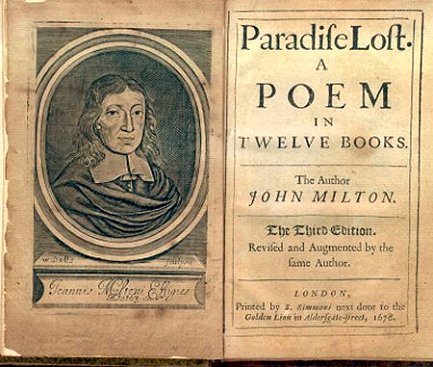
a.milton works © James F. O’Neil 2013

By: James F. O’Neil

It has happened again: One of those moments of memory revival when I do something that really conjures up picture-visions, feelings, tastes, and a sense of time gone by.           

Something simple I do, like mixing a pitcher of Kool-Aid or some other popular non-sugared drink, brings me into the memory world–here, the world of my childhood.       

Pour Kool-Aid There I was, pouring the colored powder into the two-quart pitcher.  As the green crystals and powder took their time getting to the bottom of the plastic container, I saw in my mind’s eye my mother, walking toward me, wearing her light-green smock with large pockets.            

I was waiting for her as she came from the Kool-Aid factory in Chicago, on the Southwest Side.  My vivid image of her now makes me remember a warm summer afternoon (she must have worked an early shift), the car my dad and I sat in waiting for her, and her gait, with her hands in her pockets.           

When I saw her, among the other women wearing hairnets, coming out the employees’ door, like those women workers in World War II, finishing their shift in some defense factory–in full-body coveralls–I left the car and ran towards her.  (This now occurs in filmed-slow-motion.)  A big hug, maybe a kiss (probably not in front of all those women), and a question:  “Watcha got in your pockets.”  We kept walking, her telling me about which line she worked that day: Cherry, Grape, Lemon-Lime, Orange, Raspberry, or Strawberry.  (I never liked orange.  Don’t know why, since I always enjoyed Creamsicles in orange flavor.)  She had colored powder on her smock, and her hair sparkled colored-crystal.           

I liked her job.           

That factory provided work for her, money for us to live on, and free Kool-Aid.  I cannot recall the exact dates of her work at this factory (in the 1950’s), but I know I was not a baby, as my title might imply.  Yet I remember one younger brother who also partook of the flavored powder.  We were children, with tastes.           

There is an expression “working for peanuts.”  My mom worked many jobs: making gaskets for bombsights, working at the Federal Reserve Bank (no free samples ever there), working in a cardboard factory making boxes, and the Kool-Aid Factory.  Of all, my remembrance of colored powders brings good feelings and positive memories.  She never suffered cuts, bruises, slivers, or smashed fingers or toes.  She brought home the money–and brought home color and flavor into our lives.  Much better than peanuts…

Postscript.  In 2004, the former Kool-Aid factory on the city’s Southwest Side was scheduled to be razed and replaced with a housing development.  Now known as Marquette Village, near Marquette Park, I know the soil must contain memories and crystals, with Kraft Foods Inc. manufacturing Kool-Aid, with a dose of Good Seasons salad dressing mixes–and maybe some drops and bits of Open Pit barbecue sauce.  My remembrance of things past?  “Kool-Aid, Kool-Aid, Tastes Great!  Wish We Had Some, Can’t Wait”–and, “A five-cent package makes two full quarts.”  How great was that!?

*I remember Tom Wolfe’s great book, The Electric Kool-Aid Acid Test, published in 1968.  When writing this memoir, I could not get that title out of my mind–yet I always referred to it with the “Baby” added to the title.  Don’t know why.  Perhaps I have just been a “Kool-Aid Baby.”

© James F. O’Neil  26 May 2013

By: James F. O’Neil

I have a small wooden sign in my man-cave with the words “home,” “story,” and “begins.”

What a neat sign with a neat saying.

Many craft stores, country gift shops, and little antique storefronts have made these kinds of signs popular, signs of warm, fuzzy slogans or aphorisms or “down-home” good feelings.

We like to buy these, put them on walls expressing that “Family Is Everything” or over a bed “Always Kiss Me Goodnight” or in a study “Home Is Where Your Story Begins.”

Perhaps “This Is As Good As It Gets” might be found over a door in a summer cottage. 

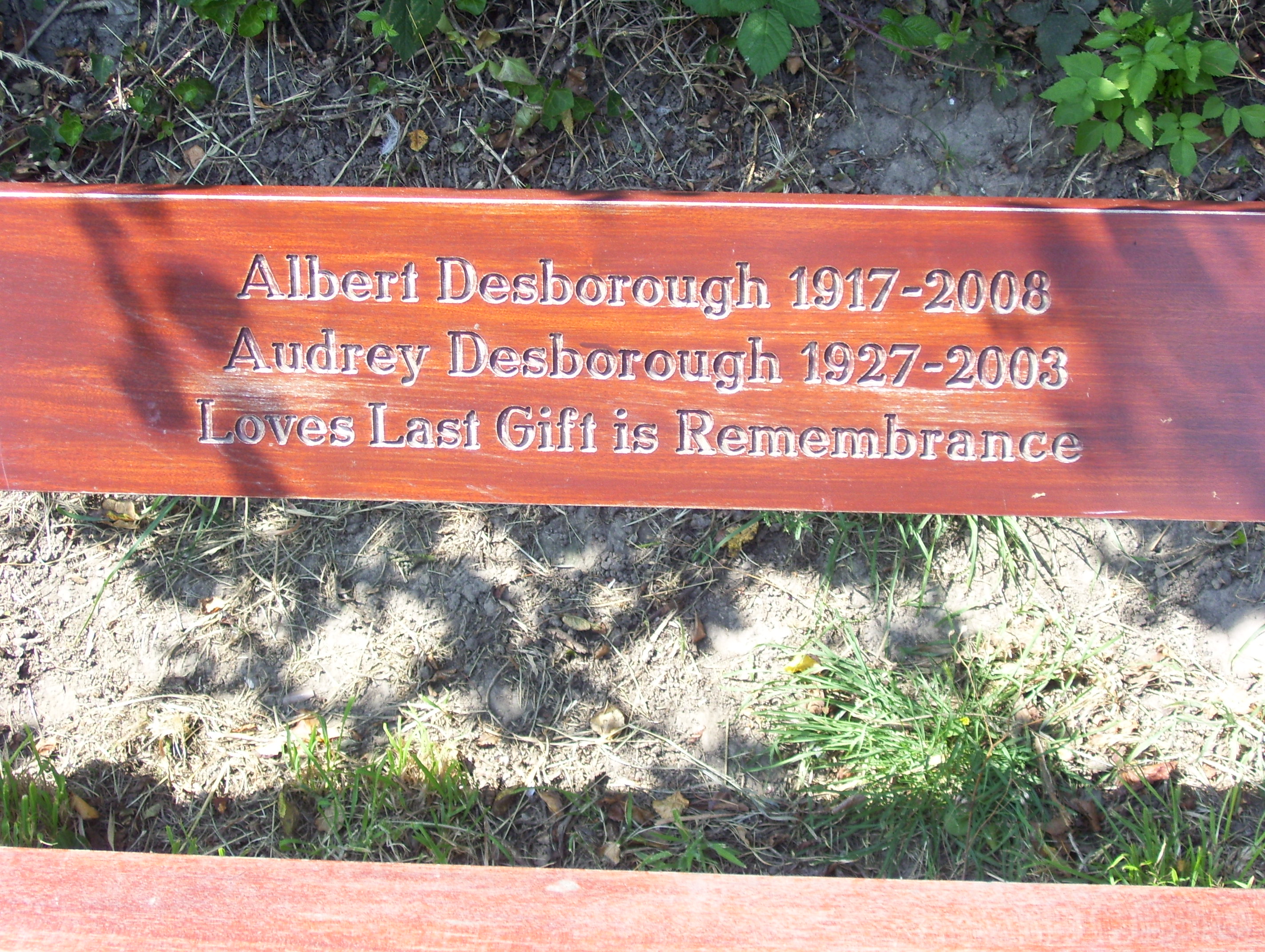
Cottage #16, of the original 100 cottagesThus it begins: a vacation, a story (“What I Did Last Summer”), a life, a death, a beginning or an ending, a love (“Love Is Blind”), stress (“Keep Calm And Carry On”), or friendship (“BFF”)–or one I really do like: “Love’s Last Gift Is Remembrance.” 

Saying from Hastings BenchStories are everywhere, where we look to see or find them.  And if “Home Is Where The Heart Is,” then that is where a story can begin. 

We must tell our story: “Once upon a time, when I was six and living with my grandmother, …”    Our listeners depend on it.

© James F. O’Neil  2013

By: James F. O’Neil

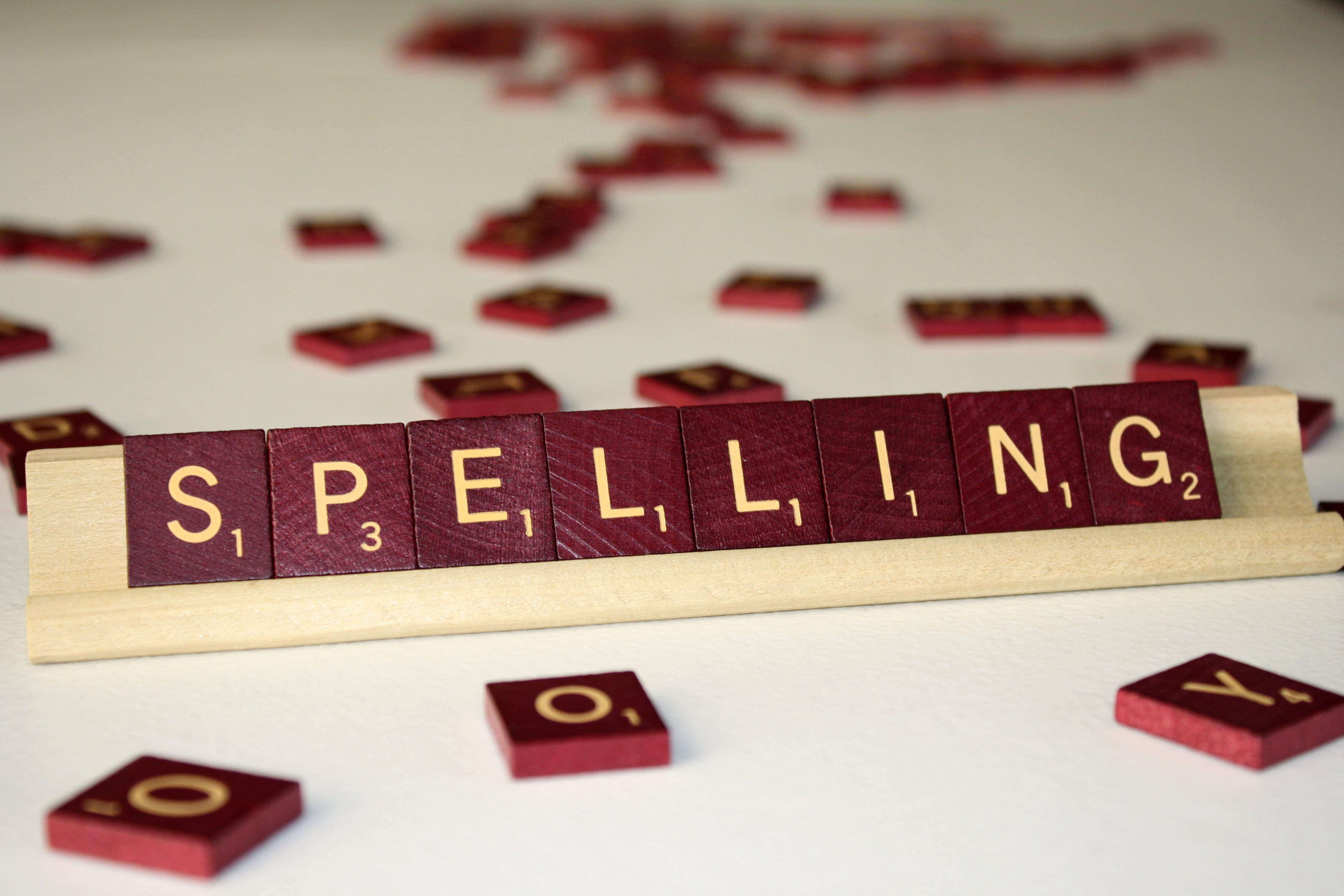
Does spelling ever matter?  Well, does it ever matter after school’s out?  Who cares about spelling as long as there is a spell-checker handy?

I have been reading a charming and fun book that has made me “Listen up!”  Roy Peter Clark at the Poynter Institute in St. Petersburg, Florida, has made me often remember my childhood and school days.  The Glamour of Grammar has a section on words that had me laughing out loud, but taking notice, as I thought back upon spelling and the problems I had.

Using correct spelling is unique to each individual, but sometimes there is no escape from ie or ei:the glamour of grammar

 i before e,

Except after c,

Or when sounded as “a,”

As in neighbor and weigh.

Despite learning this rhyme, we had to learn (our teachers hoped) to be aware of so many exceptions, like seizure, heir, Keira [Knightley], geisha, and, of course, their (not such “big” words, either.)

Should we keep our own lists of MIS-SPELLED words to help us correct our mistakes, as Clark suggests?  (Pink Floyd might suggest otherwise: “We don’t need no education.”)  Clark’s Glamour book gives us “a guide to the magic and mystery of practical English”–including spelling.  We need to know affect and effect, or public and pubic, and cleave (cut) and cleave (cling).  So many words, so little time (eight years in school?).

For what?

So we could out-spell another student, or editor, or journalist, or the boss.  We needed to come out ahead by spelling it right!

For what?  To help me remember Eleanor Wagner.

She was always a better speller than I was.  She always outlasted me in the spelling games we had, those infamous spelling bees of the bad old days.  She always was the last one to sit down, or the last one standing.  I despised her for that, for her mind.

(Sometimes, though, I envision that didn’t I throw it just to be able to sit down and watch her there alone by the board, wearing her blue pleated uniform skirt?)  In addition, she really had quite a body for an eighth grader.  I loved her, too.  (In 8th grade?)  She was my girlfriend for a while‑‑until she discovered big boys, those high-school types, those typecasts.

Eleanor also introduced me to From Here to Eternity, with the sexy beach scene all marked in her worn copy of the book which she passed along the row of desks to each of us lustful adolescents.  We read it under the desks, on our laps, of course.  Ah, a sexy beach scene from a sexy speller.

And the spelling books?  Remember those spellers that listed words, fill-in-the-blanks, exercises that demanded much busy homework?  I remember unfortunate.  More than anything else, I remember the “tuna” in the word, the tuna that I “ate.”  What happened to those spellers?  And where is Eleanor?

Ah, memory!

So, spelling does matter.  Especially, as one student of mine wrote, “In this “Doggy-Dog World we need spelling.”  (That, of course, should be spelled as “dog-eat-dog.”  Right?)

 * * *

Here is a list of must-know words to be spelled correctly:

all right, similar, familiar, marriage, possession, Wednesday, February, separate, misspell, arithmetic, occur, occurrence, similar, villain, cemetery, forty, truly, fourth.

And what about these?

braggadocio (kidding about this braggart word), acquire, inoculate, grammar (put the first letter last, and it spells rammarg, that is, grammar spelled backwards), embarrass, weird, niece, definitely, college, knowledge, sacrilegious, deceive, friendspelling

 © James F. O’Neil  2013