
Archive

MEMOIRS

By: James F. O’Neil

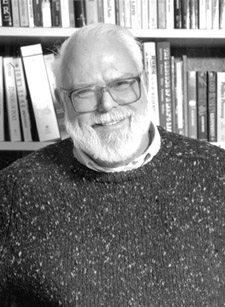
donald m murray

Donald M. Murray

“Write what you know,” Donald M. Murray (the late Pulitzer prize-winning journalist and long-time teacher) told me long ago in his book Write to Learn.  And so I practice.  Most of my personal writing is the personal-experience type: “honest, specific, and moving.”  (And many times just plain fun.) I like this approach.  The authors of these kinds of writings are authorities on the self–or selves–contained within the lines of the page.

Often, though, some writing teachers considered such efforts as non-academic, and not good writing.  I hold that “The best writing is personal writing.”  For what really is “good” or “best”?

With personal-experience writing, I do not have to become mired in academic or argumentative rhetoric to make a point.  In fact, I recall the historian Barbara Tuchman (American historian and author of The Guns of August) writing that history is the best narration–and history is the life of persons, peoples, cultures, nations.

Teacher Donald Murray wrote of students being able to “. . . discover and develop the skills of critical thinking . . . and move in close and then stand back. . . .  With immediacy and detachment, close examination, and the placing of events in perspective, there is compassion and judgment, feeling and thought.”

In addition, Robert Fulghum, author of   All I Really Need to Know I Learned in Kindergarten (1988), all i needed to knowdescribes various levels of writing: public, private, secret–all narrative.  For such a writing form “allows the reader to discover the subject–and the meaning of the subject.”  Then the reader and writer really have communication (a type of communion, or a “symbiotic relationship” in modern-speak: a relationship of mutual benefit).

Mr. Murray’s words bolstered me, supported me, and urged me on to continue what I have been doing since my early journal-writing years.  My best stories and anecdotes–in essence, my best writing–come from my life: from my reading and viewing, my experiencing, my observing.  I don’t think I could ever give them up and still be a writer.

© James F. O’Neil  2013

By: James F. O’Neil

Forever I taught three essentials for writing narratives and stories:

HEART     LIGHT BULB      A.D. 1066

valentine candy hearts

A writer needs FEELINGS (heart)

light of reason

REASON/organization/sense of order

(light bulb: the “light of reason”)

1066 and all that

a sense of PAST (history)

The BASICS OF LANGUAGE AND GRAMMAR we have pretty much under control by 6th grade–if all goes well in school.  In addition, I used to say, “If you live to 18, you will have enough to write about for the rest of your life.”

This is my theory of writing in a nutshell-posting.

Of course, this is just a beginning for that “once-upon-a-time” story or revelation.  But think about it: What more do I need to be a storyteller?

We feel; we think.  But the most difficult time we have with writing is getting that sense of our past “out there.”

Now, how far “back” can a person remember?  I read once that persons under hypnosis can go “way back”–whatever that means.  If I try to force memory, make connections with sights and sounds–and especially smells–I can recall (or remember) most of my life.  Words, images, or odors trigger responses.  Then I can time-travel and flesh out the event, including surroundings, persons nearby, and sometimes even recognize colors.  (The book and movie, DVD extras about the film, The Time Traveler’s Wife, is such a great example of what I am believing.)

“Our first palpable recollections–from vital, early mileposts to seemingly random snapshots of our toddler years–stick for good, on average, when we reach 3 1/2 years old, according to numerous past studies,” writes Bill Briggs, NBC News contributor, on The Body Odd (https://www.facebook.com/bodyodd).

So, reader, work at this.  THREE essentials.  Only three.

Three very-early-in-my-life memories continue to provide me awareness of my self as a child.  The details, such as clothes, or specifics of weather, elude me.  But it was truly a hot Chicago summer.

The actions around me at that earliest-of-time involved my one grandma.  So how old was I?  What helps me set the memory in time?

I have always had to use school or a grade to help ground me with a time-of-memory.  So much of my life was spent in school, so many activities and people were in my life, those nine months in school and then the “summer months,” whatever they brought.  This memory in particular did not put me in school.

With this memory come two others.

Grandma was forever cleaning me up.  I must have been a handful for her.  I recall not wanting to come in from playing, toward early evening, fading summer light.  I waited too long.  I pooped my pants.  She cleaned me up, and I do remember the hugs of endearment as I cried.

Another time, that same summer, I recall being outside with playmates.  Someone threw something at me.  It hit my head.  It was gooey.  My playmates laughed.  I cried, and ran to my grandmother.  She cleaned me up.

A bird pooped on me, on my head.

It was the summer of 1944.  I was three years old.

“First memories get beyond the presentations of everyday life–of clothing, career, and status–and reveal something distinctly personal and unique about you … something about our families or environment.  But all of it has something that has been so resilient that it has withstood many years of other memories and experiences without erasure.  For some it will be fun, for others, very painful – but for everyone, it’s personal.”  (Julie Gurner, Philadelphia-based doctor of clinical psychology.)

Is she right?  I have had gastro-problems since…since “Once upon a time, while a sophomore in high school, I had terrible pains in my lower right side…”  That’s a story worth telling/to be told.

© James F. O’Neil 2013

By: James F. O’Neil

Memoirs are special stories: narratives with significance for the teller.  Sometimes memoirs are written by old people, sometimes not.  For a memoir could be in the form of a lecture, like that by a professor with pancreatic cancer: Randy Pausch, The Last Lecture, a moving memoir about life and living and love and family.  Good stuff for storytelling

I want to share stories–about life and living and love and family.

Somewhere, somehow, I had a chance to write a story, “Once upon a time…”  I cannot OnceUponATime-Final-960x960remember that story, but I have others to write and many that I have already written–probably enough to last a lifetime, however long that might be.

I have a difficult time trying to organize.  I become frazzled and frustrated, not knowing how to begin or where to begin.  Yet I know enough to begin at that “once-upon-a-time” time.

For now, though, I begin with this:

“A large part of our self-concept consists of the narrative by means of which we remember and relate our past experiences,” wrote Sam Keen in To a Dancing God.

And this:

“TELL ME A FACT: I’LL LEARN.
TELL ME A TRUTH: I’LL BELIEVE.
BUT TELL ME A STORY: IT WILL LIVE IN MY HEART–FOREVER.”

This is an Indian proverb from a wonderful “stories-told” book, The Right Words at the Right Time by Marlo Thomas and Friends

And this also:

“What is the self?  It is the sum of everything we remember.”  I found this gem somewhere, from the author Milan Kundera.

Remembering is special.  It sometimes keeps me going.  But telling about the remembered?  The more I tell, the more I am.  And this is pleasing to me.  And how I do like those “once-upon-a-time” times.

© James F. O’Neil  2013