Archive

MEMOIRS

BY: JAMES F. O’NEIL

How to Read a Book by Mortimer J. Adler
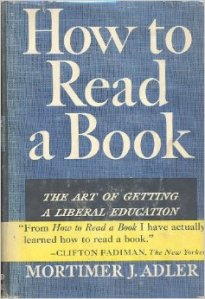
how to read a book by mortimer adler old

What a great book for me!  While a senior in high school, I belonged to the Book Club.  A group of us would meet once a month to discuss a book chosen by a faculty advisor.  He prepared questions for our comments.  Our first reading was Adler’s book.

This now-favorite and well-used book (first published in 1940) is still available in both “real” print and “electronic” print.  I have gone through two or three copies–and have given copies as gifts.  Were I to point out a most influential book in my life, Adler’s would be one of the three (followed by The Power and the Glory [1940] and A Tree Grows in Brooklyn [1943]).

Often I see Adler’s book staring at me from its place on my bookshelf.

Looking through this book not long ago, I was searching for an answer to some question about my teaching career and about students: “…although the teacher may help his student in many ways, it is the student himself who must do the learning.  Knowledge must grow in his mind if learning is to take place.”

At that point, in a special mental instant, memory-filled, I became so aware of how far I had come in my learning and discovering, by reading.  Then there occurred a light-bulb “Ah-ha!” kind of connective moment,

light of reason

not about reading but about my own discovering, by do-ing.  I stood before my bookshelf, holding Adler, musing: What have I done? 

When I was being presented with my retirement gifts and honor plaque, “For his twenty years of full-time service…,” I stood there–really–thinking about my grandfather teaching me how to do “hands-on”: the practical, not the theoretical.  Nailing and sawing and shoveling and painting and gluing.

So much of my teaching career was not “hands on”–except, of course, when I would finger paint with my Head Start students; except, of course, my writing class notes on black, green, and white boards; except, of course, for correcting-annotating-commenting upon hundreds and piles of student papers; except, of course, for typing lesson plans, calculating and entering grades and achievements.  (Late in my career, though, I was doing “hands-on” computer instruction.)

Adler’s how-to book came long after some of my how-to experiences.

While in grammar school (elementary school), I did babysitting duties: bathing, feeding, and bedding (and changing diapers).  Yet I also was able to get a “real” job at a local grocery story.  I put up stock, helped clean up, but most importantly (since I was an experienced newspaper delivery boy), I was able to be trusted to deliver groceries.  Not as easy as it sounds, considering the delivery vehicle:
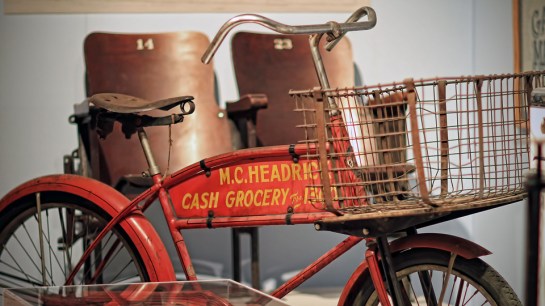
grocery bicycle

DELIVERY BICYCLE [RUSTED]

Careful and skillful, I did not let the bicycle tip or turn, spilling the contents of the basket–well, not often.  I learned then about center of gravity.  (The turning bike wanted to pull me over.)

Sometimes “all thumbs” at changing faucet washers, and driving nails, I still managed to be “hand-y”: knowing how to paint, scrub floors in the local school with a temperamental scrubbing machine, do dishes (glasses, knives and forks first; dishes, pots and pans last); mow lawns, shovel snow, change tires (automobile and bicycle).  (Later in life, in my automotive-mechanic stage of life, I actually installed water pumps, changed brakes, and even added a Holley 4-barrel carburetor to my 1954 Ford!  What achievements!)

1954 ford

I could tie a tie, long after learning how to tie shoelaces; shave my face, handwrite, and sign my name.  I hate to dust, but I can organize dirty clothes and do laundry.  And from observing and reading, I could/can make a “signature” meatloaf!

While working in a foundry, handling a swing grinder and hand tools, I made, fashioned, and finished dies for plastic companies, or was grinding off mold-edges on fire hydrants or small engines, still hot from the casting.  This work was dirty, sweaty, and hands-on. 

Yes, I have been a doer, with hands and fingers.  And I am pleased. 

I did, though, have my creative artistic attempts, like drawing flowers that looked like lollipops; then had twenty good years using my hands with glass, colored and contoured, fabricating flowers and shapes and geometrics that let the light shine through: my stained-glass years.

The Maltese Blue--One of the Best

THE MALTESE BLUE

All this and more.

My story of learning and discovery, however, cannot end without mention of one of my other greatest accomplishments of manipulative making.  I was privileged, honored, to be able to use my hands in a bookbindery.  Now how is that for a Mortimer Adler segue?

As a college junior, I found a place in the college bindery, an opportunity for me to come in contact with paper, cloth, glue, drill presses–to love books even more and realize the sacredness of pages put together.  There I folded and bound papers and pages into sets, the fascicles; sewed and pulled and tightened using needles and “thread” to sew units, not unlike Shakespeare’s quartos and octavos.  I grouped, squeezed, and pressed together the clusters of papers, then glued and waited.  The ends of the pages were trimmed with large-bladed cutters; I lost no parts of any fingers or thumbs. 

I learned how to make covers of cardboard and cloth, uniting the covers to the sewed and glued pages.  I pressed all parts together, and waited for drying.  I even learned to print titles, imprinted, impressed, using fonts of type and gold leaf foil.  I bound magazines, students’ notes, paperback texts, library journals, old books.

book edge of grant memoirs

I was proud of my work; I did my job.  I was good at my work and all the work I have done “with these hands.”

From all of this–from my reading, from my doing, from my remembering–it is that when I consider this “do-ing,” I am well pleased, something akin to sticking in my scarred thumb and pulling out a plumb–and saying, “What a good boy am I!” 

I did well, with my fingers and my thumbs. 

©  James F. O’Neil  2016

Little-Jack-Horner the color com


BY: JAMES F. O’NEIL

“The Emperor of Ice-Cream” by Wallace Stevens:  “The only emperor is the emperor of ice-cream.”

“Why the emperor of ice cream?  It’s an odd combination: an absolute, imperial power and a benign, sweet treat.  Ice cream is a sensuous delight, eagerly anticipated and gleefully consumed.  If you wait too long to eat it, it’ll melt.  So much for the ice cream–now what about the emperor?

“Ice cream is like life: sweet, or at least hungrily indulged in, while it lasts.  It’s also like the dead: cold and destined to be consumed or to dissipate away.  Perhaps, then, the line that closes each stanza is a wake-up call to readers.  If the “only emperor” or dominant principle of the world is the one we’re reminded of when we see ice cream melting–(or, in a different way, when we attend a funeral  [shown in the poem])–we’d be well advised to heed it and make each moment count.”  –Austin Allen, Poetry [magazine] Foundation

Once upon a time: Rainbow cones on the South Side: 93rd and Western in Chicago.

RAINBOW CONE chicago

There see the giant cone, with five or six colors in slices–not scoops–of ice cream piled on top of one another. 

We screamed with excitement for ice cream as our family made its special way farther south of our Marshfield home.  It was a drive from Marquette Boulevard.  No quick 45-mph trip like today.  Probably in the green ’52 Chevy, 25-30 mph, with plenty of stoplights interrupting the special occasion.

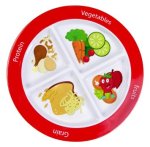
Now when it comes to memories in time about flavors, I don’t recall any special Rainbow offerings, but the colors were vibrant.  This is embedded in me.  And in days before Rainbow–and after–ice cream has been a special weakness of mine.  Not as an addiction, like anything-chocolate, but as that special “Good Nutrition My Plate” (nestled within the perfect food container that not only holds but is eaten) with its various food groups which include NUTS (coco-nut and chocolate peanut butter, pistachio and black walnut); FRUITS (like White House Cherry and rum raisin); DAIRY (lemon gelato and butter pecan);  PROTEIN (egg nog and phish food, and chunky monkey and chocolate Moose-tracks); VEGETABLES (carrot-cake and chocolate malted and mint chocolate chip); GRAINS (chocolate cookie dough, and Grape-nuts).

my plate image

However, Rainbow was but one special source of providing me with melting gustatory delights.  No doubt about it, Good Humor was like no other.

good-humor

The bells of the truck signaled the Coming of the Man in White. He enticed us kids to come outside our homes or from our apartments, or made us stop dead in our playing-tracks.  If we had the twenty or twenty-five cents, our saved nickels and dimes, we made our purchases.

good-humor-man good humor dot comAnd?  “Coconut for me, please.”  The delicious-tasting ice cream bar on a stick, covered completely with a thin coat of white-something loaded with coconuts pieces.  Heaven as I ate it.  Heavenly.  If my favorite was not available, I had to settle for something like chocolate cake or perhaps succumb to savoring an orange creamsickle:

good humor orange creamsickle

Good Humor exists today, in supermarkets, in 7-11, in other places, and even with a few trucks in certain neighborhood locations.  “But it’s not the same.”  Yet I would never turn down a chocolate eclair, a toasted almond, or even a strawberry shortcake bar.

Howard Johnson’s at some time was a place I remember first seeing coconut milk on the menu.  I thought that it would provide me with a special ice cream treat: a coconut milk milkshake.  O YES!  YES!  YES!  And then, later, I asked, “A coconut malted milkshake, please.”  The nectar of the gods for sure!

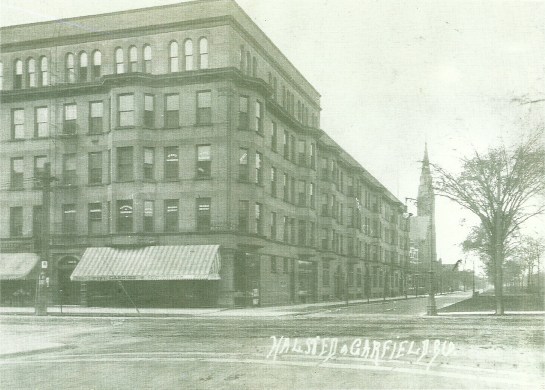
Gus Pappas died in 1987.  He was 83–and that was a long-ago moment.  In 1953, “Mr. Pappas” (“Gus”) bought a corner confectionery in the Byrne Building, at Garfield (55th) and Halsted: Pappas Sweet Shop.  We just knew it as the ice cream shop.  It was a hangout for me and my friend Bill Manion, or with Joe Balint.  My sister and her friends found time to have their ice cream and their teen-age talk-sessions there.

BURNS BUILDING Pat Telios Reagan BYRNE BUILDING WITH PAPPAS CORNER

No matter how warm outside, I remember the store was always cool inside, with its white tile floors and marble counter-tops.  Cool was needed to keep the dipped, rolled, and wrapped delicacies fresh and tasty (Oh, those chocolate-covered cherries!): Who needed Fannie May candies when we had Pappas on the corner?

Gus had a son, James (“Jimmy” to us), who worked in the store.  In my time, Jimmy began singing with the Chicago Metropolitan Opera.  Though his first role was in the chorus (My mother and I saw him in La Boheme.), he was a star to me.  He brought music and fun-with-music into my life, and an appreciation of opera that I do cherish.  And there is nothing today that compares to my savoring a Green River Malted Milkshake, with homemade ice cream, that Jimmy Pappas made for me.  Yum!

green river malt

GREEN RIVER MALTED MILKSHAKE

©  James F. O’Neil  2016

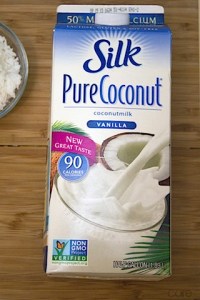
 Vanilla-Coconut-Milkshake-Silk-PureCoconut COCONUT MILK

Major Ingredient of a Homemade Coconut Milkshake


Diane called my attention to this list in the latest issue of Parade Magazine which gets delivered in our Sunday Buffalo News. It’s an eccentric list. I’ve read about 60 percent of the books. Some books, like When Breath Becomes Air and The Lion and the Mouse, I’d never heard of. You can find a…

via THE 75 BEST BOOKS OF THE PAST 75 YEARS By Ann Patchett in PARADE MAGAZINE — GeorgeKelley.org

BY: JAMES F. O’NEIL

“A lot of parents pack up their troubles and send them off to summer camp.”  — Raymond Duncan

[Music plays]: Hello Muddah, Hello Fadduh.  Here I am at Camp Granada.

 . . .

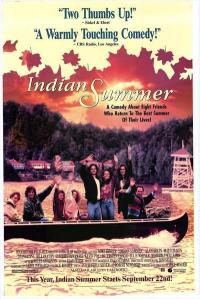
Summer camp.  Often looked forward to, by kids and adults both.  Most campers fondly recall the experiences long after they reach adulthood.  [Make sure you find and see the 1993 film Indian Summer to fondly recall some awakening memoriesofatime: “Indian Summer starts out like one of those reunion movies where friends from long ago gather again, to settle old scores, sort out old romances, open old wounds, and make new beginnings.  All of those rituals have been performed by the end of the film, but curiously enough, the movie isn’t really about what happens.  It’s about how it feels.  This is a story more interested in tone and mood than in big plot points.”  –Roger Ebert, April 23, 1993]

indian summer cover

NOT ALL HAPPY CAMPERS

Camp is usually a time to make new friends, try new things, come face-to-face with animals, bugs, unusual weather, strange sleeping conditions, and many new responsibilities.

Experiential:  Arts and crafts:  Yes, potholders, and key fobs.  Field trips.  Flowers and weeds’ identification.

Music: sing-a longs, campfire songs: “She waded in the water and she got her feet all wet….”; mysterious drum poundings and even dancing.

Water: swimming, boating, rescue; leeches, water bugs, and small water snakes.

Health: Nutrition, meal preparation, outdoor cooking (and camping)–and clean-up duties.

Safety: First Aid, wood carving, rock climbing, sailing.

Potty Training: Constipation from inability to utilize outhouses, or hating Porta Potty/Port-O-Let facilities.  (Does eating an entire can of whipped cream really work as a laxative?)  I confess here: I dreaded summer Scout Camp for this very reason: I am potty trained, but I need a clean flushing toilet, with my quiet time, my reading time for TIME magazine.

time magazine cover

QUIET-TIME BATHROOM READER

After my experiences in summer camp (some of which I have written about previously: https://memoriesofatime.com/2015/05/30/you-are-such-a-boy-scout/), camping was never high on my bucket list.  I did some with the family when the boys were young, making sure we camped in a park with adequate running water, and clean toilets.  I hope they were never scarred from their own summer camp experiences.  One did attend Scout camp, and, later, high school Band Camp.  The other experienced summer ROTC camp, and a real “summer camp” in Afghan-Land.  (I have learned little about the toilet facilities there.) 

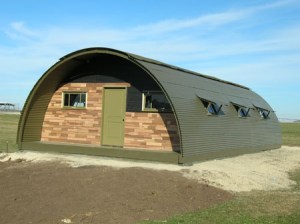
Overall, as an old fart looking back at my scouting summer camps, I know it wasn’t that bad.  One time we were housed in old military Quonset huts:

quanset hut Absolutely the best summer dorms for me–except for the loud snorers who sometimes kept me from falling asleep.  Spacious.  Lighted (some electricity).  And cleaner floors, for some reason.
The other camp facility I liked had a screen door, wood floor, bunk beds; canvas roof, wood sides halfway up, then screening to the top.  The canvas roof could be rolled up or down, for heat or light or air, depending on the needs of the resident scouts.  Heavy rain could be a problem, however, with overspray into the “cabin.”

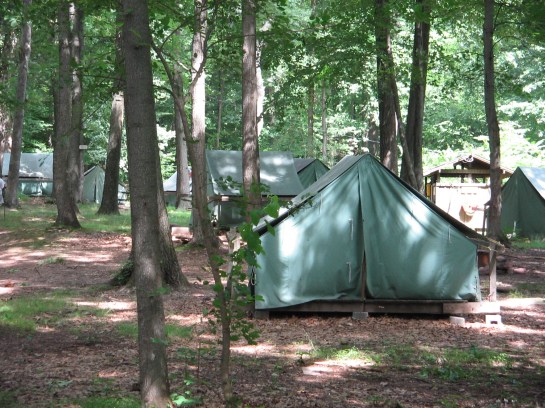
Then, of course, the tents.  Not tents, as we think tents, but tents with hard floors, soft canvas sides, soft tops.  Hot, when Chicago-area summer temperatures were high.  But no grass underfoot. 

scout tents padutchbsa.org

SCOUT FACILITY PICTURE PADUTCHBSA.ORG: THANKS

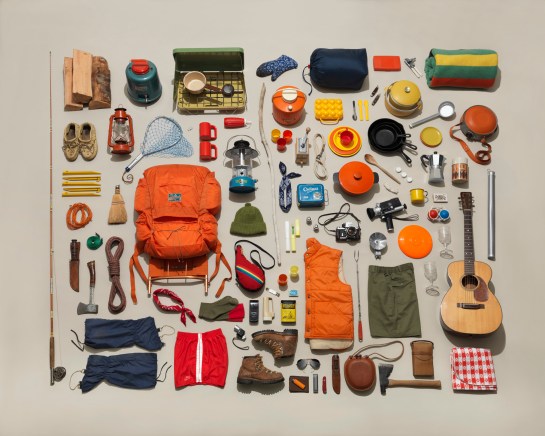
For excursions, and overnighters, we had those fold-up tents that were put up and taken down in the usual way–the kind that most people associate with camping, bugs, snakes, bears, cold, rain, romantic wilderness trips, bucolics, starry-starry nights, shooting stars, “sitting around the campfire singing Girl Scout songs”–and our sleeping bags, with other Abercrombie and Fitch, Coleman-Stove equipment:

CAMPING-COLLECTION photo by jim golden

EVERYTHING PICTURE BY JIM GOLDEN

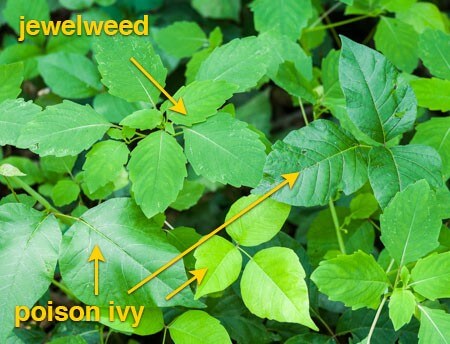
Camp counselors planned our days well: the events were structured to help us get our different merit badges: Camping, First Aid, Botany.  I did not do well with plant recognition.  To this day, everything is poison ivy; I herbicide anything that looks like a hand.

poison ivy jewel-weed-poison-ivy

SEE THE DIFFERENCES?

(I do recognize beautiful Queen Anne’s Lace.)  The meals were healthy and pretty good–especially, for me, the hot dogs grilled on the campfire.  I’m not a fussy eater; I liked nearly everything they put in front of me.  I had no trouble with KP duty, cleaning up and doing dishes: my mother taught me well at home. 

We arrived at camp on a Sunday; we departed for home on a Saturday morning–unless we were Senior scouts or Eagle Scouts staying for two weeks or more.  Parents came on Thursday night for Visitor Night: Campfire, songfest, and crying time by those young’uns who had been away from home for the first time.  (I was one of those who cried, but did not want to leave early; some did.)

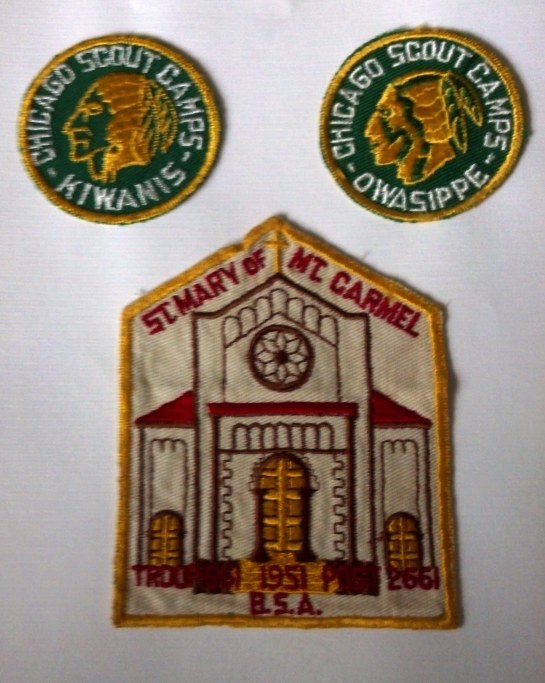
Glued into my Journal #35, I have this sacred piece of memory, dated 8/11/52, written in ink, in cursive [I was 11]: “Dear Mom, I miss you very much.  I wish I was home with you.  I lost my new raincoat, we were doing the dishes and I ran out and forgot it.  I have so many mosquitoe [sic] bites it isn’t funny.  Please come out Thursday and visit me.  We are having very good meals.  We have to wash the dishes and wait on the Scouts.  I washed today at dinner and I serve tommorrow [sic].  I am going for second class.  I will be second class (Chuck said) [Chuck was our Assistant Scout Leader] by the time we are out of camp.  I miss you very much.  With Love, Jimmy XXXXXXXX P.S.  I got my Kiwanis Patch  Jim XXXXX”

This says it all about Summer Scout Camp 1952.

©  James F. O’Neil  2016

scouts at st mary's 1951

 MY SCOUT PATCHES AND SUMMER CAMP BADGES