Archive

MEMOIRS

BY: JAMES F. O’NEIL

“Music is a moral law. It gives soul to the universe, wings to the mind, flight to the imagination, and charm and gaiety to life and to everything.” –Plato

* * *

In my studies of John Milton and Paradise Lost, I learned best about his cosmology, his use of the heavenly bodies, and the music of the spheres. That was Plato stuff.

How far I have come from

Rock-a-bye baby, in the treetop
When the wind blows, the cradle will rock
When the bough breaks, the cradle will fall
And down will come baby, cradle and all.
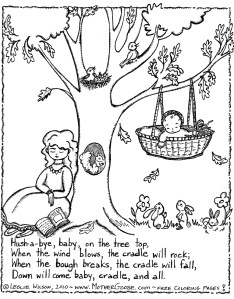
cradle lullabye cartoon

Lullaby–of course

I have grown up with music and cannot stand to have quiet! (When the music is too loud for “others,” I am told to turn it down. I have told my wife that perhaps some of my intense desire for sound has to do with my former life in the seminary when I had to observe the Magnum silentium: The Great Quiet.)

Music is me. It’s part of my life. I have to have it!

* * *

MUSIC: A sound, or the study of such sounds, organized in time:  ‎

  1. Any pleasing or interesting sounds
  2. An art form, created by organizing of pitch, rhythm, and sounds made using musical instruments and sometimes singing
  3. A guide to playing or singing a particular tune; sheet music.

 * * *

The hills are alive with the sounds of music; and I walk among the lush growths, listening whenever and wherever I can. I love it (most of it). And it shows:

I have a radio (or music source) available to me when I need it: my Bose sound machine, and TEAC CD player, in the living room; a shower radio plus portable radio in my bath room; a bedside radio; Pandora in my man-cave on the TV, computer, and smart phone. In the car, I have 36 pre-sets on the Sirius XM: rock, New Age, “Chill,” and other favorites.

I have Shazam on my smart phone to help me capture sounds and songs I like, then download them to my Pandora stations. And the CD collection? More than enough.

* * *

“Music is often overlooked as a therapeutic intervention: singing, listening, and creating music of any kind will provide an immediate biological and psychological benefit for everyone. In fact, music can be a salvation and antidote to most psychological challenges: that’s why people sing in the shower and while driving the car, or simply listen to music that’s inspiring and distracting from emotional upset.” —Wikipedia

* * *

Some research has been completed which holds that children who are involved with music programs grow up to have lower rates of addictive behaviors, demonstrate better academic performance, and are greater prepared for college and the work force. I am one of those kids.

We always had music in elementary school, and for church services. Hymnbooks and songbooks were always–and still are–around me. Our home encouraged music, with our 45-rpm records, our classical music recordings on 33 1/3 Red Label RCA’s, “His Master’s Voice,” and with the purchase of our beautiful Grundig Majestic radio and record player:

Grundig Majestic in Texas

Still Working Grundig in Texas

[Our 1958 “Grundig Majestic Shortwave, AM, FM Phonograph Compact Stereo Console” was a tube-type radio and amplifier. FM was new to the US, but had been widely used in Europe since 1948. Only the phonograph was true stereo; stereo broadcasting was yet a long way off anywhere. The cabinet was highly polished with a Vertical Magic Eye tuning indicator. The phonograph had a 45-rpm adapter, stacking automatic record changer, 16, 33, 45, &78 rpm speeds. “Made in West Germany.”

grundig-majestic-console-stereo

[Max Grundig (1908-1989) was a simple radio dealer up to 1947, then founding the “Grundig-Radiowerke mbH in Fürth, Bavaria, Germany in July 1948. Max Grundig was also well known for portable radios and fabricated one of the first portable radios after WW2 in 1950 as Grundig Boy.–Ernst Erb, http://www.radiomuseum.org]    

* * *

My income from various jobs provided spending money to buy records.

I had two main sources for my record collection: Kroger’s, near 54th and Halstead in Chicago, always had bargains, and 33 1/3rd classical records. I received a “stamp” for every record I purchased; so many stamps gave me a free record. Tower Records downtown was Mecca: walls filled with copies of anything and everything, with catalogs for locating what was available–or for what could be ordered.

There were, also, local record stores, along Halstead, with booths for listening to potential purchases. That was a fun experience that could not be duplicated in Tower Mecca. I could spend hours carefully listening through earphones, taking care not to scratch any special LP (“long playing,” 33 1/3rd) record.

booth for listening with connie francis

Connie Francis in Listening Booth

* * *

College life brought studies and quiet time, with little recreation time for music interests. My record collection remained at home. But the college library: music to soothe men’s souls. As often as I could, I made my way to the library and the listening rooms, with their turntables and headphones. Here I glommed onto Beethoven’s Fifth Symphony, Tchaikovsky’s piano concertos, and Porgy and Bess especially. Oh, of course, there were many other musical pieces for me to become familiar with.

After college, my LP record collection grew; then digital recordings–and finally, I became the first of many first patrons of Stereo World to purchase the ultimate sound machine, a Yamaha CD Player! (Well, there were other “ultimates” available.) With my electronic component system, I purchased the right wires and connections to provide the “best” digital sounds: Music for the Royal Fireworks by Handel; piano music by George Winston; Gabriel Faure’s Requiem; Allegri’s “Miserere.”

I was now in music heaven, mecca, paradise, on Mount Olympus, in Elysium or in the Elysian Fields [the Ancient Greek conception of the afterlife]. I was chosen by the music muse Euterpe, chosen to live a blessed and happy life with music. AAAHHHH!

* * *

I LOVE MY MUSIC!

* * *

Even though some research findings suggest psychological and medical benefits of music, like increased happiness, less stress, reduced depression symptoms, along with increased competence, hope, and optimism, I can vouch for certain music making me depressed if I listen long enough, like the requiems–or “sickened,” like rap. Or angry music in the car can make me angry, road-raged if prompted.

I must be careful while listening. “Blues” can be “blue.” Or some depressing country-divorce material; or “break-up songs”: “I Can’t Get Used to Losing You.” I could end up with marital difficulties if I “can’t be with the one you love, then love the one you’re with.”

So I embrace music; I don’t want to turn it down. I want to hear. BIG! LOUD!

Yet I so do know, as I am told by Mick Jagger and the Stones,

“You can’t always get what you want

But if you try sometimes you just might find

You get what you need.”


© James F. O’Neil 2016


music-notes-on-staff-clipart-nTBG8dyEc


BY: JAMES F. O’NEIL

“You can get help from teachers, but you are going to have to learn a lot by yourself, sitting alone in a room.” –Dr. Seuss

During my senior year in college, I walked into a theology and philosophy class, with a teacher who was to discuss eschatology, cosmology, and proofs for the “Uncaused Cause.” (In that class, I was using the Art and Scholasticism text by Jacques Maritain.)

For a moment, as I look back on those memories of a time, I wonder what that teacher might have asked me what influenced my decision to take his class. An interesting (philosophical?) question.

I would have said that here’s a person who has been able to see some relationships between his subject and his life, trying “to make sense of it all.”

I was so naive when I got to that point in my life, trying to make sense of it all. I was twenty-one years old. One year later, I was that very person, standing before a group of students who might have been wondering what I was doing there? And what did I know? Where did I learn to make relationships? I was just an English teacher.

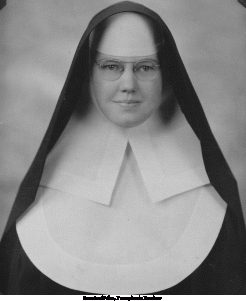
 There was Sister Mary Georgine, RSM, in my sixth grade.

 sisters-of-mercy

She helped me learn about reading, how to read, more than any other teacher before her. After, Sister Mary Philip, who took me aside and had me read Ben-Hur–“just because.” Did she think I was something or someone special? Was I?

And then there was Father Cahill in high school, always smelling of cigar ( a good smell), with dandruff on his shoulders and chalk dust on his sleeves, having us read Don Camillo stories; Father O’Donnell, taking us to The Bridge of San Luis Rey.  

Of course, there were the readings and the tests–and even some poetry. And dramas:

william shakespeare 2015

The Merchant of Venice (with the quality of mercy not being strained); Julius Caesar (with “yon Cassius” and his lean and hungry look); Macbeth (with witches, cauldrons, and “Will all the water in the ocean wash this blood from my hands?”).

I cannot forget Our Town, Huck Finn and his raft (and life on the M-I-S-S-I-S-S-I-P-P-I); Treasure Island, and “Elementary” Watson. “The Man Who Would Be King” (later in film with Sean Connery and Michael Caine); and that “Most Dangerous Game,” and Maupassant’s sad story of the lost necklace: “Oh, my poor Mathilde! Why, my necklace was paste!”

Memorable pieces I was taught, as one teacher emphasized, for enjoyment, for enrichment, and for insight. I liked that (though I did not like The Scarlet Letter and that Deerslayer-stuff: “I do not like them Sam-I-am.”)

 green eggs and ham

And then in college? And grad school? So much work, so much reading, so many pieces rushed through “to get it done by the end of the term.”

I learned from Dr. Lavon Rasco how to close read American novels, modern and contemporary (like Dos Passos, Heller, Hemingway, Faulkner, Nathaniel West). Who explained Freudian interpretations, as he walked around the classroom playing with the change in his pocket.

There was Dr. Margaret “Ma” Neville (who looked like a smiling and happy Jonathan Winters) who engaged me with Chaucer (and how “the droghte of March hath perced to the roote”) and the Beowulf (and later how I was able to understand John Gardner’s Grendel); and the beginnings and the end of Arthurian legends. (I wrote that “winner” paper, about adultery and the destruction of the Round Table.)

Dr. Harold Guthrie brought Emily D. into our classroom as no one had ever done before for me; I even followed him through the grass with Walt Whitman. I was nobody; who are you? I camped, later then, with Thoreau at Walden Pond, reading my Emerson and the doctrine of divine compensation (“Life invests itself with inevitable conditions…”).

Each of these unique teachers expected much of me; often I enjoyed and was enriched. With some others, I was disenchanted–or the works did not interest me. They became chores, tiresome. (Medieval drama and Victorian poets: No.) My likes and dislikes were my insights: “Love surfeits not, Lust like a glutton dies; // Love is all truth, Lust full of forgéd lies.” (Ah, my insightful 1968 research essay about Othello and Venus and Adonis by William Shakespeare! Now one can read about the topics in Shakespeare on Love and Lust by Maurice Charney, Columbia, 2000).

Yes, I had to put up with the rigors of schooling, the tests and exams, myriad essays and the research papers (which I mostly enjoyed doing). Yet it was not all rigor: some humor and laughter; and some scary Poe and Angela Carter; and the divine, Milton and Blake. A graduate professor at the University of Minnesota took me to Paradise, lost and regained: Dr. Lonnie Durham, riding his bicycle into class, that cold, stark, desk-filled tiered room of 120 seats. I drank deeply from the well of mythology, from a front row seat, gathering up as many pearls of wisdom that came my way. I was a careful Stephen Daedalus, trying not to get burned like Icarus.

So, after a few years as a teacher, I learned that being a teacher itself is an education.

Joseph Epstein [Aristides] wrote in American Scholar, many years ago, that teaching is really a second kind of learning, “a fine chance for a second draft on one’s inevitably inadequate initial education. . . that we are not ready for education, at any rate of the kind that leads on to wisdom, until we are sixty, or seventy, or beyond.”

Absolutely.

“A little learning is a dang’rous thing;

Drink deep, or taste not the Pierian spring:

There shallow draughts intoxicate the brain,

And drinking largely sobers us again.”–Alexander Pope.

[In Greek mythology, it was believed that drinking from the Pierian Spring would bring great knowledge and inspiration. Thus, Pope is explaining how if a person only learns a little, it can “intoxicate” in such a way that makes one feel as though he or she knows a great deal. However, “drinking largely” sobers one to become aware of how little she or he truly knows. –Wikipedia’s brief explanation.]

© James F. O’Neil 2015

 pope's spring by turner.jpgTurner’s Vision of the Spring


BY: JAMES F. O’NEIL

“And what does your father do?”

“He’s a bread truck driver.”

“Where does he work?”

“Deppe-Vienna Baking Company.” [It used to be known as the Vienna Model Baking Company, then Deppe-Vienna Baking Company, 1015 Willow Street, Chicago.]

“Got any ‘bread’?” [dough? money? the eating kind?]

***

Our family never lacked for bread: white, rye, French–and even had enough “sweet rolls” and dinner rolls.

My dad worked “forever” for a bakery that primarily serviced restaurants, steak houses, hotels, diners, and food canteens. He’d bid for routes, sometimes traveling within downtown Chicago, the Near North Side, or to oil refineries or cement plants past the South Side.

When I was in grammar school, I used to help him plan his routes and orders, even making out charge slips. When I was older (14-16, or so), I used to go to work with him, during summers or on non-school days.

I would ride with him in our ’52 Chevy, at one or two in the morning, to the bakery and garage, from the South Side to North Avenue and Clybourn. Since I was not allowed into the loading area, or near the trucks loading inside (labor laws), I would have my pillow and sleep in the back of the Chevy.

Sometime around 4 or 5 a.m., I would hear the knocking on the car window. Next to the car, with its engine running, was the shadow of the dark-green truck, with my dad telling me to get going. I’d grab my jacket and climb inside while he’d get settled behind the steering wheel.

“Get ‘em up!” he’d shout. “Let’s go!”

I’d quickly move into the truck, jumping up the step, away from the open sliding door, and find a spot on the floor behind him (couldn’t be seen), smelling the fumes of gasoline and oil. But as noticeable as the fumes were, the deliciousness of smells from chocolate-covered donuts or cherry Danish would push away the noxiousnesses. Oh, the smell of freshly baked “goods” (“Bakery goods”). [Memories of this special spot returned dramatically to me while I positioned myself on the floor of a B-17, behind the pilots, a ride I took in 2001; I was then in position for takeoff.]

And “take off” we did, my dad and I, pulling away from the neighborhood of the trucks beginning their routes.

Metro VanInternational Metro Van

The interior of the truck had an aisle wide enough for an adult person to walk to the rear-entry door, which on some trucks slid up into the roof, while on others opened outward. Facing the aisle on either side were shelves and racks, holding trays of baked breads, fried donuts (French, my favorite), cakes, cake donuts, and other goodies like éclairs and special- order dinner rolls.

bread truck insidesTRUCK INSIDES

A pile of white unfolded delivery boxes near the front of the truck needed to be assembled. So here I became the under-age bakery-truck-driver helper. (My dad called me his needed “help,” often disappointed when I could not go with him.)

Traveling to each stop, whether in South Chicago or Gary, Indiana, I would assemble a box (or boxes) and “put up” the orders. I followed the route book of cards held together with two large rings. A dozen this, two dozen that; ten loaves of rye; a dozen extra-large white (sliced square bread, pound and a half loaves or two-pound loaves), wrapped in waxy white paper.

File name: D060245 Description: Loaf of white sliced brad Photographer: Jennie Hills Science Museum Date: 12/05/06 Colour Profile: Adobe RGB (1998) Gamma Setting: 2.2THE BEST THING…SLICED BREAD 

The usual first stop was at 6 a.m. Sometimes my dad had a set of keys to enter a diner or neighborhood restaurant. I’d hop off the truck, knowing the correct key, and open the door. He’d be behind me, with boxes in arms, or loaves in hand.

Put the order on the counter–or change an order. Lock the door. Lights out? “Get ‘em up! Let’s go!” And off we’d go. Next stop. The routine. I’d turn over a route card–or may even have had the next order “prepped.”

And so it went…

I entered high school. My dad continued for many more years, mostly without me as I took other jobs–though I might rarely be his help as much as I could.

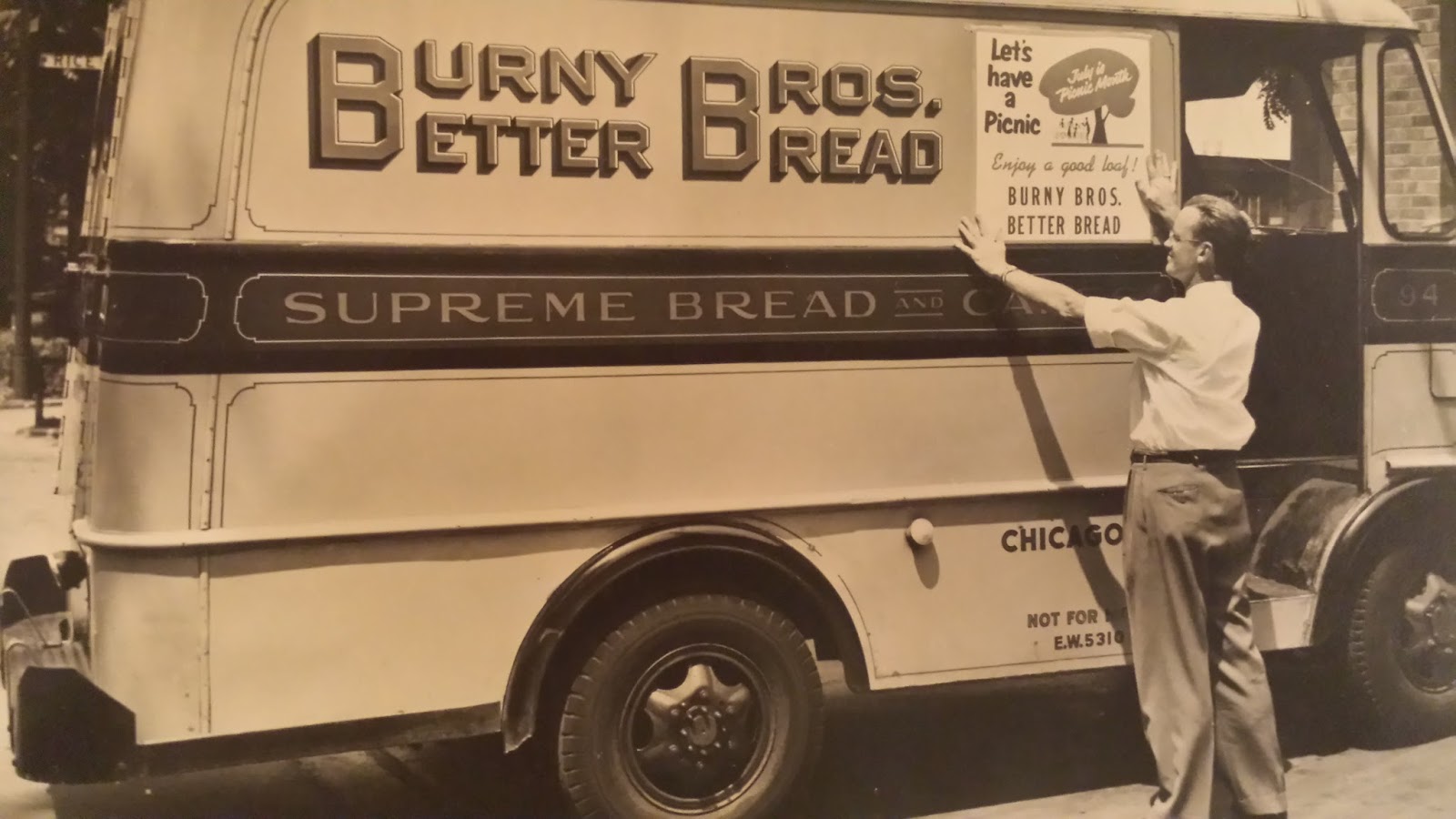
Vienna-Model became Deppe-Vienna; Deppe-Vienna became part of “Burney Brothers Better Bread.”

burney brothers better breadBURNEY TRUCK 

My dad retired.

The End.

-30-

But…those memories. These little stories and anecdotes that occurred within those times. Anecdotes containing wisps of smiles or frowns, accidents and missteps that led to my growing or growing years:

Images of smiling chefs readying piles of shrimp for 5-star restaurant diners. My starting the engine of the truck trying to “help,” not knowing the purpose of a clutch… Driving skills learned from my dad: Quickly preparing a dozen mixed donuts for policemen at 5 a.m. (Was that a red light?) Hearing once–and only once in my entire life–my dad shout “F**K!” (not “fork”). Seeing my dad work hard, really hard, in awful Chicago weather. My learning maps and directions, my way around Chicago; my planning truck delivery routes, and eating delicious meals free from favorited favored customers (my first T-bone steak!).

OK: it wasn’t always sweets and good times, especially being a back-seat sleeper, early riser. Nevertheless, what fun (mostly) I had.

And the memories: Ah, the memoriesofatime.

Each of us has had some kind of special relationship with maple-frosting long johns, or custard-filled bismarcks, or finger-lickin’ sugared donuts–a relationship that began in childhood. I, on the other hand, had a special relationship with my dad while in his bread truck, driving around the streets of Chicago, probably eating a favorite French donut. What good luck!

I hear him often in my mind’s ears: “Get ‘em up! Let’s go!” “Sweets” to my ear.

* * *
sweet rollsYUMMY BAKERY GOODS: SOME BAKERY!

NOTE: About the title: Grammarly, it’s ok in Chicago. We knew that “going to get some bakery” meant dozens of donuts or apple slices or various “sweet rolls” (almond, cheese, cherry, lemon, pecan, etc.) We weren’t on a mission to “buy some bakery company”

So, “Wanna’ come with? To get some bakery?”

© James F. O’Neil 2015

BY: JAMES F. O’NEIL

Each of us can relate somehow, some way, to a cold winter morning. Well, perhaps most of us. Yet a few of us have such a gift they can relate to others their own experiences with cold and winter mornings (poets and storytellers especially).

I have read of soldiers in Alaska, in Moscow, in the Ardennes, in Afghanistan: cold winter mornings that I have no concept of or experiences with. War is not kind. . . .

My cold life in Chicago had me in -18 degrees one winter night. My cold life in Minnesota had me at -16 degrees one Christmas: “way below zero.” The nose hairs froze. Not fun for sledding or the toboggan. Dressed for school? Watch A Christmas Story: see Ralphie’s brother waddle off to school. (And don’t forget that tongue frozen to the flag pole.)

A CHRISTMAS STORY  huffington post

Cold Walk in A Christmas Story (Huffington Post)

House cats do not have to go out for a walk on cold winter mornings. Most dogs are accustomed to morning walks, cold winter morning or not. I had to walk the dog: “Hurry up! I am freezing out here (in a Chicago alley in the early grey cold winter morning)!”

On some cold winter mornings, Jim Miller, my friend and high school classmate, and I arrived early a few times a week during our senior year at our seminary. We were chosen to sing the liturgical responses for morning Mass, at seven. Cold, stone-walled chapel, cold vocal cords, and a chapel organ that was temperamental when the bellows were cold.

 QPS

Saint James’s Chapel

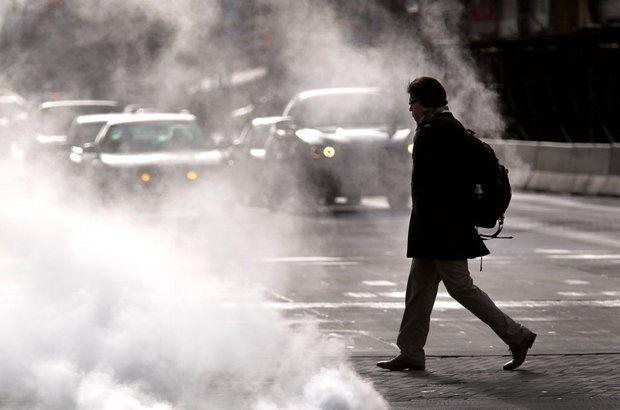
On cold winter mornings, along city streets, steam could be seen coming from that small hole in manhole covers–or steamy exhaust from city buses, and from cars.

cold cleveland steam.

Winter’s Steam (www. cleveland.com)

So, those of us who live in the Northern Hemisphere will soon have those cold winter mornings–or already have had a taste of winter. As sure as the sun rises and the sun sets, winter arrives. And cold-weather records will, no doubt, be set in the U.S. and in Europe–again).

One April, with spring approaching, April 4-6, 1968, some teaching colleagues and I were attending a conference in Minneapolis, Minnesota. A guest speaker was a poet named Robert Hayden. He received a gracious introduction and a warm audience-reception. I was there; I knew little of him, about his work.

He read a poem. He began another–but could not continue. He said, “. . . ,” then began to cry. He left the stage.

April 4 Martin Luther King, Jr. is shot dead at the Lorraine Motel in Memphis, Tennessee. Riots erupt in major American cities, lasting for several days afterwards. Minneapolis was not spared.

We were dismissed. Our conference was over, cut short.

(In 1940, Hayden published poems that drew little attention. Yet by 1976 he was well respected enough to be Consultant in Poetry to the Library of Congress, the U.S. Poet Laureate. He died in 1980, age 66.)

Although I had little acquaintance with the works of that poet, I would forever always have that memory of him in Minneapolis. So that was that.

Until about ten years ago. In an introduction to literature program. There was a poem of his, about cold Sunday mornings, a poem about a son remembering his father.

My memories of a time–or times–came across to me in such a personal way, as I am certain other readers could recollect similar remembrances. Those memories of a love and actions are not always known nor understood by us when we are young-er. That is all.

“What did I know, what did I know…?” So I took out the dog. So I walked my brother to school. So I got groceries for the invalid woman down the street. So I shoveled the neighbor’s walk. So my dad made oatmeal for us on cold mornings. So my dad walked miles in the deep snow to get a bus or a train to get to work. And me?

“What did I know, what did I know // of love’s austere and lonely offices?” Robert Hayden: “Those Winter Sundays” [1962]

“Those Winter Sundays” is a not-too-simplistic poem of age-brought discovery of what others do for us. But we don’t appreciate. However, this little “masterpiece” is about doing-in and remembering-about the cold. Those cold winter mornings.

©  James F. O’Neil 2014

* * *

Collected Poems: Robert Hayden. Ed. F. Glaysher. New York: Liveright, 1985; rpt. 1996.

Words in the Mourning Time: Poems by Robert Hayden. London: October House, 1970.

Robert Hayden American Poets Stamp