Archive

PEOPLE

By: James F. O’Neil

Do you have a favorite song–or a song you call your “own”?

Couples usually have an answer to this question.  Unfortunately, some couples born into the psychedelic and Dr. Timothy Leary eras have “The Wall” or “Baby, Light My Fire” or “Judy Blue Eyes”–or maybe even a alcohol-induced wail by Janis Joplin, or something stronger by The Doors.

Usually a favorite song evokes feelings of sentiment, or a memory of a place special to a couple for some milestone, or it might even be the timeliness of the song that makes it so special–so nostalgic…

One song that was popular in the spring of 1963 was one sung by Andy Williams: “Can’t Get Used to Losing You”:

Can’t get used to losin’ you no matter what I try to do.
Gonna live my whole life through…loving you.

…no one else could take your place.

The nice rhythm of the music, and the lyrics, makes for easy listening.  However, for a young person with a broken heart, the words evoke feelings of hurt and sadness, maybe disgust, even anger.  Most of the time, however, reason prevails, and time heals all wounds.                         

After my first serious relationship ended, my broken heart healed.  Yet every so often I found myself drifting along on Michigan Avenue, in Chicago, hearing “Can’t get used to losing you…” seeming to come from everywhere.
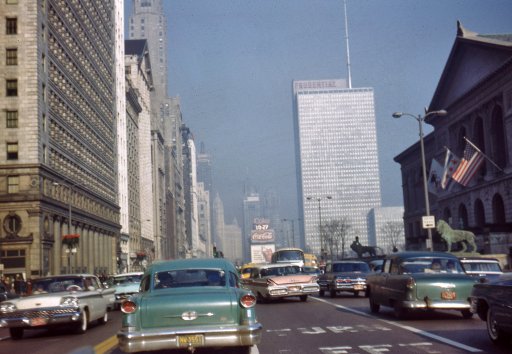
Michigan Avenue 1962

Photo Credit: Shorpy.com

Time passed.  My life took a turn.  I was with a new friend.  My heart was truly mended, healed!

Some would have said the song for the new relationship was “Rubber Ball”: bounce, bounce, bounce.  Some would have thought we were two star-crossed lovers on the rebound. 

The Universe employs the Principle of Correlation: the longer a couple talks together, stays together, they understand one another. 

And what song for this correlation?  Barbra Streisand was singing about “People: people who need people….” 

But was another song playing?  Was that now Andy Williams singing “. . . off to see the world”?

[Music plays]: Yes, Andy Williams–again.  Something about a river?  The 1961 song was from the movie Breakfast at Tiffany’s“Two drifters, off to see the world.”

But for the new couple, a favorite song? 

Was there a favorite musical composition that could pull together the special times, the good times?

Is there a song that goes something like “Hand-in-hand, we walked along Oak Street Beach, with the Moon…”?  Highly doubtful. 

Perhaps something more like “Moon River”:

Moon River, wider than a mile,…

Yet, what of “Two drifters, off to see the world”?

And what of “My huckleberry friend, Moon River, and me”?

There was no river.  Yet, we were off to see the world, my new friend and I–and there was such a lot of world to see.  There we were: 20 and 22, with a recently found three-room apartment, my new job, and a ’62 Corvair.  In addition, we were friends, huckleberry friends (whatever that meant, though I happened to be reading Huckleberry Finn).

And that’s our song.  But, more importantly, I’m so glad it was not “Singing ‘Do wah diddy diddy dum diddy do’”!  [Manfred Mann – 1964]

©  James F. O’Neil  2013

A precious memory: On the occasion of the passing of Andy Williams, 25 September 2012. 
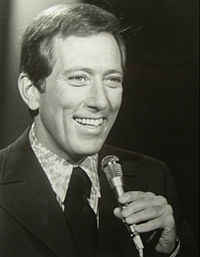
Andy_williams_1969 Wikipedia

Photo Credit: Wikipedia

By: James F. O’Neil

“Nostalgia is the product of personal memory; it is an expression of fond regret for time lost” (Jeffrey Simpson, Chautauqua: An American Utopia, Abrams, 1999: 10).  “Missing” something–or someone–can cause a kind of pain.  And “nostalgia” is a pain, bittersweet: bitter for reminiscence of the reality, yet sweet, for it was good or fun.

Sights, tastes, and smells evoke the past, sometimes just a quick sentimental journey for a brief moment.  I remember my psychology prof telling us that the SMELL of Crayolas brought about most memories of happy times and places. 

Do I have some regrets now, missing some things of the past that provided pleasure?   

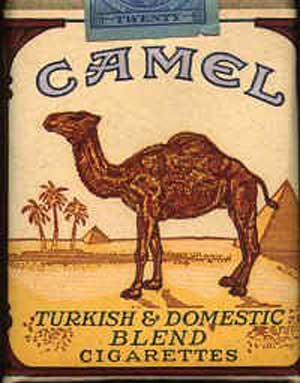
At times, after a good meal, or in a moment of relaxation, I MISS MY CAMELS.

Camel-Cigarettes

(Picture Credit: biggone.com)

That missing, but not needing, is my “perfect” example of nost + algia: the “return home” and the “algia,” the pain (like fibromyalgia or neuralgia).   I MISS MY CAMELS. 

“Severe bronchitis”: in 1972, my doctor told me.  There I was, a pack-a-day smoker.  Since 1959-1960, I had begun to smoke. Lucky Strikes, then Camels, and other brands I cannot remember.  (I do recall those days of pilfering: removing a Chesterfield from a pack lying around on a table at home.)  My bout with bronchitis, however, brought me to awareness: not of lung cancer or other smoking-related illnesses, but to just good breathing.  The doctor told me to stop smoking.  I do not know how I did it.  But I did, cold turkey, as they say, yet with the help of my wife’s chicken soup.

Nevertheless, my Camel senses linger: feel, taste, and sight: nostalgia.

No matter where I am, drug store, grocery store, airport–any place where I see Camels sold (no longer 25 cents a pack)–I can taste the tobacco flavor, smell the smoke, see the wisps of smoke I exhale (or try to make into little smoke rings).  However, probably the most particular memory-impression is my sense of feel, the smooth paper–and that white cigarette between my fingers.

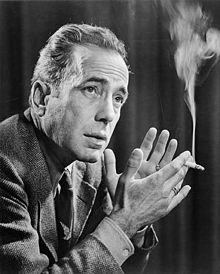
Nostalgia, when I hear “Don’t Bogart that…  [cigarette].”  Or hear lyrics “…Bogart and Bacall…” or see them: Oh, how he and she blew smoke at one another, and held those smokes.  

220px-Humphrey_Bogart_by_Karsh_(Library_and_Archives_Canada)

(Photo: Karsh: Library and Archives, Canada)

I am certain I was and still am addicted to cigarettes.  When I was teaching in a classroom with a chalkboard, I was careful not to hold my chalk like holding a cigarette.  If I did, if the chalk happened to roll out of my hand between my fingers, if I began playing with the chalk, I wanted to let the chalk rest there, then slowly I could put that piece of chalk (no matter white or yellow) between my lips, inhale, and blow.  Nothing.

Oh, the “algia”: the good feeling, the feel-good memory, but with the pain of loss.

I recognize this is an anecdote of such triviality.  Certainly, it is not equal to the nostalgic feelings and memories of the feel, smell, or sights of a former lover or beloved, to the feelings at the loss of a pet, or the loss of a child.  Certainly overwhelming nostalgia.

But then again, remembering the prom, the graduation, the wedding: pain, and happiness, as in the great movie Always.  There a song brings memory, and then the pain accompanies the awareness of loss.  Yet wonderful and fulfilling memories.  (I love that movie.)

Always poster

(Photo Poster Credit: impawards.com)

That movie contains the essence of nostalgia for me.

So, here I am, the non-smoker.  I miss my Camels, but I understand I cannot go back, cannot “go home again.” 

Besides, “The Surgeon General Has Determined That Cigarette Smoking Is Dangerous To Your Health.”  That works for me.

© James F. O’Neil 2013


By:  James F. O’Neil

When we sorted out our wedding gifts in October 1963, my wife and I had received some nice dishes, stainless tableware, pots and pans, and enough cash to allow us to enjoy a comfortable wedding night and honeymoon. 

And so we began our marriage.  And the cooking of meals.  Our pots and pans provided their usefulness, as needed.  Sometime after 1972, however, we acquired “the incomparable, the original” Rival Crock-Pot, a new item of interest for the cooks of the ‘70s. 

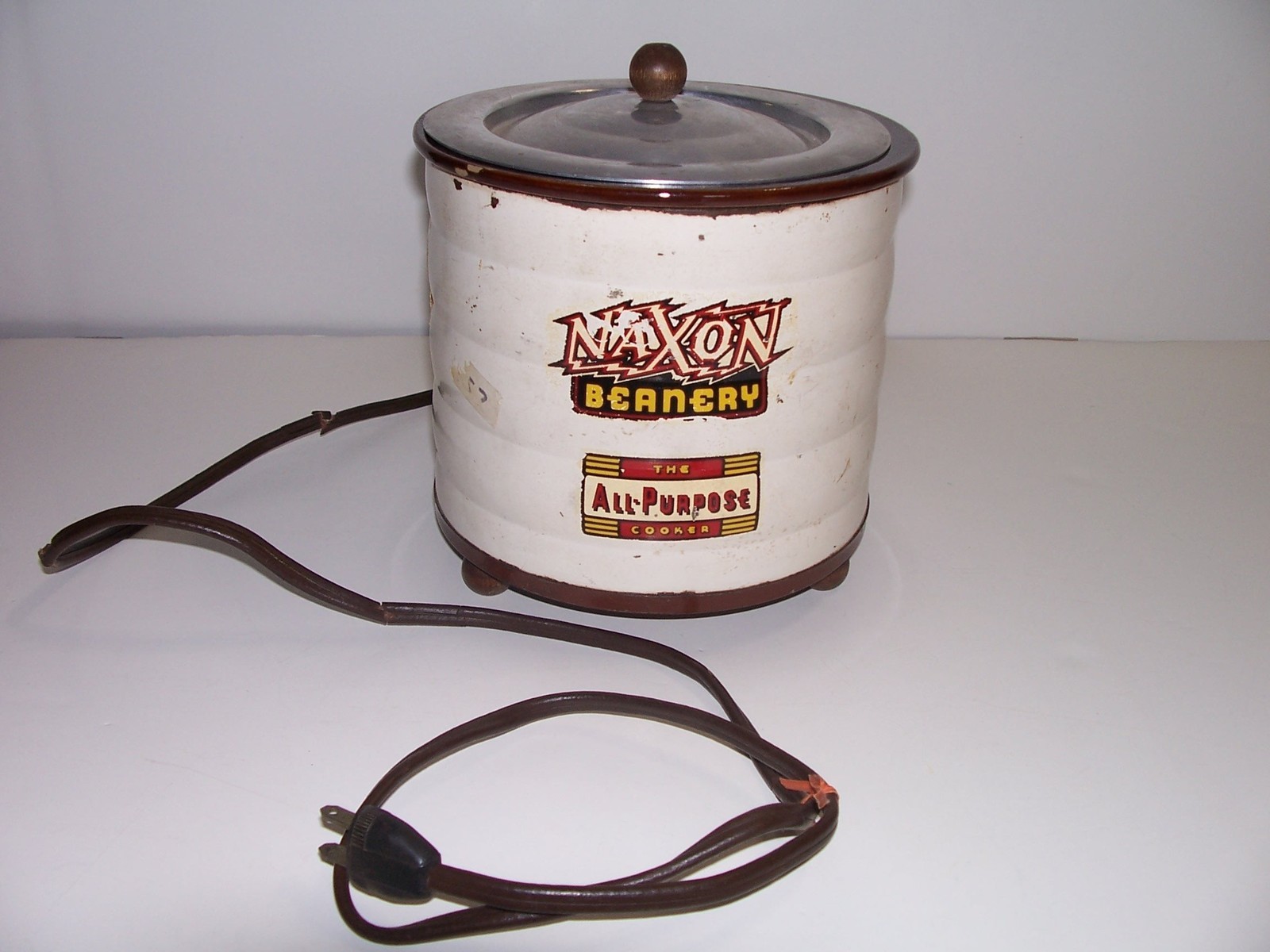
The original slow-cooker pot was actually known as a “beanery” and was made for cooking up a pot of beans.  The item was marketed as “The Naxon Beanery All-Purpose Cooker.”  (See Whoguides.com for more information and Wikipedia for a history of the cooker.)

naxon beanery all-purpose cooker  (Photo courtesy of an eBay seller)

As often happens with many good inventions, larger companies see a greater audience and “want in on the deal.”  Eventually, Naxon was bought out by the Rival Company in 1971.

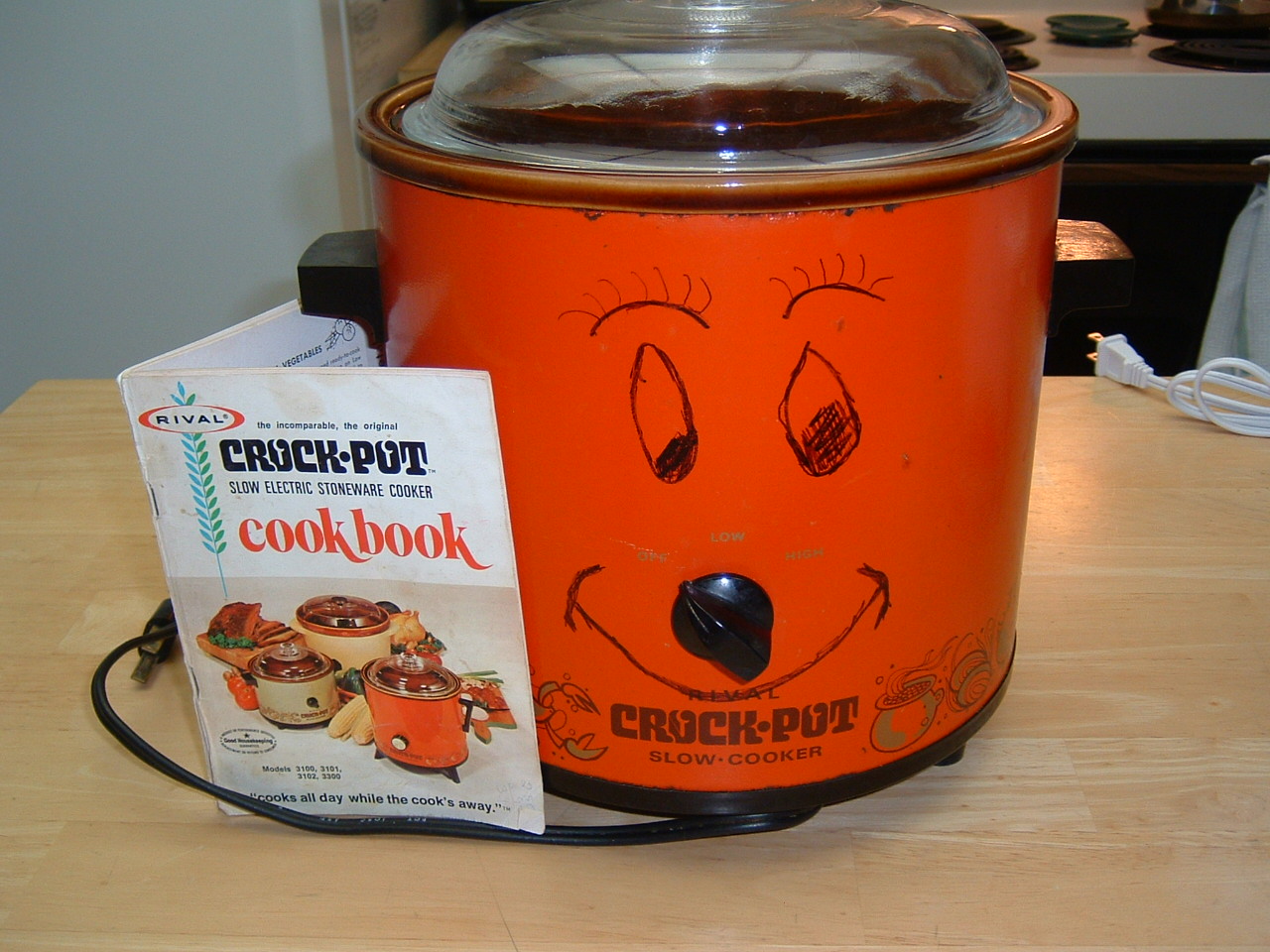
And so it goes.  Yet for the better for us, a target audience who needed to have meals prepared by a cooker that “cooks all day while the cook’s away.”  The burnt-orange-colored Rival Crock-Pot, Model No. 3100, Capacity 3 ½ qt, was the answer.

 (Photo: freshveggiesinthedesert.wordpress)

(Photo: freshveggiesinthedesert.wordpress)


Over time, the crock-pot became a “modern marvel” for our busy family.  It first allowed both of us working parents to make the Favorite Chili and the special Beef Stew for our kids in school.  Then other recipes, like Stuffed Peppers, became the new favorites–in fact, still one of the best food items to be done in the crock-pot.

The boys going to games and practices, after-play-rehearsals, high school graduation parties (in 1982 and 1985), wedding anniversaries, and just plain-old family gatherings  activated the recipes for the best B-B-Q ’s and Sloppy Joe’s, well done in our Vintage Rival Crock-Pot.

But change came–and for whatever reason, we purchased a bigger, newer model.  The old favorite was put into storage, and nearly forgotten.

In summer 2005, the Vintage happy crock-pot made its way to Cottage #66 in Epworth Park, Bethesda, Ohio.  The well-worn recipe book is still being splattered with sauce, and continues to provide guidance for delicious meals in the cottage kitchen–now for busy vacationers.  The cooker still “cooks all day while the cook’s away.”

(The O'Neil Crock-Pot)

(The O’Neil Crock-Pot)

 © James F. O’Neil 2013

By: James F. O’Neil

“What I Did Last Summer”

BETHESDA, OH:  Chautauqua Days** are over for this year.  The hot dogs are eaten; vendors have packed up their woodcarvings, and the quilts that went unsold.  Homemade candles sold out; the trophies for the fishing contest now sit on a shelf in some lucky child’s bedroom or in the living room.

 Photo credit: E.K. SchneiderPhoto credit: E.K. Schneider

The Cottage Tour in Epworth Park in Bethesda brought visitors from the area and from a distance, excited to view owners’ renovations and decor, especially those cottages being put into their original turn-of-the-century style.  The park, since 1878, has been the site for vacationers and summer visitors–in addition to the festivities associated with the Chautauqua Movement.

And for nine summers I have been a partaker of cool Ohio weather, over-bearing heat, summer thunder storms, lake stillness, fireflies (who seem to appear on time on clear evenings at 8:20), hummingbirds, poison ivy, ducks and Canada geese, non-air conditioned sleeping, candlelight suppers, mosquitos, on-the-porch Happy Hours, Saturday weddings in the open-air steel-roofed Auditorium (read “Chapel” that seats over three hundred), community pot-luck suppers (the community of 100 original cottages now numbers 66) for those owners and guests who remain after mid-July–and, the Bluegrass concerts, with much pickin’ and grinning’ taking place on stage.

What summers I have experienced here–as an adult.

If one were to ask me, “Think of your favorite place,” I return to Epworth Park and onto my cottage swing.

porch swing My Favorite Place provides me calm and recollected-ness.  And the swing allows me the opportunity to remember good summer times, those real mid-summers of July (long after the “cruelest month” of April).  I become the child in me.  The swing does that.  The Park does that.  Chautauqua Days do that: bring so many memories that remain over time.  (But, of course, there were those bad summer days, too: sunburns, injuries, working days while in high school, automobile problems, unrequited loves).

Rainbow Beach in Chicago: endless sand, hot dogs, and forever swimming.  Pullman Park Pool: everlasting swimming (indoors).

Sister Lakes, Michigan: family, and friendships–and swimming (where I did first learn to             swim, being able to make it to the oil-barrel raft away from our cottage shore).

Boy Scout Camp: swimming and crafts and…outdoor “plumbing” (ugh!).

Summers with my sister’s boyfriends–and their hot cars (especially that ’57 Merc            convertible).

O’Neil Picnics, 3rd Sunday in July (of course), rain or shine, with hot dogs and KFC and kids and aunts and uncles, train rides, and swimming (and crossing the train trestle over the Fox River in Pottawatomie Park: “Double-dare ya’!”  Stand by Me in reality?).

Garfield Boulevard and Halstead with its parkway, cool evenings, motorcycle Park Police, everlasting softball games).

Then, suddenly, it seems, I was no longer a child–“and now I have put away the childish things” (Paul. 1 Cor. 13.11).

No, Saint Paul, I cannot do it: The child in me is alive, comes alive, while I sit on my swing, while I walk through the Park.  And though I no longer put fireflies into Mason jars with bits of grass and leaves (how childish?), I watch the glow-bugs alive, throughout the trees, with a few “high-fliers” sometimes three stories above my cottage porch.

Chautauqua Summer will soon end.  The Park will soon become quiet as closing time approaches November 1st.  I will leave soon.  However, I will have another Chautauqua Summer captured, placed within my memory jar filled with Everlasting Summers.

 Photos Public Domain.com

Photos Public Domain.com

**Chautauqua [shu-TAW-kwuh]: a movement which flourished in the United States in the late 19th and early 20th centuries, including assemblies (sometimes religious), educational lectures, concerts, entertainments, and, unfortunately, no hot dogs!  [See The Chautauqua Institution of Western New York; Chautauqua Lake, in New York.]

BTW:  Rick Atkinson writes in his An Army at Dawn that “[Gen. Mark] Clark, as a young captain between the world wars had been detailed to a Chautauqua tour, spreading the gospel of Army life . . . .”

 Epworth Park Lake

Epworth Park Lake

© James F. O’Neil 2013