Archive

PLACES

BY: JAMES F. O’NEIL

Corned Beef? “In the United States and Canada, consumption of corned beef is often associated with Saint Patrick’s Day. Corned beef is not considered an Irish national dish; the connection with Saint Patrick’s Day specifically originates as part of Irish-American culture, and is often part of their celebrations in North America.

“Corned beef was used as a substitute for bacon by Irish-American immigrants in the late 19th century. Corned beef and cabbage is the Irish-American variant of the Irish dish of bacon and cabbage. A similar dish is the New England boiled dinner, consisting of corned beef, cabbage, and root vegetables such as carrots, turnips, and potatoes, which is popular in New England and parts of Atlantic Canada.” [Wikipedia]

Cornedbeef WIKIPEDIAYummy Corned Beef and Cabbage Dinner

Since I could ever remember, we had corned beef and cabbage for St. Patrick’s Day. The Irish Catholic Feast Day of St. Patrick was almost a Holy Day of Obligation: Attend church under pain of mortal sin. Well, it wasn’t really such a day; but it was a day off from school, it meant a Chicago parade, and it meant the Italians in my neighborhood had to wait two more days to get even with us by brandishing St. Joseph’s Day–and by having local processions and festivities.

[Saint Joseph’s Day, March 19, the Feast of St. Joseph is in Western Christianity the principal feast day of Saint Joseph, husband of the Blessed Virgin Mary. But the Feast of St. Joseph the Worker on 1 May was created in order to coincide with the celebration of International Labor Day (May Day) in many countries.]

St Joseph IN GLASS  st aphonsus church wexford, PASaint Joseph in Glass

Saint Alphonsus Church

Wexford, PA

He was the stepfather to Jesus; St. Patrick only drove out snakes from Ireland….

However, more people in America ate turkey at Thanksgiving time than they ate ham. And more people in American ate corned beef at St. Patrick’s Day-time than they ate Italian sausage and peppers (though I cannot “prove” this allegation by me)!

Well, corned beef, cabbage, potatoes, and carrots had been the steady diet of my O’Neil family since I became part of the O’Neil/O’Neill Clan. So my wife and I have continued to carry on our clannish traditions with our own family on that Special Day of 17 March.

170px-Irish_cloverLuck of the Irish Shamrock

Note: In October 1884, a convention held by the Federation of Organized Trades and Labor Unions unanimously set May 1, 1886, as the date by which the eight-hour workday would become standard. As the chosen date approached, U.S. labor unions prepared for a general strike in support of the eight-hour day. On Saturday, May 1, thousands of workers went on strike and rallies were held throughout the United States, with the cry, “Eight-hour day with no cut in pay.” In Chicago, the movement’s center, an estimated 30,000-to-40,000 workers had gone on strike. What then occurred is the Chicago Haymarket Affair. “No single event has influenced the history of labor in Illinois, the United States, and even the world, more than the Haymarket Affair,” with its rally and riot and trial and executions. “What began as a rally on May 4, 1886, the consequences are still being felt today. Very few American history textbooks present the event accurately or point out its significance,” according to labor studies professor William J. Adelman. [Wikipedia]

So, the Haymarket Affair is generally considered significant as the origin of international May Day observances for workers, Catholics and Communists alike.

Thus ends the history lesson relating Saint Patrick, Saint Joseph, The Haymarket Riot, May Day celebrations, the eight-hour work day, and corned beef and cabbage. Now about those Reuben sandwiches….

sandwich-corned-beef by kaufmans deli skokie ILCorned Beef on Rye by Kaufman’s Deli

Skokie, IL

© James F. O’Neil 2015


BY: JAMES F. O’NEIL

Looking out from my vacation cottage porch (at 8:20 a.m.), I could see across the small lake–and could see the red lights flashing, the stopped yellow school bus, and three or four little children climbing the steps into the bus.

When I first saw what was happening, the pseudo-Latin poem popped into my head. It always seems to happen that way, as my mind drifts at the word “buses” (or the less prevalent “busses”):

O Sybilli, si ergo,
Fortibus es in ero.
O nobili, demis trux:
Sevatis enim? Causen dux!

O see Billy, See ‘er go!
Forty buses in a row.
O no, Billy, dem is trucks.
See what is in ‘em? Cows an’ Ducks!

It makes no sense in Latin. Just some silliness from high school that has been etched into my memory, and consciousness.

“O Sibili si ergo, fortibuses in ero. Nobili demis trux: sewatis enim? Cowsendux!”

School buses. In a row.

???????????????????????????????????????????????????????????????????????????????????????????????Row of Buses…

What is there about a yellow bus, flashing red lights, children entering/exiting a school bus? And, What is “school bus yellow”?

School BusSchool Bus (Front View)

“Yellow was adopted as a standard color for North American school buses beginning in 1939, the adoption of a standard shade of paint. The color, which became known as “school bus yellow,” was selected because black lettering on that specific hue was easiest to see in the semi-darkness of early morning and late afternoon. Today the color is known as “National School Bus Glossy Yellow.” [Wikipedia]

When I was growing up in Chicago, I never rode a school bus. In the City, my sister, one smaller brother, and I walked to grammar school–six or eight city blocks.

My transportation to high school (a private Catholic school) was the CTA: Chicago Transit Authority.

cta by sullivan

CTA by Sullivan

I rode a city bus from 55th and Halstead to 63rd, then transferred for a long ride on the “L” (The Chicago ‘L’: sometimes written as “L” or “el,” short for “elevated.”), behind apartments’ back stairs or fire escapes–landings leading to second- and third-floor porches filled with toys and old ice boxes, or “stuff.” Past the buildings, then down, through and under downtown Chicago as the “L” went “subway.” I exited at Chicago and State streets, and walked a few blocks to school. For four years, I followed these routes, carrying a book bag. Neither snow nor rain nor heat nor gloom of early winter night prevented me from completion of my high school diploma.

Chicago ElevatedCTA EL

However, no school bus experience.

During graduate schooling in Minnesota, my taking courses in school administration, I learned about transporting students, planning bus routes, buying and selling of buses, transportation obligations of school boards, and school bus safety.

My own kids first rode school buses where I became high school principal. Here I was better educated about snow days, closing school early because of storms coming, and athletes traveling on buses to their events.

But it was in the southwest outback of the state, when I served as school superintendent from 1976-1980, that I became most knowledgeable in school bus “stuff.”

(In 1980, there were six major school bus body manufacturers producing full-size school buses in North America: Blue Bird Body Company; Carpenter Body Works; Superior Coach Company; Thomas Built Buses, Inc.; Wayne Corporation; and Ward Body Works. Today only three exist: Thomas, IC [Integrated Coach], and Blue Bird. [Wikipedia])

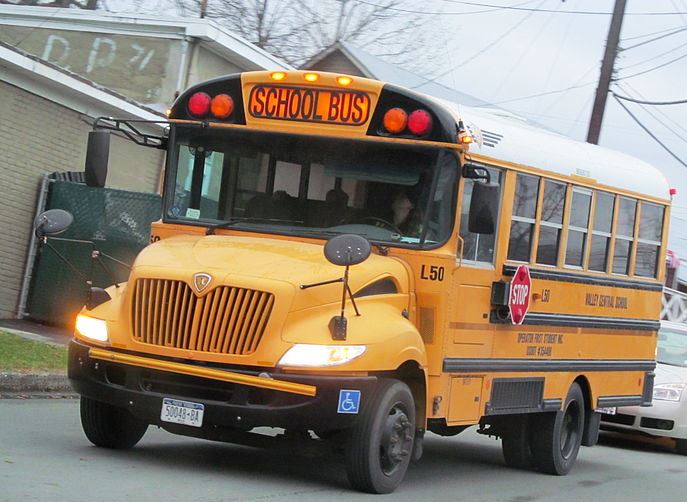
IC  L50 BusIC Integrated Coach Bus

Those four years have allowed memories to come to mind when I do see a school bus (or “busses”) on the road or street or highway. Most memories are good and pleasant.

Nervousness on my part came during bus inspection done by the Highway Patrol. The drivers and I awaited the results. I was ultimately accountable for the buses. I made sure the drivers took good care of their buses, knew their routes and their riders, and had me along sometimes as a rider so I could know as much as I could about the driving process.

Winter brought most activity with the drivers and me. I was responsible for school closings. I had to know the weather from one end of the district to another. I drove the school car in early morning “to check the roads.” I was in contact with neighboring school administrators and radio stations to help me make a decision.

And athletic events being cancelled and rescheduled? Could the buses travel safely? Sometimes there were tense times, awaiting the arrival of a bus of cheerleaders and athletes after a night game during the winter season. Even though the buses returned safely, but very late, the roads and heavy snow kept the students in town for an overnight at designated homes.

Yet I DO remember riding a bus route, with the snow plowed and moved so that it WAS over the height of the bus! High flags on every bus so they could be seen. Exciting!

[Colorado]  Snow Drift by dailycamera. com

[Colorado] Snow Drift by dailycamera. com

In spring, creeks rose and bridges sagged. I had to determine weights of gasoline, buses-over-bridges routes, and re-routing students to long driveways or distant farm homes.

Then the buying and bidding process, almost like expecting a baby: Who has the bid? Who will provide the chassis, and the body? Such a small district with six or seven buses, yet the bidding process was the same in all districts, whether buying one bus or three or more. (I made sure the buses were painted with high numbers so observers might consider our district larger than it was. Fun.)

I even drove a school bus! On US Highway 71, I steered the bus to another town, to have new tires installed. I was told that superintendents had emergency powers, allowing them to drive buses. (I never did check into that….) But what a time I had at the wheel of a Blue Bird Bus with a Chevrolet engine, or my favorite Thomas with an International Harvester powertrain. (IH was an early manufacturer of medium/heavy duty trucks. Although based upon truck chassis, IH also became the leading manufacturer of the chassis portion of body-on-chassis conventional [type C] school buses. Wikipedia)

Yet of all those memories of a time in Minnesota, a high point had to be the personal tour of the Blue Bird bus factory, then in Mount Pleasant, Iowa [1962-2002]. While on the way to a Florida vacation, we made a special arranged visit. We saw the assembly line, and how it worked. We watched the uniting of body with chassis. We walked inside an incomplete body, with bundles of wires and harnesses being installed. Ladies were working in the factory, sitting at large sewing machines, making covers for the bus seats.

I never knew before then how all the parts came together, to become a unified bus, to be delivered to a school district, the result of a bidding process that I had come to know and was part of.

So. One can see this story isn’t about an exciting Lamborghini,

Lamborghini by UK Telegraph

Lamborghini by UK Telegraph

or a Lear jet, or even about the building of a John Deere tractor.

John Deere Tractor by Restoration Project

John Deere Tractor by Restoration Project

It’s simply about a school bus. Or riding a school bus. Simple.

Yet I am certain that any reader who was a rider is now filled with School Bus Yellow Memories.

© James F. O’Neil 2014

BLUE BIRD BUS by purplewave. com

BLUE BIRD BUS by purplewave. com


BY: JAMES F. O’NEIL

“To every thing there is a season, and a time to every purpose under the heaven”–
Ecclesiastes 3:1-8

Turn, turn, turn. A time to laugh, jump, play; a time to build, tear down, and rebuild.

Our family used to live in Chicago, at 1623 West Van Buren, near Ashland, with the “L” behind our building. But:

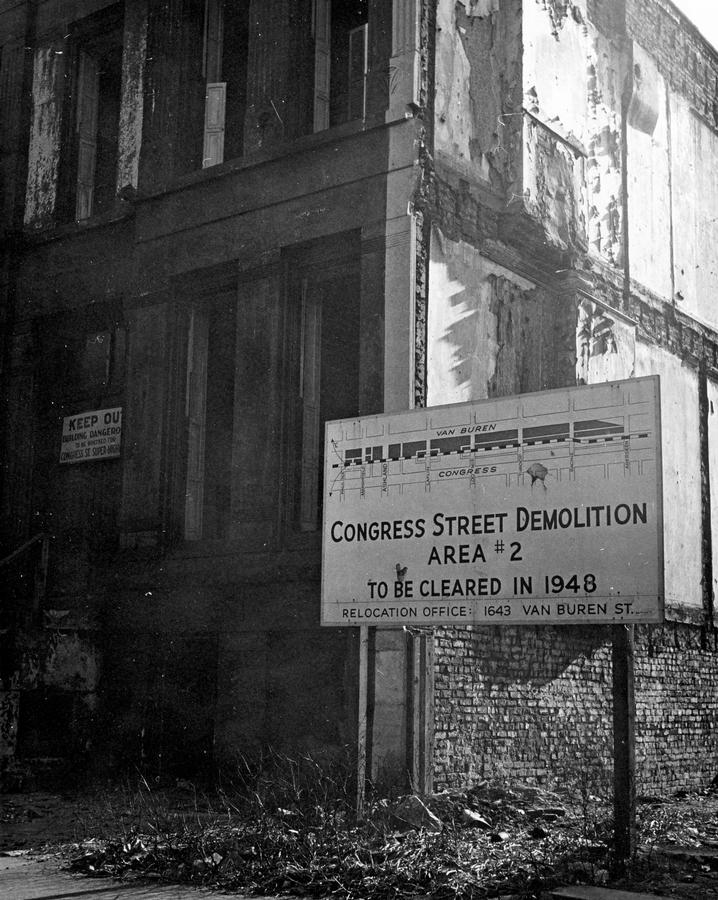
Demolition for Congress Street Expressway

Demolition for Congress   Expressway

The Congress Street [Eisenhower] Expressway made us move.

I went to 1st and 2nd grade at St. Jarlath’s on Jackson Boulevard.

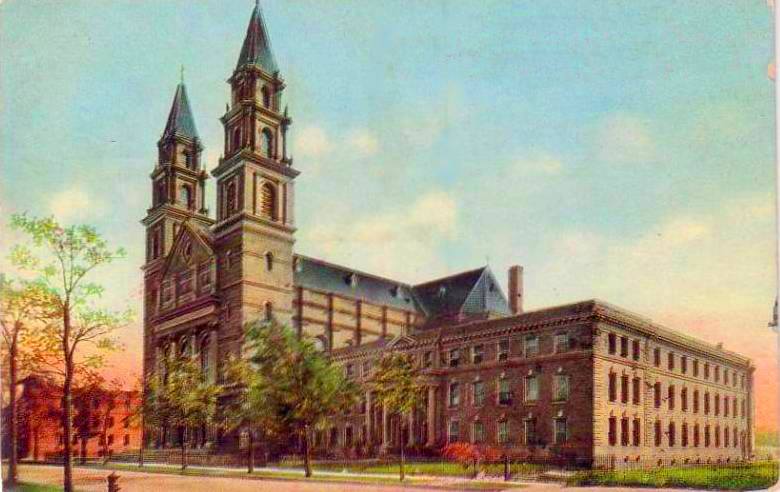
Saint Jarlath Catholic Church and School

Saint Jarlath Catholic Church                 

(St. Jarlath: Ethnic Origin: Irish. Date of Origin: 1869. Neighborhood Location: West Town, 1713 West Jackson. In September 1969, the church closed. [“Heavens to Purgatory: Imploding Churches Flatten Chicago”: “Over the decades, grand churches such as the Catholic St. Jarlath’s, St. Leo’s, and St. Charles Borromeo, along with Protestant houses of worship and synagogues are demolished, erased from the cityscape.” –Lynn Becker, arcchicago.blogspot.com/2013/01])

When the demolition of our neighborhood began, I cannot remember. I cannot recall wrecking balls, bulldozers, or men working. However, what I do recall vividly are the fires from the piles of wood that remained after demolition of the buildings.

What are brothers and sisters playing together supposed to do? Their playing field now looks like a World War II bombed-out neighborhood in Berlin or in Hamburg. What to do? The alleyways are gone. A few abandoned cars under the “L” tracks. But the rubble fires?

What is there about a campfire that attracts us and keeps us nearly frozen in time, mesmerized, as the flames rise, the embers glow, the wood crackles and pops, perhaps even shooting tiny missiles of fire, sparks. Sparks that might be dangerous to little hands or clothes or long blond hair of a fourth-grade girl.

Campfire Fun

             Campfire Fun

Picture me in second grade, my play-pal sister, Janice, two years ahead of me, stirring up the fires of demolition. What fun! Feed the fire with other sticks of wood. Make the fire come to life: “We have fire!” We are entranced.

Someone reported us to our mother.

The playtime ended. No more Fire Starters in the rubble on Van Buren. What to do now? Put pennies on the streetcar tracks? Did that. Play in the car, swinging on the steering wheel. Got too big for that. I am sure that we found something else to do–and were informed that our building was next to go. We moved to the South Side.

So long ago, so many great memories of childhood.

Here in my Ohio neighborhood, I am seeing trucks and equipment. Demolition is occurring. Not for an expressway but because a cottage is old and rotten and decrepit. So the buildings, perhaps some nearly seventy years old or more, are coming down. Part of a renewal-scape project.

Here is what it looks like:

Demolition of Cottages #7 & #8

Demolition of Cottages #7 & #8,  Epworth Park, Bethesda, Ohio

And so it goes, for life goes on. It is for the best. It is time: turn, turn, turn.

But that pile of wood…. I need to call my sister. Can she come and play?

© James F. O’Neil

BY: JAMES F. O’NEIL

“Great work is done by people who are not afraid to be great.”  —Fernando Flores

A Queen Anne’s chair had been part of our family furniture for many, many years.  It needed recovering.  My wife took it upon herself to learn re-upholstery, taught at Riverdale High School, a local high school in Fort Myers.  The Adult Ed class was scheduled for evening-night.  Not wanting her to go alone, I decided to go with her. 

What could I take?  Ah, Spanish.  “Si.”

So, one evening in January 1990, in the dark of a Florida winter, the two of us drove to register at the school–and take the first of six or seven class sessions, offered weekly.

In a large parking lot for student cars brought in the daytime, few cars were parked when we arrived. 

Hallways and closed doors greeted us as we followed signs To Registration.  Sue was accepted and paid her fees.  “Spanish class is full.  Sorry.  Are you interested in anything else?”  The list before me–Small Engine Repair, Painting I, Macramé, Investments and Retirement–presented nothing.  What interested me was the influx of Hispanic-speaking people into our city–and my wanting to be able to give directions or answer questions.

Years of high school Latin endowed me with a knowledge of Gaul and its three parts.  “Cui bono?”  What good is it?  No, no Latin offerings.  No Greek (had that, too, for four years).  German?  I’m embarrassed to tell how little I remember from three years of conversational German.  Memorization of dialogues. 

     Paul: “Guten Morgen.  Haben Sie gut geschlafen?”

     Hans: “Danke, sehr gut.  Ich schlafe immer gut.”

     Jim: Bitte, no more German.

So what was I to do while she is upholstering?  “Are you interested in stained glass?  We need one more student to make the class.”  “What’s that?”  I asked.

There were no notes to be taken.  Mr.  Stevens, the hoary-headed teacher, had set out boxes of pieces of broken glass.  Colors and clears and patterned.  He told us, “Draw something on the piece of blank white paper I gave you.”  Then, “Choose pieces of glass and copy your drawing onto the pieces of glass.  Keep it simple.”

Fear.  Not ever being very creative (my flowers always looking like lollipops), I drew this stupid little sailboat, and then using scissors to cut it into three pieces.  Something simple.  Fear: of cutting myself, of bleeding all over.  I was truly afraid. 

Then came the instruction on how to use the glasscutter, wrapping the pieces with sticky copper foil, then trying to avoid burning my fingers as I held a soldering iron to join the three little pieces together–with a little O-ring on top of the mast.

 My sailboat, from January 1990:  How my creative “juices” were flowing!

First Project 1990

A Stained Glass Beginning

This adventure led me to having more creativity than I had ever imagined for myself.  Yet fear always remained: of failure; of misjudging; of using my sense-less taste in color. 

Nevertheless, since then, I have produced some interesting works: during my kaleidoscope period (no more of those); jewelry boxes (mostly unhinged.  No more of those); of lamp making (cheaper to buy now–and well made, too); and some free-formed pieces.

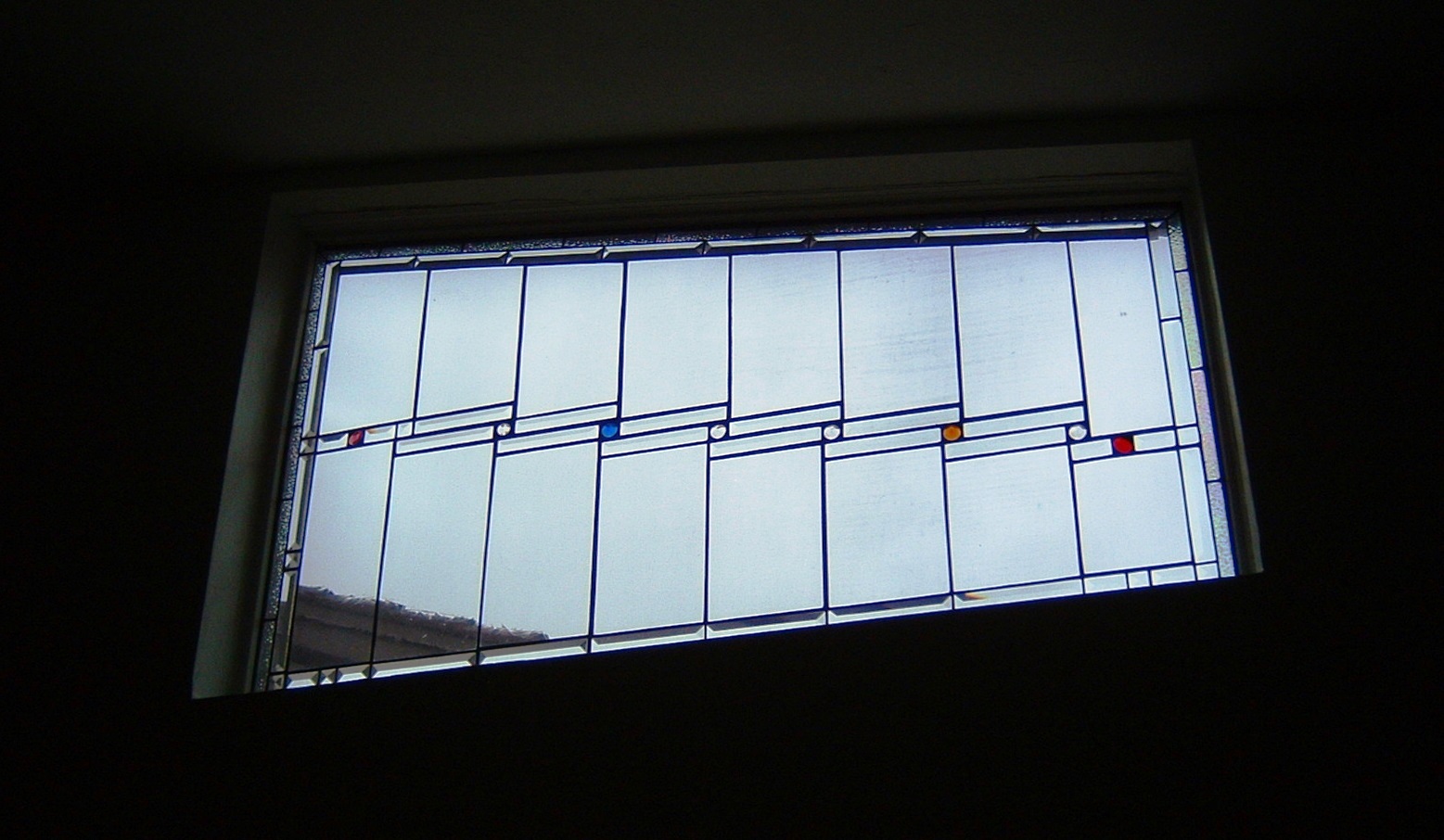
The failures (parrots too small, or wrong colors) have been superseded by the successes: clever uses of well-placed bevels in a large window to catch sunlight to bring prismatic R-O-Y-G-B-I-V colors into a living room.  I did some cabinet windows in a renovated 1920s home in Edison Park.  (That project was fear-driven: not to mess up when I was just learning the art). 

As time went on and my fears faded, I not only became a teacher of stained glass construction but also worked on projects of other artisans.  I even worked in glass shops and in galleries.  Success.

This story had to be told.

Never, in my wildest, would I ever believe I would be cutting glass (like my Grandpa Schuma tried–unsuccessfully–to teach me how to repair broken windows): for self-satisfaction, for esthetic pleasure, for that sense of “I-stuck-in-my-thumb-and-pulled-out-a-plum-and-said….”:

“I CANNOT BELIEVE I MADE THAT!”

Deo gratias!–a little appropriate holy Latin.

However, since that dark night at Riverdale High School, “I no habla Español!”

©  James O’Neil  January 2014

Dining Room Installation

Dining Room Installation 2003