Archive

PLACES

By: James F. O’Neil

When my boys were in high school, deciding on college life and careers, both chose to apply to military service academies.  The application process was rigorous and tiring.  One item on the initial application had to do with hobbies.  This small item on the long application fascinated me.  What importance was a hobby to a service academy appointment? 

West Point USMA

(West Point Photo: Wikipedia)

Admission to West Point is very competitive; candidates need to do their best in everything they do, including items counted in the “subscores,” or part of the whole score.

How far back in time is a candidate to “do best”?  Some hobbyists are “late collectors,” or come into a coin collection from a relative’s donation.  Others are Scouts from the very first, working on merit badges long before any thoughts of West Point or the Naval Academy [in Annapolis, Maryland].  Or what about having American Girl or Barbie collections, or miniature china tea sets, or even Cabbage Patch dolls piled neatly around a bedroom? 

And what about the young boy-child who collects paper bus and streetcar transfers?  Would he later be entitled to a “whole-man score”?

Recently, watching a city bus, I found myself wondering for a moment about all the bus transfers I collected from my days of boy-child.  I used to have piles of used transfers, punched and returned by a bus driver or motorman (on a trolley car or streetcar). 

Transfers back then were pieces of paper, the size of a narrow dollar bill, white, printed with a type of clock face at one end, and the route on the rest of the transfer.  It was to show with a few punches where a passenger got on and then how much time to get to another location. 
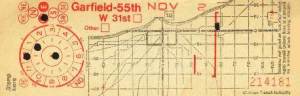
Garfield Blvd Transfer

(Photo: Chuckman’s Photos)

I lived but a few city blocks from a large streetcar, later bus, “barn,” as we used to call it.  This large interchange saw end-of-the-line tracks going in and coming out, streetcars lined up and put to sleep for the next day.  As buses replaced the trolley system, the buses found their spots to rest, interchange, or be repaired in “the barn.”
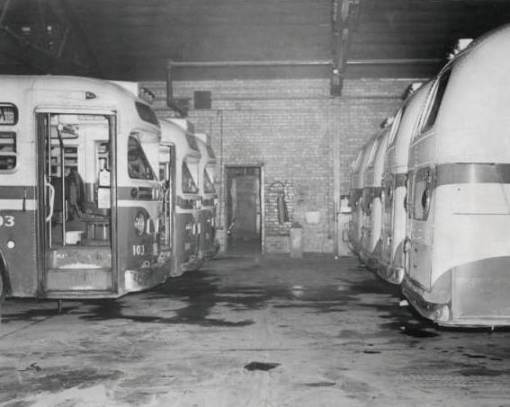

chicago-cta-bus-garage-5800-w-95th-street-interior-buses-parked-1953  chuckman's photos

(Photo: Chuckman’s)

 1973 Chicago Bus Barn

In late afternoons, I used to make my way through the parked trolleys or buses, sneaking along, looking inside for books of transfers, or single transfers.  Many an empty streetcar or silent open bus allowed me to rummage around, adding to my collections–and never being caught.

So this was a collection: paper transfers from all over the city, all organized into zones, dates, routes.  For what end?, I ask.  What I collected, how I collected, why I collected was for fun, and was enjoyable. 

Perhaps I gained some organizational skills, or some sense of what is “worth” something.  Perhaps this has all made me a “Whole Man.”

So, what’s my score?

 –“If something exists, somebody somewhere collects them.”

©  James F. O’Neil  2013

By: James F. O’Neil

“Find a place inside where there’s joy, and the joy will burn out the pain.”  –Joseph Campbell


Hospital bed

Photo: Hill-Rom

Recovering from knee surgery was an ordeal that included many nights of restlessness and pain.  During those times, often under the influence of medication, I would lie in my hospital bed, trying to ease the distress by visualizing my home, mentally walking through each room, recollecting objects, colors, and decor.  Soon I was focusing more specifically, trying to picture book titles, CD labels, and the covers of my DVD collection.  I was trying to remember, to ease the pain.

After the allowed hospital stay post-surgery, I had to spend a week in a private room in a rehab center.  There I was welcomed, my aides eager to heal me, though determined to spoil me in the process.  Constant attention was paid to the person in the private room, who just wanted to moan and get some rest.  For unknown reasons, again, my mind would drift, and my memory would work to make mental lists. 

In the evening, I would fall into a light sleep.  I would dream lightly, and then awaken after an hour or so, in my darkened room.  Forced to lie on my back because of the surgical staples, I could turn a bit on my side, enough to reach the bedside stand and the light–but also my gel pen.

On the back of the small slip of paper (my evening meal menu), I added item after item from my mental lists–items that I deemed important.  

During the day, I would study my list.  Between sessions of the staff trying to help me move, to do some exercises, and my pleasant occupation of trying to regain my strength by eating, I would edit and refine my lists. 

At home, after my release from my sick bed, I found some time to copy out those remembered “favorites”–those, “What-if-you-were-stranded-on-a-desert-island-with-only-one…?” whatever-item.

By many standards, my hospital list might seem amateurish.  Nevertheless, as I later began to study the items, I was surprised that such awareness and detail could come during periods of intense pain.  Even though I felt at times as though I were dying, I knew I was not.

I just wanted out of that hospital bed, out of that place–and wanted a Jack and Coke….

 * * *

Here is some of what I scribbled:

The Written Word:  Othello; A Tree Grows in Brooklyn; The Guns of August; The Power and the Glory; Childhood’s End; The Handmaid’s Tale.

My Visuals:  Vermeer; Tiffany; Bernini; Crayolas; Chicago Architecture.

Music:  Vivaldi; La Boheme; Gregorian Chant; Streisand Duets; Fleetwood Mac.

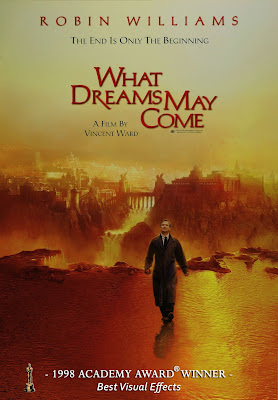
Movies:  English Patient; Casablanca; Jerry McGuire; Shakespeare in Love; Carousel; What Dreams May Come; Moonstruck.

My Beverages (Yes, I even thirsted after other types of pleasures):  Jack Daniel’s; Scotch whisky; Gewürztraminer; Diet Vanilla Coke; Arizona Sweet Tea; Cherry Dr. Pepper. 

What Dreams May Come

Photo Credit: aesteticum.com

 ©  James F. O’Neil  2013                                       

By: James F. O’Neil

The older we get, we seem aware that we are often powerless or our actions are futile: We control so little in our lives.  (A psychology teacher told me he believed that 98 percent of what happens to us we have had no control over.)

Do we not have control?  Is there such a thing as “luck”?  How do we come upon “opportunities”?  Do we really get to “choose”?

A closed door could be a fitting metaphor or symbol for those looking for an occasion to open The Door to Opportunity when She knocks.

 A CLOSED DOOR [janeheller.com]

A CLOSED DOOR [janeheller.com]

As I look back upon my life experiences, one such closed door did not open for me.

In my last semester of college, I was working as an orderly in a hospital near Chicago.  I had been allowed to work with the hospital pathologist, assisting him with autopsies, on call any time of the day or night.  The doctor taught me the uses of the instruments.  He showed me life’s wonders and sometimes the powerlessness of medicine.  There I was, a twenty-one-year-old English major, fascinated, exploring the human body.  I was assisting a medical genius who taught me so much in those hours we spent together in the hospital morgue.

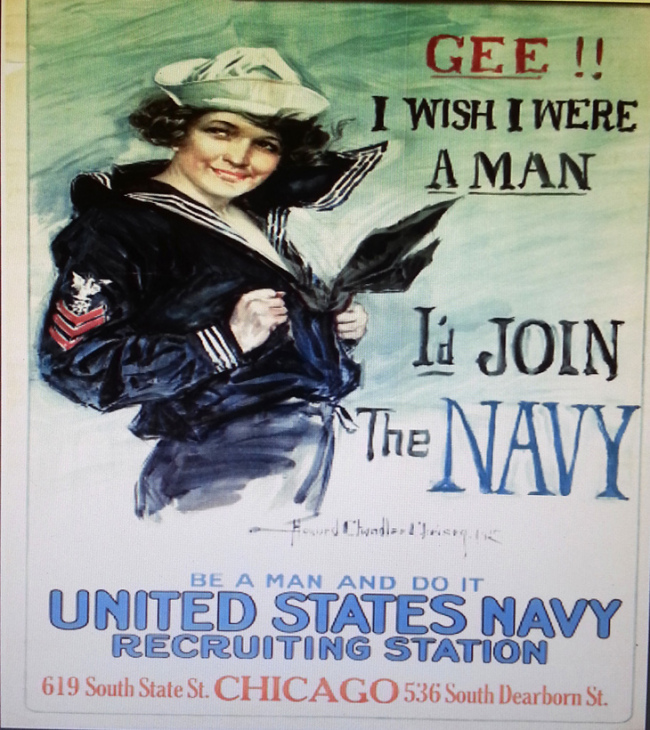
His genius made me so aware of how shallow I was.  At times, we had discussed my going to medical school.  I lamely made excuses to him.  I had thought about it, for sure.  It was part of reality as I went to work; it gnawed at me often.  “Do you want to try medicine?  You can, you know.  Join the Navy,” he prompted me.  That was a possibility I could seriously consider.

OLD NAVY RECRUITING POSTER

OLD NAVY RECRUITING POSTER

I went about my duties at the hospital.  I was interested, and even eager, about what he had said.

February: My resolve was carefully fashioned.  I would enlist.  I went to the post office and the recruiter’s office to obtain information and brochures.  That’s all I did.  I would enlist, I thought.  I read keenly, more intent.

At the end of a certain week, I would go back to the recruiter and enter the Corpsman Program. 

Credit: military.com stuff

Credit: military.com stuff

 My college training would help me; I could choose my field, probably be commissioned sooner.  The Friday could not come soon enough.  My determination was solid; nothing could sway me.

On that Friday morning I left for work, I knew the day was scheduled to be different from any other in my life. 

I would be finished at three-thirty in the afternoon.  By three-forty-five, I was walking down the steps and along the lower hallway of the post office.  I approached the Navy Recruiter’s door.  I turned the handle.  Locked.

I waited.  I knocked.  Nothing.  No sounds from within.  I was locked out.  My courage faltered. 

What now?  I asked myself.  It would be a long, trying weekend, not at all as I had planned.  I left the hallway dejected.  Monday would have to come!  I had to have another chance.  Who locked that door to my future? 

That door to the navy recruiter would never open to me–never.

On the following Monday, I would work as planned, though I did hope to contact the recruiter to make a sure-thing appointment.  At mid-morning, however, I was called to the phone.

The conversation was with a teacher at a local high school, trying to find a long-term English substitute for the remainder of the term.  “Are you interested?”  The man and the principal were desperate.  (A college classmate had told this teacher about me and my major.)

“I am planning to join the Navy.  Sorry.” 

“Would you wait a day or two to think it over?  Could you talk to the principal?  An interview?  Please?”

What was happening with this phone call?  What about my great plans for a medical career?

“Please.  You can always see the recruiter.”

I never saw the recruiter–never.

Two days later I was being interviewed. 

The temporary position did not materialize.  But I was guaranteed a full-time position in the fall, teaching ninth-grade English. 

“Will you say Yes?”

“Yes.”  I accepted.

I never saw the recruiter–never.  I never joined the Navy.  I never became a corpsman. 

I think so very often of that locked door, what it did and did not open for me. 

And medical school?   

Chance, fate, Providence–or “luck”–saw fit to it that the recruiter was not present for me, then changed my life in ways that I cannot count or recount.

What I do know, though, is that one instance, so trivial and insignificant as it may seem, was outside my control.  However, I could have said No to the caller.  I could have stopped it all right there.  I had no control over the circumstances that ultimately brought me to that point of saying “I accept.” 

“Choose wisely,” I recall from Indiana Jones and the Last Crusade (1989).  The Grail Knight tells us we MUST choose. 

 Faced with the options presented to me, I did choose.

I chose wisely….

* * * * *

 **An interesting book to look at on the subject of chance in our lives, see There Are No Accidents: Synchronicity and the Stories of Our Lives by Robert Hopcke (1998).

 no accidents goodreads.com

CREDIT: goodreads.com


© James F. O’Neil  2013


By: James F. O’Neil

Do you have a favorite song–or a song you call your “own”?

Couples usually have an answer to this question.  Unfortunately, some couples born into the psychedelic and Dr. Timothy Leary eras have “The Wall” or “Baby, Light My Fire” or “Judy Blue Eyes”–or maybe even a alcohol-induced wail by Janis Joplin, or something stronger by The Doors.

Usually a favorite song evokes feelings of sentiment, or a memory of a place special to a couple for some milestone, or it might even be the timeliness of the song that makes it so special–so nostalgic…

One song that was popular in the spring of 1963 was one sung by Andy Williams: “Can’t Get Used to Losing You”:

Can’t get used to losin’ you no matter what I try to do.
Gonna live my whole life through…loving you.

…no one else could take your place.

The nice rhythm of the music, and the lyrics, makes for easy listening.  However, for a young person with a broken heart, the words evoke feelings of hurt and sadness, maybe disgust, even anger.  Most of the time, however, reason prevails, and time heals all wounds.                         

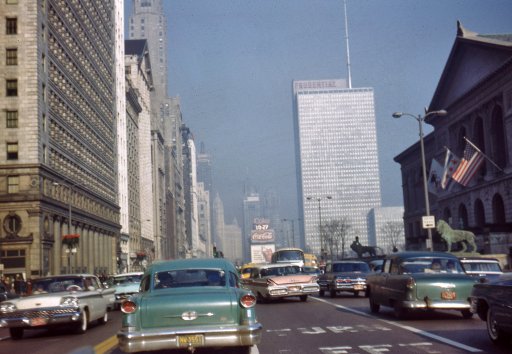
After my first serious relationship ended, my broken heart healed.  Yet every so often I found myself drifting along on Michigan Avenue, in Chicago, hearing “Can’t get used to losing you…” seeming to come from everywhere.

Michigan Avenue 1962

Photo Credit: Shorpy.com

Time passed.  My life took a turn.  I was with a new friend.  My heart was truly mended, healed!

Some would have said the song for the new relationship was “Rubber Ball”: bounce, bounce, bounce.  Some would have thought we were two star-crossed lovers on the rebound. 

The Universe employs the Principle of Correlation: the longer a couple talks together, stays together, they understand one another. 

And what song for this correlation?  Barbra Streisand was singing about “People: people who need people….” 

But was another song playing?  Was that now Andy Williams singing “. . . off to see the world”?

[Music plays]: Yes, Andy Williams–again.  Something about a river?  The 1961 song was from the movie Breakfast at Tiffany’s“Two drifters, off to see the world.”

But for the new couple, a favorite song? 

Was there a favorite musical composition that could pull together the special times, the good times?

Is there a song that goes something like “Hand-in-hand, we walked along Oak Street Beach, with the Moon…”?  Highly doubtful. 

Perhaps something more like “Moon River”:

Moon River, wider than a mile,…

Yet, what of “Two drifters, off to see the world”?

And what of “My huckleberry friend, Moon River, and me”?

There was no river.  Yet, we were off to see the world, my new friend and I–and there was such a lot of world to see.  There we were: 20 and 22, with a recently found three-room apartment, my new job, and a ’62 Corvair.  In addition, we were friends, huckleberry friends (whatever that meant, though I happened to be reading Huckleberry Finn).

And that’s our song.  But, more importantly, I’m so glad it was not “Singing ‘Do wah diddy diddy dum diddy do’”!  [Manfred Mann – 1964]

©  James F. O’Neil  2013

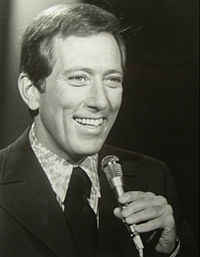
A precious memory: On the occasion of the passing of Andy Williams, 25 September 2012. 

Andy_williams_1969 Wikipedia

Photo Credit: Wikipedia