Archive

WRITING/BLOGGING

Required Texts:     Eats, Shoots & Leaves: The Zero Tolerance Approach to Punctuation by Lynne Truss (2003).  The Well-Tempered Sentence: A Punctuation Handbook for the Innocent, the Eager, and the Doomed by Karen Elizabeth Gordon (1983).  [original edition]  The Elements of Style by Strunk and White (1999) 

. . .

PERIOD/FULL STOP/END STOP.  Every one of them is guilty.

COLON: Florida has four seasons: tolerable, hot, really hot, and snowbird. 

SEMICOLON; She loves peach; I like coconut better.

QUESTION MARK?  So what’s the use?

EXCLAMATION POINT!  Don’t shout! 

COMMA, The patient had severe, but not global, knee pain.

. . .

Some special considerations:

Use a COMMA before and, or, nor, but, for, so, yet, and still when these words are used to connect independent clauses of a compound sentence:  THAT WAS THEN, AND THIS IS NOW.

Use a SEMICOLON to connect independent clauses of a compound sentence IF and, or, nor, but, for, so, yet, and still are missing: THAT WAS THEN; THIS IS NOW.

BUT: Use a SEMICOLON before and, or, nor, but, for, so, yet, and still in a compound sentence IF either clause is long OR (and this is important) either clause contains some other internal punctuation, like a comma or commas, colon, dash, or parentheses: THAT WAS THEN; YET THIS IS NOW, AS FAR AS I AM ABLE TO TELL.

Do not use quotation marks if words are directed by a person to herself or himself or are merely unexpressed thoughts BUT capitalize the first word: She thought, What will I have to pay?  He said to himself, Not this time!

Simple Rules for Vertical Lists:  Here are some simple rules for vertical lists:

  • Use a colon before a vertical list if the introductory element is grammatically complete, otherwise no colon.
  • Use periods after all items in a vertical list if the items are complete sentences, otherwise no punctuation, except a period after the last item in the list.
  • Use capital/uppercase letters to begin each item in the list.

My needs are simple:

  • To have food
  • To obtain adequate shelter
  • To wear appropriate clothing.

Each hiker has to have

  1. Comfortable clothing
  2. Adequate training and skill
  3. Knowledge of the area.

. . .

To remember: Many rules, many uses, all for clarity, emphasis, style.  Know the basics. A semicolon is more like a semi-period, a “partial” stop.  It ends, yet connects.  It also separates, like a super-special comma.  A colon is a stop.  It is like an equal (=) sign.  It is sometimes like a period on top of another period.  Both are special for writers, for communicators.  Use them well–and carefully, like the use of a dash. (That comes in another lesson.)

interrobangINTERROBANG!

Each of us brings our personal history to the table of writing, revision, editing, and criticism.”  –Roy Peter Clark, HELP! for Writers [Little, Brown, 2011]

. . .

Writing movie reviews and book reviews in a journal or as a blog is an excellent opportunity to write briefly, succinctly, pointedly.  Time, Newsweek, The New Yorker, and the New York Times can serve as good sources and models for their exposition and narration.

Writing reviews is, first, self-expression.  The author is able to use simple critical writing skills and the basics of criticism: to discover PURPOSE; to judge the WORTH; and to criticize the TECHNIQUE.      

Some movie critics remind writers first to enjoy and to realize the entertainment, then to express that enjoyment–or disappointment.

The review is a free form; for in a review virtually everything is relevant: subject matter, technique, social and intellectual background, biographical facts, relationships to other similar works, historical importance, and everything else.  Evaluation is only one of the aims; for there may be other elements of the work under discussion, special difficulties . . . to explain, and special features . . . to note.  –Edgar Roberts, Writing Themes about Literature (1964)

In addition, the reviewer can consider tone, ideas, characters, story, imagery, symbolism, style, music, and other aspects and techniques–and, of course, include a list of favorites, from time to time.

As time passes, the favorites list will change; new films and movies will be produced.  However, one thing for sure, “We’ll always have Paris.” –or we can always “Round up the usual suspects.”  A journal-er or blogger will never be at a loss to find a good movie to watch, and talk about, and think about:  a review.

Some All-Time Favorites: Casablanca  Love Actually  A Room with a View  Singin’ in the Rain  Girl with a Pearl Earring  Moonstruck  West Side Story  Forbidden Planet   Doctor Zhivago  Some Like It Hot  To Kill a Mockingbird  Fargo  One Flew Over the Cuckoo’s Nest  Metropolis

Question_mark_(black_on_white)


“…many things have been omitted which should have been recorded. . . .  It is not easy to write in a journal what interests us at any time, because to write it is not what interests us.” –Henry David Thoreau

Still?  Haven’t started yet?  For an introduction, or a refresher, see https://memoriesofatime.com/2015/05/18/journal-keeping/

composition book 1No expensive blank-page, hardcover or leatherette book: use notebook paper, a speckled notebook, or some similar writing book.  (Avoid notebooks wire-bound that flatten or break or can scratch or poke.)  
Keeping it regularly?  Faithfully?  A few times a week?

Stuffed with “stuff,” like receipts, greeting cards, pictures, favorite essays from magazines, emails from friends?  or also filled with dreams and bads and goods?

Are you conversant with your soul?  Do you confer with those who have crossed over to the Other Side?

Can you/do you capture life as you see it, the now, the past, the present?  (You are not stuck in the past, are you?)

Do you connect the few facts you know, the slim insights you have attained, the “chance extensions of sensibility into which you have been once or twice tempted into a larger enough context to make sense of the world…or the works of art you encounter”?–[Leslie Fiedler]

Chronological order: date, day, time.  A good record (for reference, a place in time).

Not boring details.  But details.  What is that saying about details?  “The idiom “the devil is in the detail” refers to a catch or mysterious element hidden in the details, and derives from the earlier phrase ‘God is in the detail,’ expressing the idea that whatever one does should be done thoroughly; i.e. details are important.”  — [Wikipedia–and other sources]

No day is bereft of material to write about…about which to write.  See, hear, touch, taste, and smell.  Then understand, react.  Then WRITE.

Note the particulars that make you your journal, your journal you.

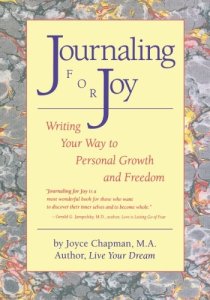
Need more than this?  Need a book for starters?  “If you want to change your life and know that you have the answers within, then learning to journal as a tool for rediscovering what you already knew, is the best way I know how. This book stands alone; and if you want to have a master teacher guide you into the depths of your soul, get this book and the companion workbook.”  [Marcia C. Bliss comment in 2013]:  Journaling for Joy: Writing Your Way to Personal Growth and Freedom by Joyce Chapman, 1991, 2013.

journaling for joy

Question_mark_(black_on_white)


Quote properly the quotation.  So, to be proper, quote is the verb; the words spoken or written constitute the quotation (a noun).  And yet, however, we do have misquotes and misquote–and a researcher just might find three or four really good quotes to bolster the argument.  Thus, the living English language will accept the verb becoming the noun, no matter how many howl “Quothe? Never!”; for it shall be “Nevermore!”

THE QUOTE CHALLENGE: A BLOGGER’S ACTIVITY

Bloggers write.  Bloggers come up with ideas to write about.  Bloggers write about loss, grief, illness, addiction, disappointment, failure.  Also about humor, happiness, geography, history, fishing, travel, truth, parents.  Real things.  Made up things.  Any thing.  Every thing.

Quotations are great sources of inspiration and great sources for topics for bloggers’ writing.  Quotations are like a box of chocolates: You never know what you’re going to get until you bite into a piece (unless you cheat with the inside cover of a Whitman Sampler).  [The old Latin psychology phrase–not quoted here–says that whatever is received is received according to the mode of the receiver.  Feeling crappy?  Most of what happens then throughout the day feels crappy.  And maybe it was that flat tire in the morning before work, or the kids, or the unfinished report.  So a quotation that is supposed to be uplifting then feels crappy.]

So there is this kind of challenge going around Bloggerville: “The Quote Challenge”: Here’s how it works.  A blogger posts 1-3 quotes [obviously something significant to the blogger-author] for three days.  Then the blogger nominates three other bloggers to do the same.  Simple?  The payoff?  Possibly nine names of bloggers for all others to see; maybe nine quotes/quotations of importance to someone “out there.”  AND–NO TEST ON MONDAY!  What’s more?  No pressure to participate.  No hurt feelings.  No non-smiley face posted on a blogger’s home page: BAD BLOGGER.

The work will be finding a quotation…

 oxford quotations

And that is all.  However, if a blogger non-participates, well then John Milton covered that: “They also serve who only stand and wait.”  Something will come along–to make something different a better thing to do.

So it goes.

KURT VONNEGUT Kurt Vonnegut

interrobang