On September 24, 2015, Pope Francis became the first pope to address a joint meeting of the United States Congress.  Dorothy Day was one of four Americans mentioned by the Pope in his speech to the joint session that included Abraham Lincoln, Martin Luther King, Jr., and Thomas Merton.  He said of Day: “Her social activism, her passion for justice and for the cause of the oppressed, were inspired by the Gospel, her faith, and the example of the saints.”

Dorothy Day (November 8, 1897–November 29, 1980) was an American journalist, social activist, and Catholic convert.  She initially lived a bohemian lifestyle before gaining fame as a social activist after her conversion, and later became a key figure in the Catholic Worker Movement, earning a national reputation as a political radical.  Some might perhaps deem her the most famous radical in American Catholic Church history.

In the 1930s, she worked closely with fellow activist Peter Maurin to establish the Catholic Worker Movement, a pacifist movement that combined direct aid for the poor and homeless with nonviolent direct action on their behalf.  She did practice civil disobedience, which led at times to arrests, in 1955, 1957, and even in 1973 at the age of seventy-five.

As part of the Catholic Worker Movement, Day co-founded the Catholic Worker newspaper in 1933, and served as its editor from 1933 until her death in 1980. 

Day supported herself as a journalist, writing a gardening column for the local paper, the Staten Island Advance and features articles and book reviews for several Catholic publications, like Commonweal.

She wrote in her autobiography: “I could write, I could protest, to arouse the conscience, but where was the Catholic leadership in the gathering of bands of men and women together, for the actual works of mercy that the comrades had always made part of their technique in reaching the workers?”

The Catholic Worker Movement

In 1932, Day met Peter Maurin, the man she always credited as the founder of the movement with which she is identified.  Despite his lack of formal education, Maurin was a man of deep intellect and decidedly strong views, with a vision of social justice and its connection with the poor, partly inspired by St. Francis of Assisi. He provided Day with the grounding in Catholic theology of the need for social action they both felt.

The first issue of The Catholic Worker appeared on May 1, 1933, priced at one cent, and published continuously since then.  It was aimed at those suffering the most in the depths of the Great Depression, “those who think there is no hope for the future,” and announced to them that “the Catholic Church has a social program…there are men of God who are working not only for their spiritual but for their material welfare.”

It was an unapologetic example of advocacy journalism.  It provided coverage of strikes, explored working conditions, especially of women and blacks, and explicated papal teaching on social issues.  Its viewpoint was partisan and stories were designed to move its readers to take action locally, for example, by patronizing laundries recommended by the Laundry Workers’ Union.  Its advocacy of federal child labor laws put it at odds with the American Church hierarchy from its first issue.  (Ironically, the paper’s principal competitor both in distribution and ideology was the Communist Daily Worker.)

In 1972, the Jesuit magazine America marked her 75th birthday by devoting an entire issue to Day and the Catholic Worker movement.  The editors wrote: “By now, if one had to choose a single individual to symbolize the best in the aspiration and action of the American Catholic community during the last forty years, that one person would certainly be Dorothy Day.”

Day suffered a heart attack and died on November 29, 1980, and is buried in the Cemetery of the Resurrection on Staten Island just a few blocks from the beachside cottage where she first became interested in Catholicism. Her many papers are housed at Marquette University along with many records of the Catholic Worker movement.

Much of her life in activism was fraught with controversy, Church versus anarchists, pacifism versus anarchism, respect for Castro and Ho Chi Minh, anti-Church and Franco.  Yet despite all her works and writings, she and her life cannot be easily dismissed or hidden away.  Her movement is a significant part of the cloth of American culture, of the spectrum of the American worker’s history, and is noted as part of her role in establishing non-violence as a Catholic principle: “the nonviolent witness of such figures as Dorothy Day and Martin Luther King has had profound impact upon the life of the Church in the United States” as written in a May 1983 pastoral letter issued by the U.S. Conference of Catholic Bishops, “The Challenge of Peace.”

In 1983, the Claretian Missionaries put forth publicly a proposal for her canonization.  At the request of Cardinal John J. O’Connor, head of the diocese in which she lived, in March 2000, Pope John Paul II granted the Archdiocese of New York permission to open her cause, allowing her to be called a “Servant of God” in the eyes of the Catholic Church.  As canon law requires, the Archdiocese of New York submitted this cause for the endorsement of the United States Conference of Catholic Bishops, which it received in November 2012.  However, some members of the Catholic Worker Movement objected to the canonization process as a contradiction of Day’s own values and concerns.  Nevertheless, Pope Benedict XVI, on February 13, 2013, in the closing days of his papacy, cited Day as an example of conversion.  He quoted from her writings and said: “The journey towards faith in such a secularized environment was particularly difficult, but Grace acts nonetheless.”

Dorothy_Day_1916

 Dorothy Day


interrobang


BY: JAMES F. O’NEIL

“There is no value in life except what you choose to place upon it and no happiness in any place except what you bring to it yourself.”  –Henry David Thoreau

“Once more unto the breach, dear friends, once more…”  Once more we have braved the 18-wheelers that ruthlessly plow through rain troughs, spraying everywhere.  Once more we pack and unpack: MOTEL; pack and unpack: MOTEL; pack and unpack: ARRIVAL.  “WE’RE BACK!”

Ohio Cottage #16

PIC OF COTTAGE 16

Yes, we have arrived.  It’s been two years.  A friend said the spiders probably have saddles; the webs are taut, but not too many.  Dust and some dirt.  But not too bad.

We’re back in town: Bethesda, Ohio: Same post office; pizza-parlor-restaurant remains.  However, some town expansion: new fuel pumps, re-conditioned gas station; new clock and clock tower, and newly established military memorial.  Some streets recently paved. 

More ducks and geese at the lake, noisily sounding out for food from cottage guests.  Some dead trees felled by recent storms lay scattered in the park area, awaiting disposal.

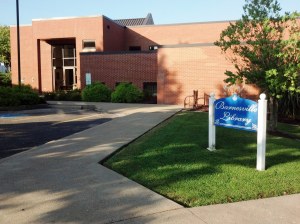
Inside, for me, after a week of sorting clothes, and catching up on minor repairs, I’m ready for…nothing.  TO VACATE.  IT’S VACATION!  Is it not?  I brought six magazines and three books.  Why?  And the books unread from previous years (including Doctor Zhivago and Madame Bovary)?  I’ve already made a trip to the library with book donations.  (I love that place. But with little self-control, I checked out four DVDs and picture-filled books: all about chocolate, and new watches of 2017.)

barnesville public library

Barnesville Public Library

So friends ask, “What do you do when you go to Ohio?  What do you do all day?  Do you ever get bored?”  Never bored.  And the days go so quickly…

Up: 8:00-9:00   Morning Reading and Meditation: 9:00-9:30

Breakfast: fruit, cereal, cappuccino, toast, oatmeal, vitamins, coffee, medications, etc.  9:30-10:30.

Contemplation of Day’s Activities while watching ducks, geese, humming birds: 10:30-11:45. 

Planning for Lunch: 11:45-noon (Get mail at post office in town.  Postal employees have lunch from twelve to one.  Mail goes out at 4-ish.)

Afternoon activities: Painting, dusting, cleaning, sitting watching lake and humming birds: noon-2:00 pm.

Lunch: 2:00 pm-3:00 pm: soup, sandwiches, salad, fruit, piece of Dove chocolate, etc.

Continuation of Activities: 3:00-5:00 pm (or laundry, litter box, play with cat, quiet reading, gardening–while in afternoon shade)

Nap Time: 5:00-6:00 pm. Quiet time.

Preparation for Dinner, and Dinner: 6:00-8:00 pm: Cooking, salads, varied recipes, or even an occasional pizza from the local pizza place.  Then cleanup.

Evening: 8:00-ish: Movie/DVD, reading, writing, catching up on “stuff” like mail and bills, quiet time, game time, perhaps time on the swing (depending on the mosquito population).

Ready for bed: 10:00-11:30 pm: Reading, showers, litter box, snack, continuation of DVD, night medications.  Check food and water for cat.

Good night.  “Always Kiss Me Goodnight” reads the sign in the bedroom.

OR

ALTERNATIVES: 11:00-6:00 pm: Wal-Mart, Lowe’s, Kroger’s, Ollies, Jo-Ann Fabrics…  Dinner out.  Shopping, shopping, shopping.  From cottage to car to St. Clairsville (12.7 miles) to Ohio Valley Mall, et al., to cottage, to unloading groceries.  Or getting a haircut.  Or visiting Goodwill because the temperature dropped to 58 degrees and we were not prepared.  Or Steak ‘n Shake…

OR

Painting or gardening as major full-day summer projects…

OR

An evening with friends: “The most I can do for my friend is simply be his friend.” –Henry David Thoreau

* * *

“So, what do you do in Ohio?”  “Oh, we just relax.”


©  James F. O’Neil  2017 


“Literary critic Harold Bloom wrote that Heart of Darkness had been analyzed more than any other work of literature that is studied in universities and colleges, which he attributed to Conrad’s “‘unique propensity for ambiguity.’”  [Wikipedia information]

“Let’s take in an old movie tonight.  Have you seen The Hunger?”  “Will I like it?”  “It is delicious.”

the-hunger-movie-poster-1983

Many claim to have a hunger for knowledge.  Knowing about the types of critics may satisfy that hunger. 

https://memoriesofatime.blog/2016/04/29/being-more-critical-some-kinds-of-critical-approaches-or-helps/

Should you like to dig you teeth into an oldie-but-goodie–but a special treat–locate a copy of The Dynamics of Literary Response by Norman N. Holland (1968).  You will not go away unsatisfied.

He writes that our first pleasures that quieted us were oral pleasures, satiating our hunger.  We were held by a mother, nurtured by a mother.  Here is the foundation for taking in “pleasure”–artistic or literary.  Yum!

From there, remember memoriesofatime being read to, and how pleasurable it was, being cuddled or curled up to someone or in someone’s lap?  More gratification and satisfaction.

And we curl up and watch a good movie with some ice cream.  Or our movie-going or movie-watching is a feast sometimes, actual appetite satisfaction with popcorn and soda (pop), Twizzlers, and perhaps even nachos.

We read or attend, for pleasure, maybe even receiving pain; but we manage feelings that are virtual.  Even though, as Holland says, we “devour books,” and are sometimes “voracious readers,” taking it all in.

The Psycho Critics help us find our way through the maze of our dreams and fantasies, help us clarify muddled images, awake or not.  And even help us understand art and literature through knowing our earliest awarenesses of gratification and satisfaction.

All that food and drink (and drugs) in movies do play a role in our “liking” or “not liking” a movie.

https://memoriesofatime.blog/2015/11/18/psycho-critics-how-literature-works/

 twizzlers

 https://memoriesofatime.blog/2013/09/13/dirty-harrys-favorite-food/

interrobang

“And the Oscar goes to La La Land….  No!  No!  Wait!  That can’t be right.  It isn’t right.  The Oscar goes to Moonlight!”  “Huh?”

It’s complicated, this movie reviewing stuff.  But maybe reviewing is simply a matter of telling persons who are busy what is better to see than to see something else, simply what NOT to see: “Don’t waste your time.”  “It’s a waste of money.”  “Don’t bother.  See X instead.”

However, do I want a review, or a formal analysis of a movie?  “Thumbs Up” or 5-Stars, or cultural response, production history, or values discussion?

What do you NEED to make you WANT to see a particular movie: old, new, classic, recent, color, black and white, documentary, drama, comedy, Netflix, Redbox, STARZ, Cobb Theatres; story, technology, actor or actress, theme, technique–and more, much more?  Does the critic count for you?  Explanation and evaluation?    

“Critics would be useful people to have around if they would simply do their work, carefully and thoughtfully assessing works [of art], calling attention to those worth noticing, and explaining clearly, sensibly, and justly why others need not take up our time.”  –John Gardner, On Moral Fiction (1978)

SO: Watch these movies for “greatness”–or NOT!”

UP IN THE AIR

CASABLANCA

P.S. I LOVE YOU

A GOOD YEAR

LOVE ACTUALLY

JERRY MCGUIRE

ALIEN

BLADE RUNNER

THE HOURS

THE ENGLISH PATIENT

GIRL WITH A PEARL EARRING

* * *

“Art is meant to be experienced, and in the last analysis the function of criticism is to assist that experience.”  –David Daiches (1956; 1981)

interrobang