BY: JAMES F. O’NEIL

Vacation: vacation refers to recreation, a get away from day-to-day chores to devote time specifically for relaxation; it can be ritual, annually around the same time, or it can be a one-time event [going to Paris for a wedding anniversary, for example]. It is a holiday…

Is summer really over? Perhaps so, if one goes to a public library recently to see posters similar to this: “Summer Reading Program a Success.”

In agrarian America, most family vacations occur during the summer, while the crops are growing and time for getting away is possible. School is out, often near the end of June, to include July and most of August. Some school districts begin “fall” classes in early August; some wait until after Labor Day.

In the UK, school days often begin in early September, with calendars for holidays similar to those in the US: Christmas and Easter, and Spring Breaks.

However, there is something about vacation-time: summer reading programs, mobile libraries in small-towns, Minnesota. For many, summer is the time for reading. Probably because required readings of books and chapters and notes do not exist. It is Summer Reading Time.

Summer Reading Southern Pines, NC

Southern Pines, NC

I am a reader. Summer or not. But summer was really the time I enjoyed for choosing activities for myself. And choosing the books I wanted to read, liked to read (though I did receive a summer-reading list at the end of the school year. Nevertheless, I could still choose from the lists and lists.).

For the past nine summers, I have had a “vacation”: a retirement of sorts. But I lived and loved and enjoyed the local library. (Barnesville Hutton Memorial Public Library is affiliated with the library system that serves Barnesville, Ohio. The collection of the library contains some 74,000 volumes; the library serves a population of more than 7800 residents.)

Barnesville, Ohio

Barnesville, Ohio

What occurred to me of late was how much more time I spent on vacation–and in the library–than I did use the local library when I was at home. This is like being back in school: vacation-time reading, summer-time reading programs.

And I love libraries in the summer.

“See Spot. See him run. Run, Spot, run.”
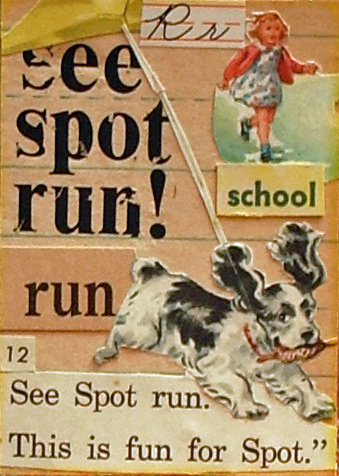
Pic: Sharondegaard

Pic: Sharonodegaard.com

That was early elementary reading, and it was “elementary.” And so it goes/went. Then I discovered Ogden Park Library, on the South Side of Chicago. Along with the summer Park Rec rec program (swimming, weaving, and that stuff), there existed the park library: That was the center of my summer life, riding there from home or swimming class, exploring the shelves, checking out books. Checking out books. Checking out books. Heaven.
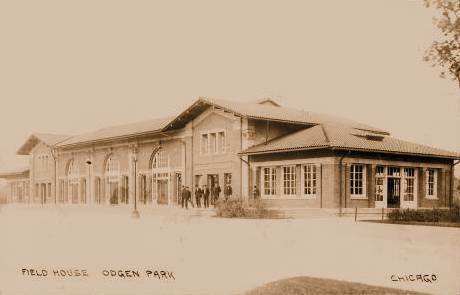
 Postcard Pic: Chuckman's

Postcard Pic: Chuckman’s

Other libraries that sucked me in, tasted me, chewed me up, digested me–those Francis Bacon’s books he wrote about– I remember so well, in summer, doing research, walking the stacks (something not often allowed now in many larger libraries), checking out books–or simply just losing myself at a table, surrounded with books.

Chicago’s Newberry Public Library:

Newberry Pic: Wikipedia

Newberry Pic: Wikipedia

Chicago Public Library [old building on Michigan Boulevard]:
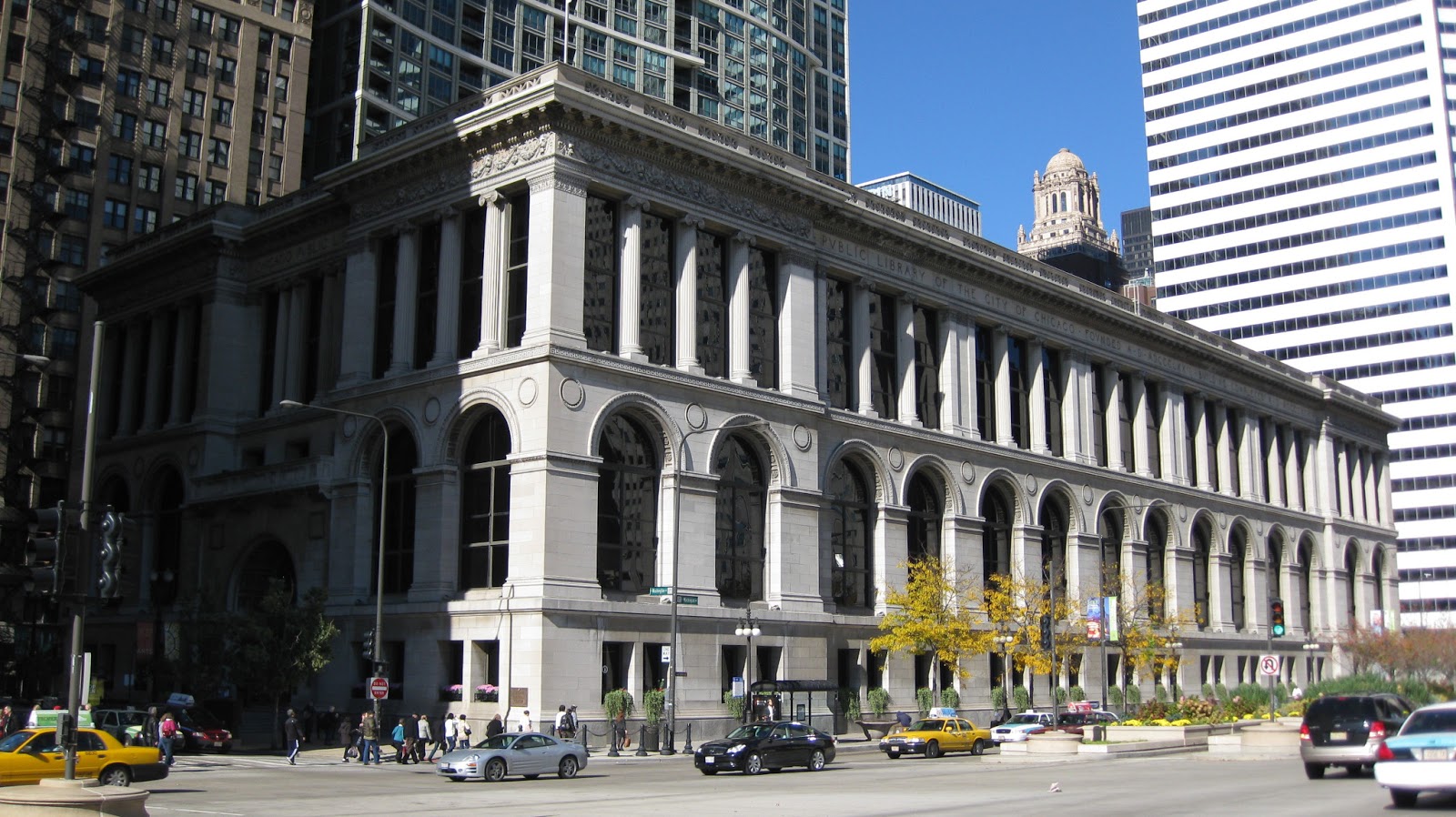
Old Public Library

Old Public Library

I had a bicycle stolen in Ogden Park in front of the library. In such a hurry to drop off books so they would not be over-due, I did not chain up the bike. In that short in-and-out time, my bike was stolen; it was recovered and returned to me (most of it) a year later. What a sad library memory.

Lost Bicycle

Gone Bicycle

I worked in my high school library (mostly dusting shelves–though I have a good yearbook picture of me in the stacks); I worked in my college library (mostly dusting shelves and books). Yet I wrote graduate papers (for Milton and Shakespeare courses) in the library of the University of Minnesota–during my summer “vacation” time.

Not many years ago, for three summer “vacation” times, I was so fortunate to be in Cambridge, England. The main “big” library was not open to summer students (except practically by Papal decree or a letter from the Queen). But no matter, I was in the summer-school library, walking the aisles, touching the volumes and volumes, doing research on the aorist tense of Greek, used by James Joyce in his short story “The Dead”!
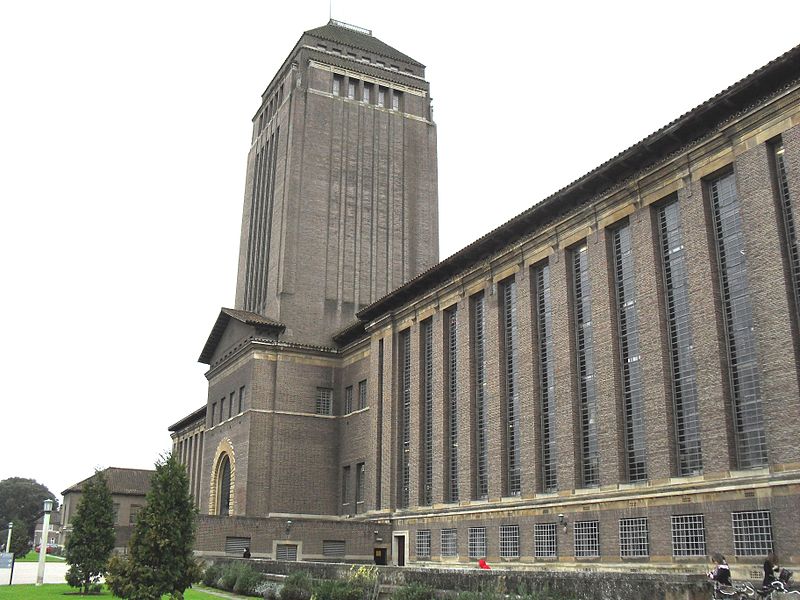
Cambridge Pic: Wikipedia

Cambridge Pic: Wikipedia

I can hum “Marian, madam librarian” from The Music Man–often. I’ve got trouble, right here–in love with books and libraries.

And now, September, then November–and summer is over. “Vacation”? I know I can have everything I need now through the Internet. I don’t need summer.

No?

But walking the stacks, touching the volumes and their spines, smelling the books. And, as in The Music Man, having a librarian, like Marian, checking out my books. That’s what love has got to do with it. I love libraries.

© James F. O’Neil 2014

I Love Books
I Love Books


BY: JAMES F. O’NEIL

“To every thing there is a season, and a time to every purpose under the heaven”–
Ecclesiastes 3:1-8

Turn, turn, turn. A time to laugh, jump, play; a time to build, tear down, and rebuild.

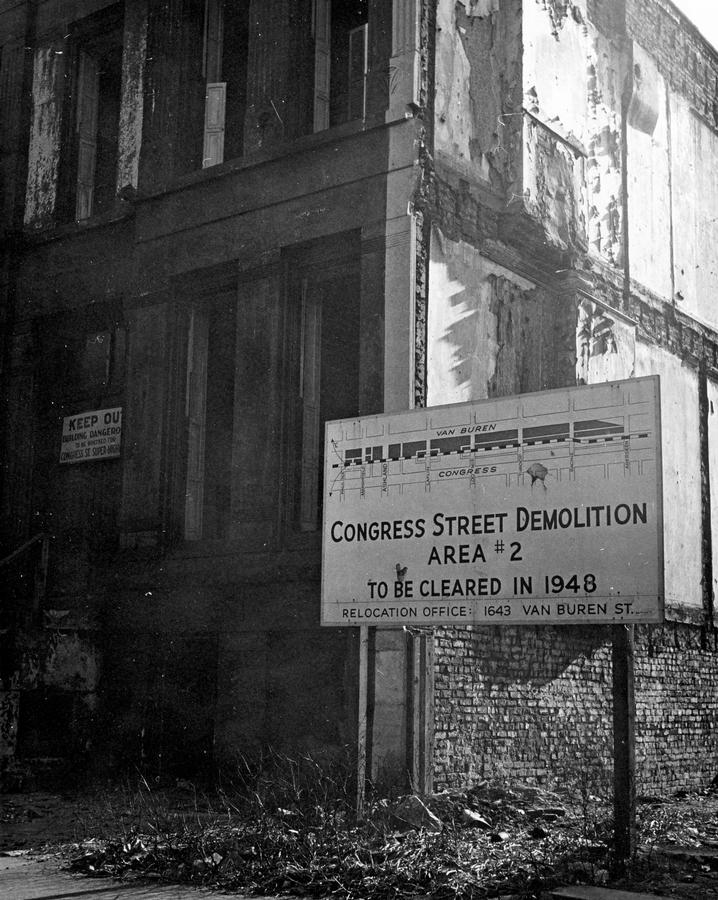
Our family used to live in Chicago, at 1623 West Van Buren, near Ashland, with the “L” behind our building. But:

Demolition for Congress Street Expressway

Demolition for Congress   Expressway

The Congress Street [Eisenhower] Expressway made us move.

I went to 1st and 2nd grade at St. Jarlath’s on Jackson Boulevard.

Saint Jarlath Catholic Church and School

Saint Jarlath Catholic Church                 

(St. Jarlath: Ethnic Origin: Irish. Date of Origin: 1869. Neighborhood Location: West Town, 1713 West Jackson. In September 1969, the church closed. [“Heavens to Purgatory: Imploding Churches Flatten Chicago”: “Over the decades, grand churches such as the Catholic St. Jarlath’s, St. Leo’s, and St. Charles Borromeo, along with Protestant houses of worship and synagogues are demolished, erased from the cityscape.” –Lynn Becker, arcchicago.blogspot.com/2013/01])

When the demolition of our neighborhood began, I cannot remember. I cannot recall wrecking balls, bulldozers, or men working. However, what I do recall vividly are the fires from the piles of wood that remained after demolition of the buildings.

What are brothers and sisters playing together supposed to do? Their playing field now looks like a World War II bombed-out neighborhood in Berlin or in Hamburg. What to do? The alleyways are gone. A few abandoned cars under the “L” tracks. But the rubble fires?

What is there about a campfire that attracts us and keeps us nearly frozen in time, mesmerized, as the flames rise, the embers glow, the wood crackles and pops, perhaps even shooting tiny missiles of fire, sparks. Sparks that might be dangerous to little hands or clothes or long blond hair of a fourth-grade girl.

Campfire Fun

             Campfire Fun

Picture me in second grade, my play-pal sister, Janice, two years ahead of me, stirring up the fires of demolition. What fun! Feed the fire with other sticks of wood. Make the fire come to life: “We have fire!” We are entranced.

Someone reported us to our mother.

The playtime ended. No more Fire Starters in the rubble on Van Buren. What to do now? Put pennies on the streetcar tracks? Did that. Play in the car, swinging on the steering wheel. Got too big for that. I am sure that we found something else to do–and were informed that our building was next to go. We moved to the South Side.

So long ago, so many great memories of childhood.

Here in my Ohio neighborhood, I am seeing trucks and equipment. Demolition is occurring. Not for an expressway but because a cottage is old and rotten and decrepit. So the buildings, perhaps some nearly seventy years old or more, are coming down. Part of a renewal-scape project.

Here is what it looks like:

Demolition of Cottages #7 & #8

Demolition of Cottages #7 & #8,  Epworth Park, Bethesda, Ohio

And so it goes, for life goes on. It is for the best. It is time: turn, turn, turn.

But that pile of wood…. I need to call my sister. Can she come and play?

© James F. O’Neil

BY: JAMES F. O’NEIL

INDELIBLE: physically impossible to rub out, wash out, or alter; impossible to remove from the mind or memory and therefore remaining forever.

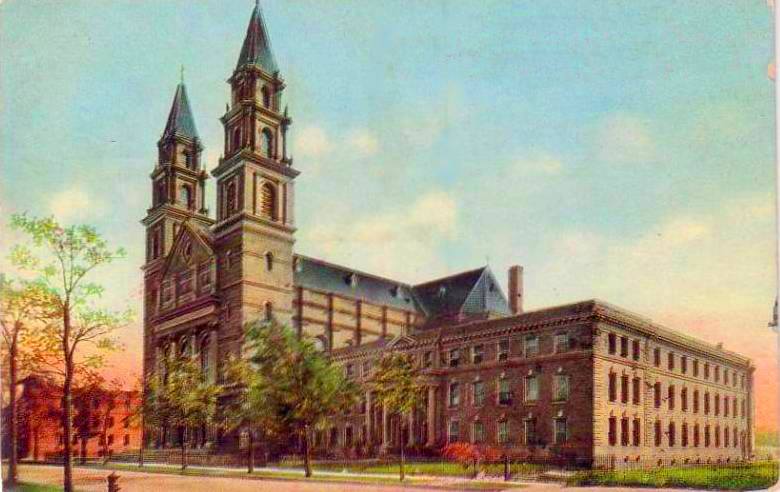
When I was a sophomore in high school, I got a part-time job at Visitation parish in Chicago. Then, in 1956, it had a kindergarten building, an elementary school of three stories, and a girls’ high school. For four years, I spent my days off from school and my summers working in the three large buildings, in addition to the auditorium and the basement bowling alley–cleaning, but mainly painting walls, floors, windows, and ceilings

pratt_lambert_stadnitsky_painting

Paints Used

I received much experience with paint in those days–and I admit that I got good at my job, especially doing window frames and baseboards. Of late, I have been painting stairs and porches of our old summer cottage. Nevertheless, I have not ever used as much paint as I did during my high school years.     

Yet as I look back at all my experiences with paint, including decorating rooms and exteriors of our houses, none stands out more than that which took place one sunny afternoon when I was a boy growing up in the city. Perhaps the season was summer or spring; it wasn’t snowy or freezing, for I remember wearing a T-shirt.        

My mother had sent me to the bakery to get some desserts for after supper. To get to our bakery, I went a half city block to Ashland Avenue, crossed, then to the bakery on the alley. On that particular afternoon, at the age of ten or eleven–I cannot be very specific–my first experience with closeness to death occurred.

Going into the bakery had always been a most pleasurable act. Then all was so fresh, with few preservatives, with so little concern for diets, cholesterol, or pimples. Heaps and heaps of calories and fats piled upon each other, whether in Napoleons, apple slices, cherry pies, sweet rolls/cheese Danishes, cookies, breads. From morning to closing, the bakery brought delight and delightful smells to the neighborhood–and to little boys. I tried to go as often as possible–as the family budget would allow.         

That particular afternoon the smells of the bakery goods and the smells from the ovens would be overpowered by the smell of calcimine (“a white or tinted wash that consists of glue, whiting or zinc white, and water that is especially used on plastered surfaces”–I later found in the dictionary).

My purchase was completed; I left the store, carrying something for dessert. As soon as I got outside, still holding open the screen door, I was hit in the face with the smell of chalky paint, an odor that I had never before encountered: acrid, pungent, biting, yet with an underlying scent of paint.           

I like–have liked–the smells of paint and painting. My model airplanes and boats were all painted–covered–with my many favorite shades from Testor’s. I enjoyed the odor–the fragrance–of brush cleaners, paint thinners, turpentine. That moment’s smells were unpleasant. I cannot forget the visual scene as my nose led me to the body of an old white-haired man lying in a pool–or what seemed like a small lake–of calcimine. I remember seeing a little red blood, perhaps from a cut head.

He was nearly covered; but I saw his worn brown shoes, white socks, and painter’s coveralls. He had on an old thin T-shirt, as I did. He was moving; the crowd gathered on the curb of the street, in the alley, in front of the bakery. I wanted to get out of the store, but a few people were in my way. I pushed them aside, and broke into what seemed to be a circle forming around the man.           

He was trying to reach to his back pocket. I watched him motion. People around seemed to be doing nothing to comfort him–but shouting out: “He’s trying to tell us something!” I did nothing either. I didn’t know what to do. I only thought of the bakery dessert and getting home. Yet the smell and the scene fixed me there. “Help him, somebody! He needs help,” one onlooker called out. I heard the words “heart attack” and “stroke”; they made no real sense to me at that moment.           

Then I was running home, to the corner, to the light, crossing the four lanes, another half block, turning the corner, running up the stairs to tell all that I had seen. I had to have told my mother. But I cannot recall what surely must have happened: the excitement, being breathless, the storytelling, the realization of the meaning of the event, then the tears that certainly had to come from an impressionable young boy.           

I can tell about death and dying–grandparents, Dad, my Uncle Bill, young friends killed in accidents, a woman I saw who had fallen to her death from the fifth floor of our apartment building, deaths I attended while I worked at hospitals, students of mine, my brother’s dog, my cats.

But this alone man lying on the sidewalk with a broken-open empty gallon can of calcimine near his feet? I never found out whatever truly happened to him.

Supposedly, the smell of Crayolas or crayons brings most memories to the fore. And apple pie, for some. True, for me, but the smell of calcimine has not been one of favorite sensuous experiences. What remains now is simply the memory of the occasion, though the details are getting dim–except for the smell in my memory of that white spill on the concrete and on that white-haired man struggling for help.


© JAMES F. O’NEIL 2014

Variety of Crayola Smells

Various Crayola Smells


BY: JAMES F. O’NEIL

“The P-51 Mustang is arguably the world’s most famous fighter of all time.” —

The 1987 movie Empire of the Sun contains a scene with the very young Christian Bale shouting “Cadillac of the Skies!” as a flight of P-51 Mustangs comes shattering the quiet over the prisoner of war camp. A dramatic scene, to say the least, as part of the film’s story.

empire of the sun 1987EMPIRE OF THE SUN POSTER 1987

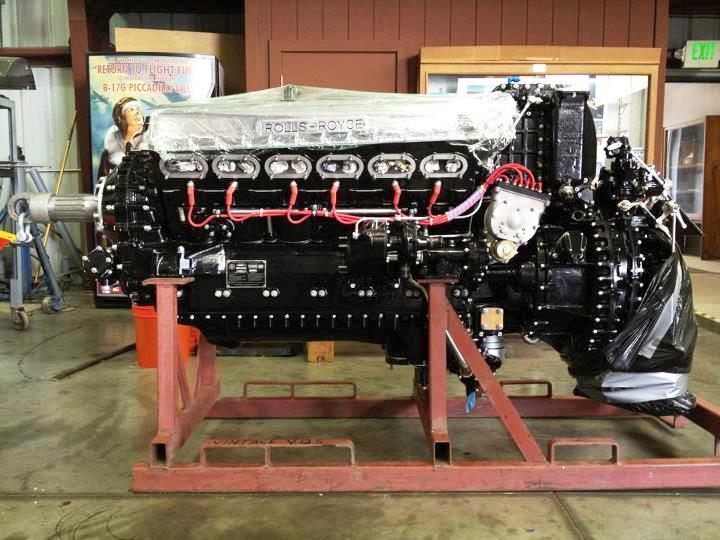
Well, the Mustangs are not Cadillacs, but are “actually” Rolls Royces…. (Well, a Packard-Merlin copy of the Rolls Royce engine. There. That’s for history.)

A Merlin Engine Aptly namedRolls Royce Merlin Engine: Tangmere, UK 

In 2004, I began to be a Collector of Mustangs. Not literally. I had entered a second childhood/youth-hood, complete with books, Internet writings and pictures, and lists and statistics about the plane, the P-51. No baseball cards this time; no “Red Menace” cards I collected in the 1950s; no SSI (Shoulder Sleeve Insignia) of various USAAF and US Army forces and divisions as I had done for my Boys Scout merit badge days; no comic books, model kits, nor coins for sorting and collecting.  

My collecting days, beginning with those desires to have a collection of something “way back then,” were never as involved with or as enthusiastic over any item as has been my interest in this particular airplane. I cannot explain it either. It just happened that way.

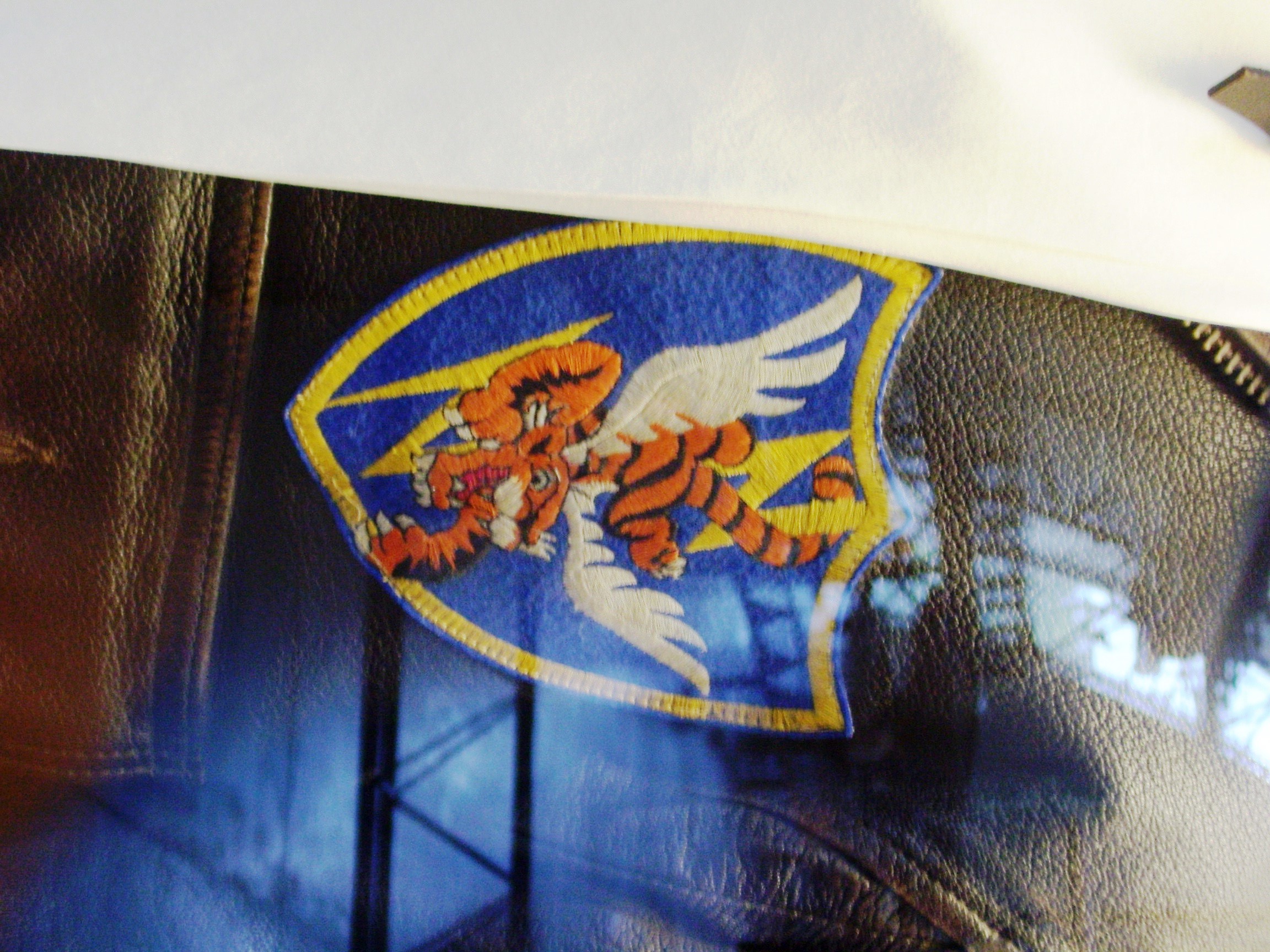
Originally, when I started this airplane “addiction,” or passion, for whatever the inexplicable reason, I had not any particular make or model in mind. I knew I wanted to read about and find information on The Flying Tigers for sure.

Flying TigersFlying Tiger Insignia

When I was in sixth grade, I became a babysitter for a neighbor down the street in Chicago. The husband and wife heard I was a reliable kid with a paper route. They had a small boy who needed an occasional sitter. I was asked over “for an interview” and hired. It was a great weekend job, putting a little guy to bed on a Saturday night–though my early Sunday morning paper route had to be taken into account.

While sitting in the quiet during those times, I read the classics about medieval knights and adventure stories and Hardy Boys books (like The Tower Treasure or While the Clocked Ticked. Those books written in 1927 seem so old now; but in the early 50s, they were “current,” less than 25 years old. By comparison, the first Harry Potter novel was written in 1997….)

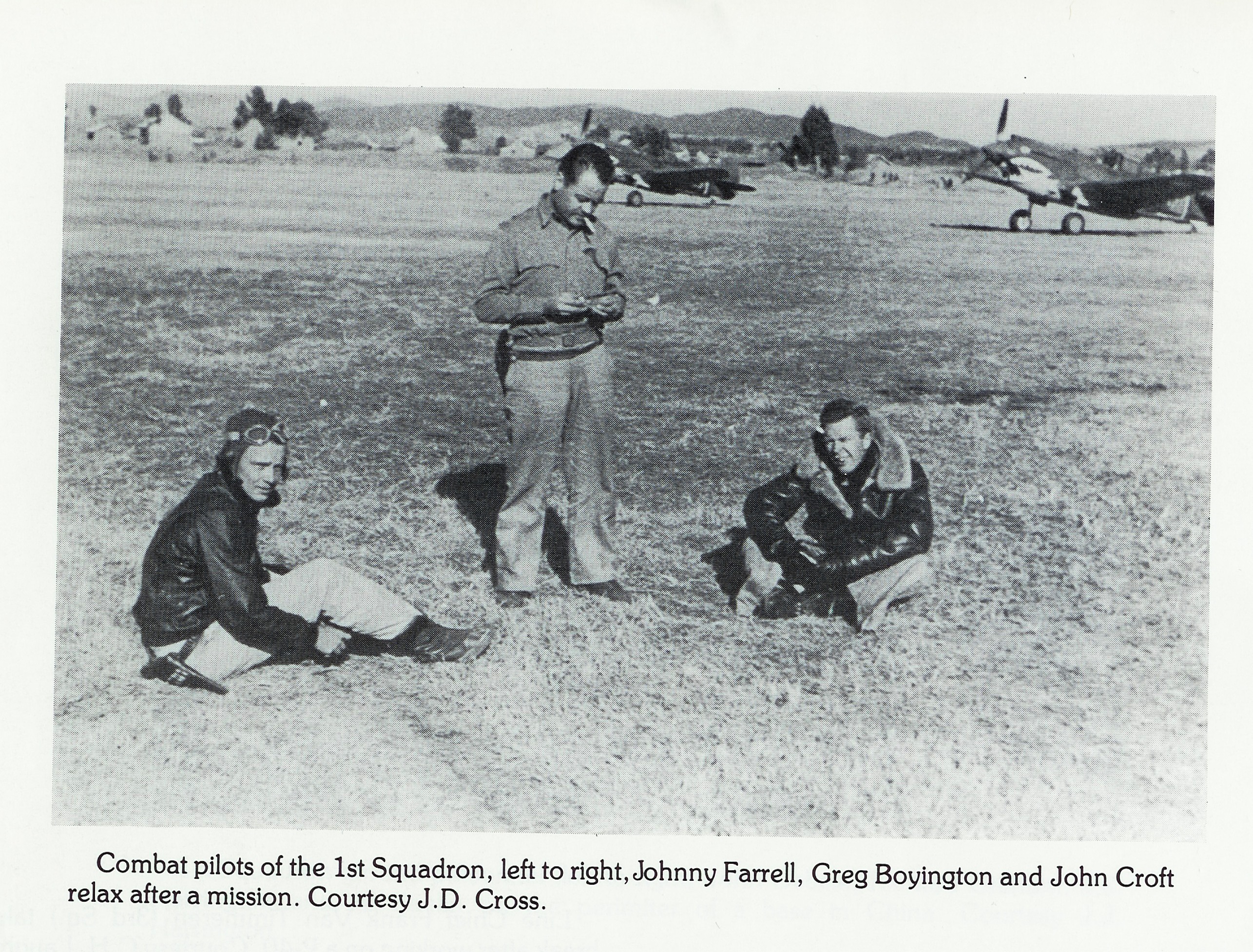
And that was that–almost. I was babysitting for an original World War II Flying Tiger.

John Farrell, boyington,croftFlying Tiger John Farrell

I heard few of his stories, but did see his jacket and pictures, medals and insignia. It was the inception, I am convinced, of my innermost love of things flyable, of WWII stories, Flying Tigers, Seabees, Iwo Jima and John Wayne, and more and more and more.

Then… “Grow up!” Well, not quite like that. But there was high school (and reading stories about pilots), and college (and reading about pilots and WWII, or William Shire’s The Rise and Fall of the Third Reich, instead of studying my philosophy assignments). And so on…and on….

2004. Indeed. I never gave up on any of the topics or stories that intervened from then until what started in 2004. I had an opportunity to re-channel, and started collecting.

Plastic, diecast, sizes, pilots, fighter groups–too much to collect without a Plan. I made a Divine Plan for Collecting Airplanes. Many times, the plan changed, kept changing–until I could focus, and that I did.

I always did “like” the “Cadillac of the Skies.” (Even the Flying Tigers gave up their shark-mouthed P-40s and transitioned to flying P-51 Mustangs.) I began my “serious” love affair, as much as I could, with this special, well-known fighter plane.

P-51 LVR License Plate croppedP-51 LVR Florida Plate 

There you have it. I have not ridden in one; I have been up close and personal, however–and have known and visited with WWII pilots and even have some autographs and books signed (typical “love-affair,” groupie-fan activities).

Punchy Powell MustangCapt. Robert Powell 

I have been to air shows on a limited basis, and to the right museums housing beautiful examples.

Ina the Macon Belle at Fantasy of Flight in FloridIna the Macon Belle at Fantasy of Flight: Florida

In addition to an in-cockpit flight film I have that puts me in the seat, I have been thrilled by a few movies for Mustang Lovers: Red Tails, The Tuskegee Airmen, Saving Private Ryan, Hart’s War, and, of course, Empire of the Sun. In the latter, Steven Spielberg used restored P-51s to portray the era accurately. Most effective.

Collecting can be fun, yet dangerous if time and money are taken from family duties and obligations, or from a person’s “normal” behavior. I have tried to be balanced and ordered in what I do: How many books can one have about a topic? Or models? Or…well, however many are needed. And there’s the rub. Want vs Need. I remember from King Lear: “Reason not the need.” I’ve tried that one too many times.

I think I am doing all right, learning from my childhood ways–and errors. But mostly my memories of past hobbies and collections are all good. My comic book collection was lost in a flooded basement. Coin collecting became too expensive for me as prices of metals rose. I still am animated when I see a beautiful new FOREVER stamp. But not enough to fill a postage album anymore. Downsizing living space has made my model collection very selective. I do not want a collection I cannot see, or touch. I am funny that way.

So that is how I came to this place in time and space, having a collection, loving to collect, and having a favorite special object from the past that continues to give me pleasure, physical and intellectual. I love the P-51 Mustang!

© James F. O’Neil 2014

Mustang LoverMustang Lover: Fort Myers, FL, Aviation Day, 2007