
BY: JAMES F. O’NEIL

“Oh, say, can you see…”

Yes, I admit, I am always on the “look” out for things “beautiful.”

“Beauty is only skin deep.” “Beauty is in the eyes of the beholder.”

Yes, as I was often told, and taught in school, me with acne-filled pores.

“Beauty,” says Thomas Aquinas, is “That which seen pleases.”  I had a more difficult time with this one saying, both in philosophy class and in my art history classes. [Aquinas…is still being interpreted.]

How do I know what beauty is? Will it be like pornography, as the Supreme Court Justice Potter Stewart defined that: “I know it when I see it” [Jacobellis v. Ohio, 1964]? (Can pornography–whatever it is–be beautiful?) Therefore, seeing, looking then is pleasing.

Ah, the beauty of it all. Oh, that ‘57 Chevy, candy-apple red hardtop, so pleasing, so beautiful!

“One man’s trash is another’s treasure.” As in, “That was a beautiful garage sale.” Or, in American Pickers: “That Texaco sign is just in beautiful condition.”
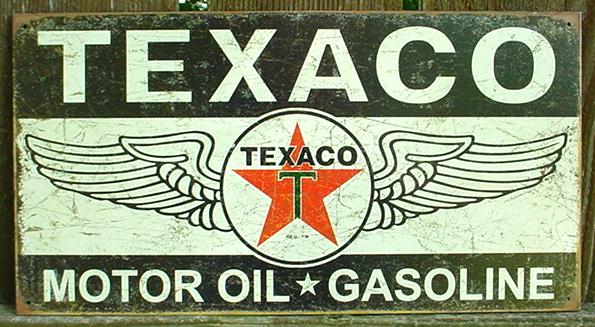
TEXACO SIGNTEXACO SIGN Credit: eBay

And what about a beautiful Scotch? “Single-malt, 15-year-old: just beautiful. Look at that color!” However, what about the taste? No dispute, is there, with taste/tastes?

“Mmm, mmm good. Mmm, mmm good. Campbell’s soups are mmm, mmm good.” Andy Warhol could attest to that!
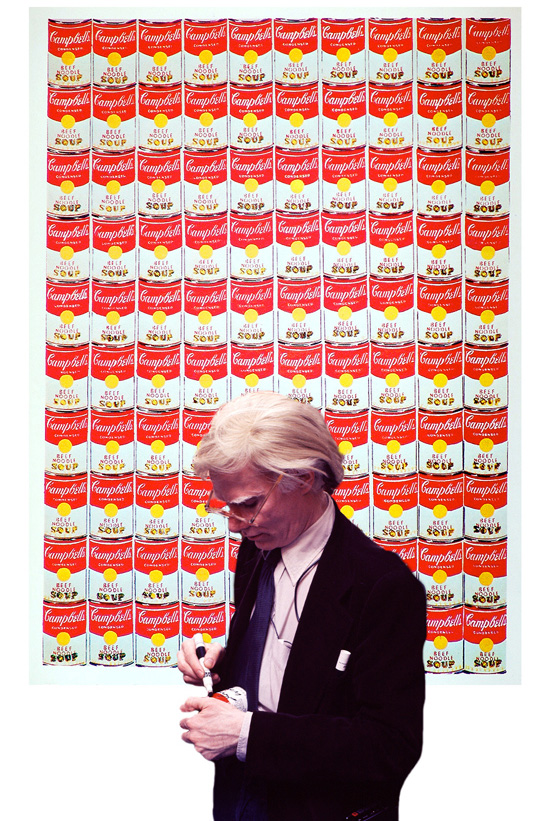
ANDY AND SOUP CANANDY AND SOUP

What do you like? Any favorites? Is it/are they “beautiful”? The kids? The small of a woman’s back (in Kevin Costner’s litany in Bull Durham)? The Mona Lisa?

But about Venus de Milo, the original, which I saw in the Louvre, not the #2 pencil, not Salvador Dali’s huge “magnificent” symbolic painting, but the original: How can it/she be “beautiful”? No arms. Measurements just not “right” [34”-31.2”-40.8”], or . . . . “Look at those hips!” Some beauty. Out of proportion. Proportion is that essential quality of beauty, says those aestheticians (those who decide what is aesthetic or “beautiful”–or “art”–and there is Thomas Aquinas, again).

VENUS DE MILOVENUS DE MILO

And something beautiful is also supposed to be good because of integrity, wholeness. It’s “bad” (even sometimes originally translated as “evil”), from any little defect. (I have always mused over “flawed” and “flawless” diamonds, even those “beautiful” three-carat, “cloudy” ones!) [Our engagement ring, 51 years ago, was a AAA, 0.39-carat, about the only affordable “way back then.” But how beautiful!]

Aesthetics: too philosophical for me.

And so, what could be beautiful?

Could be a song or musical piece (“Moon River” or Beethoven’s Ninth Symphony); could be a color or something colorful (burnt sienna or a sunset over the Gulf of Mexico); could be a building (certainly nothing “Gaudi”!), like Hagia Sophia; could be a “babbling brook”; could be a Girl with a Pearl Earring, the book, the painting, the movie (how beautiful is that?!); could be that ice-cold RC Cola washing down a Moon Pie (Yum! Right beautiful!); could be all those older couples holding hands, older sisters, younger brothers; could be an emotionally charged and tear-evoking episode of Grey’s Anatomy, or a scene from Shakespeare in Love or Romeo and Juliet; could be a Serta, or Sealy Posturepedic for a beautiful night’s sleep.

Could be.

Oh, I can’t get enough. Looking for the pleasures to be found in The Beautiful.

“O Beautiful, for spacious skies…amber waves of grain…mountain majesties….”

Can you see? See? Do you see what I see? Can you find the beauty? Are you looking?

Remember: “‘Beauty is truth, truth beauty,’”–that is all…ye need to know.” –John Keats

© JAMES F. O’NEIL   4 JULY 2014

sunset over cape coralSUNSET


BY: JAMES F. O’NEIL

Traffic lights, also known as traffic signals, traffic lamps, signal lights, stop lights–and also known technically as traffic control signals–are signaling devices positioned at road intersections, pedestrian crossings, and other locations to control competing flows of traffic. (Traffic lights were first installed in 1868 in London and are now used all over the world.)

Traffic lights alternate the right of way accorded to road users by displaying lights of a standard color (RED, YELLOW, and GREEN) following a universal color code. In the typical sequence of color phases:

           the GREEN light allows traffic to proceed in the direction denoted, if it is safe to do so; the YELLOW light denoting prepare to stop short of the intersection, if it is safe to do so; the RED signal prohibits any traffic from proceeding.” [Wikipedia]

Traffic Signal: Utica, NY (CREDIT: P.BASE.COM)

“What kinds of things do you remember most about your dad? Some little stories or anecdotes? A memory of the past, something that you do that always brings an image that is so vivid it’s like he’s there with you when you do it?”

“He taught me how to drive and be a good driver. He taught me to play the lights.”

“He is with me every time I am driving where there are stop lights in a row: down a busy street–not the interstate. I still do this. He taught me about traffic lights–and their time and speed and distance–long before computerized traffic signals.

I watch my speed, see the lights ahead of me, guess when they might change, see the Walk/No Walk signs for pedestrians–and how much time they have, and I have. This requires good eyes and good judgment. Concentration. Paying attention.

In Chicago, when I drove my mom to work, being able to go from Halstead and 55th to Downtown at the Federal Reserve Bank without having to stop for lights was a feat. Possible. Do-able. I still “play the lights” on certain streets where I live now. Even after all these years. I have to be conscious of traffic and timing. And he’s there with me.

Oh, he also taught me to be a great parallel parker, a skill not often required these days. And to back up using only mirrors (though I wasn’t so good with my mail truck in 1962, breaking off a mirror when I hit the truck next to me).

And to be a good left-turn-er (“Never make a left when you can make a right.”).

traffic-signalLEFT TURN SIGNAL?

I also have to stay between the lines: he hated when I drifted on Garfield Boulevard. This was the hardest part for him to teach me: “WATCHIT! DON’T DRIFT!”

My current driver’s license [still] has Safe Driver affixed to it–a trait I owe to my dad. 

©  James F. O’Neil 2014

“You are what you were. If you have no past, you have no future.” –Anon. 1991

BY: JAMES F. O’NEIL

MOTHERS’ DAY: The current holiday was created in 1908 as a day to honor one’s mother. President Woodrow Wilson made the day an official national holiday in 1914.

* * *

Examination question:

“Who is the person you most admired from your childhood?”

* * *

“It must be true. My mother said so.”

Yes, that worked for me for many years, with my pop psychology, my religion of motherolatry. I thought it was true: My mother was all-powerful, all knowing, all loving, and all wise–seeing all. M-O-M = G-O-D.

Then it happened: 9th grade for sure. World History. Discussion question about . . . and my answer: “My mother said so.” And the teacher’s response: “Your mother is not God!”

NO?

How could I have been so naive? How did I ever make it into high school believing that my mother had the VERUM VERBUM, the true word?

true wordNo, it is not true; I didn’t believe that . . . so late in the Game of Life. But when did I stop believing? When did I come to that realization the Game was changing? That I had to learn for myself?

Somewhere, sometime, I said, “NO!” to Mom-God. There I was, probably shaking while or after the words came from my mouth. My Act of Rebellion.

out with the old by miss cherylAnd so it goes in the Game of Life, as we grow through adolescence into adulthood (which my pop-psychology taught me. Or was that Gail Sheehy: Tryout Twenties, Turbulent Thirties, Flourishing Forties, Flaming Fifties, Serene Sixties?).

 * * *

Examination question:

“List FIVE traits, characteristics, or attributes of your mother and write about them.”

[Optional essay question.]

* * *

I cannot imagine not having a mother, losing her to disease [Steel Magnolias], in a car accident [Raising Helen], in childbirth [The Sign], to a hunter’s bullet [Bambi], or to the many other awful things that happen to mothers before their children know them. “I lost my mother when I was five.” “I don’t remember my mother.” “My mother died of cancer, when I was seventeen.” “My mom never came home from the party.”

And on it went, as I read essay after essay, year after year, for over twenty years. This question was my choice. I wanted my students to do personal narratives by which they could express themselves–and do their best writing–I hoped.

As the semesters ended, I turned to my readings. Often tired, I usually would become pensive while reading. I tried to be an objective reader, weighing the writing against the grading standards. Yet so often I was sucked into the story being told. I think I am like Miss Lonelyhearts [by Nathaniel West], encountering sad story after sad story, truth stranger than fiction. I could not help it.

Essays ranged from the “My mother took care of me when I was sick” to “My mom had it rough raising the nine of us with no father…or with a druggie father…or with an alcoholic father…or with a___ father.” [How did she manage?]

While I was drifting off, and away from the papers, my own questions, my own answers snuck in: How did my mother manage to sleep, work nights (mostly), raise the four of us, and keep up with the household duties–and be a wife, too?

Doing the dishes was the job that fell to my sister, Janice, and me. We learned–and were outstanding dish-doers. “Glasses, knives, and forks. Dishes, pots, and pans.” That was The Sacred Order. That’s the way I learned, from Mom. [Trait One: MANAGER]

Years before (maybe when in 9th grade?) as I was washing coffee cups after supper, I reached into the soapy water, reaching after a cup that slipped from my soapy left hand. My hand went automatically to retrieve the cup, but the broken cup sliced into the fingers of my left hand. Blood in the water. Panic from the immediate intense pain, cut-in-soap. My sister screaming for, of course, “M-O-M!” [Trait Two: NURSE]

“Mom, can you read my story before you go to work?” [Trait Three: GRAMMARIAN] ‘Nuff said.

grammarian amazon

Mothers cheer us on: “You can do it. Go ahead! Go ahead!” I remember vividly, her feeling good on a warm Saturday evening in Chicago. She had just ridden the (used) small bicycle bought for me. I ran alongside her with glee. At the corner, she turned around, giving me the bike. My turn. My first two-wheeler.

“You can do it. Try again,” I heard as I tried to gain balance, but fell into the bushes. Getting up, scratched arms be damned!, I tried again. Her laughing encouragement behind me grew as I cycled away from her. At the end of the sidewalk, near the alley, I stopped (applying the brakes expertly), then fell over–and off. I turned back to see my mom waiting at the end of the street. I rode to her. “Expertly,” of course. Yeah, wobbling from side to side, houses’ steps and bushes on the right, grass-curb-city street on the left. I pedaled the gauntlet. To Mom. [Trait Four: CYCLIST TRAINER]

50s bicycle liveauctioneers50s BICYCLE (CREDIT: LIVEAUCTIONEERS)

“What do you think I should do?”

If there is one question I ask, probably more than any other, it is “What do you think I should do?” My kids do it. My wife does it. We all do it.

Looking over my Early Asking Age to now, I realize this has to be The Ultimate Question: each of us is a Grand Inquisitor. We seek answers. I seek (and sought) answers. However, the answers that come from “What do you think I should do?”, though not unique to kids asking moms, make us Deciders. For the answer usually is, “You’ll have to decide.” It means, “You’ll have to make up your own mind–and live with it.” This is not cold, harsh, cruel, but is concerning, caring, and–when I think more about it–allowing the Inquisitor to grow and live. Therefore, we talk and discuss and ask: “What should we do?”

Yes, just like a mom, she said, “Yes, you’ll have to decide.” Just as I expected, not unexpected. [Trait Five: NON-DECIDER/DECIDER]

Good move, for, as we all know so well, not just Mother Nature, but “Mother knows best” (often).

So I would search student essays for goodness and admiration, stories that demonstrated “goodness” and “admiration.” “All the good” moms do . . . “is oft interred with their bones.”

NO! The good DOES live after them. I CAN recall the good times, the admired times; memories of the hard times, the rough times; illnesses, job layoffs, or . . . .”

Too, from Trait Five, I learned: to be able to reach decisions, come to conclusions, after rational thought, not impulse thoughts, but rather, like a good Indiana Jones Crusader, to choose wisely.

 So, “The person I most admire from childhood . . . .”

 © James F. O’Neil   2014

* * *

 ~Irish Proverb: “A man loves his sweetheart the most, his wife the best, but his mother the longest.”

 happy-mothers-day shlomoandvitos.com(CREDIT: shlomoandvitos.com)

BY: JAMES F. O’NEIL

Most of us adjusted our clocks to keep up with The Changing of the Clocks: Daylight Saving Time (“Daylight Time”). And the world keeps on turning.

watch If the yearly changing of clocks is important for the economy and for the normal operation of living, we can be aware of what a big deal it really is.

However, it is a small instance in our being involved in rite, ritual, and myth.

Ritual plays such an important role in the life of an aware human, and knowledge of ritual and mythology makes us aware of the bond that unites us all to one another.

If you need to delve into this “myth thing,” read and study Frazer, Frye, Eliade, Wheelwright; then worlds open up reading Jung, Milton, Whitman, and Joyce. There is no end to discovering, to making connections, to becoming aware of how contemporary faiths and practices are united with/by “archaic” realities. And in the widest range possible, “faiths and practices” can even include setting back or ahead a timepiece or the Dashboard Clock.

How I do something or how I am told to do something is RITE: How to color Easter eggs.

EGG COLORING BY ELCIVICS.COM

The actual coloring is the Annual RITUAL, including hiding the eggs, making baskets, and making chocolate disappear.

MYTH is a true story that is precious, contains special elements, and is usually religious or “sacred.” (This is the story of “Once upon a time . . .”: Easter Bunny, tombs, rolling back a stone, angels passing over, etc.) We need to get used to NOT saying, “It’s a myth.” (Maybe in Shakespeare in Love, “It’s a mystery” has more meaning than appears.)

A MYTH is a narrative and an expression of ultimate reality, a statement of value: “I believe this.” Even if it’s an Easter Bunny, the Paschal Lamb, or Passover . . . or changing the time. We express, “We believe,” then act accordingly as those who have done before us from the beginning.

From here, we go to see the timepiece, the clock, as more than a time change but rather as a renewal of and re-living the myth: spring (or autumn). And all that spring announces, like dawn or birth or green (however, after the snow is finally gone), or revival, defeat of darkness of winter (resurrection?).

This is Spring. (April may be the cruelest month, but April showers bring May flowers . . .)

Living a MYTH implies a genuinely religious experience. We live it ceremonially or by performing the ritual: Easter bonnets, those Easter Parades (any parade!). In one way or another, we “live” the myth in the sense that we are “seized by the sacred, exalting power of the events recollected or re-enacted” (Mircea Eliade).

All those little things we do at this time of the year, “religious” or sacred or “profane,” take us on that journey of awareness, that ritual of discovery of our origins and of who we are: humans.

It’s no big deal, just a clock and egg and a bunny and a . . . .

© James F. O’Neil

BUNNY EGG BY LUCYLEARNS.COM