By: James F. O’Neil

“What I Did Last Summer”

BETHESDA, OH:  Chautauqua Days** are over for this year.  The hot dogs are eaten; vendors have packed up their woodcarvings, and the quilts that went unsold.  Homemade candles sold out; the trophies for the fishing contest now sit on a shelf in some lucky child’s bedroom or in the living room.

 Photo credit: E.K. SchneiderPhoto credit: E.K. Schneider

The Cottage Tour in Epworth Park in Bethesda brought visitors from the area and from a distance, excited to view owners’ renovations and decor, especially those cottages being put into their original turn-of-the-century style.  The park, since 1878, has been the site for vacationers and summer visitors–in addition to the festivities associated with the Chautauqua Movement.

And for nine summers I have been a partaker of cool Ohio weather, over-bearing heat, summer thunder storms, lake stillness, fireflies (who seem to appear on time on clear evenings at 8:20), hummingbirds, poison ivy, ducks and Canada geese, non-air conditioned sleeping, candlelight suppers, mosquitos, on-the-porch Happy Hours, Saturday weddings in the open-air steel-roofed Auditorium (read “Chapel” that seats over three hundred), community pot-luck suppers (the community of 100 original cottages now numbers 66) for those owners and guests who remain after mid-July–and, the Bluegrass concerts, with much pickin’ and grinning’ taking place on stage.

What summers I have experienced here–as an adult.

If one were to ask me, “Think of your favorite place,” I return to Epworth Park and onto my cottage swing.

porch swing My Favorite Place provides me calm and recollected-ness.  And the swing allows me the opportunity to remember good summer times, those real mid-summers of July (long after the “cruelest month” of April).  I become the child in me.  The swing does that.  The Park does that.  Chautauqua Days do that: bring so many memories that remain over time.  (But, of course, there were those bad summer days, too: sunburns, injuries, working days while in high school, automobile problems, unrequited loves).

Rainbow Beach in Chicago: endless sand, hot dogs, and forever swimming.  Pullman Park Pool: everlasting swimming (indoors).

Sister Lakes, Michigan: family, and friendships–and swimming (where I did first learn to             swim, being able to make it to the oil-barrel raft away from our cottage shore).

Boy Scout Camp: swimming and crafts and…outdoor “plumbing” (ugh!).

Summers with my sister’s boyfriends–and their hot cars (especially that ’57 Merc            convertible).

O’Neil Picnics, 3rd Sunday in July (of course), rain or shine, with hot dogs and KFC and kids and aunts and uncles, train rides, and swimming (and crossing the train trestle over the Fox River in Pottawatomie Park: “Double-dare ya’!”  Stand by Me in reality?).

Garfield Boulevard and Halstead with its parkway, cool evenings, motorcycle Park Police, everlasting softball games).

Then, suddenly, it seems, I was no longer a child–“and now I have put away the childish things” (Paul. 1 Cor. 13.11).

No, Saint Paul, I cannot do it: The child in me is alive, comes alive, while I sit on my swing, while I walk through the Park.  And though I no longer put fireflies into Mason jars with bits of grass and leaves (how childish?), I watch the glow-bugs alive, throughout the trees, with a few “high-fliers” sometimes three stories above my cottage porch.

Chautauqua Summer will soon end.  The Park will soon become quiet as closing time approaches November 1st.  I will leave soon.  However, I will have another Chautauqua Summer captured, placed within my memory jar filled with Everlasting Summers.

 Photos Public Domain.com

Photos Public Domain.com

**Chautauqua [shu-TAW-kwuh]: a movement which flourished in the United States in the late 19th and early 20th centuries, including assemblies (sometimes religious), educational lectures, concerts, entertainments, and, unfortunately, no hot dogs!  [See The Chautauqua Institution of Western New York; Chautauqua Lake, in New York.]

BTW:  Rick Atkinson writes in his An Army at Dawn that “[Gen. Mark] Clark, as a young captain between the world wars had been detailed to a Chautauqua tour, spreading the gospel of Army life . . . .”

 Epworth Park Lake

Epworth Park Lake

© James F. O’Neil 2013

By: James F. O’Neil

Shredding the past can be traumatic: a violent act.  Placing a special document, such as a letter of application or a letter of resignation–or a letter presenting some award or gift–into a machine, then hearing the gears and chopping blades turn a piece of paper into cute, ruffled shredded-paper-documents-600x400strips of nondescript pieces of chaff, with now-unintelligible markings that looked like some ancient alphabets, can hurt.       

What was once a flat piece of 8 ½” x 11” or 11” x 14” now    becomes colored fluff,  expanded, with new life, now taking up more space, and more volume in a large black trash bag.   to be received unceremoniously, un-holily, by “The Garbage Men.”   

(Photo courtesy: photos-public-domain.com)

“The horror!  The horror!”

When I planned to retire, I knew the inevitable: I had to clean out and vacate the office I had for twenty years.  While an office occupier, I became the Collector, the Accumulator, the Filing Expert, the Organizer, the Archivist, a Librarian for many years.  During that twenty-year period, I had accumulated

  • A thousand books
  • Files and papers enough to fill five large 40-gallon trash barrels which I personally carted to the dumpster
  • Eighteen bankers’ boxes of “stuff.”

And what to do with “stuff”?  Books could be given away, donated, re-shelved at home.

But the stuff?

Class notes from college, course outlines, lecture notes, correspondences, newspaper and magazine clippings and articles, my term papers dating back to 1959, including a paper on the G.I. Bill, one on Fleming and penicillin, another on Froebel, the founder of the kindergarten.  [My C+ paper from graduate school on James Joyce and water imagery, in A Portrait of the Artist as a Young Man, was thrown away.]

These papers had to be preserved in memoriam, et in saecula saeculorum: forever! 

It could not happen: I had to shred that “stuff.”

So I shredded, while watching old movies or football or whatever was available to me to distract me from the task at hand: destroying history.  Hours and hours of shredding, placing the fluff into those unmarked black plastic trash bags–33-gallon, for sure–then neatly piling the bags at the curb to await their fate at the hands of Waste Management. 

When the truck and its three workers arrived, I felt guilty for giving them so much un-normal work to do.  I helped them toss away some of my past by picking up and flinging a bag or two.  (The bags were not all that heavy, despite some philosophy and psychology within their contents.)  Then, as if magically, the piles disappeared.  I could not watch as the truck pulled away.

I was not yet finished, though.  In the next few weeks, I had a second and then a third shredding, the last pile of “stuff” put down into the awaiting jaws of the killing machine.  I did the shredding slowly, nostalgically, pensively, silently–except for the sound of The Shredder: for two minutes at a time, to overheating, then the quiet of the four-minute auto shut-off.  Then more chewing and grinding and swallowing.  Little by little, the deed was done.

I thought it would be more painful, but it was not.  In fact, it was not painful at all–except when I had to clean out paper jams caught in the tiny blades, and scratched or nicked my fingers.  No pain at all, generally.  I felt mostly satisfaction, and relief.  As I looked at the fluffed piles of my life that I gently emptied from shredder into the trash bags, a sense of calm came over me: A full life, bagged, tied, and waste managed.

Like Forrest Gump often says, “That’s all I’m gonna say about that.”

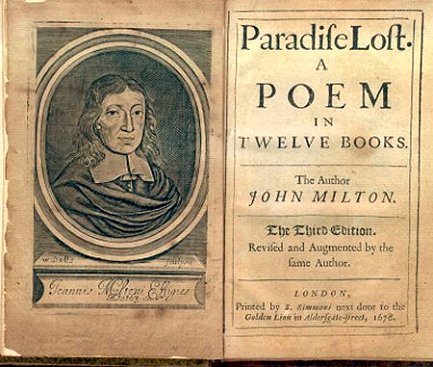
But about those undergraduate and graduate papers I wrote?  The ones with red ink, grades, and maybe some comments?  Maybe I should have saved that Milton paper?

a.milton works © James F. O’Neil 2013

By: James F. O’Neilcolored file folders

While going through my notebooks and files, I came across two interesting folders: one red, one the usual “manila folder.”  I knew what they were; I just had not seen them for a while.  The red tab, “Placement Programs,” in manuscript-print (all CAPS).  The other had a somewhat beat-up, dog-eared tab: “Certification Materials,” handwritten by me in my best cursive.

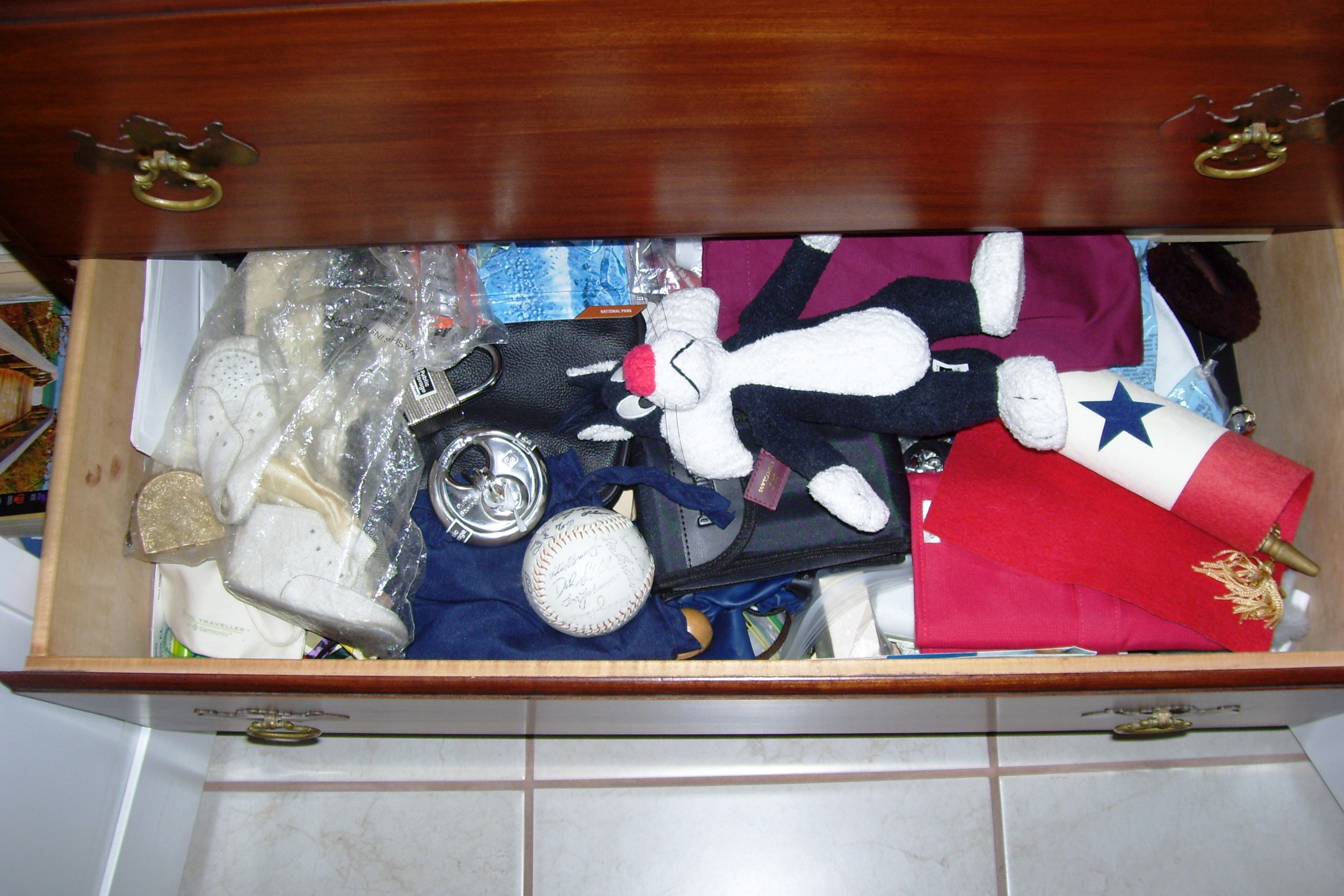
If you have ever sat down in front of your dresser that has a bottom drawer filled with junk, stuff, dead-desiccated prom flowers, old love letters, maybe a vibrator or two, greeting-cards-saved-forever, warranty papers for radios and bicycles and CD players long gone, and so much else, it might be difficult to slide the drawer back in.  Memories flood out from the items as you look to find something. 

Why did you go in there in the first place?  Isn’t this A Sacred Place of Collection?  Does not every item belong?  Have you tried to delete or discard something from within–or something you took out to look at, for no reason, then put back into the right place?  How about those empty watch boxes?  Stones and rocks, collected when you were in the Mojave Desert?  (I still have wrapped in the most-delicate “Saran Wrap” the two newly-marrieds from the top of my/our wedding cake.  Also, a pair of baby shoes, not mine.  A signed baseball, not mine.  An assortment of padlocks, combination locks, keys to nowhere, day-minders/day-timers back to 1973.  A handgun lock.  And more.)

My Bottom Drawer

Those two folders I found are like my bottom drawer: A Sacred Place of Collection: papers, letters, and copies of important information about me.  Letters of application I once sent.  Transcripts from high school and college (even a sealed envelope “Issued to Student” stamped on the seal of one envelope), proof that I completed the necessaries.

My certificates and licenses, proof, to teach, to administer, to sell insurance.  Some certificates for outstanding service, for being a committee chair, or for appreciation. 

Oh, my!  What have I done?  I have opened a “bottom drawer.”  I spent hours going through the two folders: the items contained defined what I was, or prove what I still am capable of (degree to teach).  Each item tells/told where I was at a time in my life, a date and a place of my existence, in addition to what I have accomplished.

These folders, with the classes I took in the grades and in college, open up my life: “Look what he did?”  The transcripts show Latin, Greek, German, science, mathematics, philosophy, history, letters and literature, religion, physical education, geography, music, biology, Bible studies, economics, and even some art.  Proof of my education.

Something more than what is on the papers I liken to the spirits that linger, hang around those items in the bottom drawer.  Something sacred there.  Something special, or it wouldn’t still be there, right?

So, I put the papers back into their rightful folders, knowing that some had to be shredded.  They were old, outdated, non-useful, and unusable.  Someday, I told myself; not now.  Then I sigh, look at my folders, and carefully replace them in the file cabinet drawer–deleting nothing.

“Ah, me.”  Latin and Greek–and philosophy?  Really?  Omne agens agit propter finem.  Nemo dat quod non habet.  But really, Qui nimis probat nihil probat.

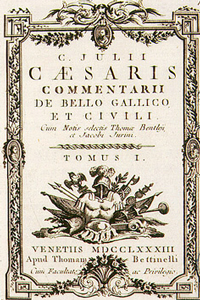
 Gallia est omnis divisa in partes tres,…

caesar

[Here are a few words of explanation:  “Everyone does something for a reason.”  “No one”–not “Nemo,” the clown fish–“gives what one hasn’t got.”  And this last one I love–really: “She/he who proves too much, proves nothing.”]

© James F. O’Neil 2013


By: James F. O’Neil

             “So, where ya’ from?”

            “The South Side of Chicago.  You know Chicago?”

            “I sure could tell by your accent you’re not from around here.”

That’s what I hear when I’m in Newark, Ohio, talking to a grocery-store clerk; or in Saint Louis; or in Cairo, Illinois; or, even more, in Darien, Georgia, not too far from the Florida border, the state in which I have lived for more than thirty years.

They can still tell I’m not from around “here”–or “there.”  What gives me away?

Is Newark, Ohio, like Newark, New Jersey [“JOYsea”–or “GERsee,” as “gerbil” or “German”]?

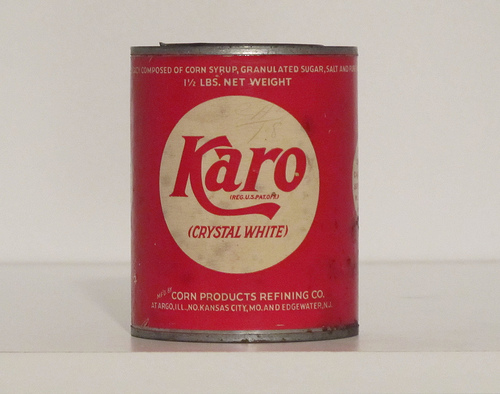
And about Cairo, Illinois: Is that like “kai” as in “KAYak” or “CAIro,” Egypt?  Or more like “cay” or KARO syrup“Kaye,” like Karo syrup, that thick sweetener, used in baking, cooking, and on pancakes?

The folks in Darien, Georgia, catch shrimp–some of the best.  They don’t care how I talk or where I am from: They care that I like the shrimp and like the hush puppies.

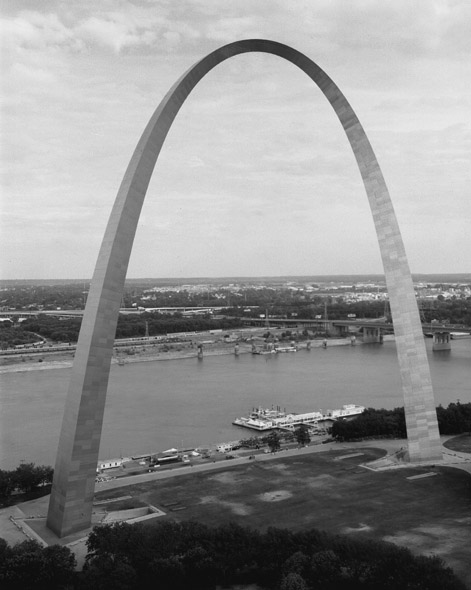
I lived in Saint Louis for two years of college.  Saint Louis is but 300 miles from Chicago–the “-ca-” in “Chicago” pronounced by me as in “caught” or as the sound of a crow “cawing” while sitting on a telephone or electrical wire. 

StLouisArchThree-768691My college friends, however, had a tendency to say “shi- [“shin”]-KAH-[a Boston “kah”]-goe” [“toe”], much like the way President Obama pronounces the name of his home city.  (My green car [“kar,” “CARpet,” and “cargo”] was a “core” in Saint Louis; its roof sounded like a dog’s “woof, woof.”)

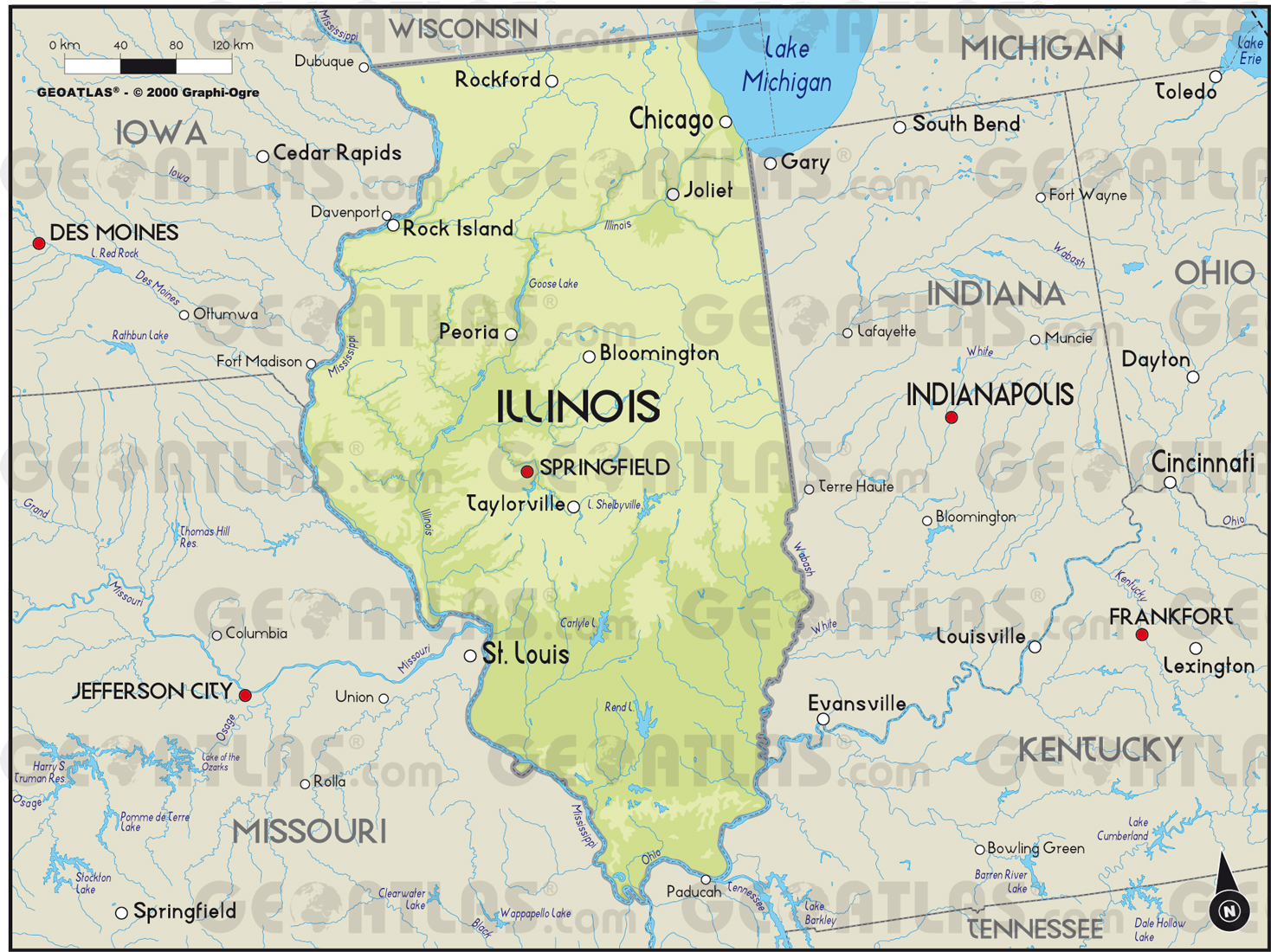
These various listeners hear my stories told in my Upper-Midwest dialect.  And that’s the long and the short of it, the length of Illinois,Illinois Map from Chicago to those good folks in “downstate” Illinois, south of Springfield and East Saint Louis, down near the southernmost border, around “KAY-roe.”

             “So, where you from?”

            “Iowa.”

            “Oh, Dess Moynes (Dah Moine)?”

 * * *

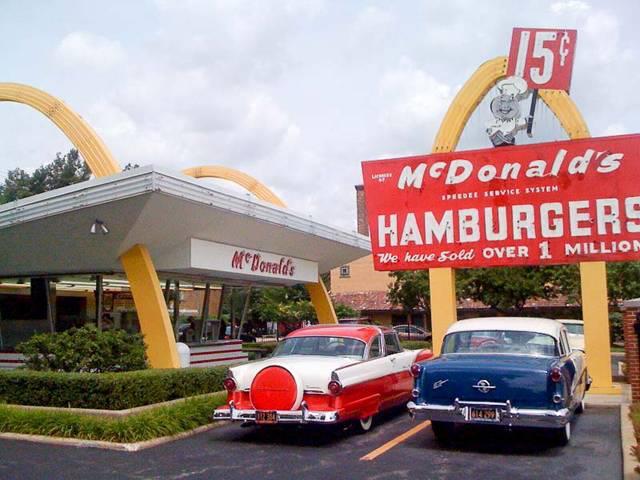
[Author’s note: I once lived in Des Plaines (Dess Planes), Illinois, the home of the first franchise McDonald’s. Oh, and there is “no noise” in Illinois: It’s like “ill-in-NOY.”]

Des Plaines History

Wikipedia photo

 © James F. O’Neil  2013