Archive

Author Archives: JAMES F. O'NEIL

From Laura T. Martin, Music, Blacksburg Elementary/Primary School

“We can’t all be heroes because somebody has to sit on the curb and clap as they go by.”

 …

  1. I think part of a best friend’s job should be to immediately clear your computer history if you die.
  2. Nothing sucks more than that moment during an argument when you realize you’re wrong.
  3. I totally take back all those times I didn’t want to nap when I was younger.
  4. There is great need for a sarcasm font.
  5. How the heck are you supposed to fold a fitted sheet?
  6. Was learning cursive really necessary?
  7. Map Quest really needs to start their directions on #5. I’m pretty sure I know how to get out of my neighborhood.
  8. Obituaries would be a lot more interesting if they told you how the person died.
  9. Bad decisions make good stories.
  10. You never know when it will strike, but there comes a moment at work when you know that you just aren’t going to do anything productive for the rest of the day.
  11. Can we all just agree to ignore whatever comes after Blue Ray? I don’t want to have to restart my collection…again.
  12. I hate leaving my house confident and looking good and then not seeing anyone of importance the entire day. What a waste.
  13. Sometimes, I’ll watch a movie that I watched when I was younger and suddenly realize I had no idea what the heck was going on when I first saw it.
  14. I would rather try to carry 10 plastic grocery bags in each hand than take two trips to bring my groceries in.
  15. I have a hard time deciphering the fine line between boredom and hunger.
  16. How many times is it appropriate to say “What?” before you just nod and smile because you still didn’t hear or understand a word they said?
  17. I love the sense of camaraderie when an entire line of cars teams up to prevent an idiot from cutting in at the front. Stay strong, brothers and sisters!
  18. Shirts get dirty. Underwear gets dirty. Pants? Pants never get dirty, and you can wear them forever.
  19. Is it just me or do high school kids get dumber and dumber every year?
  20. There’s no worse feeling than that millisecond you’re sure you are going to die after leaning your chair back a little too far.
  21. As a driver I hate pedestrians, and as a pedestrian I hate drivers.
  22. Sometimes I’ll look down at my watch three consecutive times and still not know what time it is.

interrobang

“Technical communication is the transfer of information about a technical situation, product, service, or concept, by written, oral, or visual means, to audiences of varying levels of technical knowledge, so that each member of the audience clearly understands the message.”  –Ron Blicq, Administratively Write!  [1985]

. . .

Communicating in business and industry is not all about telephones, emails, secretarial assistants and transcription, and signing contracts. 

From some old class notes, perhaps still with some relevancy:

  • 28% of time on the job is spent in written communication
  • The writing process involves exploring a topic (20%); planning (10%); actual writing (30%); re-writing (35%); proofreading and editing (5%)
  • Business writers do not always have choices of topics–and write under pressure in 43% of the situations.

. . .

Presenting Technical Information

[Some]  Notes from Professor Reginald Kapp, Institute of Scientific and Technical Communicators (ISTC)

“Clear and precise technical communication is getting directly to the point, being specific and not generalizing, using qualifications and metaphors in writing, using a technical vocabulary.

“Thinking about the person addressed is ‘the first lesson in the art of conveying information effectively from mind to mind.’

“Functional English is the English that any writer uses who expresses meaning clearly and without ambiguity; who spares readers unnecessary effort; who selects every item and places every sentence and every word so that it will meet the function assigned to it.  Functional English presents facts and ideas simply and logically.

“Functional English is chiefly the language of science…nearly always concerned with the outer world; it rarely conveys information obtained by introspection.

“Plain statement alone serves the purpose of Functional English.  Words must not be made to carry either more or less meaning than they do in common usage.

“Language was not evolved by the human race in order to discuss what goes on in our minds.  It was designed as an instrument of the co-operative practical work of every day.

Yet, new information must bring with it associations with things the reader, listener, or viewer already knows, in the ‘storehouse of memories’: ‘things heard, seen, felt; tastes and smells; spoken and written words; trivial and momentous ones; things experienced in reality and things experienced in thought only.’  Thus, illustrative examples should be those familiar to the receiver, not those familiar only to the sender.

“Understanding requires the correlation of the new information with what is already known.  During correlation, work is done on the items that have been assembled for display in consciousness.

“The pleasure one gets from imaginative art is the pleasure of exercising one’s imagination, one’s insight, one’s understanding of human nature.  Imaginative writing calls for insight.  Scientists must not leave anything to the imagination.  They must set it all down in black and white, as Newton did.  Scientists must explain, where the poet implies.”  [1948]

Question_mark_(black_on_white) 


“Socrates was the first person to distinguish between the ability to criticize literature and the ability to compose it.”  –Abercrombie

Is old criticism still “good” criticism?

“The realm of criticism is occupied by the activities of three distinct powers: the power to CREATE; the power to ENJOY; the power to CRITICIZE.

“The powers to criticize can be acquired, with process and system to be studied, and deliberately put into practice.

“There are no principles which will tell you how to create literature, nor how to enjoy it.”

“Criticism consists in asking and answering rational questions about literature.”

Basically two kinds of criticism, or critical inquiry, can be determined: studying the function of literature, the nature of literature, the theory of literature (aesthetics).  The second, criticism proper, may be called practical criticism (studying unique qualities in actual concrete examples of literature).

***

“The history of criticism has been very largely the history of attempts to formulate rules for criticism.  But rules derived from some particular instances in one kind of literature…have been found wanting.

“Only the principles which express the nature, and define the function, of literature in general can determine what is essential in any kind of literature; and only by appealing to what is essential can criticism provide itself with trustworthy rules.”

***

So where does one begin?  At the beginning: “The first and most celebrated of all systematic theories of literature?  Aristotle’s Poetics.”  [That’s old.]

“Aristotle raises almost all the problems out of which emerge the principles required by criticism for its security.”  (But he doesn’t always solve the problems satisfactorily, yet he compels us to consider them exactly.  How could he ever imagine a Catcher in the Rye or À la recherche du temps perdu–or even Joyce’s Ulysses?)

Question_mark_(black_on_white)


BY: JAMES F. O’NEIL

“The Emperor of Ice-Cream” by Wallace Stevens:  “The only emperor is the emperor of ice-cream.”

“Why the emperor of ice cream?  It’s an odd combination: an absolute, imperial power and a benign, sweet treat.  Ice cream is a sensuous delight, eagerly anticipated and gleefully consumed.  If you wait too long to eat it, it’ll melt.  So much for the ice cream–now what about the emperor?

“Ice cream is like life: sweet, or at least hungrily indulged in, while it lasts.  It’s also like the dead: cold and destined to be consumed or to dissipate away.  Perhaps, then, the line that closes each stanza is a wake-up call to readers.  If the “only emperor” or dominant principle of the world is the one we’re reminded of when we see ice cream melting–(or, in a different way, when we attend a funeral  [shown in the poem])–we’d be well advised to heed it and make each moment count.”  –Austin Allen, Poetry [magazine] Foundation

Once upon a time: Rainbow cones on the South Side: 93rd and Western in Chicago.

RAINBOW CONE chicago

There see the giant cone, with five or six colors in slices–not scoops–of ice cream piled on top of one another. 

We screamed with excitement for ice cream as our family made its special way farther south of our Marshfield home.  It was a drive from Marquette Boulevard.  No quick 45-mph trip like today.  Probably in the green ’52 Chevy, 25-30 mph, with plenty of stoplights interrupting the special occasion.

Now when it comes to memories in time about flavors, I don’t recall any special Rainbow offerings, but the colors were vibrant.  This is embedded in me.  And in days before Rainbow–and after–ice cream has been a special weakness of mine.  Not as an addiction, like anything-chocolate, but as that special “Good Nutrition My Plate” (nestled within the perfect food container that not only holds but is eaten) with its various food groups which include NUTS (coco-nut and chocolate peanut butter, pistachio and black walnut); FRUITS (like White House Cherry and rum raisin); DAIRY (lemon gelato and butter pecan);  PROTEIN (egg nog and phish food, and chunky monkey and chocolate Moose-tracks); VEGETABLES (carrot-cake and chocolate malted and mint chocolate chip); GRAINS (chocolate cookie dough, and Grape-nuts).
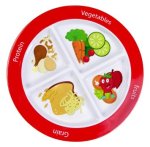
my plate image

However, Rainbow was but one special source of providing me with melting gustatory delights.  No doubt about it, Good Humor was like no other.

good-humor

The bells of the truck signaled the Coming of the Man in White. He enticed us kids to come outside our homes or from our apartments, or made us stop dead in our playing-tracks.  If we had the twenty or twenty-five cents, our saved nickels and dimes, we made our purchases.

good-humor-man good humor dot comAnd?  “Coconut for me, please.”  The delicious-tasting ice cream bar on a stick, covered completely with a thin coat of white-something loaded with coconuts pieces.  Heaven as I ate it.  Heavenly.  If my favorite was not available, I had to settle for something like chocolate cake or perhaps succumb to savoring an orange creamsickle:

good humor orange creamsickle

Good Humor exists today, in supermarkets, in 7-11, in other places, and even with a few trucks in certain neighborhood locations.  “But it’s not the same.”  Yet I would never turn down a chocolate eclair, a toasted almond, or even a strawberry shortcake bar.

Howard Johnson’s at some time was a place I remember first seeing coconut milk on the menu.  I thought that it would provide me with a special ice cream treat: a coconut milk milkshake.  O YES!  YES!  YES!  And then, later, I asked, “A coconut malted milkshake, please.”  The nectar of the gods for sure!

Gus Pappas died in 1987.  He was 83–and that was a long-ago moment.  In 1953, “Mr. Pappas” (“Gus”) bought a corner confectionery in the Byrne Building, at Garfield (55th) and Halsted: Pappas Sweet Shop.  We just knew it as the ice cream shop.  It was a hangout for me and my friend Bill Manion, or with Joe Balint.  My sister and her friends found time to have their ice cream and their teen-age talk-sessions there.
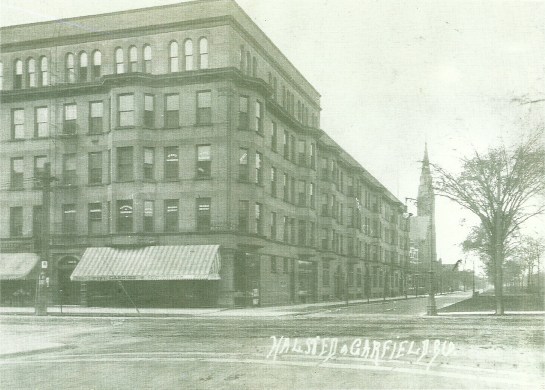
BURNS BUILDING Pat Telios Reagan BYRNE BUILDING WITH PAPPAS CORNER

No matter how warm outside, I remember the store was always cool inside, with its white tile floors and marble counter-tops.  Cool was needed to keep the dipped, rolled, and wrapped delicacies fresh and tasty (Oh, those chocolate-covered cherries!): Who needed Fannie May candies when we had Pappas on the corner?

Gus had a son, James (“Jimmy” to us), who worked in the store.  In my time, Jimmy began singing with the Chicago Metropolitan Opera.  Though his first role was in the chorus (My mother and I saw him in La Boheme.), he was a star to me.  He brought music and fun-with-music into my life, and an appreciation of opera that I do cherish.  And there is nothing today that compares to my savoring a Green River Malted Milkshake, with homemade ice cream, that Jimmy Pappas made for me.  Yum!

green river malt

GREEN RIVER MALTED MILKSHAKE

©  James F. O’Neil  2016
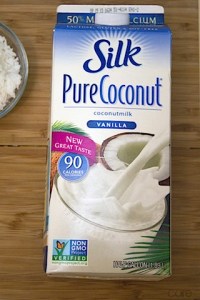
 Vanilla-Coconut-Milkshake-Silk-PureCoconut COCONUT MILK

Major Ingredient of a Homemade Coconut Milkshake