Archive

EVENTS

BY: JAMES F. O’NEIL

“Friends, Good Friends–and Such Good Friends”–by Judith Viorst (1977)

I came across Judith Viorst’s essay on friendship many years ago. It was included in a writing text, as an example of one of the major (“classic”) expository writing strategies: Classification. The content is about degrees of friendships and kinds of friendships, an essay mostly about women but also does include “men who are friends.” Viorst posits some eight or nine categories. I liked/like her essay, so much more concise and example-driven than Cicero’s “classic” essay on friendship, which I once wrote about in a college paper.

I like Viorst’s varieties of friendships, which I modified for my own use, but based on her commentary: acquaintances, companions, social friends, intimates. Yet within my own classification, I even found myself making too many subdivisions, sub 1, sub 2, and on.

What more can be said, then, written about, that is not already available, from Aristotle (now that is one-long-analytical-philosophical piece–EVER) and Francis Bacon, and not to forget Emerson–and more?

For movie-lovers, the screen is filled with examples of friends and friendships, categories and kinds. (There’s that Jack Ryan character, in Clear and Present Danger, sorting out friends, and all the President’s friends.). And Stand by Me: classic. Nor can we ever forget Bogart and Bacall; Rick and Ilse?

rick and ilseCASABLANCA

Pause with me for a moment. Hold that thought-picture from Casablanca, while I come to “black books”: those small black books within which are found addresses of friends, relationships, passwords, codes, comments. Such little black “address” books become a Revelation of Life and Times and Thoughts. And mysteries. Small address books, black, leatherette, red tabs, handwritten entries, perhaps with some phone numbers. No pictures. Special books. I never had such a black book. Instead:

JIMMY'S FIRST COMMUNIONJIMMY’S FIRST COMMUNION

There I stand, on May 9, 1948, between The Twins, my first “friend-girls.” Though my hands are folded in the prayer-mode, my first little black book was My First Communion Prayer Book, not an address book. It was probably similar to this:
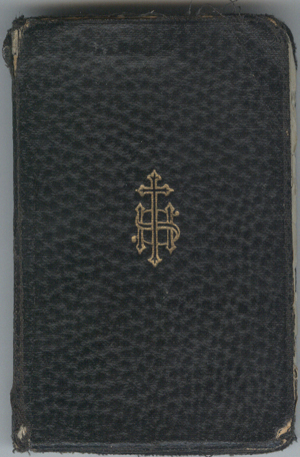
FIRST COMMUNION BOOKFIRST COMMUNION BOOK: PHOTO CREDIT: jerryhammes.com

Most likely, the book was in my little suit pocket. I used the little prayer book for a few years, until I graduated to something akin to the Saint Joseph’s Sunday Missal, then on to the Saint Joseph’s Daily Missal through high school.

Some years ago, I underwent a special period of nostalgia. I searched for a link to a past life, and another black book. I found The Book of Common Prayer, with its soft leather and gilt edges. I bought this particular book (in 2007) mostly for its beauty and its comfort-for-me content:

EPISCOPAL BOOK OF COMMON PRAYER.Photo Credit: Oxford U Press

Since the beginning, however, my little black books have morphed into larger black books, but then on to a Day-Timer, and AT-A-GLANCE (2-year format) “books.” Yet were I to have a “small black book,” it would include, among other items, the coded names and coded notes about my “something-special” friends. I once intended to write about my “friend-girls,” those women in my life who were/are special, yet certainly are not “girlfriends.”
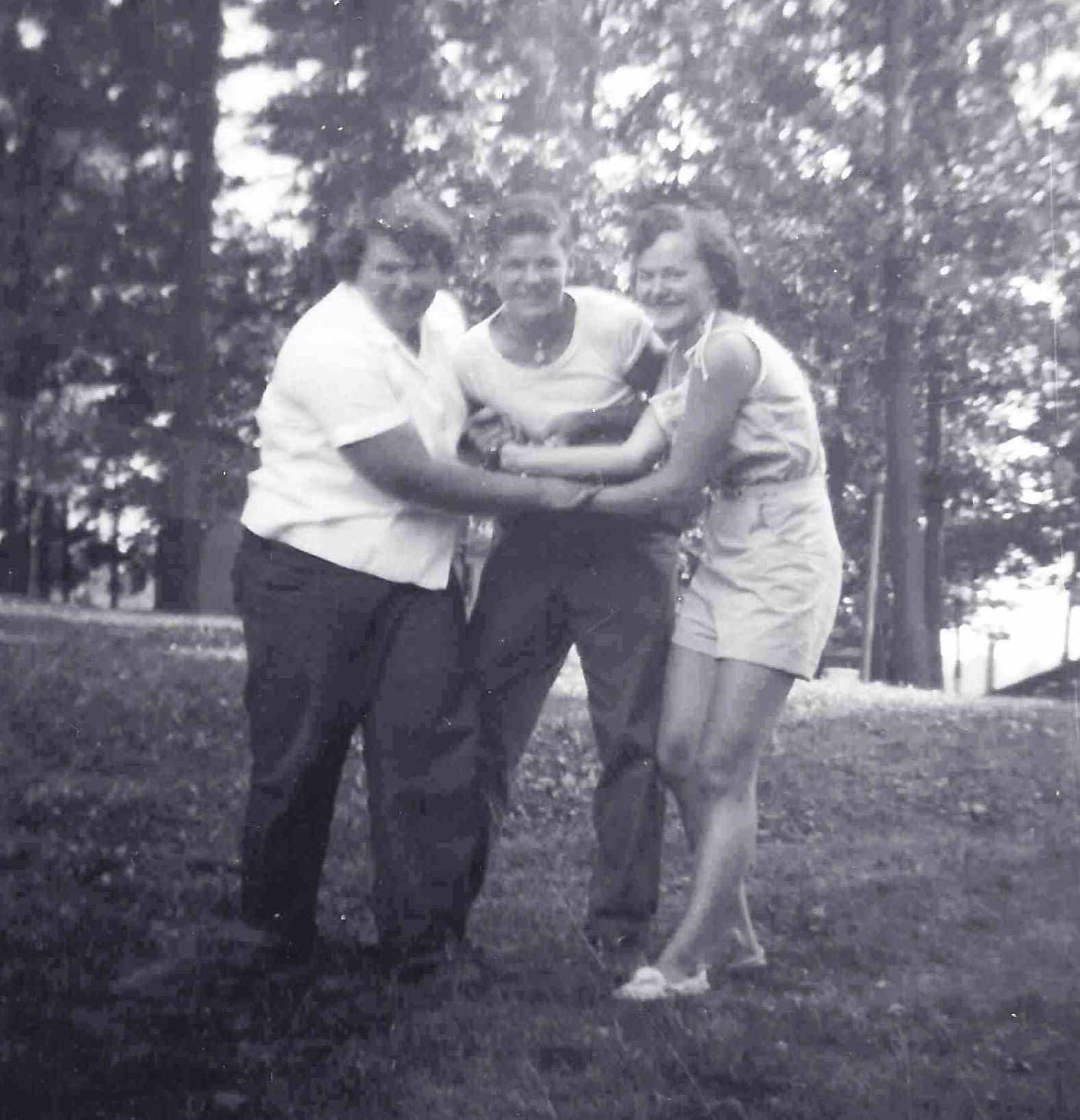
carol, jim, dianne at shubat's july 1956--10th gradeJIMMY ON VACATION 10TH GRADE

So there we were: C. Z.: At Sister Lakes, Mich., and her cousin, D. K. My first REAL Friend-Girls. Teen years in the summers, high school, and college. “Friends Forever”–until after my marriage. C. my confidante. Confessor. Mentor. Guide. Wee-hour discussions, for hours and hours, about poetry, God, friendship–and love. Then gone. A loss. One of the essential pieces of The Great Puzzle I Am…. [R.I.P. July 1998]

L. A.: Next-door neighbor: Married. I loved her. I am fourteen. I am sixteen. I am eighteen. I still love her. [R.I.P.]

T. M.: On a first date. Movies in downtown Chicago. The Longest Day.

longest dayTHE LONGEST DAY. Photo Credit: imdb.com

DUMB! Didn’t think she’d ever date me again. I was right: she didn’t. A war movie, for God’s sake?!

K. N.: Nice Czech-Bohemian girl from Chicago. I had her pictures pasted everywhere. I was a fan-atic. She was my pubescent-time fantasy. Silly infatuation with a goddess, Jeanne Eagles. I was The Man with a Golden Arm. KimKimKim. I suffered from Vertigo:

KIM.KIM.KIM.KIM.KIM.KIM.KIM.

P. S.: “My” BRIDE OF CHRIST. Most holy and beautiful. A spiritual distraction, came to be my first dark night of the soul. To the nunnery! Curse God! Conflicted. “What a friend we have in Jesus.” Not so. Or so I thought. Time healed.

AUDREY HEPBURN in THE NUN’S STORY. Photo Credit: amazon.com

D.T.: SECRET ADMIRER. I kept address and phone number in secret place. Secret letters. Mail from “D.T.” The Vixen? The Destroyer? Just a friend? Serious discussions. Two lost souls.

Oh. And:

saint pauli girl vintageadbrowserPhoto Credit: vintageadbrowser

M. V.: “You’ll never forget me.” Too young. I’ve never forgotten her. “You’ll never forget your first….”

And, finally (here), 

E. W.: Untouchable, with braces. Virgin on Pedestal. Adorable. Adored. Forever a Good Memory of a time that was good and wholesome. And how I did so well learn how to spin that bottle with her!

My friends, and such good friends at the right time.

© James F. O’Neil 2015
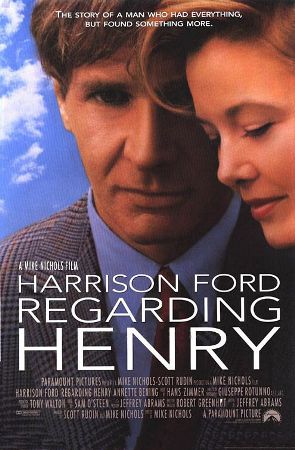
Regarding Henry wikipediarandom hearts poster

[For some interesting viewing of “friends” and “friendship,” try Random Hearts (1999) and/or Regarding Henry (1991).]


BY: JAMES F. O’NEIL

My brother Denis recently asked me for a copy of a handout I used in my writing classes: “The 3-8 Paragraph.”

In my memories of a time many years ago, my friend and colleague, Walt, gave me a handout called “The 3-8 Paragraph Method for Writing.” I was not as overly enthusiastic about using it as he was; he explained it was something he had used in teaching for some years. And he had gotten it from someone else during a long-time-ago workshop.

This method shows a simple way for writers to get started working on a topic, especially memories of a time–bringing about “the thrill of mining one’s own experiences,” as Jeff, a former student of mine, described it.

I found it to be a gem in my writing programs, after using it for a while. Since that time ago, I had been using this handout as one of the best pass‑and‑share/show‑and‑tell items I have ever received. I have given workshops describing how to use it, taught it, and shared it with colleagues. (Some might know it now as a method to help develop the so-called “essay map.”)

And so much for that.

However, my remembering now the times I have used the method makes me want to share the most essential element in the process, the keystone: having the concept of “three” or “3” or “threesies.”

This might seem too easy. And it is. And that is all I am going to say about that. Well, not really.

How much does “three” play in a life? What should I know about “3,” other than it comes after 2 and before 4? But wasn’t that a difficult thing to do, counting as a very young child, as you think back on it?

This is not about numerology–but it could be: the study of the use and power of numbers. Though I want it not to be “occult” or “cult-ish.” But think and remember what you might know about this number and its effect upon your life–or what memories you have about something “three.”

Maybe, “Once upon a time, there were three bears….” Why three?

“And now, Earth, Wind & Fire!” (though the classical elements add the 4th, water)

1st, 2nd, and 3rd place… (blue, red, and yellow [white for 4th place])

“Three men on a match”: That is “bad luck.”

Picture this: In the wind, a soldier during World War I lights a match, at night or in the dark, cupping his hand to prevent the wind from putting out the match. Then the cigarette is lighted. He shares the flame with a 2nd soldier. Then a 3rd soldier attempts to use the fading fire. He is the dead man, shot by an enemy sniper who has been alerted by the first light, takes aim on the 2nd, and knows there will be a 3rd.  Bad luck.

That is how I learned it.

In the novel As Time Goes By (by Michael Walsh, 1998), Rick Blaine shares a light with a friend. Reading that, I at once thought of the three-men-on-a-match anecdote. It happens that way with me.

Between 1490 and 1510, Hieronymus Bosch painted Garden of Earthly Delights, the modern title given to a triptych.

The Garden of Earthly Delights by Bosch

The Bosch Garden

What is a “triptych painting”? It is a work of art divided into three sections, or three carved panels that are hinged together and can be folded shut or displayed open. A trifold, three-sectioned something. Like a trifold wallet, or greeting card.

And then, remember “Two’s company, three’s a crowd”? Not as dramatic as the match story, but it could be, for some, a serious “threesome” relationship–or a stage of growing up. Just think of how many times you were the “odd man out,” the “third wheel.” Growing up, did you have fun as a “trio”? Or was it ever a “love triangle” (in French, ménage à trois).

Triangle: “… and the hypotenuse of a right triangle is….” Let’s think about that baseball field and see, not three bases but two triangles abutting one another across the mound in the middle. And see the 127 feet from first to third. Hypotenuse. Geometry. Tenth (10th) grade for some. Oh, that throw from third to second to first? That’s known as a “triple play.” That’s a baseball rarity.

Triple, as in “triple-crown winner.” Or the “trifecta.”

What gives me pleasure? “A loaf of bread, a jug of wine, thou.” Yup, another “threesie,”

In The Little Mermaid look carefully at the “trident” that King Triton (“tri-”) carries.

King Triton wiki

King Triton (Credit: Wikipedia)

 Or remember the Times Table of Three: that “three times three equals __.”

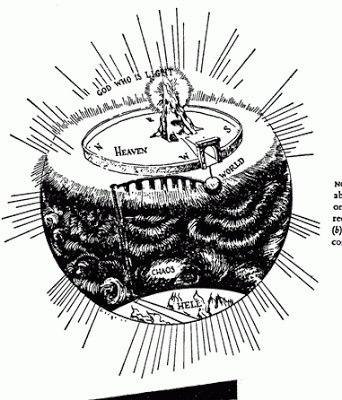
Finally (though this is by no means the last word on threesies), the poet John Milton wrote Paradise Lost, the massive poem about the massive battle about good angels, bad angels, and man. And God. The places were Milton’s poetic descriptions of mythic threesies: heaven, earth, hell.

Milton’s Universe

Though his poem was written “way back when” (1674?), even today writers ask (and answer in science fiction, fantasy, or pop literature), “What is the tripartite cosmology common to many foundation myths?” Outer darkness, earth, and some sort of heaven.

You will not look at three (3) the same way again…

 © James F. O’Neil 2014

The Three Stooges (as found in Wikipedia)

The Three Stooges (as found in Wikipedia)


BY: JAMES F. O’NEIL

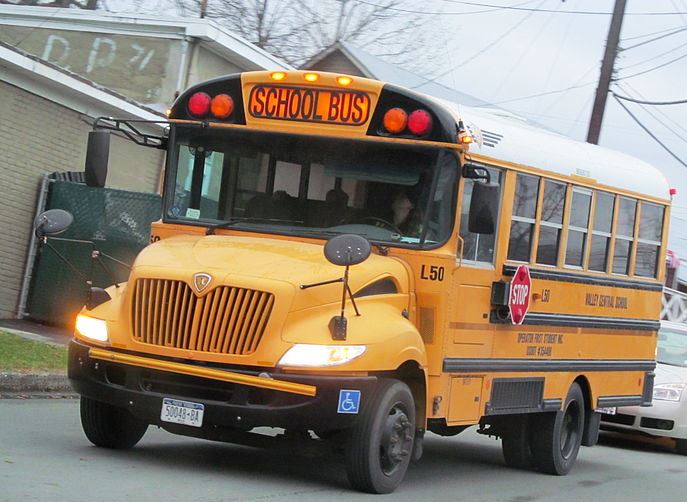
Looking out from my vacation cottage porch (at 8:20 a.m.), I could see across the small lake–and could see the red lights flashing, the stopped yellow school bus, and three or four little children climbing the steps into the bus.

When I first saw what was happening, the pseudo-Latin poem popped into my head. It always seems to happen that way, as my mind drifts at the word “buses” (or the less prevalent “busses”):

O Sybilli, si ergo,
Fortibus es in ero.
O nobili, demis trux:
Sevatis enim? Causen dux!

O see Billy, See ‘er go!
Forty buses in a row.
O no, Billy, dem is trucks.
See what is in ‘em? Cows an’ Ducks!

It makes no sense in Latin. Just some silliness from high school that has been etched into my memory, and consciousness.

“O Sibili si ergo, fortibuses in ero. Nobili demis trux: sewatis enim? Cowsendux!”

School buses. In a row.

???????????????????????????????????????????????????????????????????????????????????????????????Row of Buses…

What is there about a yellow bus, flashing red lights, children entering/exiting a school bus? And, What is “school bus yellow”?

School BusSchool Bus (Front View)

“Yellow was adopted as a standard color for North American school buses beginning in 1939, the adoption of a standard shade of paint. The color, which became known as “school bus yellow,” was selected because black lettering on that specific hue was easiest to see in the semi-darkness of early morning and late afternoon. Today the color is known as “National School Bus Glossy Yellow.” [Wikipedia]

When I was growing up in Chicago, I never rode a school bus. In the City, my sister, one smaller brother, and I walked to grammar school–six or eight city blocks.

My transportation to high school (a private Catholic school) was the CTA: Chicago Transit Authority.

cta by sullivan

CTA by Sullivan

I rode a city bus from 55th and Halstead to 63rd, then transferred for a long ride on the “L” (The Chicago ‘L’: sometimes written as “L” or “el,” short for “elevated.”), behind apartments’ back stairs or fire escapes–landings leading to second- and third-floor porches filled with toys and old ice boxes, or “stuff.” Past the buildings, then down, through and under downtown Chicago as the “L” went “subway.” I exited at Chicago and State streets, and walked a few blocks to school. For four years, I followed these routes, carrying a book bag. Neither snow nor rain nor heat nor gloom of early winter night prevented me from completion of my high school diploma.

Chicago ElevatedCTA EL

However, no school bus experience.

During graduate schooling in Minnesota, my taking courses in school administration, I learned about transporting students, planning bus routes, buying and selling of buses, transportation obligations of school boards, and school bus safety.

My own kids first rode school buses where I became high school principal. Here I was better educated about snow days, closing school early because of storms coming, and athletes traveling on buses to their events.

But it was in the southwest outback of the state, when I served as school superintendent from 1976-1980, that I became most knowledgeable in school bus “stuff.”

(In 1980, there were six major school bus body manufacturers producing full-size school buses in North America: Blue Bird Body Company; Carpenter Body Works; Superior Coach Company; Thomas Built Buses, Inc.; Wayne Corporation; and Ward Body Works. Today only three exist: Thomas, IC [Integrated Coach], and Blue Bird. [Wikipedia])

IC  L50 BusIC Integrated Coach Bus

Those four years have allowed memories to come to mind when I do see a school bus (or “busses”) on the road or street or highway. Most memories are good and pleasant.

Nervousness on my part came during bus inspection done by the Highway Patrol. The drivers and I awaited the results. I was ultimately accountable for the buses. I made sure the drivers took good care of their buses, knew their routes and their riders, and had me along sometimes as a rider so I could know as much as I could about the driving process.

Winter brought most activity with the drivers and me. I was responsible for school closings. I had to know the weather from one end of the district to another. I drove the school car in early morning “to check the roads.” I was in contact with neighboring school administrators and radio stations to help me make a decision.

And athletic events being cancelled and rescheduled? Could the buses travel safely? Sometimes there were tense times, awaiting the arrival of a bus of cheerleaders and athletes after a night game during the winter season. Even though the buses returned safely, but very late, the roads and heavy snow kept the students in town for an overnight at designated homes.

Yet I DO remember riding a bus route, with the snow plowed and moved so that it WAS over the height of the bus! High flags on every bus so they could be seen. Exciting!

[Colorado]  Snow Drift by dailycamera. com

[Colorado] Snow Drift by dailycamera. com

In spring, creeks rose and bridges sagged. I had to determine weights of gasoline, buses-over-bridges routes, and re-routing students to long driveways or distant farm homes.

Then the buying and bidding process, almost like expecting a baby: Who has the bid? Who will provide the chassis, and the body? Such a small district with six or seven buses, yet the bidding process was the same in all districts, whether buying one bus or three or more. (I made sure the buses were painted with high numbers so observers might consider our district larger than it was. Fun.)

I even drove a school bus! On US Highway 71, I steered the bus to another town, to have new tires installed. I was told that superintendents had emergency powers, allowing them to drive buses. (I never did check into that….) But what a time I had at the wheel of a Blue Bird Bus with a Chevrolet engine, or my favorite Thomas with an International Harvester powertrain. (IH was an early manufacturer of medium/heavy duty trucks. Although based upon truck chassis, IH also became the leading manufacturer of the chassis portion of body-on-chassis conventional [type C] school buses. Wikipedia)

Yet of all those memories of a time in Minnesota, a high point had to be the personal tour of the Blue Bird bus factory, then in Mount Pleasant, Iowa [1962-2002]. While on the way to a Florida vacation, we made a special arranged visit. We saw the assembly line, and how it worked. We watched the uniting of body with chassis. We walked inside an incomplete body, with bundles of wires and harnesses being installed. Ladies were working in the factory, sitting at large sewing machines, making covers for the bus seats.

I never knew before then how all the parts came together, to become a unified bus, to be delivered to a school district, the result of a bidding process that I had come to know and was part of.

So. One can see this story isn’t about an exciting Lamborghini,

Lamborghini by UK Telegraph

Lamborghini by UK Telegraph

or a Lear jet, or even about the building of a John Deere tractor.

John Deere Tractor by Restoration Project

John Deere Tractor by Restoration Project

It’s simply about a school bus. Or riding a school bus. Simple.

Yet I am certain that any reader who was a rider is now filled with School Bus Yellow Memories.

© James F. O’Neil 2014

BLUE BIRD BUS by purplewave. com

BLUE BIRD BUS by purplewave. com


BY: JAMES F. O’NEIL

Vacation: vacation refers to recreation, a get away from day-to-day chores to devote time specifically for relaxation; it can be ritual, annually around the same time, or it can be a one-time event [going to Paris for a wedding anniversary, for example]. It is a holiday…

Is summer really over? Perhaps so, if one goes to a public library recently to see posters similar to this: “Summer Reading Program a Success.”

In agrarian America, most family vacations occur during the summer, while the crops are growing and time for getting away is possible. School is out, often near the end of June, to include July and most of August. Some school districts begin “fall” classes in early August; some wait until after Labor Day.

In the UK, school days often begin in early September, with calendars for holidays similar to those in the US: Christmas and Easter, and Spring Breaks.

However, there is something about vacation-time: summer reading programs, mobile libraries in small-towns, Minnesota. For many, summer is the time for reading. Probably because required readings of books and chapters and notes do not exist. It is Summer Reading Time.

Summer Reading Southern Pines, NC

Southern Pines, NC

I am a reader. Summer or not. But summer was really the time I enjoyed for choosing activities for myself. And choosing the books I wanted to read, liked to read (though I did receive a summer-reading list at the end of the school year. Nevertheless, I could still choose from the lists and lists.).

For the past nine summers, I have had a “vacation”: a retirement of sorts. But I lived and loved and enjoyed the local library. (Barnesville Hutton Memorial Public Library is affiliated with the library system that serves Barnesville, Ohio. The collection of the library contains some 74,000 volumes; the library serves a population of more than 7800 residents.)

Barnesville, Ohio

Barnesville, Ohio

What occurred to me of late was how much more time I spent on vacation–and in the library–than I did use the local library when I was at home. This is like being back in school: vacation-time reading, summer-time reading programs.

And I love libraries in the summer.

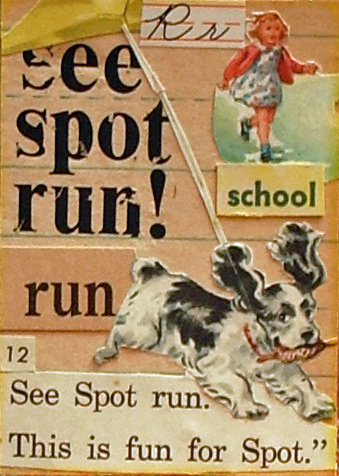
“See Spot. See him run. Run, Spot, run.”

Pic: Sharondegaard

Pic: Sharonodegaard.com

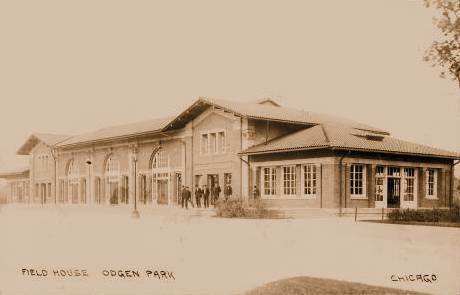
That was early elementary reading, and it was “elementary.” And so it goes/went. Then I discovered Ogden Park Library, on the South Side of Chicago. Along with the summer Park Rec rec program (swimming, weaving, and that stuff), there existed the park library: That was the center of my summer life, riding there from home or swimming class, exploring the shelves, checking out books. Checking out books. Checking out books. Heaven.

 Postcard Pic: Chuckman's

Postcard Pic: Chuckman’s

Other libraries that sucked me in, tasted me, chewed me up, digested me–those Francis Bacon’s books he wrote about– I remember so well, in summer, doing research, walking the stacks (something not often allowed now in many larger libraries), checking out books–or simply just losing myself at a table, surrounded with books.

Chicago’s Newberry Public Library:

Newberry Pic: Wikipedia

Newberry Pic: Wikipedia

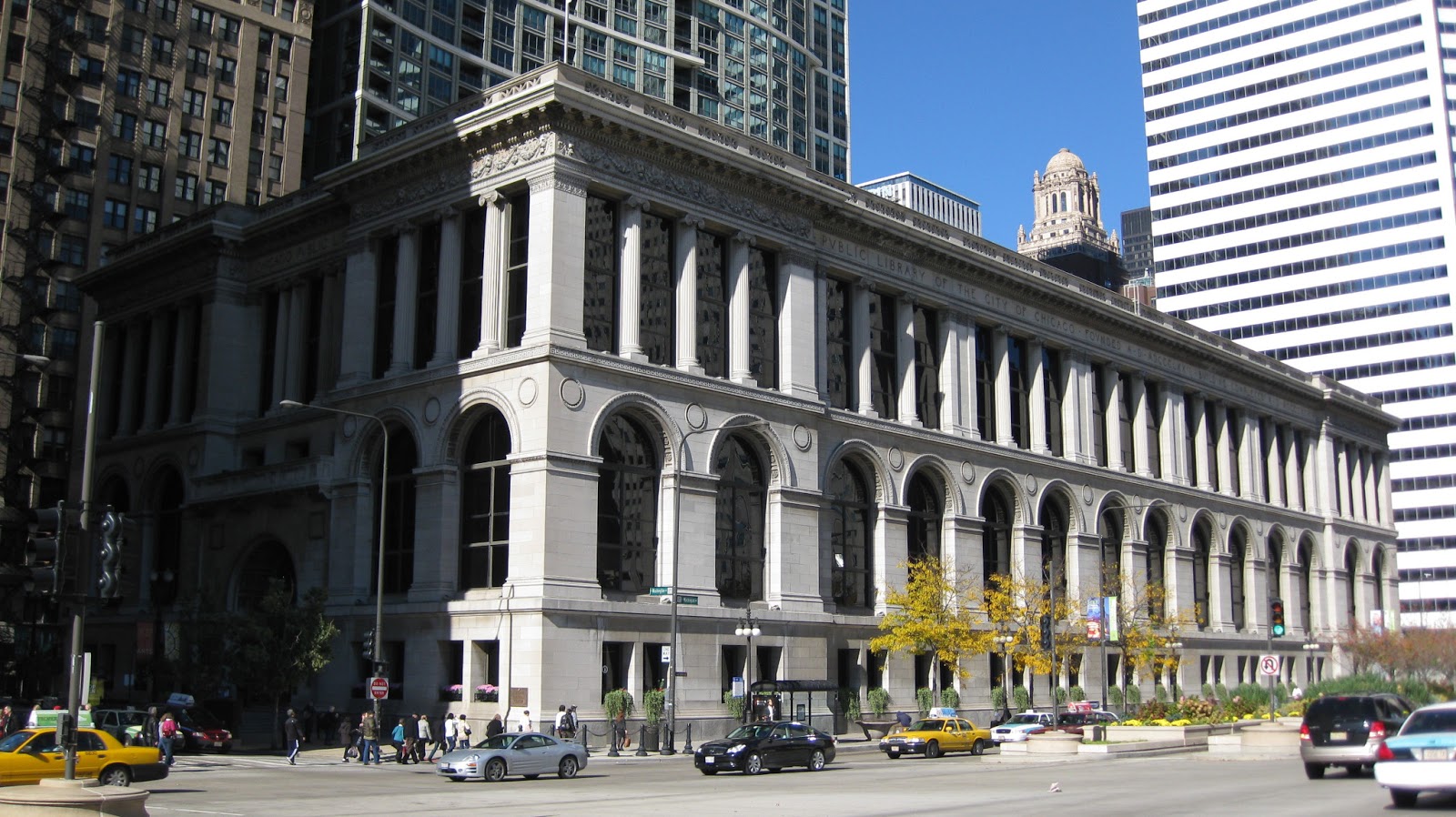
Chicago Public Library [old building on Michigan Boulevard]:

Old Public Library

Old Public Library

I had a bicycle stolen in Ogden Park in front of the library. In such a hurry to drop off books so they would not be over-due, I did not chain up the bike. In that short in-and-out time, my bike was stolen; it was recovered and returned to me (most of it) a year later. What a sad library memory.

Lost Bicycle

Gone Bicycle

I worked in my high school library (mostly dusting shelves–though I have a good yearbook picture of me in the stacks); I worked in my college library (mostly dusting shelves and books). Yet I wrote graduate papers (for Milton and Shakespeare courses) in the library of the University of Minnesota–during my summer “vacation” time.

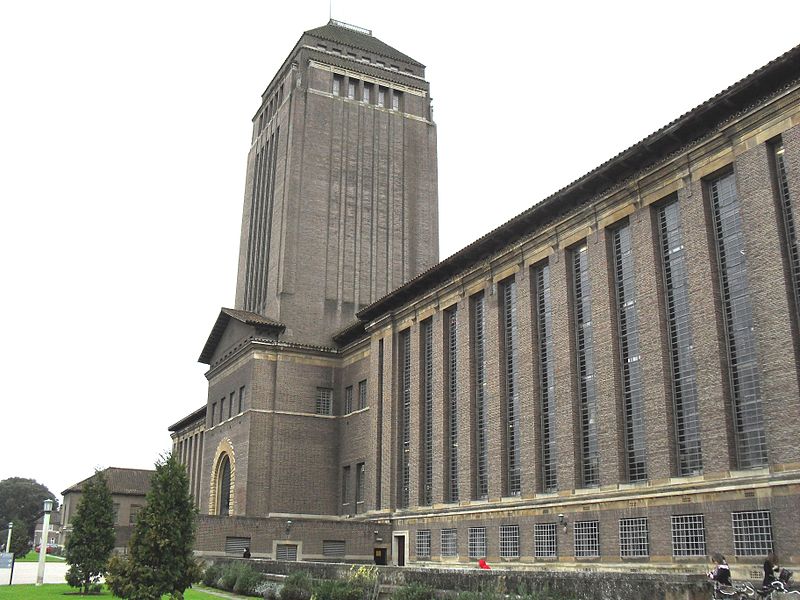
Not many years ago, for three summer “vacation” times, I was so fortunate to be in Cambridge, England. The main “big” library was not open to summer students (except practically by Papal decree or a letter from the Queen). But no matter, I was in the summer-school library, walking the aisles, touching the volumes and volumes, doing research on the aorist tense of Greek, used by James Joyce in his short story “The Dead”!

Cambridge Pic: Wikipedia

Cambridge Pic: Wikipedia

I can hum “Marian, madam librarian” from The Music Man–often. I’ve got trouble, right here–in love with books and libraries.

And now, September, then November–and summer is over. “Vacation”? I know I can have everything I need now through the Internet. I don’t need summer.

No?

But walking the stacks, touching the volumes and their spines, smelling the books. And, as in The Music Man, having a librarian, like Marian, checking out my books. That’s what love has got to do with it. I love libraries.

© James F. O’Neil 2014

I Love Books

I Love Books