Archive

EVENTS

By: James F. O’Neil

All I Really Need to Know I Learned in Kindergarten–Robert Fulghumall i needed to know

My mother once overwhelmed me by reciting the names of so many of her high school teachers.  Her telling was many years ago–and many years after she left Lindblom High School in Chicago.  I once tried to replicate her memory of my teachers.  Once.

Throughout my teaching career, I was (and still am) a firm believer that “teachers teach as they were taught,” choosing eclectically the best practices and avoiding the worst of the worst.  I always wanted to become aware of those who were memorable, or non-memorable, teaching influences in my life. 

I, for example, though not starring in many school plays, hated to memorize lines.  I hated any type of public recitation, from a “Bah!  Humbug!” in 7th grade to “Friends, Romans, countrymen” in 10th grade.  Yet despite my aversion to memorization, there was no way out.  I had to do it: multiplication tables, geometry theorems, aorist tenses in Greek, and even argumentation principles.

Memorization is an action of memory, hence the root of the word.  “If memory serves me correctly,” usually it does.  And for some, memory serves better than for others.  What matters about baseball statistics or capitals of states or GNP of countries?  Caring.  Who cares?  Yes, that’s the point.

The Pythagorean theorem–a² + b² = c²–meant nothing to me.

Who cares?  I didn’t–until a teacher (a nun, a Religious Sister of Mercy, RSM) explained that throwing a ball from third base to first over the pitcher’s mound was NOT 90 feet, but 127.27922 feet.  She and Pythagoras made that very clear.

I cared now.  I needed a strong arm to play third base.

Caring determines memorization acumen.  If I care so much about subject X, for whatever reason–to get a good grade, to show off, to complete myself, to prove something to myself or to others–then memory will serve me well.  (Though for certain school subjects, “Use it or lose it” does come into play.  I rarely use “side-angle-side,” the quadratic equation, or R-O-Y-G-B-I-V–except when I see a rainbow.)

So what good to remember names of teachers unless one cares?  How often am I actually called upon to write an essay on “The Most Influential Person in My Life”?  Teachers might come to mind were I writing a college admission essay.  Or “the fastest airplane ever” if I were an airplane enthusiast.  Or anything with lists or numbers or beliefs or…ad infinitum (Ah, that’s one to remember: “to infinity” but then I might add “and beyond” for an update to include time and space: ad astra per aspera, an axiom or motto adopted by some pilots in World War Two.) 

And the list goes on. . . .

But those special teachers: I cannot forget.  Ever.  Like my mother, no matter how old I am, I remember.  Or try to remember.  But is the past worth returning to?  Do I need to be able to remember or list teachers?  

Joseph Epstein

Joseph Epstein

“Memory,” Joseph Epstein writes, “with the ability it bestows to allow a person to live vividly away from the body and immediate environment, is a possible sign of the ability to live after the body has disappeared.”

Receiving notification of the death of a former teacher, I page through my high school yearbook.  The spirits live, as Epstein believes.  I was looking to find a picture of one of my “ghost” teachers, to find a picture that might enliven a memory.  There he was.  His death notice showed him to be thirteen years older than I, both then and now.  However, he looked so young in the picture; he was never “old.”  (My graduation picture shows me at age 18.)

Opening the pages–still mostly intact after fifty years!–I find pleasure.  Calm overtakes me: I see my teachers; I look into the eyes of my classmates.  There is something that even thrills me.  My youth?  All our youth?  (Except for those “old” teachers.)

Yes, those memory-filled pages (as trite as it sounds) bring smiles to my face, stories into my mind.  And those teachers, those favorites, live on: history, science, Latin, math, music, religion, even Greek and some German.

Yet I could not, however, list them all from memory.  When I open the book, however, I visualize and want to tell the stories.  I want to recount who did what, what “battles” were fought, who still survives.

A yearbook isn’t simply a book about “years”; it is about life.  It has a spiritual life of its own–even though a body has disappeared.  Timeless.  Though I might age, I am forever young within its pages.  These pages contain so much memory of a part of my life–even, perhaps, an incalculable part.

And, really, I was a handsome guy….

©  James F. O’Neil  2014

 Pic of 1936 Yearbook from Lindblom High School (Credit: eBay)


.



BY: JAMES F. O’NEIL

“In by 7, Out by 11.” 

Some dry cleaners had that as their motto, often prominently displayed in the front window of the store.  As a kid, I never had to have any pants or shirts by 11, so I really did not care about the saying.  However, I am sure that for men who had to have dress pants ready for an afternoon meeting or an evening’s activities, this type of cleaners provided a necessary service, often “at a moment’s notice”: “Same Day Service.”

Neon Sign

I pictured girl friends or wives rushing to be there by seven in the morning, to be able to have shirts ready and pants laid out, with proper tie, for the dinner, opera, or theatre when the man of the house arrived home from work.  No doubt it was a rush job–and maybe poor planning on someone’s part.  Nevertheless, the cleaners did their job–and the man was dressed for success.     

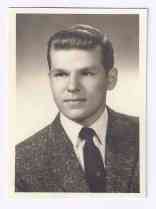
Where I went to high school, I had to wear a suit coat and tie.  For four years, that was our daily dress.  My coats often came from my Uncle Bill, hand-me-downs that worked just fine.  The coat usually stayed in my school locker; shirt and tie were put on in the early morning at home.  My high school yearbook picture shows me so neat, with shirt and tie.

Jimmy yearbook picture 1960

SENIOR PICTURE

(My dad did not wear a tie to work to drive a bakery truck, but he did for church–and dinners–and taught me well how to tie my ties.)

Teaching in high school in Chicago, I wore ties every day: with white (laundered and starched) shirts, for three years.  Later, in Florida, I continued to wear ties, and was comfortable, for the rest of my teaching career.  For the most part.  And that was all right, especially when I was teaching classes like Professional and Business Writing.  I felt that I was setting a kind of standard often mentioned in the textbook as good business dress–even having the tip of the tie “just below the bottom of the belt buckle.”  Dressed for Success…        

That is how I was dressed–wearing a striped Oxford button down, tie (100% silk), and dress trousers–on Gall Bladder Tuesday.  This was a class day like none other EVER in my whole life, with “one of those moments that changed your life forever.”         

I have had my share of illnesses and sickness and operations: tonsils, appendix, hernias, and the awful total knee-replacement surgery.  “On a scale of 1 to 10, what is your pain level?”  I was asked when I awoke in the recovery room after my knee surgery.  “ELEVEN!  ELEVEN!”  And that was no kidding around.          

That was the worst pain I had ever had in my life.  I thought.          

My Tuesday night class progressed as normal, having begun at 5 pm.  Most of the students were present for a professional business lecture.  My tie was perfect, one of my favorites, gold with miniature World War I biplanes in neat little rows, evenly spaced.  I tied it without a problem earlier in the afternoon, around three o’clock.  I planned to end the class at 6:30, with time for discussion and individual questions.  As usual, during the lecture, I was beginning to lose my voice, and was in need of a throat lozenge or cough drop.            

Something happened that Tuesday night after I took that cough drop.  I winced–and began to sweat.  Perspiration, like never before.  That was one powerful Hall’s cough drop!  I was then having a worse pain in the gut.  I did not recognize this pain, and was soon beginning to get very nervous: about me, about the class.  I hung on, of course.  I was the teacher.  By 6:30, they and I were ready.  Class was over.  Then I was alone with the pain.  I sat down and gulped the rest of my cherry Coke.  Then some water.           

I gathered leftover handouts, locked the door, and made my way to the faculty parking lot.  In the car, I sweat, turning the AC on me.  I nearly ripped off my silk airplane tie, and unbuttoned my shirt, down to my belt.  I sat back, trying to decide: a heart attack or a bad candy bar I ate earlier.  I weighed the decision to go to the hospital, to home, or to the nearest fire station.  I chose home.   

“No, can’t do it.”  I made my painful way to the hospital near my home, calling my wife to meet me.  By now I was practically holding my ankles near the gas pedal from pain.  I was in the hospital hallway by 7:00 pm.            

A paramedic walking in the hall helped me into a wheel chair.  I was rushed into an exam room, stripped of all but socks and my undies (“Make sure you always have on clean underwear in case something happens!”  I could hear Generations speaking), and then wired to every machine available.  High blood pressure, intense pain, but no heart attack.

“What is your pain level, Mr. O’Neil?” the ER nurse screamed at me.  “MR. O’NEIL!”  Oh, it was off the chart, as I squirmed on the gurney, on my back, of course, doubled-over with pain.

pain measurement scale

“HOW MUCH DOES IT HURT?”

Dilaudid did it: “AAHHHHHHH….”

By 11 pm, after a CT scan, the ER doctor, having ruled out an aneurysm, decided to consult with the surgeon on call.  I was moved to a room at 2:15 am, where I was morphined.            

At 6 a.m., “Gall stones for sure,” assured the surgeon, drawing me a cartoonish explanation.  “Surgery at 9.”            

“Take a deep breath, Mr. O’Neil,” some masked person spoke, putting something over my nose.           

I was in by 7, out by 11, then back in the room, and was told all went well.  I would be able to leave after 5!

What dry-cleaner success!           

At 7:30 p.m. in the dark, I was home, weighing a bit less.  Twenty-four hours!  I had a reamed out belly button (bandaged, of course), and three neatly spaced slits for the instruments.  I did not have to endure a lengthy procedure of cutting and poking and stitching and tubing and pumping and being sick for five hospital days.  I was certainly lucky.           

Of course, in the ER, the paramedics had chided me.

“Call 9-1-1!”

“Yes, you’ll find me by the side of the road, by my car.”  I thought of that, but then thought, What would happen to my car?  So I tried for the hospital.           

Besides, I had advanced degrees.  I knew what to do….  Dumb…

©  James F. O’Neil  2014


BY: JAMES F. O’NEIL

“So what can you tell us about your first Christmas as a married couple?  What was different or unusual that you can remember?  Any special memories of that day–or that season?”

“Let me try to recall.  Y’know that was fifty Christmases ago…  If I go back…”

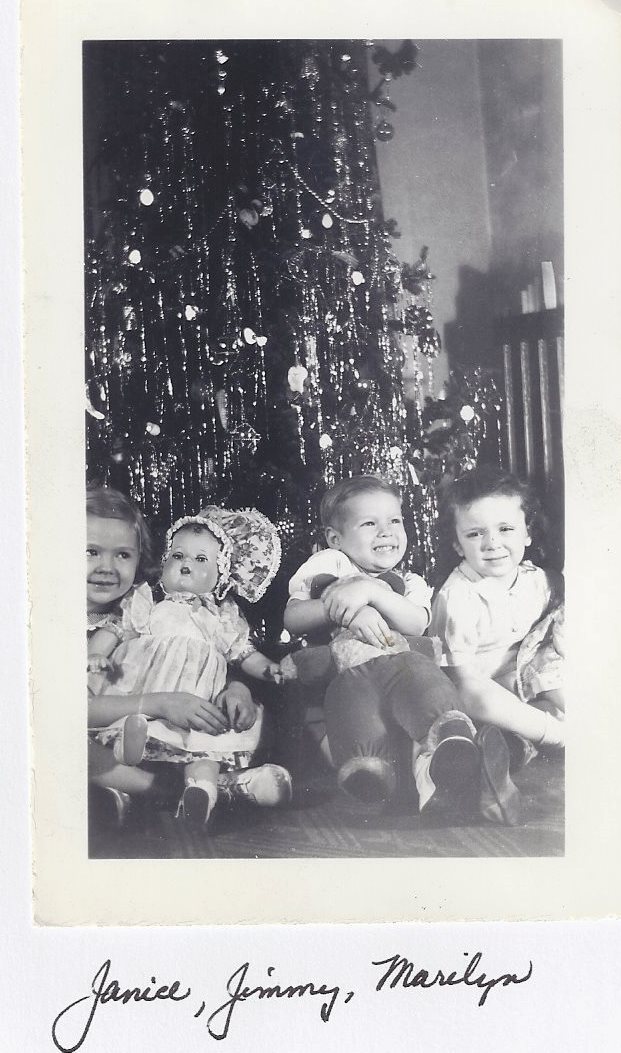
christmas with jan and marilynChristmas Photo

“That picture is an early one with my sister and my cousin.  We were always together, like The Three Musketeers.”

“But your first Christmas of marriage.  Do you have a picture of that?”

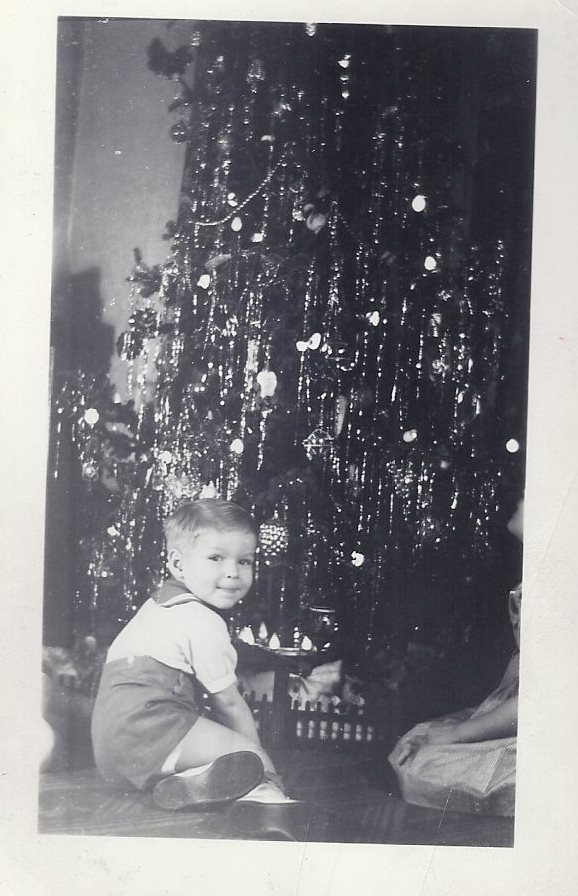
“How about this one?  I was really cute in this one.”

jimmy's christmas

Jimmy’s Christmas Photo

“No.  That is not what I need for the article.  What else do you have?”

“Those old pictures from 1963 must have been with my Argus C3 and were slides.”

ARGUS C3 Photo Credit: Wikipedia

“That was a wonderful camera.  I think I got it as a Christmas present in 1957 or 1958.  I don’t have those slides anymore.  But I do have some black and white pictures of Garfield Boulevard if you want to see them.  No?  Well, sorry about 1963.  I know I took pictures.”

“Please.  I’d like you to tell me what you remember about 1963.”

“I remember one Christmas when I was in grade school.  It was so warm that we walked to Midnight Mass at Saint Justin Martyr.  I remember wearing a pink shirt and dark tie–or maybe it was the other way around.  Anyhow, no snow and warm.”  [1954: 45 degrees]

“Our Christmas in 1963 was a cold one [26 degrees].  In 1966 we were living in Minnesota.  But Chicago had worse weather–and people remember The Storm of 1967: lots of snow.” 

Chicago Snowstorm 1967 Sun Times http://www.suntimes.com

“My new wife and I lived in Arlington Heights in 1963.  We had a three-room apartment: living room, kitchen, and bedroom.  And bath, of course.  A nice new apartment building.  I remember that address: 222 North Salem.  I can remember most of my addresses where I lived.  Most.

“Anyhow, we had a small tree in the corner of the living room.  Our first tree, a “Charlie Brown Tree.”

charlie-brown-christmas-tree-jpg1 Charlie Brown Tree

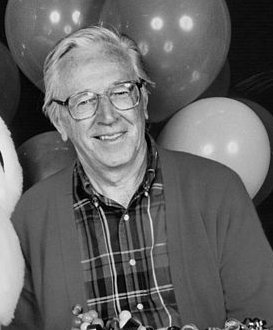
“Everyone seems to have had a tree like that.  Probably that tree we relate to–and why Charles Schulz was so successful.  We all have those common memories.”

Charles Schulz from Wikipedia

“Anyhow.  My dad always had a surprise for us or for the family.  One year he gave my mom a watch, in a box of Fanny May chocolates. 

Fanny May Chocolates for Gifts

“He always put an envelope on the tree for each of us, with a little money inside.  One year–and it is memorable–I got an Underwood portable typewriter.  That was 1956.  I used it through high school and college.  I still have it; it still works.”

underwood typewriterPhoto of My Underwood Leader

“I can’t remember many presents or gifts under that Charlie Brown tree in 1963.  I do remember a black tie-tack and an umbrella.  And the homemade coffee table made by my new wife’s brother Dave.  Mosaic squares.  Lasted a long time.  A high school shop project, I think.  But the most special present was not to arrive for another eight months: our first son.”

“Well, thank you.  I must go now.  I appreciate your time and your memories.”

“Y’know, since ’63 we’ve had many trees and presents.  Oh, and a cold, nose-numbing, stay-inside-and-keep-warm Christmas: 1973.  In western Minnesota, -16 degrees, without the wind.  That was some Christmas!”

“And that’s about all…for now.”

© James F. O’Neil

 TREE 2013Christmas Tree in 2013

By:  James F. O’Neil

English, once accepted as an international language, is no more secure than French has proved to be as the one and only accepted language of diplomacy or as Latin has proved to be as the international language of science.”  Edward Sapir

My New Latin Grammar by Charles E. Bennett is the 1957 edition.  The first edition, “presenting the essential facts of Latin grammar in a direct and simple manner,” dates to 1894. 

 LATIN BOOK 10-31-2013MY LATIN GRAMMAR BOOK

Timeless.  Priceless.  For this little green book which I managed to keep, despite my years and years of disposing of my books–selling them, donating them, garbage-ing them–still provides me with answers I might seek.  But more: It is a concrete reminder of my years of studying Latin. 

I’m infected with Latinity.

I look upon my education–and my being Latinized–a great gift, monetarily paid for by others, worked for by me and by my teachers.  My testimony is to all hard teachers, easy teachers; good teachers, bad teachers.  I learned from them all: amo, amas, amat [I love, you love, she loves]…porta, portae, portae, portam [the gate, of the gate, to or for a gate, the gate]….

In a humanities class I used to teach, I built an entire unit around three Latin words or phrases: ALLELUIA:

alleluia commons.wikimedia.org

GREGORIAN CHANT ALLELUIA Credit: commons.wikimedia.org

GLORIA:

VIVALDI GLORIA

GLORIA!

DIES IRAE:

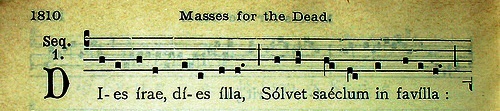
DIES IRAEGREGORIAN DIES IRAE

The themes, motifs, and tropes are around us, as soundtracks, as performed by contemporary vocalists, or even as parts of television commercials.  But not everyone can always recognize a Latin word as a prayer when found on a New Age soundtrack or CD by Aria, Amici, Constance Demby–or Kevin Wood:

sacred kevin wood ScenicListening.com

Credit: ScenicListening.com

Nevertheless, those words are there. 

I once explained that after a moving experience, whether musical or visual or literary, we often have a unique “what’s-it-to-me?” feeling or response.  It’s akin to being “slimed,” like in Ghostbusters.  After we close the book, or turn off the movie (or leave the movie theater); are quiet after hearing “Un bel di vedremo” from Madama Butterfly; or after sitting down after seeing, for the first time, Notre Dame Cathedral, or having walked within Hagia Sophia, or stood overlooking the Grand Canyon, we remark (in awe): “WOW!” or something humanly pathetic.  For we are at a loss–or are lost in the moment: “WOW!”  (Maybe even “That’s awe-some!”)  Or, “Glory gee!”  Or once or twice we might have exclaimed, “Halleluiah!”

This is all beautiful to me, enriching and rewarding, these words, the many musical expressions using Latinity.  I must simply see or hear: be aware.

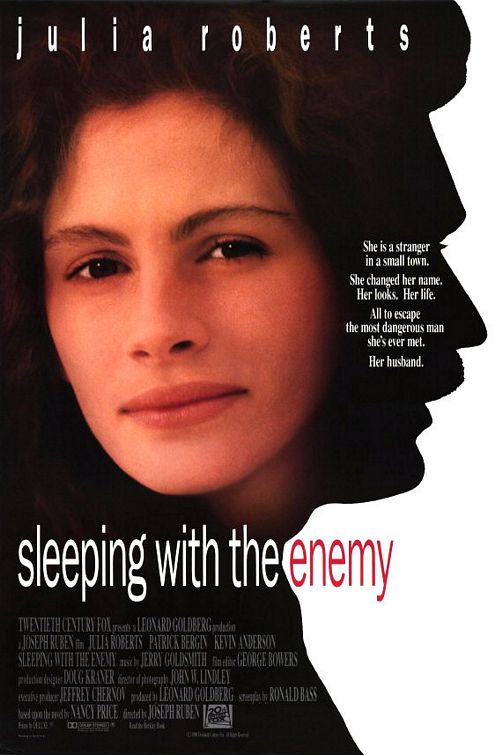
So there I sat, five minutes into Sleeping with the Enemy, wondering what Julia Roberts and her film-husband were up to.  “Hungry?” she asks.

He goes over to the wet bar.  There, next to bottles of alcohol, rests a CD: Hector Berlioz: Symphonie fantastique.  The music plays as he nuzzles her neck….  DUM, DAH, DUM, DAH….

Dies_Irae_Treble wikipedia

Treble Dies Irae Photo: Wikipedia

WHAT’S THIS? 

Yes, “Making Love to…to….”

Listen.  Watch.  What is the point with this background music, the soundtrack?

 sleeping_with_the_enemy

From Berlioz’s own program notes, Fifth movement: “Songe d’une nuit de sabbat” (Dreams of a Witches’ Sabbath): The funeral knell tolls…

Can we guess what might come (foreshadowing?)?

And that is our Latin Lesson #3: Not joy [Alleluia!], not awe [Gloria!], but sad, death, requiem–within the first five minutes of this film.  However, there is more; the movie has just begun, with the sounding of a bit of Latinity.

* * *

I have done this blog pro bono (not Sonny nor Cher).  I make no pronouncements ex cathedra (it’s from Florida, not from Rome), and this is not a quid pro quo (an expression often used in sexual harassment cases) exercise.  But you have read a bit here, in situ (where you sit, maybe sedentary, a sedent) on a sedilia (chair); however, I know about you: quid quid recipitur ad modum recipientis recipitur–meaning that if you are feeling lousy now, this doesn’t work so well.  It’s how you’re feeling at the time. 

This is the end.

Deo gratias!

 ©  James F. O’Neil  2013

**Latin Dictionary = http://www.lexilogos.com/english/latin_dictionary.htm

**Philosophical axioms in Latin = http://www.catholicapologetics.info/catholicteaching/philosophy/axiomata.htm