SHUTTLE TO NOWHERE
1 Comment


BY: JAMES F. O’NEIL
“Music is a moral law. It gives soul to the universe, wings to the mind, flight to the imagination, and charm and gaiety to life and to everything.” –Plato
* * *
In my studies of John Milton and Paradise Lost, I learned best about his cosmology, his use of the heavenly bodies, and the music of the spheres. That was Plato stuff.
How far I have come from
Rock-a-bye baby, in the treetop
When the wind blows, the cradle will rock
When the bough breaks, the cradle will fall
And down will come baby, cradle and all.
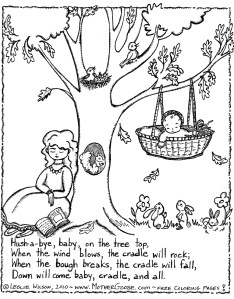
Lullaby–of course
I have grown up with music and cannot stand to have quiet! (When the music is too loud for “others,” I am told to turn it down. I have told my wife that perhaps some of my intense desire for sound has to do with my former life in the seminary when I had to observe the Magnum silentium: The Great Quiet.)
Music is me. It’s part of my life. I have to have it!
* * *
MUSIC: A sound, or the study of such sounds, organized in time:
* * *
The hills are alive with the sounds of music; and I walk among the lush growths, listening whenever and wherever I can. I love it (most of it). And it shows:
I have a radio (or music source) available to me when I need it: my Bose sound machine, and TEAC CD player, in the living room; a shower radio plus portable radio in my bath room; a bedside radio; Pandora in my man-cave on the TV, computer, and smart phone. In the car, I have 36 pre-sets on the Sirius XM: rock, New Age, “Chill,” and other favorites.
I have Shazam on my smart phone to help me capture sounds and songs I like, then download them to my Pandora stations. And the CD collection? More than enough.
* * *
“Music is often overlooked as a therapeutic intervention: singing, listening, and creating music of any kind will provide an immediate biological and psychological benefit for everyone. In fact, music can be a salvation and antidote to most psychological challenges: that’s why people sing in the shower and while driving the car, or simply listen to music that’s inspiring and distracting from emotional upset.” —Wikipedia
* * *
Some research has been completed which holds that children who are involved with music programs grow up to have lower rates of addictive behaviors, demonstrate better academic performance, and are greater prepared for college and the work force. I am one of those kids.
We always had music in elementary school, and for church services. Hymnbooks and songbooks were always–and still are–around me. Our home encouraged music, with our 45-rpm records, our classical music recordings on 33 1/3 Red Label RCA’s, “His Master’s Voice,” and with the purchase of our beautiful Grundig Majestic radio and record player:

Still Working Grundig in Texas
[Our 1958 “Grundig Majestic Shortwave, AM, FM Phonograph Compact Stereo Console” was a tube-type radio and amplifier. FM was new to the US, but had been widely used in Europe since 1948. Only the phonograph was true stereo; stereo broadcasting was yet a long way off anywhere. The cabinet was highly polished with a Vertical Magic Eye tuning indicator. The phonograph had a 45-rpm adapter, stacking automatic record changer, 16, 33, 45, &78 rpm speeds. “Made in West Germany.”

[Max Grundig (1908-1989) was a simple radio dealer up to 1947, then founding the “Grundig-Radiowerke mbH in Fürth, Bavaria, Germany in July 1948. Max Grundig was also well known for portable radios and fabricated one of the first portable radios after WW2 in 1950 as Grundig Boy.–Ernst Erb, http://www.radiomuseum.org]
* * *
My income from various jobs provided spending money to buy records.
I had two main sources for my record collection: Kroger’s, near 54th and Halstead in Chicago, always had bargains, and 33 1/3rd classical records. I received a “stamp” for every record I purchased; so many stamps gave me a free record. Tower Records downtown was Mecca: walls filled with copies of anything and everything, with catalogs for locating what was available–or for what could be ordered.
There were, also, local record stores, along Halstead, with booths for listening to potential purchases. That was a fun experience that could not be duplicated in Tower Mecca. I could spend hours carefully listening through earphones, taking care not to scratch any special LP (“long playing,” 33 1/3rd) record.

Connie Francis in Listening Booth
* * *
College life brought studies and quiet time, with little recreation time for music interests. My record collection remained at home. But the college library: music to soothe men’s souls. As often as I could, I made my way to the library and the listening rooms, with their turntables and headphones. Here I glommed onto Beethoven’s Fifth Symphony, Tchaikovsky’s piano concertos, and Porgy and Bess especially. Oh, of course, there were many other musical pieces for me to become familiar with.
After college, my LP record collection grew; then digital recordings–and finally, I became the first of many first patrons of Stereo World to purchase the ultimate sound machine, a Yamaha CD Player! (Well, there were other “ultimates” available.) With my electronic component system, I purchased the right wires and connections to provide the “best” digital sounds: Music for the Royal Fireworks by Handel; piano music by George Winston; Gabriel Faure’s Requiem; Allegri’s “Miserere.”
I was now in music heaven, mecca, paradise, on Mount Olympus, in Elysium or in the Elysian Fields [the Ancient Greek conception of the afterlife]. I was chosen by the music muse Euterpe, chosen to live a blessed and happy life with music. AAAHHHH!
* * *
I LOVE MY MUSIC!
* * *
Even though some research findings suggest psychological and medical benefits of music, like increased happiness, less stress, reduced depression symptoms, along with increased competence, hope, and optimism, I can vouch for certain music making me depressed if I listen long enough, like the requiems–or “sickened,” like rap. Or angry music in the car can make me angry, road-raged if prompted.
I must be careful while listening. “Blues” can be “blue.” Or some depressing country-divorce material; or “break-up songs”: “I Can’t Get Used to Losing You.” I could end up with marital difficulties if I “can’t be with the one you love, then love the one you’re with.”
So I embrace music; I don’t want to turn it down. I want to hear. BIG! LOUD!
Yet I so do know, as I am told by Mick Jagger and the Stones,
“You can’t always get what you want
…
But if you try sometimes you just might find
…
You get what you need.”
© James F. O’Neil 2016

The WordPress.com stats helper monkeys prepared a 2015 annual report for this blog.

Here’s an excerpt:
The concert hall at the Sydney Opera House holds 2,700 people. This blog was viewed about 8,300 times in 2015. If it were a concert at Sydney Opera House, it would take about 3 sold-out performances for that many people to see it.
Definition: 1) a woman’s one-piece undergarment
2) a soft toy in the form of a bear. Developed in the early years of the 20th century, and named after President Theodore “Teddy” Roosevelt, the teddy bear became an iconic children’s toy, celebrated in story, song, and film. [Since the creation of the first teddy bears, which sought to imitate the form of real bear cubs, “teddies” have greatly varied in form, style, and material. They have become collector’s items, with older and rarer “teddies” appearing at public auctions. Teddy bears are among the most popular gifts for children and are often given to adults to signify love, congratulations, or sympathy.] –Wikipedia
3) an award given annually by Joe Klein, of TIME magazine, for “doers, diplomats, and leaders who ignored our worst instincts.”
“It is not the critic who counts: not the man who points out how the strong man stumbles or where the doer of deeds could have done them better. The credit belongs to the man who is actually in the arena, whose face is marred by dust and sweat and blood, who strives valiantly, who errs, who comes up short again and again … who spends himself in a worthy cause; who, at the best, knows, in the end, the triumph of high achievement, and who at the worst, if he fails, at least fails while daring greatly.” –Teddy Roosevelt

Note: Joe Klein’s Teddy Awards for 2015: Barack Obama, Joe Biden, Jerrold Nadler, Bob Corker, George H. W. Bush, James Baker, Jeb Bush, John Kasich, John Kerry, Mohammad Javad Zarif, and Fox News Presidential Debate (“proving that good politics can be substantive and entertaining”). (See, TIME, December 21, 2015, p. 46)
 Memories of a Time