
BY: JAMES F. O’NEIL 
PART II: PLANES
“Flying a good airplane doesn’t require near as much attention as a motor car.” —Charles Lindbergh
* * *
I love flying. I’d do more if I could, for I have no fear. But bad back and arthritic knees make for discomfort. I cannot imagine an eighteen-hour flight nowadays. Maybe at one time. There was that trip to Frankfort then on to Istanbul; or the New York to Athens, non-stop; and my six visits to the UK (Anglophile? and summer school at Cambridge University); and I’ll always have Paris (2013). Still, my bucket list contains the word “Reykjavik.” Maybe. Someday.
 Iceland Map
My flying life began in spring 1961. I was a passenger, with a gift-ticket from my parents, to visit home for Easter Break. Saint Louis to Midway Airport, Chicago, a four-engine turbo-prop… I’ll Never Forget My First–within the wispy clouds of the heavens. And so it began, little by little, but enough for me: a DC-3 and others, graduating to the luxury of a British Airways 747, bigger and better. I have been fortunate to see the Concorde, up close and personal, and in a museum, sitting in its rather futuristic seats. Indeed, I have seen it fly, even take off and land.
As an airplane enthusiast, I’ve made trips to airshows and aviation days (Duxford, England, even); I have listened to stories told by fighter pilots, collected books and magazines. I have visited with World War II bomber pilots, have tried to squeeze my portly non-regulation body over the catwalks in the bomb bay of a B-24. No way could I make it into the pilot’s seat.
However–oh, my!–what a birthday gift from my wife: One Ticket to Ride in the Collings Foundation B-17G. One hour. What a present! Ten passengers. During takeoff, I was in the pilots’ compartment, sitting on the floor, hearing every command, feeling every bump on the runway. Reaching altitude, flying above Fort Myers, Florida, and Sanibel, out over the Gulf, and back to Page field, we riders were allowed to walk through the plane, from tail area to look through the Plexiglas nose. I even stuck out my head, able to look at the tail as we cruised at many miles an hour, my head being blown about. (That hour flew by…) Speechless. In awe.
 Jimmy in Birthday Present Ride B-17
[Aside anecdote: That B-17 ride? I was so child-like nervous-excited (at age 50) that I had to make two visits to the WC before takeoff. Then one more, as I was about to crawl into the plane: “Do I have time…?” The plane had to delay takeoff to wait for me from my third “potty stop.”]
 Collings Foundation B-17G
I am a dreamer, though, dreaming, hoping someday, of being in the cockpit of the Cadillac of the Sky, the P-51 Mustang. If I can fit.
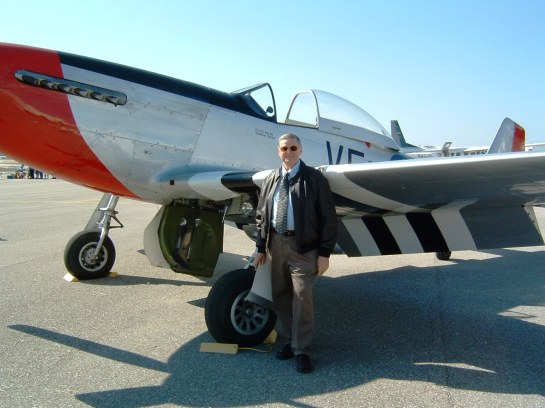 Jimmy Dreamer Next to His Favorite Plane
The dreams, though, actually began long ago, those memoriesofatime. That early airplane- enthusiasm life began with balsa wood, hanging around hobby shops, smelling Testor’s paints and glues.
 Modelers’ Dream of Testor’s Paints
Real stick models, tissue-paper sides. Then came “Plastics!” Snap-apart-parts then glue-together models, fighters and bombers from World War II especially, sizes 1/32, 1/72, or 1/48 scale mostly. And metal: lead and zinc: Hot Wheels, Matchbox, Maisto, others. No more toy soldiers for me that I had made in my own little foundry when I was young; I had metal airplanes for a while. And then?
Then I put away, for a very long time, “the things of a child.” (“When I became a man, I gave up childish ways.” Paul 1Cor. 8.11).
The lure of metal airplanes became strong, stronger, as I neared retirement age: “Diecast metal construction with some plastic components. Realistic panel lines, antennas, access panels, and surface details. Pad printed markings that won’t fade or peel like decals. Opening canopies, revealing detailed cockpit interiors. Interchangeable extended/retracted landing gear. Presentation stand. Accurately detailed underside.”
In addition, more and more companies moved into the market, while others, like Franklin Mint moved out. Others began to attract older collectors who grew up with those plastic models, now making transitions to Corgi, Witty, Hobby Master, Dragon Wings, and Gemini Aces, detailed with the “fiddly bits” that made authenticity and squadron markings paramount–and arguable for “purist collectors.”
I became a collector, a hobby-addict. It’s not all ordering and unboxing, displaying and dusting.
 “Some Assembly Required.”
There can be research, reading, movies to see, stories to read. Oh, airfields to visit–and even cemeteries to walk
I am not fanatical about my hobby. I enjoy what I can, see what I can. As I have previously written, here is what I have learned: The more I learn about one little bit of this or that, the more I realize how impossible it is to really “know it all”–like trying to collect it all. When it comes down to it, as all know, it’s “whatever turns your crank,” isn’t it? What I collect, how I collect, why I collect makes me, me. It is fun and enjoyable. That works for me–and guides me.
 Small Part of the Collection
And that’s my story–so far, since once upon a time. (And, happily, I no longer collect old razor blades. https://memoriesofatime.blog/2013/10/25/confessions-of-an-addict-reflections-on-collecting/)
© JAMES F O’NEIL 2018

JIMMY PREPARING FOR TAKEOFF IN BI-PLANE
 he took me to visit a friend of his at a switching yard on the South Side of Chicago. The three of us walked through the roundhouse, walked among the rails, and even watched to see the railroad turntable in operation.
 configured for extended periods of running in reverse, and in many locomotives the top speed was lower in reverse motion. In the case of diesel locomotives, though most can be operated in either direction, they are treated as having “front ends” and “rear ends” (often determined by reference to the location of the crew cab). When operated as a single unit, the railway company often prefers, or requires, that a diesel locomotive be run “front end” first. All this is visually and masterfully shown in the movie with Denzel Washington, Unstoppable.
 Pennsylvania RR diesel
 (though that was not always the problem). Lionel had the heavier three-track, more expensive gauge sets, parts, transformers–all the right “stuff.”
  So my frustration abounded, as trains were taken out and put away; I never had a basement with a large open space for a board for a train layout. [An interesting bit of Wiki-history: During the 1950s, Lionel outsold its closest competitor, American Flyer, by nearly 2:1, peaking in 1953. Some Lionel company histories say Lionel (more than just trains) was the largest toy company in the world by the early 1950s. The 1946–1956 decade was Lionel’s Golden Age. The Lionel 2333 Diesel locomotive, an EMD F3 in the colorful Santa Fe “Warbonnet” paint scheme that was introduced in 1948,
 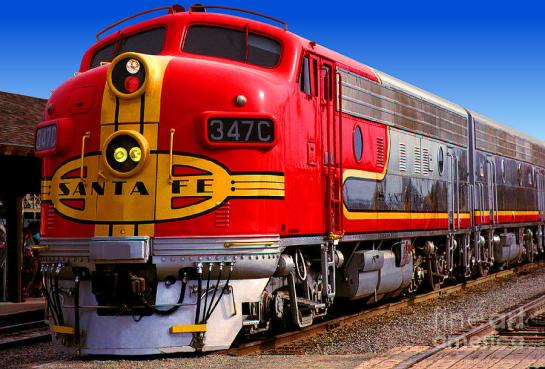 became the Lionel company icon and the icon of the era, yet Lionel declined rapidly after 1956. Hobbyists preferred the smaller but more realistic HO scale trains, and children’s interest shifted from toy trains to toy cars. Efforts to increase train set profitability and/or sales by cheaper manufacture (largely by replacing castings and folded sheet metal with unpainted injected-molded colored plastic) were largely unsuccessful; 1957 was Lionel’s last profitable post-war year. In 1959, the business direction of the Lionel company changed: it added subsidiary companies unrelated to toy train sets. The company lost more money. See more in Wikipedia.]
 Not well known, but better recognized if I say “near Dowagiac,” or Benton Harbor. Those were great growing-up summers with my cousins and siblings, and “friend-girls” from different neighborhoods in Chicago.
 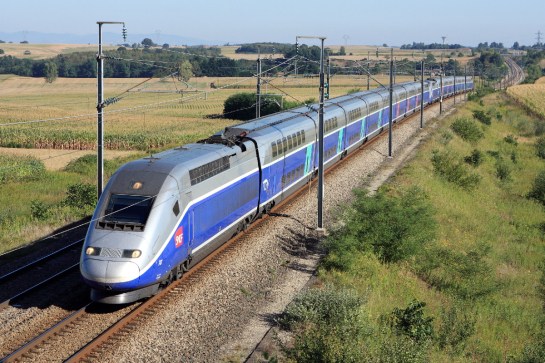 Yes, I have done that too. And the “Chunnel” Eurostar, London to Paris? Yup, that too. London to Carlisle, to Cambridge, to Oxford. Never yet to Cornwall or Land’s End, or to see Doc Martin’s place. Mostly–mostly–friendly, delightful, memorable.

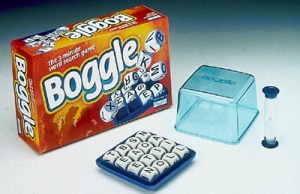
 I hate games. Chess? A beauty this is, with royalty, pawns, knights, and even a bishop or two. I was even in the high school chess club. I played on a miniature board with a classmate while we rode the “L” to school. I made a chess board for my boys. But I’ve had it with chess. And Battleship, Solitaire, Minesweeper, Husker Du, or HOOSKER DOO– whatever. I have outgrown Cops-n-Robbers, lost my Confederate soldier cap, never did the Cowboys-n-Indians thing, but Soldiers? Now THAT…
  JOHN WAYNE aka SGT Stryker
 Rodin’s THE THINKER
 Biltmore Mansion at Christmas Asheville, North Carolina

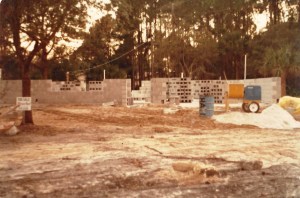
 However, Americans, says the Census Bureau, are staying in the same house longer between moves: from 5 years, on average, in the 1950s and 1960s, to about 8.6 years in 2013. The U.S. Census Bureau reports that the average American moves 12 times during his or her lifetime. Since our wedding-apartment in 1963, we have had eighteen (18) addresses and moves. Surely, we deliberated many times over with questions like those asked during our recent activity. For each dwelling, we know why we chose it instead of another.
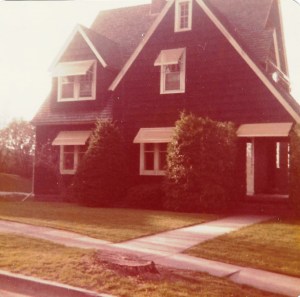
 Memories of a Time