Archive

MEMOIRS

BY: JAMES F. O’NEIL

Some synonyms for “bleak”: black, gloomy, cheerless, chill, cloudy, cold, dark, darkening, depressive, desolate, dismal, dreary, glum, gray, miserable, morose, somber, sullen, sunless, wretched…

Not every snowy and cold winter in Chicago is/was “bleak.”  But delivering papers in the cold and dark afternoons of my childhood often seemed bleak.

I could not often use my bike because of the snow.  So I had a sled to haul the papers from the distribution point at 69th and Racine.  I had to walk there after school (still in grammar school), fold my papers, then begin my route.  No easy summer bike ride with a paper bag on the front of the bike, no easy travel “to work” and then back home.  Winter brought the cold after school.  Then dark–and colder.

My little brother Tom was often there with me, slogging along, making my duty and responsibility to my customers less bleak.

My original route began with 39 customers.  I was the young kid delivering the afternoon paper during the week, with some Saturday and Sunday (early Sunday morning) customers.  I was the paperboy for the Chicago Herald American.

Chicago Herald-American_mast

We began our undertaking at 69th Street and Loomis Boulevard, working our way north.  Crossing 67th Street–Marquette Boulevard–we delivered only on the west side of the street.  Ogden Park, with its paths and hills and summer rec swimming pool, now covered with snow, took over the east territory to Racine Avenue.

 map of ogden parkMap of Ogden park

At the corner of 63rd and Loomis sat our winter oasis: Rexall Drugstore.

A Rexall Drugs Sign (logo). Credit: wikipedia

Sitting in the shadow of the elevated train, the “L,” back then the end of the line for A trains south, was Our Rest Stop.  Our Watering Hole.  It provided us with our favorite nourishment after that cold Windy City walk opposite Ogden Park.

My brother sat in a booth, snow melting from his boots and mittens.  I ordered and paid at the soda fountain: “Two hot chocolates with marshmallows, please.”  (I always was polite to the person making our delicious creamy drink.  More marshmallows for the polite.  Big marshmallows.  Two, maybe three.)

We sat, joking and laughing, perhaps recounting our Snow Warrior battles along the route, or counting money collected.  I always paid for his drink, his reward for helping me.  Then we had to return to the bleak midwinter to finish the route.  Once again my brother and I trudged along, to customers on Ada, Throop, and Elizabeth, from 64th back to 63rd, up and down both sides of the streets, the wind now blowing across the park, from the south.

Finished.  Then home: from 64th and Elizabeth to 67th and Marshfield, rarely though the wind-swept snow-piled paths in the park, down to 67th , then west, crossing the frozen streets of dirty snow and slush, sled bumping off the curbs, to wide Ashland Avenue, then to our home refuge. 

chicago snowy street and row houses c 1960 chuckman's

Chicago Snowy Street and Row Houses  c1960. Photo: chuckman’s

Sometimes, though, on our way home, we stopped at a neighborhood grocery store, getting a five-cent pie, our snack for a job well done.  Cherry was always my favorite, or lemon–or maybe coconut cream.  Small pies, easily shared, or gulped down by one.  I still long for those pies, now more crust than filling (and with no whole cherries). 

When I grew older, when winter turned to other seasons, and my companion found other activities of his own, the winter-time paper route had grown from 39 papers to a route of 73.  It became too big; it was split.  The drug store was no longer on the route.  Those warming cups of chocolate were no longer needed. 

I no longer stopped at Our Rest Stop.  (Besides, I hated sitting alone.) 

©  James F. O’Neil  2014


BY: JAMES F. O’NEIL

“Who knows where the time goes?”  –Sandy Denny/Judy Collins/Eva Cassidy

Credit: filmbuffonline

A Meditation and Reflection on Time:  All we did, all we have to do, all left undone.  Another year has passed, as have some friends and relatives.  Another year ahead, with or without resolutions.  But “Time Marches On…”

And:

Every person passing through this life will unknowingly leave something and take something away.  Most of this ‘something’ cannot be seen or heard or numbered or scientifically detected or counted.  It’s what we leave in the minds of other people and what they leave in ours. Memory.  The census doesn’t count it.  Nothing counts without it.”  –Robert Fulghum

Remember:

“What matters in life is not what happens to you but what you remember and how you remember it.”  –Gabriel Garcia Marquez


MEMORIES OF A TIME:

1941-2014

happy new year

Credit: rockingwallpaper.com

“When I consider how my light is spent…”–John Milton

BY: JAMES F. O’NEIL

“So what can you tell us about your first Christmas as a married couple?  What was different or unusual that you can remember?  Any special memories of that day–or that season?”

“Let me try to recall.  Y’know that was fifty Christmases ago…  If I go back…”

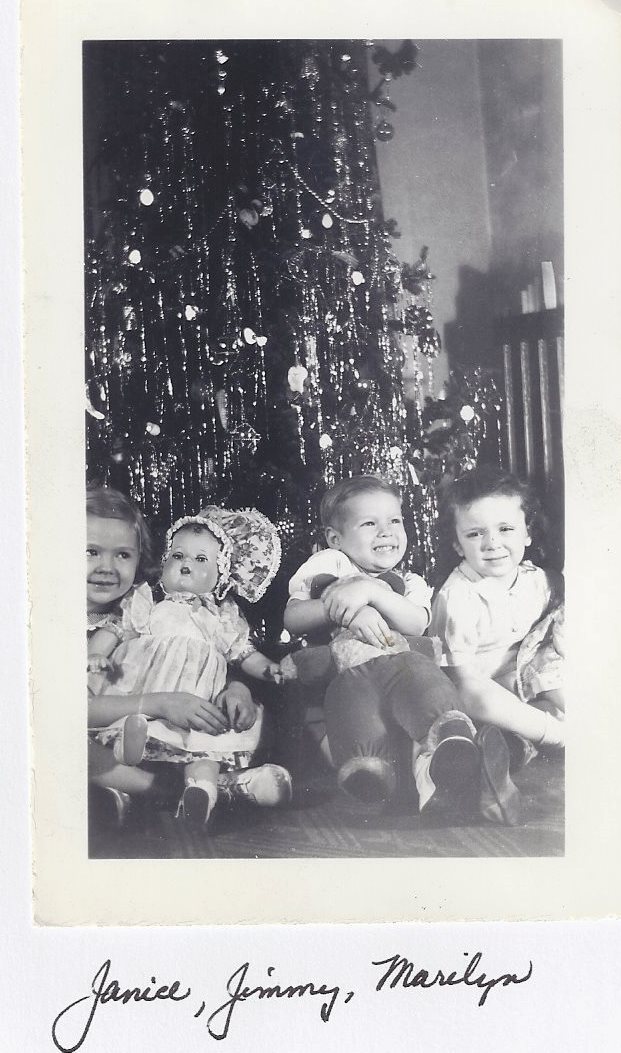
christmas with jan and marilynChristmas Photo

“That picture is an early one with my sister and my cousin.  We were always together, like The Three Musketeers.”

“But your first Christmas of marriage.  Do you have a picture of that?”

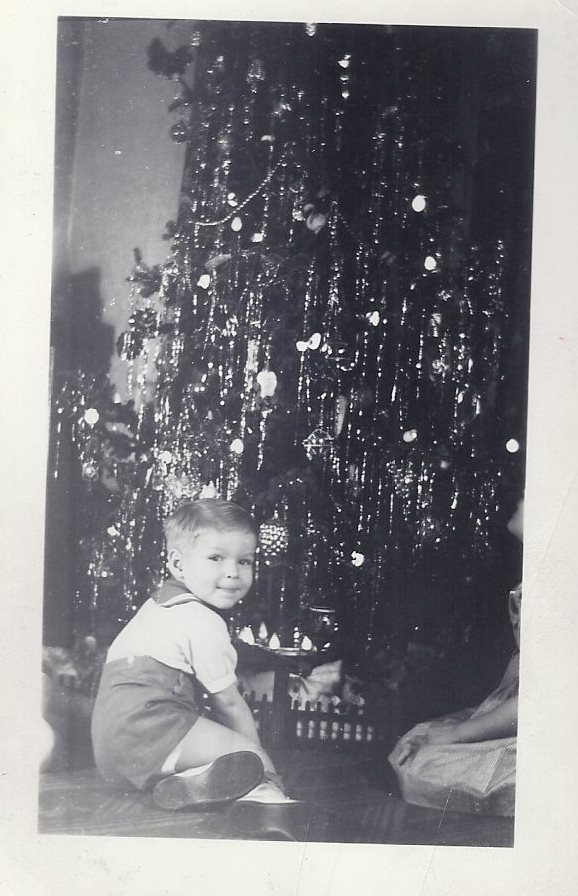
“How about this one?  I was really cute in this one.”

jimmy's christmas

Jimmy’s Christmas Photo

“No.  That is not what I need for the article.  What else do you have?”

“Those old pictures from 1963 must have been with my Argus C3 and were slides.”

ARGUS C3 Photo Credit: Wikipedia

“That was a wonderful camera.  I think I got it as a Christmas present in 1957 or 1958.  I don’t have those slides anymore.  But I do have some black and white pictures of Garfield Boulevard if you want to see them.  No?  Well, sorry about 1963.  I know I took pictures.”

“Please.  I’d like you to tell me what you remember about 1963.”

“I remember one Christmas when I was in grade school.  It was so warm that we walked to Midnight Mass at Saint Justin Martyr.  I remember wearing a pink shirt and dark tie–or maybe it was the other way around.  Anyhow, no snow and warm.”  [1954: 45 degrees]

“Our Christmas in 1963 was a cold one [26 degrees].  In 1966 we were living in Minnesota.  But Chicago had worse weather–and people remember The Storm of 1967: lots of snow.” 

Chicago Snowstorm 1967 Sun Times http://www.suntimes.com

“My new wife and I lived in Arlington Heights in 1963.  We had a three-room apartment: living room, kitchen, and bedroom.  And bath, of course.  A nice new apartment building.  I remember that address: 222 North Salem.  I can remember most of my addresses where I lived.  Most.

“Anyhow, we had a small tree in the corner of the living room.  Our first tree, a “Charlie Brown Tree.”

charlie-brown-christmas-tree-jpg1 Charlie Brown Tree

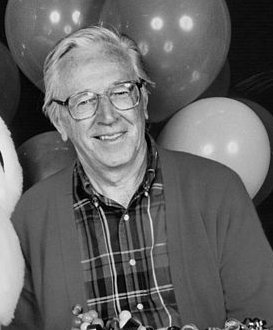
“Everyone seems to have had a tree like that.  Probably that tree we relate to–and why Charles Schulz was so successful.  We all have those common memories.”

Charles Schulz from Wikipedia

“Anyhow.  My dad always had a surprise for us or for the family.  One year he gave my mom a watch, in a box of Fanny May chocolates. 

Fanny May Chocolates for Gifts

“He always put an envelope on the tree for each of us, with a little money inside.  One year–and it is memorable–I got an Underwood portable typewriter.  That was 1956.  I used it through high school and college.  I still have it; it still works.”

underwood typewriterPhoto of My Underwood Leader

“I can’t remember many presents or gifts under that Charlie Brown tree in 1963.  I do remember a black tie-tack and an umbrella.  And the homemade coffee table made by my new wife’s brother Dave.  Mosaic squares.  Lasted a long time.  A high school shop project, I think.  But the most special present was not to arrive for another eight months: our first son.”

“Well, thank you.  I must go now.  I appreciate your time and your memories.”

“Y’know, since ’63 we’ve had many trees and presents.  Oh, and a cold, nose-numbing, stay-inside-and-keep-warm Christmas: 1973.  In western Minnesota, -16 degrees, without the wind.  That was some Christmas!”

“And that’s about all…for now.”

© James F. O’Neil

 TREE 2013Christmas Tree in 2013

By:  James F. O’Neil

English, once accepted as an international language, is no more secure than French has proved to be as the one and only accepted language of diplomacy or as Latin has proved to be as the international language of science.”  Edward Sapir

My New Latin Grammar by Charles E. Bennett is the 1957 edition.  The first edition, “presenting the essential facts of Latin grammar in a direct and simple manner,” dates to 1894. 

 LATIN BOOK 10-31-2013MY LATIN GRAMMAR BOOK

Timeless.  Priceless.  For this little green book which I managed to keep, despite my years and years of disposing of my books–selling them, donating them, garbage-ing them–still provides me with answers I might seek.  But more: It is a concrete reminder of my years of studying Latin. 

I’m infected with Latinity.

I look upon my education–and my being Latinized–a great gift, monetarily paid for by others, worked for by me and by my teachers.  My testimony is to all hard teachers, easy teachers; good teachers, bad teachers.  I learned from them all: amo, amas, amat [I love, you love, she loves]…porta, portae, portae, portam [the gate, of the gate, to or for a gate, the gate]….

In a humanities class I used to teach, I built an entire unit around three Latin words or phrases: ALLELUIA:

alleluia commons.wikimedia.org

GREGORIAN CHANT ALLELUIA Credit: commons.wikimedia.org

GLORIA:

VIVALDI GLORIA

GLORIA!

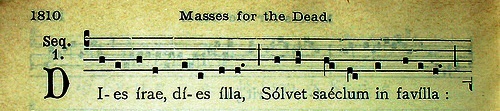
DIES IRAE:

DIES IRAEGREGORIAN DIES IRAE

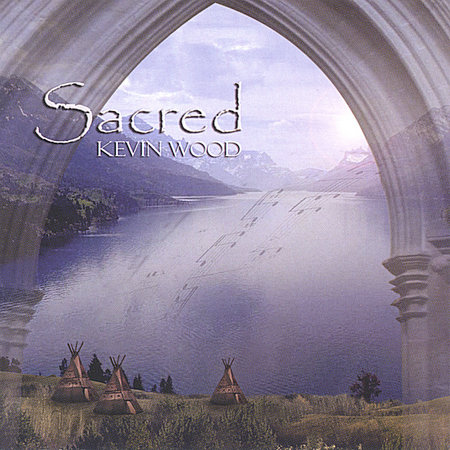
The themes, motifs, and tropes are around us, as soundtracks, as performed by contemporary vocalists, or even as parts of television commercials.  But not everyone can always recognize a Latin word as a prayer when found on a New Age soundtrack or CD by Aria, Amici, Constance Demby–or Kevin Wood:

sacred kevin wood ScenicListening.com

Credit: ScenicListening.com

Nevertheless, those words are there. 

I once explained that after a moving experience, whether musical or visual or literary, we often have a unique “what’s-it-to-me?” feeling or response.  It’s akin to being “slimed,” like in Ghostbusters.  After we close the book, or turn off the movie (or leave the movie theater); are quiet after hearing “Un bel di vedremo” from Madama Butterfly; or after sitting down after seeing, for the first time, Notre Dame Cathedral, or having walked within Hagia Sophia, or stood overlooking the Grand Canyon, we remark (in awe): “WOW!” or something humanly pathetic.  For we are at a loss–or are lost in the moment: “WOW!”  (Maybe even “That’s awe-some!”)  Or, “Glory gee!”  Or once or twice we might have exclaimed, “Halleluiah!”

This is all beautiful to me, enriching and rewarding, these words, the many musical expressions using Latinity.  I must simply see or hear: be aware.

So there I sat, five minutes into Sleeping with the Enemy, wondering what Julia Roberts and her film-husband were up to.  “Hungry?” she asks.

He goes over to the wet bar.  There, next to bottles of alcohol, rests a CD: Hector Berlioz: Symphonie fantastique.  The music plays as he nuzzles her neck….  DUM, DAH, DUM, DAH….

Dies_Irae_Treble wikipedia

Treble Dies Irae Photo: Wikipedia

WHAT’S THIS? 

Yes, “Making Love to…to….”

Listen.  Watch.  What is the point with this background music, the soundtrack?

 sleeping_with_the_enemy

From Berlioz’s own program notes, Fifth movement: “Songe d’une nuit de sabbat” (Dreams of a Witches’ Sabbath): The funeral knell tolls…

Can we guess what might come (foreshadowing?)?

And that is our Latin Lesson #3: Not joy [Alleluia!], not awe [Gloria!], but sad, death, requiem–within the first five minutes of this film.  However, there is more; the movie has just begun, with the sounding of a bit of Latinity.

* * *

I have done this blog pro bono (not Sonny nor Cher).  I make no pronouncements ex cathedra (it’s from Florida, not from Rome), and this is not a quid pro quo (an expression often used in sexual harassment cases) exercise.  But you have read a bit here, in situ (where you sit, maybe sedentary, a sedent) on a sedilia (chair); however, I know about you: quid quid recipitur ad modum recipientis recipitur–meaning that if you are feeling lousy now, this doesn’t work so well.  It’s how you’re feeling at the time. 

This is the end.

Deo gratias!

 ©  James F. O’Neil  2013

**Latin Dictionary = http://www.lexilogos.com/english/latin_dictionary.htm

**Philosophical axioms in Latin = http://www.catholicapologetics.info/catholicteaching/philosophy/axiomata.htm