Archive

PEOPLE

BY: JAMES F. O’NEIL

Some synonyms for “bleak”: black, gloomy, cheerless, chill, cloudy, cold, dark, darkening, depressive, desolate, dismal, dreary, glum, gray, miserable, morose, somber, sullen, sunless, wretched…

Not every snowy and cold winter in Chicago is/was “bleak.”  But delivering papers in the cold and dark afternoons of my childhood often seemed bleak.

I could not often use my bike because of the snow.  So I had a sled to haul the papers from the distribution point at 69th and Racine.  I had to walk there after school (still in grammar school), fold my papers, then begin my route.  No easy summer bike ride with a paper bag on the front of the bike, no easy travel “to work” and then back home.  Winter brought the cold after school.  Then dark–and colder.

My little brother Tom was often there with me, slogging along, making my duty and responsibility to my customers less bleak.

My original route began with 39 customers.  I was the young kid delivering the afternoon paper during the week, with some Saturday and Sunday (early Sunday morning) customers.  I was the paperboy for the Chicago Herald American.

Chicago Herald-American_mast

We began our undertaking at 69th Street and Loomis Boulevard, working our way north.  Crossing 67th Street–Marquette Boulevard–we delivered only on the west side of the street.  Ogden Park, with its paths and hills and summer rec swimming pool, now covered with snow, took over the east territory to Racine Avenue.

 map of ogden parkMap of Ogden park

At the corner of 63rd and Loomis sat our winter oasis: Rexall Drugstore.

A Rexall Drugs Sign (logo). Credit: wikipedia

Sitting in the shadow of the elevated train, the “L,” back then the end of the line for A trains south, was Our Rest Stop.  Our Watering Hole.  It provided us with our favorite nourishment after that cold Windy City walk opposite Ogden Park.

My brother sat in a booth, snow melting from his boots and mittens.  I ordered and paid at the soda fountain: “Two hot chocolates with marshmallows, please.”  (I always was polite to the person making our delicious creamy drink.  More marshmallows for the polite.  Big marshmallows.  Two, maybe three.)

We sat, joking and laughing, perhaps recounting our Snow Warrior battles along the route, or counting money collected.  I always paid for his drink, his reward for helping me.  Then we had to return to the bleak midwinter to finish the route.  Once again my brother and I trudged along, to customers on Ada, Throop, and Elizabeth, from 64th back to 63rd, up and down both sides of the streets, the wind now blowing across the park, from the south.

Finished.  Then home: from 64th and Elizabeth to 67th and Marshfield, rarely though the wind-swept snow-piled paths in the park, down to 67th , then west, crossing the frozen streets of dirty snow and slush, sled bumping off the curbs, to wide Ashland Avenue, then to our home refuge. 

chicago snowy street and row houses c 1960 chuckman's

Chicago Snowy Street and Row Houses  c1960. Photo: chuckman’s

Sometimes, though, on our way home, we stopped at a neighborhood grocery store, getting a five-cent pie, our snack for a job well done.  Cherry was always my favorite, or lemon–or maybe coconut cream.  Small pies, easily shared, or gulped down by one.  I still long for those pies, now more crust than filling (and with no whole cherries). 

When I grew older, when winter turned to other seasons, and my companion found other activities of his own, the winter-time paper route had grown from 39 papers to a route of 73.  It became too big; it was split.  The drug store was no longer on the route.  Those warming cups of chocolate were no longer needed. 

I no longer stopped at Our Rest Stop.  (Besides, I hated sitting alone.) 

©  James F. O’Neil  2014


BY: JAMES F. O’NEIL

English: Thanksgiving Dinner, Falmouth, Maine,...

Thanksgiving Dinner, Falmouth, Maine, USA 2008 (Photo credit: Wikipedia)

The Thanksgiving turkey is now mostly eaten–the remains becoming soup or turkey salad (with mayo), or sandwiches for the kids’ lunches.  (Some leftovers might even be put into the freezer for later…)  The festive food preparation, eating at the Turkey Day Table, the family conversations and discussions, football games and scores, and the trip home are fast becoming memories.  Another Thanksgiving….

My memories of Turkey Day Vacation of 1961 may be “outdone” by others’ recollections; but at age 20, I had a holiday vacation like no other since then.

College students home for holidays lose sleep, party hearty, visit relatives, stay out late, go places (like dances, movie theaters, or Black Friday shopping events with others in crowded places), and sometimes travel long distances to get to the traditional Turkey Day Feast (See Planes, Trains and Automobiles, the 1987 film written, produced, and directed by John Hughes).

An Illinois Central Railroad diesel locomotive...

An Illinois Central Railroad diesel locomotive on static display in Carbondale, Illinois. (Photo credit: Wikipedia)

For some, these activities weaken immune systems.

In 1961, to my Chicago home from school in Saint Louis: 300 miles.  Thanksgiving holiday: Wednesday to Sunday.  A round trip on the Illinois Central Railroad.

Now I cannot recall the specifics of my arrival home, the turkey dinner (November 23, 1961), the activities with friends and family–and how much sleep I did not get.  But pneumonia I did get somehow and somewhere.

 “Pneumonia is an infection that inflames the air sacs in one or both lungs causing cough … and difficulty breathing.  A variety of organisms, including bacteria, viruses and fungi, can cause pneumonia.  Pneumonia can range in seriousness from mild to life threatening … most serious for … people with underlying health problems or weakened immune systems.  Most people with pneumonia begin with cold and flu symptoms and then develop a high fever, chills, and cough…  Pneumonia usually starts … after having a cold or the flu.”

The Chicago weather that November ranged from a high of 55 to a cold 30 degrees.  Some nice days, some much colder.  Not much snow around, just crispy and cold at night.

My holiday ended Sunday night, the 26th, but not before I took out the dog.  I was in my shirtsleeves, I remember: no jacket, walking the dog in an open field, 39 degrees–colder in the wind near our place near O’Hare Field.  Walking into the warm house I got the chills.

“Off you go”–or something like that my dad said to me, as I boarded the Illinois Central late Sunday night.  (I took the Illinois Central, for its train routes allowed me to leave later from home and have more vacation time.)

I did not feel well; I had the chills.

The only seat I found was in a small compartment chair-like seat next to the door between train cars.

All night, as I tried to sleep, people would be opening and closing the door, letting in the cold air, letting the cold air blow on me.  No other place to move to.  I was getting cold and colder, despite being dressed in my heavy black wool overcoat.

At three o’clock on Monday morning, my friend met me at the train station.

Saint Louis RR Station

Not much sleep.  Didn’t want breakfast.  Into my dorm room bed I went.  No class attendance: I became feverish and delirious by suppertime.  By six, I was being driven to the hospital where I fainted in the X-ray room, as I remember.

xray-barnes-1951X-Ray Barnes Hospital 1951

(I have no remembrance of ever sitting in an ER.)

Admitted.  Put into bed.  A small bed–in the pediatric wing!  (The hospital census, I was later told, was high with few beds left.)

So my Thanksgiving vacation included a five-day stay in a hospital.  The latter required medications, rest, and more rest.  But did meet a young college student like me, also admitted to pediatrics.  Female.

When I returned to campus activities and classes, I found myself running on SLOW for a few months.  Yet, though I was later deemed “fully recovered” and released from a doctor’s care, my lungs were never “as good as new.”

That’s my storied Thanksgiving memory.  For now….

© James F. O’Neil  2013

By: James F. O’Neil

“Riding the Subway as Therapy”– Jared Keller (http://www.theatlanticcities.com/commute/2012/12/riding-subway-therapy/4075/)

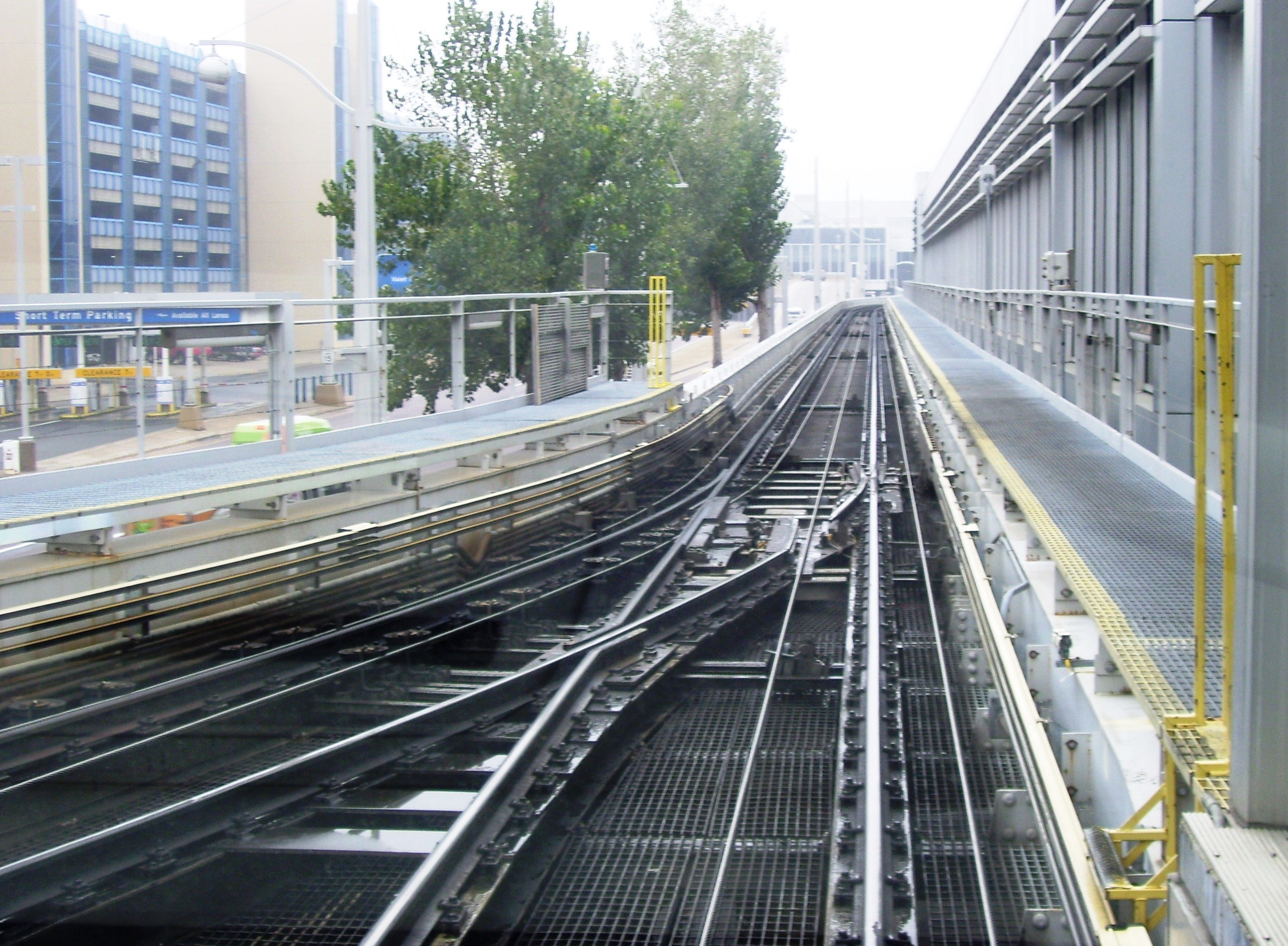
On a recent trip to Minnesota, I rode the tram in the Minneapolis airport.  Carry-on bag with me, I stepped onto the tramcar, moved away from the doors which were about to close (as I was warned), and sat down to the right in a senior seat.  I had a perfect front view of the tracks, and a view of how I was going to travel to Concourse C.

TRAM TRACKS MPLS AIRPORT 2013

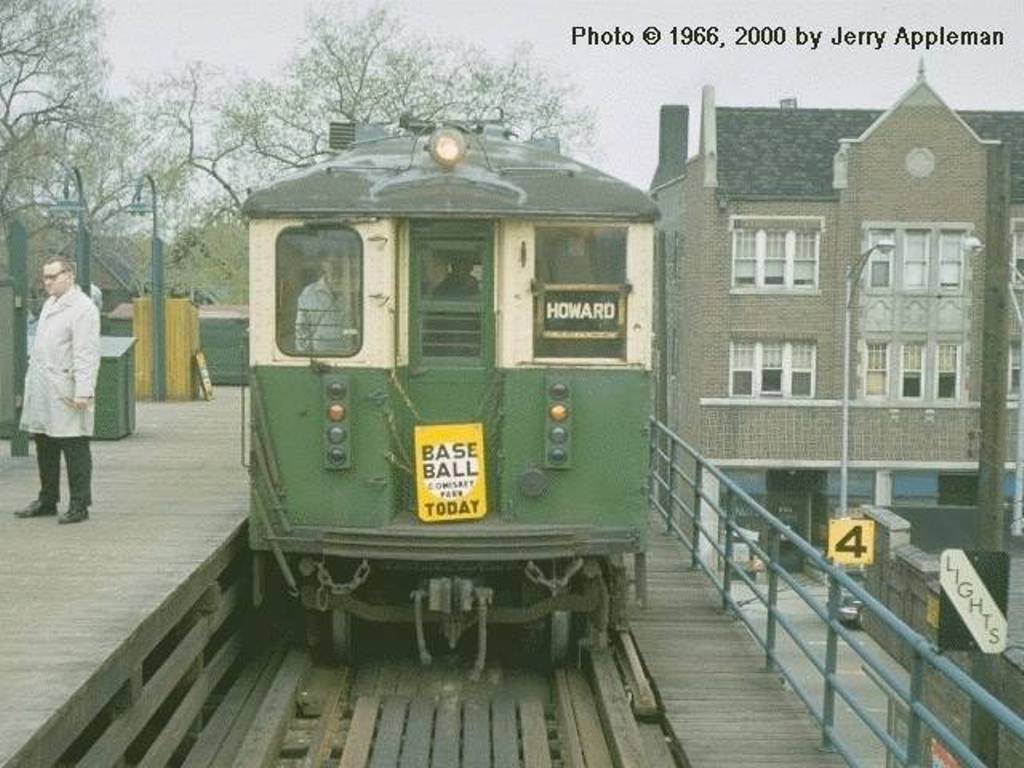
In a moment-flash-to-the-past, a recurring moment, I was transported to Chicago, the Chicago L, the Englewood Line, then called The “A” Train.

CTA “A” TRAIN TO HOWARD STREET

(The CTA ‘L’ is sometimes written as “L” or “el,” short for “elevated.)  My little brother and I were travelers of the CTA rails.  My small companion, five years younger, and I went for L rides, for something to do.  What a cheap date!  When we rode the transit system, from bus to L, the fares were 12¢, and then rose to 20¢ in the late ‘50s.  (In 1957, the base fare was raised to 25¢.)

Our route was the walk from 67th and Marshfield, to the bus on Ashland, then north to 63rd, transfer to 63rd to Loomis, where the Englewood Line ended/began. 

 Tom and I--Forever Bound

63rd and Loomis

Through the station and up the stairs we went.  (See the 1995 romantic comedy film While You Were Sleeping with Sandra Bullock and Bill Pullman for a view of fare-collecting and L train stations.)  Almost running to the front of the waiting “train,” the two of us pushed into the first car, sitting in the front across from the motorman.  We’d share turns on the single seat by the front window. 

As the train went underground, becoming the subway under the Chicago Loop and farther north, the journey under the city thrilled us both–and a greater thrill when the motorman opened his door, propping it open with a foot or leg, allowing us front-row seats to the controls of the machine.  We drove with him.  We were in command. 

Lights and rails and signals raced by; then we slowed for each underground platform stop.  As we came to daylight, we saw and felt the climb up the rails to over two stories above the city.  We were always able to look down at porches and cars and people, or look into third-story windows.

From 63rd and Loomis to the end of the line at Howard Street, we delighted.  Then everyone off, down the stairs to the exit to the street.  We would walk around, finding our favorite stop for a Coke, then looking in the showroom window of the Mercedes-Benz dealer on Howard and State Street.  In the showroom, we walked around, transfixed–really–looking at the new gull-wing Mercedes-Benz,


1955_Mercedes-Benz_300SL_Gullwing_Coupe_34Pic of that Mercedes in 1955

Then we’d make our way back home, looking forward to the ride, but somewhat let down, of course, for the trip was over.  But at the same time, what a trip, nearly from one of the city to the other.

As we grew older, the trips became less frequent.  Yet like Holden Caulfield protecting his sister Phoebe (in Salinger’s The Catcher in the Rye), I was my brother’s savior on one unforgettable L ride. 

We were traveling underground.  I was in the single seat (my turn…), facing the motorman compartment, but able to turn face-front.  My brother was in the first double seat, next to the window, looking forward and left.  Both of us thought nothing of the old man who came from a crowded platform and made his way to sit down with us in the empty place.  Next to my brother.  Small talk (as I look back), about our ride and us. 

From the corner of my eye, I saw the man move his hand slowly from on his left leg towards my brother’s little right leg covered by brown corduroys.  I mean, this guy was some kind of pervert and all…  Honest to God!  And I got excited and all.  And nervous.  I mean, what was I supposed to do?  I’m not kidding.  I kept worrying, in slow motion and all, about what the pervert was going to do–and all.

I looked him in the eye: “Don’t touch my brother or I’ll kill you, I swear to God I will!”  He stood up and moved.  There I was, sliding away from the window, sitting down next to the little guy.  There I was, the catcher in the rye and all.  I caught him before he was swept over the cliff.  I saved him and all.  I swore then and there that I would NEVER let harm come to him–and all.

 * * *

From Wikipedia: The Chicago rapid-transit system is officially nicknamed the ‘L’.  This name for the CTA rail system applies to the whole system: its elevated, subway, at-grade, and open-cut segments.  The use of the nickname dates from the earliest days of the elevated railroads.  Newspapers of the late 1880s referred to proposed elevated railroads in Chicago as ‘”L” roads.  The first route to be constructed, the Chicago and South Side Rapid Transit Railroad gained the nickname “Alley Elevated,” or “Alley L” during its planning and construction, a term that was widely used by 1893, less than a year after the line opened.

In discussing various stylings of “Loop” and “L” in Destination Loop: The Story of Rapid Transit Railroading in and around Chicago (1982), author Brian J. Cudahy quotes a passage from The Neon Wilderness (1949) by Chicago author Nelson Algren: “beneath the curved steel of the El, beneath the endless ties.”  Cudahy then comments, “Note that in the quotation above … it says ‘El’ to mean ‘elevated rapid transit railroad.’  We trust that this usage can be ascribed to a publisher’s editor in New York or some other east coast city; in Chicago, the same expression is routinely rendered ‘L.'” The Chicago Tribune style guide also uses ‘L.’

As used by CTA, the name is rendered as the capital letter ‘L’, in quotation marks.  “L” (with double quotation marks) was often used by CTA predecessors such as the Chicago Rapid Transit Company; however, the CTA uses single quotation marks (‘) on some printed materials and signs rather than double.  In Chicago, the term subway is only applied to the sections of the ‘L’ network that are actually underground and is not applied to the entire system as a whole, as in New York City where both the elevated and underground portions are called the subway.

Link: http://www.chicago-l.org/index.html 

Note: The Website is found as Chicago “L”.org

© James F. O’Neil  2013

By: James F. O’Neil

October 12, 1963: Wedding Day.  I was married.

sue and jim

OCTOBER THEN

With my new bride came her dowry: the gifts to her new husband to help get the household started.

One 1962 Corvair, white, four-door with red leather interior:


Corvair

IT’S A CORVAIR

One high fidelity sound system:

hi-fi

HI-FI-CABINET

The hi-fi was a large piece of furniture that cleverly concealed four speakers, an AM-FM radio, and a phonograph turntable.  All this hid beneath a lift-up top and behind decorative grill/lattice-work.  Two sliding doors even concealed a record storage cabinet that could hold thirty or so LP records (“hi-fi” records with dynamic sound, or the latest LPs, a.k.a. “stereophonic”). 

One wedding picture from 1963 shows us leaving the church in a black ’57 Olds 98 four-door hardtop, with white leather interior. 

wedding wave

WEDDING GOOD-BYE

What a sweet car!  I added pink interior lights for wooing. 

57olds98

COURTSHIP MACHINE 1957 IN 1963

The courtship Rocket-Powered Olds brought me love–and a French provincial hi-fi.  What a dowry! 

I got the Corvair. 

My family got a daughter-in-law, and the Olds. 

49th Anniversary Photo in Florida

OCTOBER NOW

© James F. O’Neil  2013