Archive

PLACES

BY: JAMES F. O’NEIL

“The Emperor of Ice-Cream” by Wallace Stevens:  “The only emperor is the emperor of ice-cream.”

“Why the emperor of ice cream?  It’s an odd combination: an absolute, imperial power and a benign, sweet treat.  Ice cream is a sensuous delight, eagerly anticipated and gleefully consumed.  If you wait too long to eat it, it’ll melt.  So much for the ice cream–now what about the emperor?

“Ice cream is like life: sweet, or at least hungrily indulged in, while it lasts.  It’s also like the dead: cold and destined to be consumed or to dissipate away.  Perhaps, then, the line that closes each stanza is a wake-up call to readers.  If the “only emperor” or dominant principle of the world is the one we’re reminded of when we see ice cream melting–(or, in a different way, when we attend a funeral  [shown in the poem])–we’d be well advised to heed it and make each moment count.”  –Austin Allen, Poetry [magazine] Foundation

Once upon a time: Rainbow cones on the South Side: 93rd and Western in Chicago.

RAINBOW CONE chicago

There see the giant cone, with five or six colors in slices–not scoops–of ice cream piled on top of one another. 

We screamed with excitement for ice cream as our family made its special way farther south of our Marshfield home.  It was a drive from Marquette Boulevard.  No quick 45-mph trip like today.  Probably in the green ’52 Chevy, 25-30 mph, with plenty of stoplights interrupting the special occasion.

Now when it comes to memories in time about flavors, I don’t recall any special Rainbow offerings, but the colors were vibrant.  This is embedded in me.  And in days before Rainbow–and after–ice cream has been a special weakness of mine.  Not as an addiction, like anything-chocolate, but as that special “Good Nutrition My Plate” (nestled within the perfect food container that not only holds but is eaten) with its various food groups which include NUTS (coco-nut and chocolate peanut butter, pistachio and black walnut); FRUITS (like White House Cherry and rum raisin); DAIRY (lemon gelato and butter pecan);  PROTEIN (egg nog and phish food, and chunky monkey and chocolate Moose-tracks); VEGETABLES (carrot-cake and chocolate malted and mint chocolate chip); GRAINS (chocolate cookie dough, and Grape-nuts).
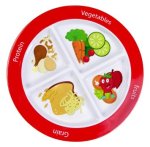
my plate image

However, Rainbow was but one special source of providing me with melting gustatory delights.  No doubt about it, Good Humor was like no other.

good-humor

The bells of the truck signaled the Coming of the Man in White. He enticed us kids to come outside our homes or from our apartments, or made us stop dead in our playing-tracks.  If we had the twenty or twenty-five cents, our saved nickels and dimes, we made our purchases.

good-humor-man good humor dot comAnd?  “Coconut for me, please.”  The delicious-tasting ice cream bar on a stick, covered completely with a thin coat of white-something loaded with coconuts pieces.  Heaven as I ate it.  Heavenly.  If my favorite was not available, I had to settle for something like chocolate cake or perhaps succumb to savoring an orange creamsickle:

good humor orange creamsickle

Good Humor exists today, in supermarkets, in 7-11, in other places, and even with a few trucks in certain neighborhood locations.  “But it’s not the same.”  Yet I would never turn down a chocolate eclair, a toasted almond, or even a strawberry shortcake bar.

Howard Johnson’s at some time was a place I remember first seeing coconut milk on the menu.  I thought that it would provide me with a special ice cream treat: a coconut milk milkshake.  O YES!  YES!  YES!  And then, later, I asked, “A coconut malted milkshake, please.”  The nectar of the gods for sure!

Gus Pappas died in 1987.  He was 83–and that was a long-ago moment.  In 1953, “Mr. Pappas” (“Gus”) bought a corner confectionery in the Byrne Building, at Garfield (55th) and Halsted: Pappas Sweet Shop.  We just knew it as the ice cream shop.  It was a hangout for me and my friend Bill Manion, or with Joe Balint.  My sister and her friends found time to have their ice cream and their teen-age talk-sessions there.
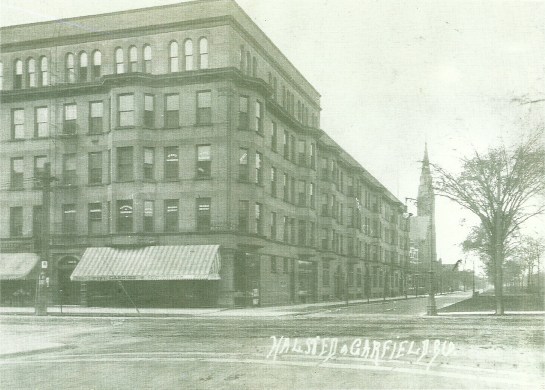
BURNS BUILDING Pat Telios Reagan BYRNE BUILDING WITH PAPPAS CORNER

No matter how warm outside, I remember the store was always cool inside, with its white tile floors and marble counter-tops.  Cool was needed to keep the dipped, rolled, and wrapped delicacies fresh and tasty (Oh, those chocolate-covered cherries!): Who needed Fannie May candies when we had Pappas on the corner?

Gus had a son, James (“Jimmy” to us), who worked in the store.  In my time, Jimmy began singing with the Chicago Metropolitan Opera.  Though his first role was in the chorus (My mother and I saw him in La Boheme.), he was a star to me.  He brought music and fun-with-music into my life, and an appreciation of opera that I do cherish.  And there is nothing today that compares to my savoring a Green River Malted Milkshake, with homemade ice cream, that Jimmy Pappas made for me.  Yum!

green river malt

GREEN RIVER MALTED MILKSHAKE

©  James F. O’Neil  2016
 Vanilla-Coconut-Milkshake-Silk-PureCoconut COCONUT MILK

Major Ingredient of a Homemade Coconut Milkshake


BY: JAMES FRANCIS CUMMINGS O’NEIL NEE ČAPEK

“I know my father and my mother, but beyond that I cannot go. My ancestry is blurred.” –V. S. Naipaul

* * *

Once upon a time, from my interviewing my mother, and thus it is written (here), I learned that the beautiful young maiden (of course!) …

KATRINA VON KOENIG, Great Grandma Katrina, a worker in the Barony of Luxembourg (it’s sounding so romantic and mysterious) met

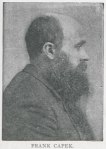
FRANK ČAPEK [b. 1834], a laborer who was (maybe) in the Prussian Army (that would be romantic, like in Elvira Madigan), later turned anarchist, and (perhaps) a bomb manufacturer, in Chicago, for the eight Accused Conspirator Workingmen in the Haymarket Affair (Riot), May 4, 1886.

HaymarketRiot-Harpers

Drawing from Harper’s Magazine and Wikipedia

I heard about this man when I was a child. I grew up believing I was related to a famous anarchist, because Grandma Schuma said so, and because my mom told me so.

I couldn’t wait to see my Great Grandpa Čapek’s picture in the newspapers.

Frank Capek (Great Grandpa)

I spent hours at the beautiful Chicago Public Library on Michigan Boulevard, using the actual newspapers and microfilms of the events of May 4, 1886. (At one time later, my Uncle Elmer told me he studied, too, about his grandfather, and claimed he recognized pictures. He lived with Great Grandpa at 5431 South Seeley Avenue [I remember that house across Garfield Boulevard] until the Prussian soldier died.)  Great Grandpa Čapek was a talented watchmaker. He died in 1930.

* * *

Frank and Katrina, whom I did not ever know, had eight children, with beautiful ethnic Bohemian names: Emilie [b. 1886], Mike, John, Frank, Joe [b. 1884], Theresa, Katherine, and Mary. I could never understand why my Bohemian relatives chose these names. But when I thought about emperors and empresses, presidents and monarchs, like Franz Josef and Maria Theresa, or King John, maybe the “common” names were more special emulations than Leopold or Vlad the Destroyer. (Not many songs about Leopold, but Emily? Maria? and Joe? or Meet John Doe?–or A Guy Named Joe–or, even better, “What a good Joe he is!,” the compliment.)

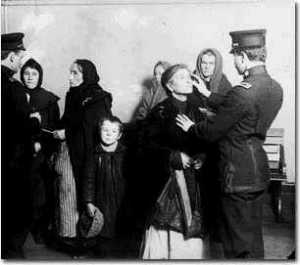
immigrants at ellis island

Bohemian immigrants on Ellis Island

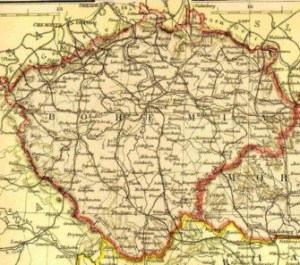
There they were, these Bohemian kids (not CZECHS!, not Slovaks, not Slovenes, but Bohacs, or Bohunks–Hunkies or Honkies!). Czechoslovakia was formed in 1918. Bohemia was a kingdom, from “way back when,” like before A.D. 600–those days of Beowulf….

bohemia in 1882

Bohemia in 1882

I learned–and was reminded often–that I was a Bohemian, because “Mom said so.” There I was, growing up in the ethnic South Side of Chicago: Damen and Seeley and Garfield Boulevard (55th Street), and Back of the Yards. Some neighbors were postal workers; others, electricians, tradesmen, homemakers. Family people. Neighborhood people. [Emilie worked in Upton Sinclair’s The Jungle. She was a meat packer for Libby Foods.]

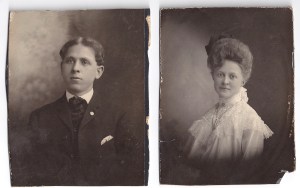
JOE ČAPEK married ANNA JARYKOVIC.

Joseph Capek and  Anna Jarykovic

JOE AND ANNA WEDDING PICTURE

Anna–of course, it had to be “AH-NAH”–died in 1924. In 1918 she had contracted the flu–the world influenza pandemic that occurred near the end of World War I. (More died from the disease than died in the war. I learned that in school.) She then contracted and succumbed to TB. Growing up, I remember many trips to the North Side, to Bohemian National Cemetery, and the graves and headstones.

Bohemian_National_Cemetery

Bohemian National Cemetery Entrance

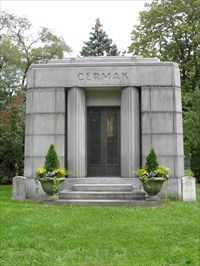
And Mayor Anton Cermak’s mausoleum

cermak tomb

Cermak Tomb

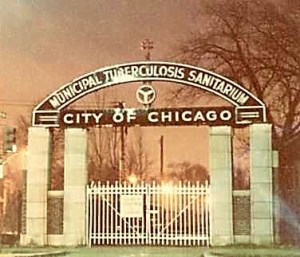
–and the nearby restaurant that had the best roasted duck, with mashed potatoes and gravy. On the way, we sometimes passed the TB Sanitarium….

tb sanitarium in chicago Jennifer A. Stix 1974 photo

Photo by Jennifer A. Stix 1974

Joe and Anna begot: Herbert (Uncle Herbie, who went with Aunt Flo); Joe (Uncle Joe, who went with Aunt Aggie); Elmer (Uncle Elmer, who went with Aunt Gladys) —I knew them all; and LILLIAN CATHERINE [b. November 16, 1918] (my mom).

Lillian C. Capek Schuma

LILLIAN C. CAPEK

Mother Katrina, while helping Anna with the children, died of a heart attack: November 1918….

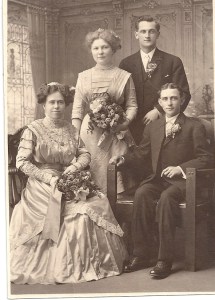
In June 1910, having fallen (madly?) in love, Emilie Čapek (Joe’s sister), while working at Libby Foods, married her handsome supervisor, Edward Albert Šuma [Schuma] [b. 1884]. I have the wedding pictures. My, what a handsome couple they were!

Edward Suma-Schuma and Emilie Capek

Edward Suma-Schuma and Emilie Capek (seated)

* * *

My Grandpa Schuma was hospitalized, was dying. In Evangelical Lutheran Hospital cafeteria, in 1956, on the South Side of Chicago, I came to know who really begot whom. I heard a beautiful story from my mother, a story of family and love. I heard of the love of a mother for a daughter, and a grandmother’s love. Then illness and death. How could all these children have comprehended it all?

Family togetherness, and the love of a generous aunt and uncle (Emilie and Ed), “begot” Lillian as “parents” and for me were my Grandma and Grandpa Schuma. They took the little girl. “Uncle Joe” kept the boys. I never knew that Joseph Capek was my real grandfather–until 1956. I knew my “grandparents” helped raise me when my father (Francis Cummings) was overseas with the Army. Their house was the first I can recall, at 5644 South Seeley Avenue.

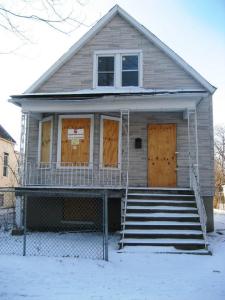
5644 South Seeley, Chicago Grandma s Place

5644 South Seeley Chicago (current)

I grew up there with them: with their daughter, my “Aunt” Emily, and with my sister and with my (2nd) cousin Marilyn (who was begot by “Uncle” Bill Knoch).

So I learned the family “secret.” Yet it was never meant to hide or deceive. Life went on. I learned the facts, the “truth.” My mother said it was so.

Nothing changed after that. Except for my awareness. After Grandma Schuma died, I was present for the reading of her will, in 1958. Then the lawyer stated the “where-from?” that began in 1924: “My niece Lillian,…” when they took in that little girl. Nothing really changed for me.

How does one ever begin to tell a story of ancestry? The more I work with the lives and the connections, however, the more I realize the story was really the beginning of how my sister, my cousin, and I–three little kids–became part of the family story. I never looked at it this way before. Those earliest of pictures I have of me alone show a cute happy baby in my mother’s arms.

jimmy loved b

Jimmy Loved

Later pictures begin to show three little children, each a year apart, with smiling faces.


jan jim marilyn january 1944

January 1944 THREE FRIENDS [Janice, Jimmy, Marilyn]

Then, standing together, holding hands.

GRANDMA'S PORCH 1945 B

Grandma’s Porch  5644 S Seeley 1945  [Marilyn, Jimmy, Janice]

In  the beginning,… Janice [b. 1939], Marilyn [b. 1940], and Jimmy [b. 1941]….

Little did these women, sister and cousin, who begat my formation, who made me laugh, who taught me some funny-ness–little did they know they’d become the main characters in an important story:

“Where ya’ from?”

© James F. O’Neil 2016

kim novak bohemian daughter

Kim Novak famous Chicago Bohemian


BY: JAMES F. O’NEIL

“The musical film is a film genre in which songs sung by the characters are interwoven into the narrative, sometimes accompanied by dancing. The songs usually advance the plot or develop the film’s characters, though in some cases they serve merely as breaks in the story line, often as elaborate production numbers. Typically, film musicals use lavish background scenery and locations. In such films, performers often treat their song and dance numbers as if there is a live audience watching.” [Wikipedia]

I was raised with the movies, black and white and then color. I still spend much time with movies, reading about film and films, though as I have gotten older, I hardly ever go to an actual movie theater, relying on other resources for my viewing pleasure.

An avid moviegoer since I can remember, I vividly recall attending my first CinemaScope 55 film Carousel.

cinemascope 55

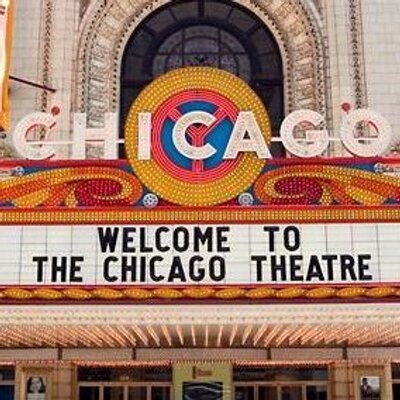
Sometime in 1956, I had a Sunday-afternoon-experience with my mother, which included an L ride in Chicago, and the movie Carousel at the Chicago Theater:

chicago theater welcome

That was the “real” beginning. Since then, I have been mildly addicted and affected by the grand opening spectacle of this color film: 20TH CENTURY FOX, blazing out to me, with full orchestration.

20th century fox

(To this day, I get thrills when a film opens with this icon. Memories.)  Mesmerized, to say the least: In CinemaScope, the story, the music, and the production numbers were alive for me on that huge big screen. I was awestruck, not being familiar with this beautiful theater and with such a spectacle.

carousel_poster

I laughed and cried and moved with the music; I was saddened by the story. But a profound moment came for me at the end, when I, a mere fifteen years old, was told “You’ll never walk alone.” To this day–and most recently–I watch the movie, still fresh, sad, enlightening, with its tear-making choral finale. A classic, that has certainly withstood the test of time.

After seeing the movie, I could hum many of the songs; I knew then I had to have the music for my music library. My mother bought for me the small boxed-set in 45 rpm, for use in my portable carry-along phonograph. Later I purchased a 33 1/3 LP edition [and now have the CD and DVD].

Carousel_film_1956

I love movies. To that memory-of-a-time in 1956, I attribute my love and appreciation of so many kinds of film. Ultimately, I have come to possess my list of favorites–which changes as time passes and new films and movies are produced. However, one thing for sure, Carousel will always remain at the top of that list.

© James F. O’Neil 2015

 chicago theater by jeffB at flickriver

 Chicago Theater (by JeffB at flickr)


BY: JAMES F. O’NEIL

“Are we there yet?    “Do we hafta go home?”   “Can’t we stay another few days?”

* * *

Summer is over. School is in session. No more whining about getting there or coming back. It’s another ended-vacation, no matter where or when, no matter how long or how short.

FIN. THE END. FINIS.

And next year? “We have time to talk about that. Do your homework now.”

The essay “What I Did Last Summer” has already been turned in, been graded, and returned. “Excellent!” “Nice Story.” “Sounds Like Fun.” “Oh, I Hate Spiders, Too!” “I’ve Never Been There. Glad It Was Enjoyable.” A++

And so it goes–or went.

I have never been in the military, never have been deployed, never have been separated for months and months at a time in a foreign country.

Oh, I have been on some very short vacations as a child–weekends in South Bend or in Dowagiac, Michigan. Longer adult vacations in England, Turkey, France, Greece. And July summers at school in Cambridge, England.

Memorable vacations with friends, family, scouts, students.

But always–always–I had to come “home,” wherever that was at the time.

This past summer I returned to Florida (with my wife, and a cat) from our 11th summertime in Ohio.

Ohio is not a foreign country. But what a difference from our life in Florida!

It is a different world–a “whole new world”–if one wants it to be.

welcome to ohio

The TripTik trip is 1100 miles (like “forever” to leave Florida). And then, after rest stops, potty stops, burgers-on-the-road, crossing states’ lines, motel rooms, changing drivers, fuel stops, napping and dozing–finally! “We are there! Finally!”

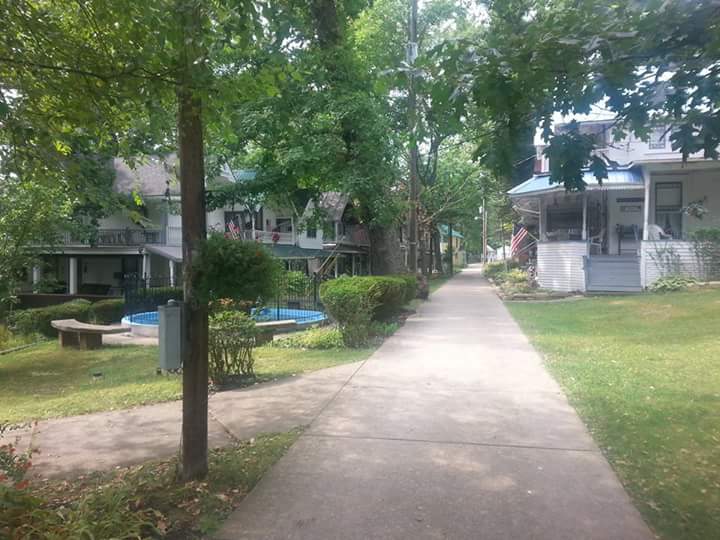
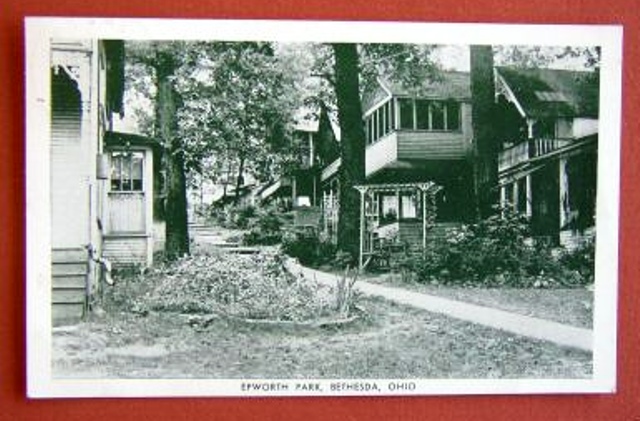
Entrance to Epworth Park

ENTRANCE TO EPWORTH PARK

Then we do our “summer things,” with friends, family, and other park-vacation dwellers.

We have arrived: Cottage #16

?

We are now Deployed in Ohio. We are IN-COUNTRY: being or taking place in a country that is the focus of activity (such as military operations or scientific research) by the government or citizens of another country.” Sometimes we feel we have time-travelled, back to the 1880s:

morristown residents

                                 MORRISTOWN, OHIO

Now there exists time to do “stuff.” To spend time in activities. To have time for reading and quiet time. (“NO TELEVISION! We are on vacation!”) To watch the lake–for hours. To feed the ducks. To walk to the post office. To garden Ohio flowers. To enjoy the quiet in the evening (though silence is sometimes shattered by an occasional Air National Guard C-130 “practicing” over the village of 800 persons, and 60 cottages). But normally, the crickets and the frogs and the owls and the geese provide their evening and night symphonic repertoires.

I have crossed over (the Ohio River). I live a different life. Some years back, I read In Country by Bobbie Ann Mason (1985). This past summer, perhaps somewhat nostalgic and “moody,” I kept remembering the book, and the film with Bruce Willis.in country poster

Awareness of my past time reading the novel and viewing the movie was significant. There was some kind of heightened response this past summer to my being “in the world but not of the world.” Perhaps because we were able to have more time there, not just a “quick weekend?” Perhaps. Time there is filled with memories of others who tell stories of the “before” of the Park. And ghosts? Certainly they reside in the walls and around the trees.

morristown cemetery

                                           MORRISTOWN, OHIO, CEMETERY

Time does not ever stand still: the same 24 hours a day. But still melds into quick time and the days go faster and faster. The end gets closer; we count the “sleeps” until packing the car, closing down the blinds, taking down the hummingbird feeders.

It is time to go. Back to The World.

The drive leaving is quiet. Not much talking. The first hour in the car winds down, and the Ohio River Crossing nears.

ohio river bridge 800px-Williamstown_Bridge_WV

“Over the river and through the woods to grandmother’s house we go….” Not quite. We leave Ohio. In the rear-view mirror In Country slowly disappears as the car climbs up the hills of the river’s valley. We have crossed over.

The trek home really begins here, from this point. It will be burgers and stops and motel beds for the thousand miles remaining. There will be fog and rain and heat and cool air conditioning in the car. And spilled snacks, and lane changes–and maybe an occasional highway patrol car watching our movements.

Then The World Approach can be seen. We cross over, another river divide.

welcome-to-florida-sign-20140116

WELCOME BACK…WELCOME!

“It won’t be long now.”

“WEEEEERRRRREEEE BAAAACK!”

We have returned, been returned safely, to Florida. All went well. No major problems, no delays.

Soon we are greeted; the vacation ending is looming larger:

Welcome to St Pete 2

GREETINGS ON I-275 FROM TAMPA

The forgetting begins. We’re home. We cannot forget there, but now we have to remember: what drawer holds the forks; what cabinet houses the packs of Kool-Aid; where the peanut butter jar is; and, certainly, where we are to put the dirty laundry from the trip home.

We are home. It’s really different here.

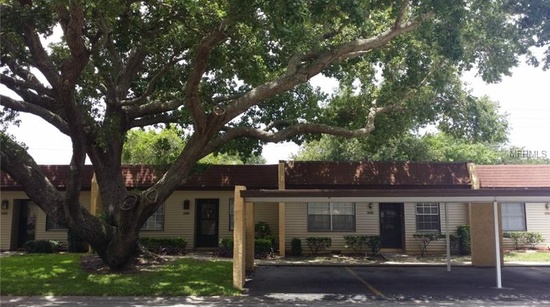
mission oaks condo

MISSION OAKS: SEMINOLE, FLORIDA

However, we have our memories of a time to nurture us, until next time.

© James F. O’Neil 2015

The AvenueNOW AND THEN:

Early Epworth Park Photo b