BY: JAMES F. O’NEIL
How to Read a Book by Mortimer J. Adler
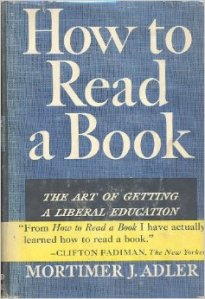
What a great book for me! While a senior in high school, I belonged to the Book Club. A group of us would meet once a month to discuss a book chosen by a faculty advisor. He prepared questions for our comments. Our first reading was Adler’s book.
This now-favorite and well-used book (first published in 1940) is still available in both “real” print and “electronic” print. I have gone through two or three copies–and have given copies as gifts. Were I to point out a most influential book in my life, Adler’s would be one of the three (followed by The Power and the Glory [1940] and A Tree Grows in Brooklyn [1943]).
Often I see Adler’s book staring at me from its place on my bookshelf.
Looking through this book not long ago, I was searching for an answer to some question about my teaching career and about students: “…although the teacher may help his student in many ways, it is the student himself who must do the learning. Knowledge must grow in his mind if learning is to take place.”
At that point, in a special mental instant, memory-filled, I became so aware of how far I had come in my learning and discovering, by reading. Then there occurred a light-bulb “Ah-ha!” kind of connective moment,

not about reading but about my own discovering, by do-ing. I stood before my bookshelf, holding Adler, musing: What have I done?
When I was being presented with my retirement gifts and honor plaque, “For his twenty years of full-time service…,” I stood there–really–thinking about my grandfather teaching me how to do “hands-on”: the practical, not the theoretical. Nailing and sawing and shoveling and painting and gluing.
So much of my teaching career was not “hands on”–except, of course, when I would finger paint with my Head Start students; except, of course, my writing class notes on black, green, and white boards; except, of course, for correcting-annotating-commenting upon hundreds and piles of student papers; except, of course, for typing lesson plans, calculating and entering grades and achievements. (Late in my career, though, I was doing “hands-on” computer instruction.)
Adler’s how-to book came long after some of my how-to experiences.
While in grammar school (elementary school), I did babysitting duties: bathing, feeding, and bedding (and changing diapers). Yet I also was able to get a “real” job at a local grocery story. I put up stock, helped clean up, but most importantly (since I was an experienced newspaper delivery boy), I was able to be trusted to deliver groceries. Not as easy as it sounds, considering the delivery vehicle:
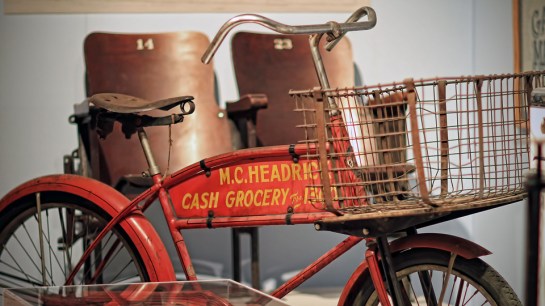
DELIVERY BICYCLE [RUSTED]
Careful and skillful, I did not let the bicycle tip or turn, spilling the contents of the basket–well, not often. I learned then about center of gravity. (The turning bike wanted to pull me over.)
Sometimes “all thumbs” at changing faucet washers, and driving nails, I still managed to be “hand-y”: knowing how to paint, scrub floors in the local school with a temperamental scrubbing machine, do dishes (glasses, knives and forks first; dishes, pots and pans last); mow lawns, shovel snow, change tires (automobile and bicycle). (Later in life, in my automotive-mechanic stage of life, I actually installed water pumps, changed brakes, and even added a Holley 4-barrel carburetor to my 1954 Ford! What achievements!)

I could tie a tie, long after learning how to tie shoelaces; shave my face, handwrite, and sign my name. I hate to dust, but I can organize dirty clothes and do laundry. And from observing and reading, I could/can make a “signature” meatloaf!
While working in a foundry, handling a swing grinder and hand tools, I made, fashioned, and finished dies for plastic companies, or was grinding off mold-edges on fire hydrants or small engines, still hot from the casting. This work was dirty, sweaty, and hands-on.
Yes, I have been a doer, with hands and fingers. And I am pleased.
I did, though, have my creative artistic attempts, like drawing flowers that looked like lollipops; then had twenty good years using my hands with glass, colored and contoured, fabricating flowers and shapes and geometrics that let the light shine through: my stained-glass years.

THE MALTESE BLUE
All this and more.
My story of learning and discovery, however, cannot end without mention of one of my other greatest accomplishments of manipulative making. I was privileged, honored, to be able to use my hands in a bookbindery. Now how is that for a Mortimer Adler segue?
As a college junior, I found a place in the college bindery, an opportunity for me to come in contact with paper, cloth, glue, drill presses–to love books even more and realize the sacredness of pages put together. There I folded and bound papers and pages into sets, the fascicles; sewed and pulled and tightened using needles and “thread” to sew units, not unlike Shakespeare’s quartos and octavos. I grouped, squeezed, and pressed together the clusters of papers, then glued and waited. The ends of the pages were trimmed with large-bladed cutters; I lost no parts of any fingers or thumbs.

I learned how to make covers of cardboard and cloth, uniting the covers to the sewed and glued pages. I pressed all parts together, and waited for drying. I even learned to print titles, imprinted, impressed, using fonts of type and gold leaf foil. I bound magazines, students’ notes, paperback texts, library journals, old books.
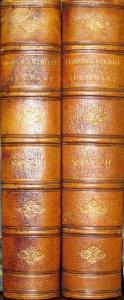
I was proud of my work; I did my job. I was good at my work and all the work I have done “with these hands.”
From all of this–from my reading, from my doing, from my remembering–it is that when I consider this “do-ing,” I am well pleased, something akin to sticking in my scarred thumb and pulling out a plumb–and saying, “What a good boy am I!”
I did well, with my fingers and my thumbs.
© James F. O’Neil 2016




 Memories of a Time