Archive

JOURNALING

“…many things have been omitted which should have been recorded. . . .  It is not easy to write in a journal what interests us at any time, because to write it is not what interests us.” –Henry David Thoreau

Still?  Haven’t started yet?  For an introduction, or a refresher, see https://memoriesofatime.com/2015/05/18/journal-keeping/

composition book 1No expensive blank-page, hardcover or leatherette book: use notebook paper, a speckled notebook, or some similar writing book.  (Avoid notebooks wire-bound that flatten or break or can scratch or poke.)  

Keeping it regularly?  Faithfully?  A few times a week?

Stuffed with “stuff,” like receipts, greeting cards, pictures, favorite essays from magazines, emails from friends?  or also filled with dreams and bads and goods?

Are you conversant with your soul?  Do you confer with those who have crossed over to the Other Side?

Can you/do you capture life as you see it, the now, the past, the present?  (You are not stuck in the past, are you?)

Do you connect the few facts you know, the slim insights you have attained, the “chance extensions of sensibility into which you have been once or twice tempted into a larger enough context to make sense of the world…or the works of art you encounter”?–[Leslie Fiedler]

Chronological order: date, day, time.  A good record (for reference, a place in time).

Not boring details.  But details.  What is that saying about details?  “The idiom “the devil is in the detail” refers to a catch or mysterious element hidden in the details, and derives from the earlier phrase ‘God is in the detail,’ expressing the idea that whatever one does should be done thoroughly; i.e. details are important.”  — [Wikipedia–and other sources]

No day is bereft of material to write about…about which to write.  See, hear, touch, taste, and smell.  Then understand, react.  Then WRITE.

Note the particulars that make you your journal, your journal you.

Need more than this?  Need a book for starters?  “If you want to change your life and know that you have the answers within, then learning to journal as a tool for rediscovering what you already knew, is the best way I know how. This book stands alone; and if you want to have a master teacher guide you into the depths of your soul, get this book and the companion workbook.”  [Marcia C. Bliss comment in 2013]:  Journaling for Joy: Writing Your Way to Personal Growth and Freedom by Joyce Chapman, 1991, 2013.
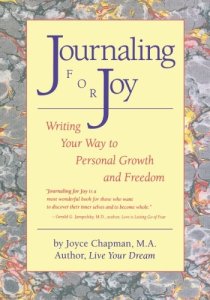

journaling for joy

Question_mark_(black_on_white)


REFLECTIONS ON “WHAT IS TRUTH?”

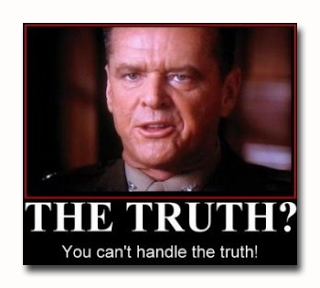
TRUTHTOM CRUISE

From notes gathered into my journals: Will I ever “get to the bottom of it?” [bottom of what?]

Should I know the truth, the whole truth, and nothing but the truth?

* * *
TRUTH = the quality of being true or correct according to SOME ground or test for establishing the reality of a statement (proposition, idea, thought, belief, opinion).

“Truth” assumes that what it applies to DOES depict fact or reality.

But some statements are to be tested: proposals (accept or reject); resolutions (yes, or violated); promises (kept or not); suggestions (heeded, or not); commands (obeyed, or not).

***TRUTH IS THE CONFORMITY OF THE INTELLECT WITH THE THING (logical truth, “truth of knowing”).

SHOULDS: Contain VALUE JUDGMENTS, without moral import at all. “You should turn here.”  YET, the action COULD have moral import…and consequences: “You should turn here, or you’ll….”

PRACTICAL LIVING demands certain guidelines or limits within which all humans should behave.

BASIC MORAL PRINCIPLES can indeed be set up to govern most human actions–yet exceptions can be provided for, with careful and strong justification.

So, we live with NORMATIVES (“It’s good/right.”) and PRESCRIPTIVES (“You should not do it.”).

**Yet, even if a proposition is true, there is no guarantee that people will act in accordance with it–yet the proposition still remains true whether they do or not….

THUS:
Just because they do it doesn’t mean it’s true.
Just because they believe it doesn’t make true.

* * *

PRINCIPLE OF TRUTH-TELLING, OR HONESTY:

The principle that states a human being should always OUGHT to strive to tell the truth or be honest, except when it would interfere with or seriously violate the principles of GOODNESS, VALUE OF LIFE, and JUSTICE. [This principle is necessary for meaningful communication and human relationships…]

Vital-Lies-Simple-Truths-CoverARE SOME LIES VITAL? 

VALUE OF LIFE [SANCTITY OF LIFE] = 1st moral principle = life of humans is to be preserved, protected, valued

GOODNESS/RIGHTNESS = moral/ethical = good/right
Promote good over bad
Cause no harm/badness
Prevent badness/harm

JUSTICE/FAIRNESS = not enough to do good and avoid bad, but some effort must be made to distribute the good and bad resulting from actions = moral rightness, equity, fairness:
Exchange = payment/remuneration
Distributive = merit, reward (for work performed)
Social = fair and just for all
Retributive = eye for an eye/punishment

* * *

From On Truth by Harry G. Frankfurt (Knopf, 2006):

Truth is so important to us . . . we should especially care about it. Yet common sense tells us that we know what it means to tell the truth, …and what it means to give false accounts: to lie.

Higher levels of civilization must depend even more heavily on a conscientious respect for the importance of honesty and clarity in reporting the FACTS, and on a stubborn concern for accuracy in determining what the facts are.

[No one in his right mind would rely on a builder, or submit to a physician, who does not care about truth. There is a clear difference between getting things right and getting them wrong, and thus a clear difference between the true and the false.]

…societies cannot afford to tolerate anyone or anything that fosters a slovenly indifference to the distinction between true and false. AND indulge the . . . narcissistic pretense that being true to the facts is less important than being “true to oneself.”

We need to avoid being debilitated either by error or by ignorance. We need to know–and, of course, we must understand how to make productive use of–a great many truths.

Our success or failure in whatever we undertake, and therefore in life altogether, depends on whether we are guided by truth or whether we proceed in ignorance or on the basis of falsehood.

WE REALLY CANNOT LIVE WITHOUT THE TRUTH… 

…hiding our eyes from reality will not cause any reduction of its dangers and threats.

If we have no respect for the distinction between true and false, we may as well kiss our much-vaunted “rationality” good-bye.

For every fact, there is a true statement that relates it; and every true statement relates a fact.

…caring about truth plays a considerably different role in our lives, and in our culture, than does caring about the accumulation of individual truths.

It is because we appreciate that truth is important to us that we care about accumulating truths.

It is only through our recognition of a world of stubbornly independent reality, fact, and truth that we come both to recognize ourselves as beings distinct from others and to articulate the specific nature of our own identities.

How, then, can we fail to take the importance of factuality and of reality seriously? How can we fail to care about truth? We cannot….

“…many things have been omitted which should have been recorded. . . . It is not easy to write in a journal what interests us at any time, because to write it is not what interests us.”   –Henry David Thoreau

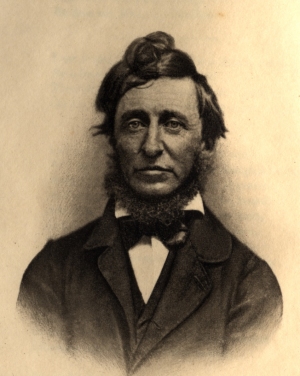
thoreauHenry David Thoreau

Through the writings of Thoreau–Walden and A Week on the Concord and Merrimack Rivers–a person interested in journaling can begin to make connections between writing, self, and life. Thoreau is the teacher.

walden pondA journal can help its writer make such connections, make her or him feel alive, discern life; journal writing can bring insight, can shape human identity, and give life meaning.

The journal will become a place to make progress in prose style, a method of/a place for self-understanding and self-revelation.

The journal-keeper will be able to make connections with the past and the present–and have a special vision: to see and to realize the value in making those connections–and writing about them.

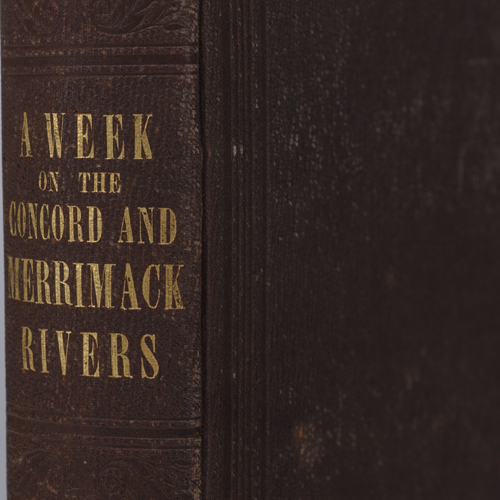
week on the concordNOTE: A diary is a fact book: I saw a rainbow. A journal is a fact book with feeling–or with feelings about the facts: I saw a magnificent rainbow and was overwhelmed by the beauty of the colors of a prism. Simple, no?

composition book 1The Speckled Notebook for Journal Entries

BY: JAMES F. O’NEIL

Most of us adjusted our clocks to keep up with The Changing of the Clocks: Daylight Saving Time (“Daylight Time”). And the world keeps on turning.

watch If the yearly changing of clocks is important for the economy and for the normal operation of living, we can be aware of what a big deal it really is.

However, it is a small instance in our being involved in rite, ritual, and myth.

Ritual plays such an important role in the life of an aware human, and knowledge of ritual and mythology makes us aware of the bond that unites us all to one another.

If you need to delve into this “myth thing,” read and study Frazer, Frye, Eliade, Wheelwright; then worlds open up reading Jung, Milton, Whitman, and Joyce. There is no end to discovering, to making connections, to becoming aware of how contemporary faiths and practices are united with/by “archaic” realities. And in the widest range possible, “faiths and practices” can even include setting back or ahead a timepiece or the Dashboard Clock.

How I do something or how I am told to do something is RITE: How to color Easter eggs.

EGG COLORING BY ELCIVICS.COM

The actual coloring is the Annual RITUAL, including hiding the eggs, making baskets, and making chocolate disappear.

MYTH is a true story that is precious, contains special elements, and is usually religious or “sacred.” (This is the story of “Once upon a time . . .”: Easter Bunny, tombs, rolling back a stone, angels passing over, etc.) We need to get used to NOT saying, “It’s a myth.” (Maybe in Shakespeare in Love, “It’s a mystery” has more meaning than appears.)

A MYTH is a narrative and an expression of ultimate reality, a statement of value: “I believe this.” Even if it’s an Easter Bunny, the Paschal Lamb, or Passover . . . or changing the time. We express, “We believe,” then act accordingly as those who have done before us from the beginning.

From here, we go to see the timepiece, the clock, as more than a time change but rather as a renewal of and re-living the myth: spring (or autumn). And all that spring announces, like dawn or birth or green (however, after the snow is finally gone), or revival, defeat of darkness of winter (resurrection?).

This is Spring. (April may be the cruelest month, but April showers bring May flowers . . .)

Living a MYTH implies a genuinely religious experience. We live it ceremonially or by performing the ritual: Easter bonnets, those Easter Parades (any parade!). In one way or another, we “live” the myth in the sense that we are “seized by the sacred, exalting power of the events recollected or re-enacted” (Mircea Eliade).

All those little things we do at this time of the year, “religious” or sacred or “profane,” take us on that journey of awareness, that ritual of discovery of our origins and of who we are: humans.

It’s no big deal, just a clock and egg and a bunny and a . . . .

© James F. O’Neil

BUNNY EGG BY LUCYLEARNS.COM