KEEPING/TELLING SECRETS
3 Comments


Definition: 1) a woman’s one-piece undergarment
2) a soft toy in the form of a bear. Developed in the early years of the 20th century, and named after President Theodore “Teddy” Roosevelt, the teddy bear became an iconic children’s toy, celebrated in story, song, and film. [Since the creation of the first teddy bears, which sought to imitate the form of real bear cubs, “teddies” have greatly varied in form, style, and material. They have become collector’s items, with older and rarer “teddies” appearing at public auctions. Teddy bears are among the most popular gifts for children and are often given to adults to signify love, congratulations, or sympathy.] –Wikipedia
3) an award given annually by Joe Klein, of TIME magazine, for “doers, diplomats, and leaders who ignored our worst instincts.”
“It is not the critic who counts: not the man who points out how the strong man stumbles or where the doer of deeds could have done them better. The credit belongs to the man who is actually in the arena, whose face is marred by dust and sweat and blood, who strives valiantly, who errs, who comes up short again and again … who spends himself in a worthy cause; who, at the best, knows, in the end, the triumph of high achievement, and who at the worst, if he fails, at least fails while daring greatly.” –Teddy Roosevelt

Note: Joe Klein’s Teddy Awards for 2015: Barack Obama, Joe Biden, Jerrold Nadler, Bob Corker, George H. W. Bush, James Baker, Jeb Bush, John Kasich, John Kerry, Mohammad Javad Zarif, and Fox News Presidential Debate (“proving that good politics can be substantive and entertaining”). (See, TIME, December 21, 2015, p. 46)
BY: JAMES F. O’NEIL
“You can get help from teachers, but you are going to have to learn a lot by yourself, sitting alone in a room.” –Dr. Seuss
During my senior year in college, I walked into a theology and philosophy class, with a teacher who was to discuss eschatology, cosmology, and proofs for the “Uncaused Cause.” (In that class, I was using the Art and Scholasticism text by Jacques Maritain.)
For a moment, as I look back on those memories of a time, I wonder what that teacher might have asked me what influenced my decision to take his class. An interesting (philosophical?) question.
I would have said that here’s a person who has been able to see some relationships between his subject and his life, trying “to make sense of it all.”
I was so naive when I got to that point in my life, trying to make sense of it all. I was twenty-one years old. One year later, I was that very person, standing before a group of students who might have been wondering what I was doing there? And what did I know? Where did I learn to make relationships? I was just an English teacher.
There was Sister Mary Georgine, RSM, in my sixth grade.
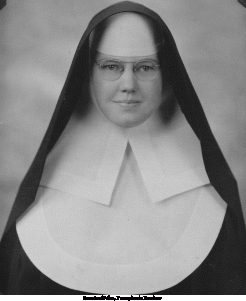
She helped me learn about reading, how to read, more than any other teacher before her. After, Sister Mary Philip, who took me aside and had me read Ben-Hur–“just because.” Did she think I was something or someone special? Was I?
And then there was Father Cahill in high school, always smelling of cigar ( a good smell), with dandruff on his shoulders and chalk dust on his sleeves, having us read Don Camillo stories; Father O’Donnell, taking us to The Bridge of San Luis Rey.
Of course, there were the readings and the tests–and even some poetry. And dramas:
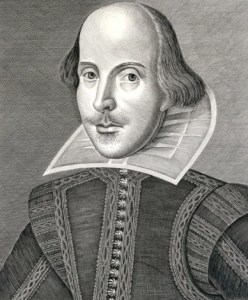
The Merchant of Venice (with the quality of mercy not being strained); Julius Caesar (with “yon Cassius” and his lean and hungry look); Macbeth (with witches, cauldrons, and “Will all the water in the ocean wash this blood from my hands?”).
I cannot forget Our Town, Huck Finn and his raft (and life on the M-I-S-S-I-S-S-I-P-P-I); Treasure Island, and “Elementary” Watson. “The Man Who Would Be King” (later in film with Sean Connery and Michael Caine); and that “Most Dangerous Game,” and Maupassant’s sad story of the lost necklace: “Oh, my poor Mathilde! Why, my necklace was paste!”
Memorable pieces I was taught, as one teacher emphasized, for enjoyment, for enrichment, and for insight. I liked that (though I did not like The Scarlet Letter and that Deerslayer-stuff: “I do not like them Sam-I-am.”)

And then in college? And grad school? So much work, so much reading, so many pieces rushed through “to get it done by the end of the term.”
I learned from Dr. Lavon Rasco how to close read American novels, modern and contemporary (like Dos Passos, Heller, Hemingway, Faulkner, Nathaniel West). Who explained Freudian interpretations, as he walked around the classroom playing with the change in his pocket.
There was Dr. Margaret “Ma” Neville (who looked like a smiling and happy Jonathan Winters) who engaged me with Chaucer (and how “the droghte of March hath perced to the roote”) and the Beowulf (and later how I was able to understand John Gardner’s Grendel); and the beginnings and the end of Arthurian legends. (I wrote that “winner” paper, about adultery and the destruction of the Round Table.)
Dr. Harold Guthrie brought Emily D. into our classroom as no one had ever done before for me; I even followed him through the grass with Walt Whitman. I was nobody; who are you? I camped, later then, with Thoreau at Walden Pond, reading my Emerson and the doctrine of divine compensation (“Life invests itself with inevitable conditions…”).
Each of these unique teachers expected much of me; often I enjoyed and was enriched. With some others, I was disenchanted–or the works did not interest me. They became chores, tiresome. (Medieval drama and Victorian poets: No.) My likes and dislikes were my insights: “Love surfeits not, Lust like a glutton dies; // Love is all truth, Lust full of forgéd lies.” (Ah, my insightful 1968 research essay about Othello and Venus and Adonis by William Shakespeare! Now one can read about the topics in Shakespeare on Love and Lust by Maurice Charney, Columbia, 2000).
Yes, I had to put up with the rigors of schooling, the tests and exams, myriad essays and the research papers (which I mostly enjoyed doing). Yet it was not all rigor: some humor and laughter; and some scary Poe and Angela Carter; and the divine, Milton and Blake. A graduate professor at the University of Minnesota took me to Paradise, lost and regained: Dr. Lonnie Durham, riding his bicycle into class, that cold, stark, desk-filled tiered room of 120 seats. I drank deeply from the well of mythology, from a front row seat, gathering up as many pearls of wisdom that came my way. I was a careful Stephen Daedalus, trying not to get burned like Icarus.
So, after a few years as a teacher, I learned that being a teacher itself is an education.
Joseph Epstein [Aristides] wrote in American Scholar, many years ago, that teaching is really a second kind of learning, “a fine chance for a second draft on one’s inevitably inadequate initial education. . . that we are not ready for education, at any rate of the kind that leads on to wisdom, until we are sixty, or seventy, or beyond.”
Absolutely.
“A little learning is a dang’rous thing;
Drink deep, or taste not the Pierian spring:
There shallow draughts intoxicate the brain,
And drinking largely sobers us again.”–Alexander Pope.
[In Greek mythology, it was believed that drinking from the Pierian Spring would bring great knowledge and inspiration. Thus, Pope is explaining how if a person only learns a little, it can “intoxicate” in such a way that makes one feel as though he or she knows a great deal. However, “drinking largely” sobers one to become aware of how little she or he truly knows. –Wikipedia’s brief explanation.]
© James F. O’Neil 2015
 Turner’s Vision of the Spring
 Memories of a Time