Archive

READING

“Socrates was the first person to distinguish between the ability to criticize literature and the ability to compose it.”  –Abercrombie

Is old criticism still “good” criticism?

“The realm of criticism is occupied by the activities of three distinct powers: the power to CREATE; the power to ENJOY; the power to CRITICIZE.

“The powers to criticize can be acquired, with process and system to be studied, and deliberately put into practice.

“There are no principles which will tell you how to create literature, nor how to enjoy it.”

“Criticism consists in asking and answering rational questions about literature.”

Basically two kinds of criticism, or critical inquiry, can be determined: studying the function of literature, the nature of literature, the theory of literature (aesthetics).  The second, criticism proper, may be called practical criticism (studying unique qualities in actual concrete examples of literature).

***

“The history of criticism has been very largely the history of attempts to formulate rules for criticism.  But rules derived from some particular instances in one kind of literature…have been found wanting.

“Only the principles which express the nature, and define the function, of literature in general can determine what is essential in any kind of literature; and only by appealing to what is essential can criticism provide itself with trustworthy rules.”

***

So where does one begin?  At the beginning: “The first and most celebrated of all systematic theories of literature?  Aristotle’s Poetics.”  [That’s old.]

“Aristotle raises almost all the problems out of which emerge the principles required by criticism for its security.”  (But he doesn’t always solve the problems satisfactorily, yet he compels us to consider them exactly.  How could he ever imagine a Catcher in the Rye or À la recherche du temps perdu–or even Joyce’s Ulysses?)

Question_mark_(black_on_white)


Lewis H. Lapham (1935- ), former editor of the American monthly Harper’s Magazine from 1976 until 1981, and from 1983 until 2006.  He is the founder of Lapham’s Quarterly, a quarterly publication about history and literature, and has written numerous books on politics and current affairs. 

“As many as six out of ten American adults have never read a book of any kind…”

Some things about education (1989):

“Schools serve the wishes and expectations of the society to which they belong.”

In the spirit of re-arranging the American system of education, “citing the authority of Thomas Jefferson…I can imagine Jefferson’s purpose translated…that would train…students…  [with] curricula…directed toward two fairly modest tasks: the teaching of languages, history, and mathematics; and the instilling of intellectual confidence.”

“The study of languages and mathematics provides the student with the tools to work at the trade of learning.”

“A student reads the classical texts because they induce the habit of thought.”

”A thorough knowledge of a few writers instills in the student the confidence that he cannot derive from selected passages printed, usually in bad translation,  in an anthology chosen by a committee of pedants.”

“All students should learn the rudiments of writing, reading, history, and arithmetic…ceaseless reading (literature)…writing (letters, explanations, narratives)…calculations (bills, rates, balances)…ceaseless study of historical chronologies.”

“Jefferson assumed that roughly 90 percent of the population was ineducable: he meant that most people were not suited to the atmospheres of the higher learning.  Certainly everybody has a right to go somewhere, but not necessarily to academia.”

“Too often it is thought that an education can be acquired in the way that one acquires a suntan or an Armani suit, as if it were an object instead of a turn of mind.”

“An education begins with two or three teachers and six or seven texts (maybe books, maybe equations or fossils or trees) that introduce the student to the uniqueness of his or her own mind.  After that it’s a matter of educating oneself.”

“The best American minds, or at least the most generous and imaginative of American minds (I think of Lincoln and Melville and Edison), tended to be self-taught.  Expressing a sentiment that Jefferson probably would have seconded, St. Augustine observed that it is possible to learn only what one already knows.”

LHLaphamLewis Lapham


Question_mark_(black_on_white)


“VIRTUCRAT”: “any man or woman who is certain that his or her political views are not merely correct but deeply, morally righteous in the bargain.”

“After all these years, I may have found my own best reader, and he turns out to be me.”

Some selected works:
Divorced in America: Marriage in an Age of Possibility (1974)
Familiar Territory: Observations on American Life (1979)
The Middle of My Tether: Familiar Essays (1983)
With My Trousers Rolled: Familiar Essays (1995)
Snobbery: The American Version (2002)
Friendship: An Exposé (2006)
In a Cardboard Belt!: Essays Personal, Literary, and Savage (2007)
Distant Intimacy: A Friendship in the Age of the Internet (with Frederic Raphael) (2013)
A Literary Education and Other Essays (2014)

“I read in the hope of discovering the truth, or at least some truths. I look for truth in what some might deem strange places: novels and poems, histories and memoirs, biographies and autobiographies, letters and diaries.”

“I’m not so sure that statistics have much to tell us about a cultural activity so private as reading books.”

“Serious readers…when young they come upon a book that blows them away by the aesthetic pleasure they derive from it, the wisdom they find in it, the point of view it provides them.”

“For myself, I have come to like books that do not have photographs of their authors, preferring my imaginings of their looks to the reality.”

Joseph Epstein

Joseph Epstein

“Books are an addiction.”

“Nearly all modern stories or memoirs of growing up are accounts of sadness, loss, secret terror.”

“Many people write or become psychoanalyzed in order to bury the ghosts of their childhood. I wish, as best I can, to revive the ghosts of mine….”

“Thinking too much about the future resembles thinking too much about breathing–the result is to make one feel very uncomfortable. Best to glory in what was finest in the past, to concentrate on the present, and to allow the future to fend for itself.”

“…without friendship, make no mistake about it, we are all lost.”

“. . . I seek clues that might explain life’s oddities, that might light up the dark corners of existence a little, that might correct foolish ideas that I have come to hold too dearly, that might, finally, make my own stay here on earth more interesting, if not necessarily more pleasant.”

[See http://memoriesofatime.com/2013/05/27/why-i-read/%5D

Question_mark_(black_on_white)

BY: JAMES F. O’NEIL

“You can get help from teachers, but you are going to have to learn a lot by yourself, sitting alone in a room.” –Dr. Seuss

During my senior year in college, I walked into a theology and philosophy class, with a teacher who was to discuss eschatology, cosmology, and proofs for the “Uncaused Cause.” (In that class, I was using the Art and Scholasticism text by Jacques Maritain.)

For a moment, as I look back on those memories of a time, I wonder what that teacher might have asked me what influenced my decision to take his class. An interesting (philosophical?) question.

I would have said that here’s a person who has been able to see some relationships between his subject and his life, trying “to make sense of it all.”

I was so naive when I got to that point in my life, trying to make sense of it all. I was twenty-one years old. One year later, I was that very person, standing before a group of students who might have been wondering what I was doing there? And what did I know? Where did I learn to make relationships? I was just an English teacher.

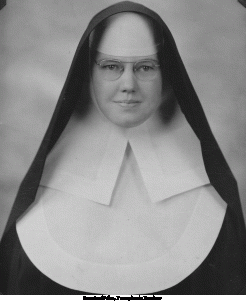
 There was Sister Mary Georgine, RSM, in my sixth grade.
 sisters-of-mercy

She helped me learn about reading, how to read, more than any other teacher before her. After, Sister Mary Philip, who took me aside and had me read Ben-Hur–“just because.” Did she think I was something or someone special? Was I?

And then there was Father Cahill in high school, always smelling of cigar ( a good smell), with dandruff on his shoulders and chalk dust on his sleeves, having us read Don Camillo stories; Father O’Donnell, taking us to The Bridge of San Luis Rey.  

Of course, there were the readings and the tests–and even some poetry. And dramas:
william shakespeare 2015

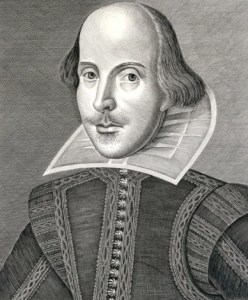
The Merchant of Venice (with the quality of mercy not being strained); Julius Caesar (with “yon Cassius” and his lean and hungry look); Macbeth (with witches, cauldrons, and “Will all the water in the ocean wash this blood from my hands?”).

I cannot forget Our Town, Huck Finn and his raft (and life on the M-I-S-S-I-S-S-I-P-P-I); Treasure Island, and “Elementary” Watson. “The Man Who Would Be King” (later in film with Sean Connery and Michael Caine); and that “Most Dangerous Game,” and Maupassant’s sad story of the lost necklace: “Oh, my poor Mathilde! Why, my necklace was paste!”

Memorable pieces I was taught, as one teacher emphasized, for enjoyment, for enrichment, and for insight. I liked that (though I did not like The Scarlet Letter and that Deerslayer-stuff: “I do not like them Sam-I-am.”)

 green eggs and ham

And then in college? And grad school? So much work, so much reading, so many pieces rushed through “to get it done by the end of the term.”

I learned from Dr. Lavon Rasco how to close read American novels, modern and contemporary (like Dos Passos, Heller, Hemingway, Faulkner, Nathaniel West). Who explained Freudian interpretations, as he walked around the classroom playing with the change in his pocket.

There was Dr. Margaret “Ma” Neville (who looked like a smiling and happy Jonathan Winters) who engaged me with Chaucer (and how “the droghte of March hath perced to the roote”) and the Beowulf (and later how I was able to understand John Gardner’s Grendel); and the beginnings and the end of Arthurian legends. (I wrote that “winner” paper, about adultery and the destruction of the Round Table.)

Dr. Harold Guthrie brought Emily D. into our classroom as no one had ever done before for me; I even followed him through the grass with Walt Whitman. I was nobody; who are you? I camped, later then, with Thoreau at Walden Pond, reading my Emerson and the doctrine of divine compensation (“Life invests itself with inevitable conditions…”).

Each of these unique teachers expected much of me; often I enjoyed and was enriched. With some others, I was disenchanted–or the works did not interest me. They became chores, tiresome. (Medieval drama and Victorian poets: No.) My likes and dislikes were my insights: “Love surfeits not, Lust like a glutton dies; // Love is all truth, Lust full of forgéd lies.” (Ah, my insightful 1968 research essay about Othello and Venus and Adonis by William Shakespeare! Now one can read about the topics in Shakespeare on Love and Lust by Maurice Charney, Columbia, 2000).

Yes, I had to put up with the rigors of schooling, the tests and exams, myriad essays and the research papers (which I mostly enjoyed doing). Yet it was not all rigor: some humor and laughter; and some scary Poe and Angela Carter; and the divine, Milton and Blake. A graduate professor at the University of Minnesota took me to Paradise, lost and regained: Dr. Lonnie Durham, riding his bicycle into class, that cold, stark, desk-filled tiered room of 120 seats. I drank deeply from the well of mythology, from a front row seat, gathering up as many pearls of wisdom that came my way. I was a careful Stephen Daedalus, trying not to get burned like Icarus.

So, after a few years as a teacher, I learned that being a teacher itself is an education.

Joseph Epstein [Aristides] wrote in American Scholar, many years ago, that teaching is really a second kind of learning, “a fine chance for a second draft on one’s inevitably inadequate initial education. . . that we are not ready for education, at any rate of the kind that leads on to wisdom, until we are sixty, or seventy, or beyond.”

Absolutely.

“A little learning is a dang’rous thing;

Drink deep, or taste not the Pierian spring:

There shallow draughts intoxicate the brain,

And drinking largely sobers us again.”–Alexander Pope.

[In Greek mythology, it was believed that drinking from the Pierian Spring would bring great knowledge and inspiration. Thus, Pope is explaining how if a person only learns a little, it can “intoxicate” in such a way that makes one feel as though he or she knows a great deal. However, “drinking largely” sobers one to become aware of how little she or he truly knows. –Wikipedia’s brief explanation.]

© James F. O’Neil 2015

 pope's spring by turner.jpgTurner’s Vision of the Spring