Archive

GROWING UP

BY: JAMES F. O’NEIL

“I think I have serious latent Catholic guilt issues.”  –Grimes (Brainyquote)

A grey rainy late winter day in Chicago.  My dad and my sister are in the car (our ’37 Plymouth) waiting to pick me up from school.  I was in 2nd grade at St. Jarlath’s, near our apartment on Van Buren and Ashland (long gone now, concretized by the Congress Street-Eisenhower Expressway). My dad worked nights but came to get us home for lunch in bad weather.  What was the delay?  I’m inside the classroom, sitting under the teacher’s desk.  What was happening then in 1949?

Born in April 1941, I have few memories before 1944, though some child development specialists have told they could unlock the drawers holding those before-memories.  How many “major” memories do we get to keep?  Memories are the captured ones, say, the ones not ever forgotten, those “memorable” thoughts and stories that unfolded becoming our lives.  Choosing which ones to share, or to organize those recalled from time to time can be a daunting task, albeit a rewarding one (cathartic one?).  I am certain there were, in my first three or four years, those first baths, and birthdays–complete with cake and frosting in hair, or on the high chairs, and thrown about the room.  Perhaps early birthdays with games and balloons and smashed cake really do form the basis for celebrations of all kinds that come at later dates.

But the memories of our first three or four years?  I delight in all that is forgotten: the pain of early ear infections, of being one gigantic chicken pox when all the pox-dots are connected.  Scarlet fever, insect bites and stings, broken favorite toys, cough medicines, penicillin injections, Vicks-covered wrapped-chests, and more awful things that should remain in those memory drawers, not needing to be unhoused.  For what real purpose?

We hardly also remember all the good times, for they were not so traumatizing on the psyche.  Yet I would not mind the good memories that could be released: memories of first beach day (not a sun burn, of course, but the eternal sand castle building or perfect water temperature), train trips or miniature-train rides in parks or at carnivals, parties and Christmases and Easter egg hunts, and A&W root beer floats, and .  .  .  Release might involve the “good” with the “bad.”  (Personally, Dr. Jung Freud, I like it the way it is–as if I have slept through most of those first three or four years.)

Therefore, my life story begins in 1944: I was three.  That is a good start for my history.  My baby pictures tell enough of that, especially those with my favorite cousin Marilyn on one side and my sister, Janice, on the other side of me–all with our little knees showing.  Three joined at the hip, as it were, on Grandpa Schuma’s front porch.  THAT is the memory, the picture I want to keep alive forever as representative of my early-early life, the “good life.”

jimmy on GRANDMA'S PORCHTHE THREE OF US ON THE PORCH AT 5644 SOUTH SEELEY 1945

It is my school life, though, that has always been a nine-month chunk of my life cycle.  So much of my time, my daily life, was spent in school or around school or going to/coming from.  The summers, then, were sacrosanct with a life of their own.  That is why we probably use the expression so often “School Life,” from pre-K, or even nursery school, to whatever graduation point or final degree.

Overall, I grade my “school life” in the range of “good” to “above average”: C to B+, from first grade through my advanced degree programs.  In “My Life Story: Early Life in School: 1947-1949,” there exist a few milestones, like Baltimore Catechism (and hating–forever–memorization); First Holy Communion (and that dark blue wool suit seen in pictures);

jimmy's First Communion May 9, 1948

JIMMY’S O’NEIL’S FIRST COMMUNION MAY 9, 1948

a Confessional, for the first time.  The Milk Break: I loved milk breaks–any grade.  (And I wish I had gone to kindergarten to have had a blankie and a nap.  My vivid memories center upon “chocolate”: for morning milk [in glass bottles in metal cases, ordered a week ahead].)  Nuns-as-Teachers (I cannot remember their names or their faces, but I do have a picture of 1st and 2nd grade blackness.)  And, finally, the memory that I cannot ever eradicate: Being Late:  A rainy day when my dad was able to pick us up for lunch.  I was late.

Let me back up now.  Earlier that morning, I got myself into trouble.  I was talking to the kid across the aisle from me, no doubt my friend Peter Mendoza.  Now what do 2nd graders have to talk about in 2nd grade in mid-morning after Milk Break?  What is so important that is worth violating the Silence Rule?  (We had no Smart phones to keep us occupied.)

I cannot recall nor remember.  “I have no recollection of the event or the conversation,” politicians say.

Whatever it was certainly drew the attention of Sister Mary of the Rosary Beads, our nun-teacher.  My nun-teacher called a name-not-mine.  I thought I heard her call my name, “Jimmy O’Neil come to the front of the room.”  (Caught!  I was probably talking.)  Guiltily I stood up and accepted the punishment.  So I walked to the Time-Out spot near the blackboard.  A classmate was already there.  “Did she call your name?”  Soon I began talking to one rightfully punished standing by the blackboard.  “Jimmy O’Neil.”  This time I was called out for talking by the One-in-Black-Who-Saw-and-Heard-Everything, and told to go sit under her desk–a Final Punishing Place!  My memory of pulling away the teacher chair and crawling under the drawer and skootching next to the “modesty panel” still hurts.  And how was I going to explain my situation to my dad if I did not come out for lunch on time?  Fear of the Lord.  Guilt.  Crime and Punishment.

I was wearing a flannel plaid shirt.  Brown and white.  I happened to be wearing one of my collectibles: a metal pin-back pin found in cereal boxes, pins of railroads.

Vintage-1980s-Prr-Pennsylvania-Railroad-Train-Logo-Pinback

PENNSYLVANIA RR PIN-BACK PIN

I took off my Pennsylvania RR pin and played with it while listening to nun and students.  I began to formulate my excuse: The Lie.  I would lie and say I hurt myself and had to stay after for help.  I managed, at eight years old, in 1949, to plot a lie-story that would save me from home punishment for the double-punishment of the 2nd grade classroom.  I would show my injury on my hand.  I had to create an injury story.

I picked at the wrist of my left hand with the pinpoint of the Pennsy RR button.  I picked and picked until I began to bleed and open a wound.  I felt no pain.  No guilt either.  Time passed quickly.  The class continued its lessons without me as I picked and poked and bled.  Then the bell.  I heard all leave the room; the door shut.  All left except Jimmy O’Neil, forgotten under the desk.  Everyone forgot me.  I crawled out, with my bloody sore already scabbing over.  It was much smaller than a dime.  I went to the cloakroom for my coat.

Dad and my sister were waiting in the car, in the rain.  As I ran to the car, I let my courage come unstuck from somewhere.  “I’m sorry I’m late.  I was kept after for talking.”  (No mention of being forgotten by everyone, including my teacher.)  No more was said.  Moreover, no one asked about the sore on my hand; I didn’t tell any more than was required.

That’s it.  My brain, learning, and memory cells increased proportionately after 1949.  I know I learned the basics of how to count, to use the alphabet, and how to tie my shoes–even at school.  And, I’ve forgotten so much–trivia, irrelevancies, factoids.

Yet I cannot ever eradicate this one 2nd grade anecdote.  I want to keep it, not tug it around to depress me, but not throw it away either.  It’s a story by a little boy about a little boy.  Maybe it has some Catholic guilt within, maybe some fear of disappointing a dad (or worry about some punishment), or maybe it has a small step in my growing up.  For sure, though, I made certain I never ever had to sit under a teacher’s desk again!

. . .

“Every person’s autobiography is both unique and usual, the story of an individual life and of all mankind.  We are shaped by an inescapable human condition which dictates certain events and themes that will figure prominently in every life story.”  –Sam Keen and Anne Valley-Fox, Your Mythic Journey (1989)

©  James F. O’Neil  2018


BY: JAMES F. O’NEIL

I have done the “What walks on …?  four-, two-, three-feet bit,” as I put my cane into the corner.  (I use it for short walks.  I do have a four-wheeler for longer jaunts.)

Born in 1941, retired now, after nearly fifty years in academics and education, I find myself more often asking, “Is that all there is?”  Rarely, “What’s next?”  Well, it has been quite a ride, when I consider how my light is spent, bumps and all, roller coaster and carousel, too.  Mostly, mostly enjoyable, some fascinating journeys and trips. 

What has been important in these years has been success and money.  As a teacher, I always had the first, never the latter.  Seriously?  No: Family and health, with some good fortune and luck added for good measure.  Looking back upon 77 years, I can say, realistically, “It all worked out.”  “There are no accidents.”  “It was meant to be,” I was often told (or, read, “It’s God’s Divine Plan).

So let me report, let me give an AAR–After Action Review: My Various Systems.  HEALTH: I don’t exercise (as I should).  Walking hurts.  I’m not at all motivated, this coming from a guy who smoked Camels a pack a day for 12 years, then quit, cold turkey; a guy who has been clean and sober for over four years (15-year-old-scotch…ah, memoriesofatime), but who is certified addicted to chocolate.  And it shows…  Perhaps too much dark chocolate as I am trying to keep myself “heart healthy”?  Dove, Sport, M&Ms, Fannie May dark-chocolate-covered orange peels: Celestial.

I am READING less and less, having discarded more books (donated and trashed), hardly any fiction, but filling my Kindle (catching up on some classics, like Proust, Joyce, Dos Passos, and Dreiser; Wolfe, Farrell, and Dostoyevsky.  I even captured some Dickens, Conrad, and Anna Karenina, to name-drop a few!)–forty-one classics now, just in case I cannot carry any magazines or books with me into the hospital, should I fall ill. 

I am subscribing to TIME, Entertainment Weekly, Rolling Stone, Esquire, and Handguns.  I do have an un-read biography of Gen. Douglas MacArthur, Umberto Eco’s The Mysterious Flame of Queen Loana, and the latest book of essays by my favorite, Joseph Epstein, The Ideal of Culture.  (Epstein suggests name-dropping when possible.)

My semi-sedentary retiree retired life is fertile ground for movie watching.  Not too much “real” TV (Jeopardy, Sunday Morning with Jane Pauley, unbiased factual truthful news stations, like…), but Netflix, Hulu, Amazon, HBO–gifted by kids and grandkids–provide the viewing pleasure to supplement our personal DVD collection of favorites.  Rarely do we step out into the dark of a movie-theater-eating-experience, unless for some blockbuster.  Rare.

The AIRPLANE COLLECTING I began in 2004 has come to a taxied halt.  No more new models have interested me for over a year now.  Cost of metals has made collecting a sophisticated hobby; fewer models are being produced.  I have enough, a good representation of those I value for their history or their particular insignia markings.  (My collection peaked at 125 large models; 50 remain.)

My BLOG (htpps://www.memoriesofatime.blog) postings are becoming less frequent–and take much more time than when I began in 2013.  Not that I have no available topics, but just concentrating–and finding retirement time.  TIME, for retirees, is elusive, not what it is thought or imagined to be: Too many doctor visits to make me in perfect or better-than-normal health. Other things keep coming along that take up time: laundry, Wal-Mart, Lowe’s, sunset watching, listening to Pandora while relaxing, naps (a MUST daily), journaling, and even time with a great-grandson.

And “So it goes!” wrote Kurt Vonnegut.  So it goes, another year in Paradise (the move to Florida in 1980 was best).  Another year closer to 80.  That’s really a Big One, some believe.  No doubt, I’ll have another Great Reflection at Turning 80.  Why not?

A writer I do read (name-dropping Joseph Epstein) wrote that he made a pact to give up smoking in return for good health, and wished to live to eighty.  Then he would start smoking again.  He has made it; he’s been rather healthy.  Yet he has not started smoking again.  Makes perfect sense to me.

I have an occasional cigar, on my way to 80.  Chinese food almost monthly; Chicago hot dogs (NEVER ketchup!) whenever; Greek; Italian; pizza and wings; and Cubans, maybe too often.  Of course, along with Sonny’s and Texas Roadhouse, and Ale House.  Yet the home chicken and rice recipes also keep us in good health, with good cholesterol levels!

And so it goes, towards “Happy Birthday!”  You will not, however, hear from me, “Pack of Camels, please!”

©  JAMES F. O’NEIL  21 APRIL 2018


jimmy 8-3-41

BABY JIMMY 8-3-1941

BY: JAMES F. O’NEIL

WHAT’S IN A NAME?  O’NEIL, O’NEAL, O’NEILL, O’NIALL

Of course, we young Catholics growing up in Chicago learned of the exploits of “Uncle Hugh”: how he bravely fought the bloody British English Anglican Protestants of Queen Elizabeth I.  How he died bravely for Roman Catholicism and has been revered through the centuries in the Celtic-Gaelic rich hagiographical tradition of Ireland.  I always pictured him fighting Essex, Uncle Hugh looking like Errol Flynn, handsome as all get out, or Tyrone Power.  Those black-and-white movies fed my young imagination.  And on it went, wars and outrages, through the awfulnesses of Cromwell’s later reign and more, through “Sunday, Bloody Sunday…” and…

But for now, I want to share some bit of what is/”might be” the True Word:   Hugh O’Neill (Irish: Aodh Mór Ó Néill; literally Hugh The Great O’Neill;    c. 1550–20 July 1616), was an Irish Gaelic lord, Earl of Tyrone (known as the Great Earl and was later created The Ó Néill.  O’Neill’s career was played out against the background of the Tudor conquest of Ireland, and he is best known for leading the resistance during the Nine Years’ War.  Hugh O’Neill lived in England from the age of nine as a protégé of Queen Elizabeth I.  (Really!)  He was proclaimed Earl of Tyrone in 1585.  The crown used him as an ally in Gaelic controlled Ulster, warring against the Scots.  (Do the Scots know this?  The Scots-Irish folks?)  However, by 1595, he had issued a challenge to Tudor power. (What went wrong?)

Warring followed; promises were made; treaties were broken.  Lands were bartered.  A queen died; a new king, and throughout a nine-year exile, Uncle Hugh was active in plotting a return to Ireland, toying variously both with schemes to oust English authority outright and with proposed offers of pardon from London.  It was not to be (but almost…).  Uncle Hugh O’Neill died in Rome on 20 July 1616 (probably).  Controversy still remains about his role in Irish history: what his ultimate goal was for the people or the land or for his own power.  (Talk with a British historian, for one.)

Today the ancient O’Neills flourish in Ireland, Europe, and the New World.  Clan organizations and meetings are held regularly, and the family organization is recognized by every possible Irish historical governing body.  As they were for over a thousand years, the O’Neill family has once again returned to a position of cultural leadership in modern Ulster.  The unique and difficult history of the family has allowed it to see beyond the sectarian divide of the recent past.  The clan’s goals now state that they strive for a future that prizes peace and economic development across Ulster.  [Wikipedia]

 oneil arms shield

It is a common misconception that there is one coat of arms associated to everyone of a common surname, when, in fact, a coat of arms is property passed through direct lineage.  This means that there are numerous families of O’Neill under various spellings that are related, but because they are not the direct descendants of an O’Neill that owned an armorial device, they do not have rights or claims to any arms themselves.

The coat of arms of the O’Neills of Ulster, the branch that held the title of High Kings of Ireland, were white with a red left hand (latterly, the Red Hand of Ulster), and it is because of this prominence that the red hand (though a right hand is used today, rather than the left used by the high kings) has also become a symbol of IRELAND, ULSTER, TYRONE, and other places associated with the family of O’Neills.  The red hand by itself has become a symbol of the O’Neill name, such that when other O’Neill family branches were granted or assumed a heraldic achievement, this red hand was often incorporated into the new coat of arms in some way. red handThe red hand is explained by several legends, with a common theme but of a promise of land to the first man to sail or swim across the sea and touch the shores of Ireland.  Many contenders arrive, including a man named O’Neill, who begins to fall behind the others.  O’Neill cuts off his left hand and throws it onto the beach before the other challengers can reach the shore, becoming the first to touch land and win all of Ireland as his prize.  These legends seem to originate (or to have been written down) in the 17th century, centuries after the red hand device was first used by O’Neill families. 

northern_ireland_ulster_banner_flag

Currently, the official flag of Northern Ireland is the Union Flag of the United Kingdom.  However, from 1953 until 1973, the Ulster Banner (also known as the Ulster flag) was used by the Parliament of Northern Ireland; since its abolition, use of the flag has been limited to representing Northern Ireland in certain sports, at some local councils, and at some other organizations and occasions.  Despite this, the Ulster Banner is still commonly seen and referred to as the flag of Northern Ireland, especially by those from the unionist and loyalist communities.

* * *

The national flag of Ireland–frequently referred to as the Irish tricolor–is the national flag and ensign of the Republic of Ireland. 

255px-Flag_of_Ireland.svg


The flag was adopted by the Irish Republic during the Irish War of Independence (1919–1921).  The flag’s use was continued by the Irish Free State (1922–1937), and it was later given constitutional status under the 1937 Constitution of Ireland.  The tricolor is often used by nationalists on both sides of the border as the national flag of the whole island of Ireland. 

The green pale of the flag symbolizes Roman Catholics, the orange represents the minority Protestants who were supporters of William of Orange, who had defeated King James II of England and his predominantly Irish Catholic army.  (It was included in the Irish flag in an attempt to reconcile the Orange Order in Ireland with the Irish independence movement.)  The white in the center signifies a lasting peace and hope for union between Protestants and Catholics in Ireland.  The flag, as a whole, is intended to symbolize the inclusion and hoped-for union of the people of different traditions on the island of Ireland, which is expressed in the Constitution as the entitlement of every person born in Ireland to be part of the independent Irish nation, regardless of ethnic origin, religion, or political conviction.  (Of course, there are, and have been, many exceptions to the general beneficent theory.  Green was also used as the color of such Irish bodies as the mainly-Protestant and non-sectarian Friendly Brothers of St. Patrick, established in 1751.  PROTESTANTS FOR SAINT PATRICK!)

So ends the Irish history lesson for this, Saint Paddy’s Day, 2018.  There will be no test, no quiz.  No papers are required.  Only remember some Irish Prayer, and  

 erin go bragh 2018

©  James [aka Seamus] O’NEIL  2018

* * *

Go n-éirí an bóthar leat.
Go raibh cóir na gaoithe i gcónaí leat.
Go dtaitní an ghrian go bog bláth ar do chlár éadain,
go dtite an bháisteach go bog mín ar do ghoirt.
Agus go gcasfar le chéile sinn arís,
go gcoinní Dia i mbois a láimhe thú.

May the road rise to meet you.
May the wind be always at your back.
May the sun shine warm upon your face,
the rain fall soft upon your fields.
And until we meet again,
may God hold you in the palm of his hand.


BY: JAMES F. O’NEIL

PART III: AUTOMOBILES

“I’d ban all automobiles from the central part of the city.  You see, the automobile was just a passing fad.  It’s got to go.  It’s got to go a long way from here.”  –Lawrence Ferlinghetti

* * * *

A.  Driving My Mom: My mother worked at the Federal Reserve Bank in downtown Chicago. This was one of her jobs I can remember.  She worked from 11 pm–7 am.  She didn’t drive to work.  She didn’t drive–ever.  And no one ever let her take a bus or subway at night.  So, someone had to drive her to work each night, leaving at around 9:30 pm.  For years my dad did this while I was in high school.  When I earned my driver’s license, I became the chauffeur, even on some school nights, most of my duties coming in 1958-1960, with our 1956 Chevy.  What great driving experience, learning city streets, unencumbered by daytime traffic.  And, in the spring and summer, what beautiful rides home, windows down, radio-for-teen-driver blaring along the Outer Drive.  Home from college on vacation, I assumed my duties once again as she continued to work.  (She always took public transportation home in the mornings.)  [My fiancé and I did enjoy making some off-to-work trips for my mom.  On the return, we had a chance to stop at Oak Street Beach or some other beautiful place to spend some quiet time together.] 

* * * *

No doubt each of us has stories–memoriesofatime–we can relate about our automobiles or driving habits and incidents or how we first committed “vehicularism”: “steering any automotive vehicle in a proper and correct manner; learning to drive a vehicle appropriately.”  My enumeration of vehicles I’ve had and used, from my “First,” a 1950 Ford to my current 2016 KIA SOUL, may be longer than some, shorter than others.’  But with each car or auto, there goes at least one anecdote, or several stories, that could go on for pages of memories.  A few, however, I highlight as part of my trilogy “Are We There Yet?”

* * * *

When young, growing up, I never played cops-n-robbers.  I never played cowboys-n-Indians (though I did have a cap gun six-shooter).  I played Soldiers at War.  I crawled through bushes and along city sidewalks and through alleys, skinning my knees, carrying my Thompson “Tommy” gun–or I would set up the “50-cal” on its tripod in the front yard.  In the house, I played fighter pilot or bombardier.  Mostly Flip Corkin of Terry and the Pirates, or Steve Canyon–or John Wayne as a Flying Tiger.   

terry_pirates

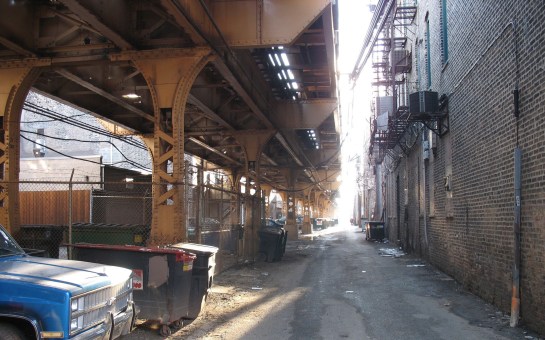
The elevated, behind our apartment building in Chicago, ran parallel to Van Buren Street.  Under that dark brown rusting structure, my sister and I played.  When the family’s ’37 Plymouth was parked there, we drove for miles and miles in our imaginations, swinging around the steering wheel, working the pedals.  (Did we have anything to do with the clutch going out, and the purchase of that sleek black ’49 Ford?  Hmmm.)

els bad name alleyElevated Tracks and Alley

Our first “big people” car was the two-tone Our Family Chevy, 1952.  I thought I could drive that car, bold and brassy “big people” that I thought I was becoming!  However, of course, I had to wait awhile…for the Chevrolet 210, new, in 1956.  This was to be my real learning-taught-mobile.


1956-Chevy-210-ORIGINAL-SURVIVOR-TRUE-BARN-FIND

1956 Chevrolet 210

In this car, my dad taught me his Rules of the Road: charity (“Give ‘em a break and let ‘em in), and his sometimes “Two-Right-Turns-Are-Better-Than-A-Left” philosophy.  He taught me well, to stay in my lane (while he would have small heart attacks as I drove down the boulevard’s middle lane), and how to “play the lights” to make all the greens.  He helped me pass my license test on the first solo.  “Of course,” he said.  Then I began the drive to the Bank, taking my mom to work (not alone, bringing along my little brother sometimes). 

* * * *

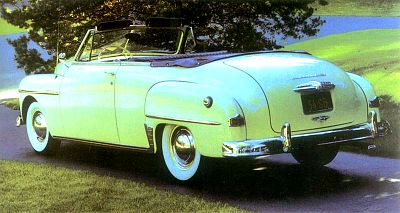
B.  The Korean War. A long, long time ago.  Well, in my memory years, not too too many years, you could have found me on South Marshfield Street, on a warm Saturday morning.  In the alley, I’m there washing and polishing a beautiful 1950 Plymouth convertible.

1950-plymouth-special-deluxe-convertible-2

I had been taking good care of this car.  I was like the Neighborhood Helper: shopper, babysitter, sidewalk-snow-shoveler, car washer, paperboy.  I was eleven and twelve then.  Even a good, successful Boy Scout (Senior Patrol Leader, no less). 

The mother of a young man off to war in Korea had asked for some help with the car, and I had obliged.  Such a beautiful machine!  I worked to make him proud.  We prayed for his return, his mom and I, to be healthy.  And “If he doesn’t come back from Korea,” she said one day, in a moment of deep sorrow and emotion, “the car will be yours.”  Amen!  Oh, how I prayed.  And prayed.  “Please, God…” I tried to pray.  “Dear God . . .” God must have heard my prayers, for he returned–and often gave me long rides for my hard work.  “O God!”

* * * *

“Seventy-five dollars!”  All mine.  My First.  The 1950 Ford.  Fuzzy-brown upholstery (including the headliner), manual shift, in-line 6, 4-door Ugly. 

1950_Ford_Custom_Fordor-maroon-m.jpg

My friend, called “Betsy” (last time I ever named a car), was good transportation, better in the cold.  The engine just quit in the hot weather.  I was learning something about cars and engines when I threw a rod, and had a classmate rebuild the engine.  Then I grew into a ’54 Ford, my Mechanic-Me machine.  A V-8 that got my hands dirty: I did brakes, new spiffy grill, and installed a Holley 4-barrel carb.  Sweet!  I did all that while keeping all my fingers and thumbs intact.holley 4-barrel carburetor

“Will you marry me?”  I asked in my black 4-door hardtop ’57 Oldsmobile.  Oh, that was My Beauty, the Loveofmylife.  Like no other.  My “wooing” machine. 

57olds98.jpg

And after that “Yes,” My Automobile History becomes a catalog of special machines, with special stories: travel, vacation, auto accidents, blizzards, camping, broken bones, emergencies, and other illnesses.  The machines were athletic (Sportage); creepy-crawly (Beetle and “bug”); Arthurian (Avalon); class standing (Squire); and metaphysical-theological (SOUL).

Cars come and go.  Miles and miles.  Bought, sold, traded, leased.  Oil changes, maintenances, contracts, extended warranties, license renewals, sales taxes, repainted, detailed, egged, hailed upon, bird-shat upon, iced and salted.  And sales personnel.  Those sales personnel.  “What will it take to make the deal?  To make you walk out of here happy?”  Some buyers thrive on haggling.  Some would rather have a root canal without Novocain than buy a new car.

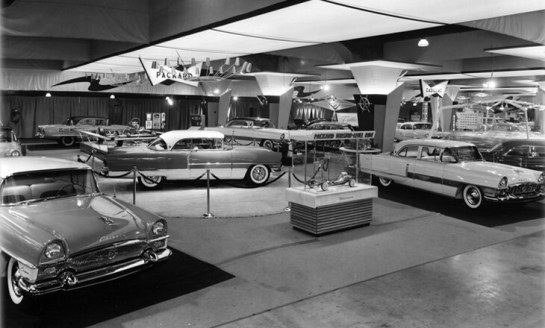
However, when all is said and done, the papers are signed twenty times or so, that new car smell: nothing else like it.  Some dream of their dream car for years; others, it’s merely a “thing” to worry about and get washed once in a while when it looks dirty.  I have had my favorites, have drooled on many a steering wheel at auto shows in my “salad days.” 

packard 1955 auto showSmall Demonstration at an Auto Show

It has been a fun run, and yet a stressful one, too, at times, without maps or directions (GPS and Garmin have helped).  I’ve enjoyed the rides, the miles; I have been avoiding trouble, while having fond memoriesofatime, though witnessing some horrible accidents.

Yes, I’ve run out of gas, have broken down, needed towing, gotten lost (but more often than not, asked for directions), had my own accidents–and, yes, had a few traffic tickets/citations of my own, don’tcha know?  My share.

I’m coming up for another license renewal in a couple of years.  I’m not worried: I’ve been at this for a while.  Yes, the bright night lights now do bother my surgeried-cataracts, so I won’t be on the road much after dark (when the monsters come out anyway).

So please watch out for me: I’ll have my blinkers on.  I’m slow (always following the speed limit) in the left fast lane.  I try not to hit squirrels and other rodents.  Oh, did I mention? My driver’s license is stamped SAFE DRIVER.  ORGAN DONOR.  O+

©  JAMES F O’NEIL  2018