Archive

IDEAS

“What we call the beginning is often the end / And to make an end is to make a beginning.  / The end is where we start from.”  –T. S. Eliot

“The past is never dead.  In fact it’s not even past.”  –William Faulkner

“…these statements express the realization that we can never access the body of the past, the physical experience that people now dead once felt in the very fiber of their bodies.  But we can also nevernot want to access that past, to think, imagine, and write our way back to an imagination of what those bodies must have felt [Walt Whitman’s referring to the Civil War dead].  Often our own past feels this way, too–we recall feeling pain or horror or terror, but it is difficult to ‘get it in the books,’  to write it so that others can experience in their bodies what we felt in ours (or so that we can once again feel what we know we once felt).  Writers often experience most keenly this notion that ‘the past is never dead’ and that we are always starting at the end.’”  [IWP © The University of Iowa 2012-2016]

MEMORIESOFATIME  are often written about past events which caused the writer to feel intensely and deeply and physically, then described in such a way emphasizing what the body felt–words being used to bring a dead past alive.

“Memories are the key not to the past, but to the future.”  –Corrie Ten Boom

“Fear not for the future, weep not for the past.”  –Percy Bysshe Shelley

“There is not past, no future; everything flows in an eternal present.”  ….  “Hold to the now, the here, through which all future plunges to the past.” –James Joyce

“We can’t let the past be forgotten.”  –George Takei

“The destruction of the past is perhaps the greatest of all crimes.”  –Simone Weil

© James F. O’Neil 2016 

From Laura T. Martin, Music, Blacksburg Elementary/Primary School

“We can’t all be heroes because somebody has to sit on the curb and clap as they go by.”

 …

  1. I think part of a best friend’s job should be to immediately clear your computer history if you die.
  2. Nothing sucks more than that moment during an argument when you realize you’re wrong.
  3. I totally take back all those times I didn’t want to nap when I was younger.
  4. There is great need for a sarcasm font.
  5. How the heck are you supposed to fold a fitted sheet?
  6. Was learning cursive really necessary?
  7. Map Quest really needs to start their directions on #5. I’m pretty sure I know how to get out of my neighborhood.
  8. Obituaries would be a lot more interesting if they told you how the person died.
  9. Bad decisions make good stories.
  10. You never know when it will strike, but there comes a moment at work when you know that you just aren’t going to do anything productive for the rest of the day.
  11. Can we all just agree to ignore whatever comes after Blue Ray? I don’t want to have to restart my collection…again.
  12. I hate leaving my house confident and looking good and then not seeing anyone of importance the entire day. What a waste.
  13. Sometimes, I’ll watch a movie that I watched when I was younger and suddenly realize I had no idea what the heck was going on when I first saw it.
  14. I would rather try to carry 10 plastic grocery bags in each hand than take two trips to bring my groceries in.
  15. I have a hard time deciphering the fine line between boredom and hunger.
  16. How many times is it appropriate to say “What?” before you just nod and smile because you still didn’t hear or understand a word they said?
  17. I love the sense of camaraderie when an entire line of cars teams up to prevent an idiot from cutting in at the front. Stay strong, brothers and sisters!
  18. Shirts get dirty. Underwear gets dirty. Pants? Pants never get dirty, and you can wear them forever.
  19. Is it just me or do high school kids get dumber and dumber every year?
  20. There’s no worse feeling than that millisecond you’re sure you are going to die after leaning your chair back a little too far.
  21. As a driver I hate pedestrians, and as a pedestrian I hate drivers.
  22. Sometimes I’ll look down at my watch three consecutive times and still not know what time it is.

interrobang

“We are what we believe.”  –Mary Hambidge [1885-1973]

A lifelong pursuit of creativity, along with a love of dynamic symmetry and natural beauty, led Mary Hambidge to develop an artist’s community in the foothills of the Blue Ridge Mountains.

Rabun Gap, Georgia: Located in northeastern Georgia where the Blue Ridge and Nantahala Mountain ranges meet.  Hambidge is 100 miles from Atlanta, and 80 miles from Asheville, North Carolina.

Hambidge is the oldest artists’ residency program in the Southeast, and one of the oldest in the nation, founded in 1934, to provide artists and other creative thinkers with the setting, solitude, and time necessary to create,

HAMBIDGE CENTER

Meeting House from search Courtesy of Hambidge House

Mary Crovatt became involved with Jay Hambidge (1867–1924), an artist and writer who achieved fame with his books on design and “dynamic symmetry.”  Though they never married, she took his last name.  After his death, she had envisioned a place in the Georgia mountains where crafts and agriculture could be practiced according to the principles developed by Jay.  She expanded dynamic symmetry and imagined a self-sufficient lifestyle emerging from the practice of balance and proportion.  In his memory, she created the Hambidge Center, believing that creativity can best be nurtured through working closely with nature.

In the early days of Hambidge, she employed local women to create exceptional weavings, but with the industrialization of the 1950s and the availability of steady mill jobs, the weavers slowly disbanded.  Hambidge broadened the scope of the center and invited creative artists and friends to come for extended stays there.  

One landscape architect often brought his son along with him; Eliot Wigginton returned to the Hambidge Center while a teacher in the area in 1966. Discussions with other Hambidge guests inspired him to develop the Foxfire program, in which students explored their local and regional heritage for the magazine that they created under his guidance.   
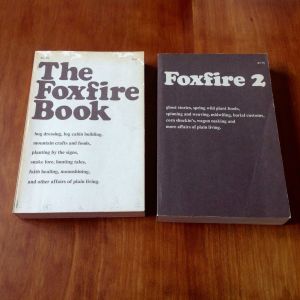
Foxfire books  from eBay“The teacher’s approach put to action John Dewey’s progressive premise that classroom learning should be a form of democratic life in which students actively demonstrate their knowledge and skills by immediately using them to improve society.”  [in Carl Glickman, KAPPAN, Feb. 2016: p. 55]

Foxfire remains alive where it was created.  For others, “it is realistic and imperative to expect that students today can apply what they are learning in English, math, science, history, and the arts to making their communities healthier, more caring, economically viable, and aesthetically better places to live.  That would be the ultimate success for Foxfire and for our country.”  [Glickman, p. 59]

Mary Crovatt Hambidge, from native of coastal Georgia to New York model and actress, to student and creative artist and weaver, to builder and visionary to missionary for the arts, remains in spirit as a driving force at Hambidge today.

. . .

The Hambidge Center has gathered many of her writings and papers and put them together in a book Apprentice in Creation: The Way Is Beauty.

“Work is one form of worship.” 

“I’d rather be one little cog in the wheel of truth than the entire wheel in a machine of lies.”

“What the world needs today is love, not religion.  …psychological love.  Religion comes from love, not love from religion.  The world was created by love, not religion.  Religion is man made.”

“Never have the forces of the world met together with such power.  Shall it be for destruction or creation?  I believe in the divinity of man and the immortality of his soul, therefore I believe that creation will triumph.”

“All life is working towards a state of exaltation.  One does not stay in this state, but by means of it, one is led into that world of beauty where one remains.  Moments of ecstasy come when the divine inner beauty of things, of life, is overpowering.”

“One knows that everything that contributes to this life that goes on, this making of perfection, is important.  Everything we suffer, every shortcoming, every weakness we must struggle against is the result of someone who has gone before who has not conquered it.  If we abandon the fight, it is not only we who suffer but those who come after.”

“I know now that to lose one’s faith in humanity is to lose one’s faith in God.  Humanity is God.  Life only is God, and humanity is the highest expression of Life.”

© The Jay Hambidge Art Foundation Question_mark_(black_on_white)



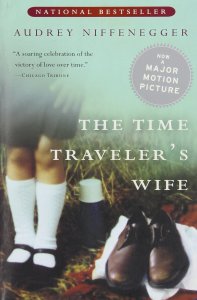
“You can’t tell a book by its cover.”  “Read the book first.”  Really?

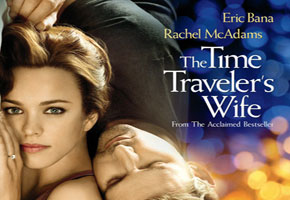
“Time traveling is very confusing.”  –Rachel McAdams

“A movie, for me, is a completely heart-, gut-level experience.  And occasionally, the mind comes into play to sort of engage what’s happening…but mostly movies are not observed in the mind.  And often, when your energy goes into your mind to watch a movie, you disengage from the story, and it takes a little while to get pulled back.” –Bruce Joel Rubin, Screenwriter

“The movie is gonna exist alongside the book.  But I think you can get in trouble if you don’t give the movie a life of its own.  If you don’t have time to tell it in the movie, you can’t assume the audience knows it, because you have to tell your story for people who haven’t read the book, and who are maybe gonna read the book later as well.”  “  Gomez,” Ron Livingston

“You can create the illusion of a novelistic feeling in a film, but it’s not really what film does best, for the most part.  I think films are probably closer to a short story.  Films work toward a single cataclysmic event…most of the time at the end, and that’s a short story: ‘When is it gonna happen?  How is it gonna happen?’”  –Robert Schwentke, Director

“…there is a presence that goes beyond death.  I play with that a lot in the movie Ghost.  I play with it a little bit in Jacob’s Ladder.  It’s a theme I really care about.  The great love stories are always stories that are ultimately about loss…about not being able to have forever, in the physical sense, the one you love. 

“As a writer, I get this enormous joy of knowing I get two hours at any given moment to talk to the world.  But I realized early on that each movie is like a sentence, an idea, one idea.  

“And a career, if you’re lucky to have a career, is a paragraph.  And that’s what I want.  I want to be able to have one paragraph of understanding that I can share with the world.  And all of these films put together, I think, create that paragraph.  And Time Traveler’s Wife fits into that paradigm perfectly for me.

“It’s not a full 100-percent statement of what it means to be free of death, but it is a real intimation of love continuing beyond time.”  –Bruce Joel Rubin

© 2008 Internationale Scarena Film.

Question_mark_(black_on_white)time traveler's book

time traver's wife movie.jpg