BY:  JAMES F. O’NEIL

“. . . yet in these days, when an extended curriculum tends to curtail considerably the amount of Latin read, it seems to me that anything which may help boys to some knowledge of Latinity in a short time is not wholly useless.”  –Preface, Latin Phrase Book, Trans. H. W. Auden, 1894 [Reprint 1990].

How much Latin should a person remember who has studied the classics and languages, say 25, 35, or even 50 years ago?  Quis curat?  (“Who cares?”)  Does it matter anymore that a person study Latin at all?  Humerus is the humorous bone.  Why know differently?  Funny, no?  Make no bones about it: Don’t forget the radius and ulna, too.

I have many semesters of Latin (and Greek) noted on my transcripts, high school and college.  I have sung in Latin, prayed in Latin, translated into Latin and Latin into English.  I have even had the good fortune (Deo gratias!) to pass the Latin examination as part of my Master’s degree program (M.A., Magister Artium).  Years of daily study, from basic rex, regis (as in “king” and “of the king”) to the study of Thomistic philosophy and theology in Latin, prepared me for a three-hour written translation of some classical piece of Cicero, without a dictionary.

I am still Latinized, cannot avoid it in my life, nor could not avoid it as an English lit/humanities major: Never would I have been able to manage my way through the works of Chaucer nor those of John Milton without some Latin.  Moreover, Latin even contributed to the success of one of my previous blogs, “HOW’S YOUR LATIN?”  OR, SLEEPING WITH THE ENEMY: https://memoriesofatime.blog/2013/11/08/hows-your-latin-or-sleeping-with-the-enemy/   This gave a bit of my Latinity, and my living with a Dead Language.  Nor can you avoid it–even if you have not studied a classroom word of it.

Yet you have: “Vocabulary test on Monday, don’t forget!” your teacher says as you begin to race out the classroom door on a Friday afternoon.  You know you had to study, memorize, and remember.  And the SAT, the PSAT, the ACT vocabularies: lists of roots and prefixes (like pre-fix: “before”) were the fundamentals (fundus: “ground, earthy, foundation”).  Recall now: anti-, ante-, intro-, extra-, inter-, ad-, mal-, mel-, etc.  (Oh, that’s one: et cetera: “and so forth.”)  You studied from morning to night, a.m. and p.m. (ante meridiem: “before noon”; post meridiem: “after noon”; “before”; “after”; diem: “day,” as in per diem: “per-day” expenses).  Some of you studied long and hard, to illness (perhaps even to “mono” illness) requiring medication PRN, or BID, or TID.  Huh?  Every eight hours?  Ter in die.  Every twelve hours?  Twice a DAY is bis in die.  Maybe for that serious pain, hydrocodone pro re nata, as needed, or whenever necessary–when the Tylenol does not do it!

Ergo (“therefore,” those three dots used in geometry, or the conclusion in philosophy or logic: “Therefore, all men are animals.”), it may not be so easy to be without Latin in our daily lives.  Medicine, geography, law, politics, religion, everyday living, literature, movies, sports, etc.–each contains various Latin expressions as part of the vocabulary of the subject, i.e. (id est: “that is”), particular words recognized by users in that area.  Usually one has to first begin a study of a subject by studying the vocabulary of the subject.  (I cannot forget those long lists of vocabulary in Latin classes, every week.)

Gallia est omnis divisa in partes tres, quarum unam incolunt Belgae, aliam Aquitani, tertiam qui ipsorum lingua Celtae, nostra Galli appellantur.  —Caesar’s Gallic Wars.  This is how my formal study began, in 1955 or so.  Church Latin began years before that, however: reading, singing, and listening to Latin at Mass and at Church services. 

I am certain that most of you reading this blog now can look at the Latin of Julius Caesar and guess at a few words, can even recognize a few meanings.  And in this very paragraph, look to see some Latin (not “paragraph,” however: that’s Greek: para-: “beside”; graphein: “writing”: a short stroke or mark was made alongside text to indicate a new “section”).  Look: “certain” (certus: “sure”) and “re-cognize” (re: “again”; cog: “knowledge”).

You can see it’s a living language for me, not a dead subject.  I can watch George C. Scott, the actor, in the movie Patton, walking in the silence in North Africa among the ruins of an ancient city.  I realize what he is there for, portraying this warrior general, George S. Patton, to annihilate (nihil: “nothing”) the enemy.  And I recall my Latin heard, learned, from somewhere, CARTHAGO DELENDA EST!: “Carthage must be destroyed [deleted]!”–now an expression of total warfare.

patton patton

General George S. Patton, U.S. Army

DELENDA.  A keystroke.  Delete: A key on my computer keyboard . . .  (Thirsty here, I take a sip from my bottle of Aquafina [“water”; “pure”] . . .) Now I don’t go around in my life obsessed with Latin or searching for Latinity.  It comes about, comes to me.  It excites me to remember something I learned long ago, still remember, have memoriesofatime, or still use.  Well, maybe not necessarily “excites,” but just makes all that previous effort so worthwhile.  That I did learn something, that I do remember something, that I can read (or hear) and make some kind of living connection somehow with ex officio, vox populi, habeas corpus, ex cathedra, fiat lux, extempore, semper fidelis!, dexter, semper paratus, ad astra per aspera, sine die, de fide, in loco parentis, sinister, gravitas, aurora borealis, summa cum laude,  contra, Taurus, ad hoc, bona fide, placebo, ad nauseam, etc., et al., ad infinitum . . .  You do get the point.

And thus, my friends, SATIS (“enough”).  My revels now are ended.  My Little Living Latin exercise ends; I make my exit (exit: “he leaves”; exeunt: “they leave”).  For certe, Toto, sentio nos in Kansate non iam adesse.  

ADDENDUM
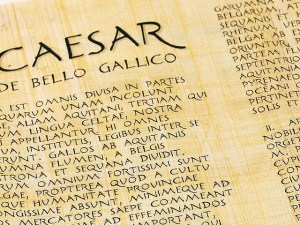
CAESARCommentarii-de-Bello-Gallico

Books and sources abound for further study of the Dead-Living Language.  A Google search (or Amazon quest) reveals copies of major works in Latin, often with English translations (q.v.: quod vide: “which see”):  http://www.thelatinlibrary.com/index.html

Latin is still being taught in many secondary (and primary) schools, and in programs in higher education, here in the United States and in Europe.  So much the language of medicine (anatomy), law, and science, Latin is useful also in the study of words themselves, etymology, from Greek to Latin to French or Middle English.  Useful, fun, T-shirt-able, important, serious–whatever the need: “What good is Latin?”  Well, for one, it’s to help us understand our view of things, to help us “get” it, to even ponder how we think about . . . life itself?

carpe diem t-shirtCARPE DIEM T-SHIRT

. . .

**Latin for Dummies (2002) “makes learning fun and brings the language to life.”

**Latin for the Illiterati (2nd ed 2009) is a reference to common Latin words and phrases.  Not a dictionary, but rather “a compendium of words, expressions, familiar sayings, abbreviations, with an English-Latin Index.”

**More Latin for the Illiterati: A Guide to Medical, Legal, and Religious Latin (2003).

**Latin Phrase Book (1990 Rpt. of 1982 ed.).  A Longwood Academic reprint book I found is a translation (1894) from the sixth German edition of Lateinische Phraseologie by Professor Carl Meissner, organized into seventeen topics, with Latin and English indices.

©  JAMES F. O’NEIL  2018

BY: JAMES F. O’NEIL

“I think I have serious latent Catholic guilt issues.”  –Grimes (Brainyquote)

A grey rainy late winter day in Chicago.  My dad and my sister are in the car (our ’37 Plymouth) waiting to pick me up from school.  I was in 2nd grade at St. Jarlath’s, near our apartment on Van Buren and Ashland (long gone now, concretized by the Congress Street-Eisenhower Expressway). My dad worked nights but came to get us home for lunch in bad weather.  What was the delay?  I’m inside the classroom, sitting under the teacher’s desk.  What was happening then in 1949?

Born in April 1941, I have few memories before 1944, though some child development specialists have told they could unlock the drawers holding those before-memories.  How many “major” memories do we get to keep?  Memories are the captured ones, say, the ones not ever forgotten, those “memorable” thoughts and stories that unfolded becoming our lives.  Choosing which ones to share, or to organize those recalled from time to time can be a daunting task, albeit a rewarding one (cathartic one?).  I am certain there were, in my first three or four years, those first baths, and birthdays–complete with cake and frosting in hair, or on the high chairs, and thrown about the room.  Perhaps early birthdays with games and balloons and smashed cake really do form the basis for celebrations of all kinds that come at later dates.

But the memories of our first three or four years?  I delight in all that is forgotten: the pain of early ear infections, of being one gigantic chicken pox when all the pox-dots are connected.  Scarlet fever, insect bites and stings, broken favorite toys, cough medicines, penicillin injections, Vicks-covered wrapped-chests, and more awful things that should remain in those memory drawers, not needing to be unhoused.  For what real purpose?

We hardly also remember all the good times, for they were not so traumatizing on the psyche.  Yet I would not mind the good memories that could be released: memories of first beach day (not a sun burn, of course, but the eternal sand castle building or perfect water temperature), train trips or miniature-train rides in parks or at carnivals, parties and Christmases and Easter egg hunts, and A&W root beer floats, and .  .  .  Release might involve the “good” with the “bad.”  (Personally, Dr. Jung Freud, I like it the way it is–as if I have slept through most of those first three or four years.)

Therefore, my life story begins in 1944: I was three.  That is a good start for my history.  My baby pictures tell enough of that, especially those with my favorite cousin Marilyn on one side and my sister, Janice, on the other side of me–all with our little knees showing.  Three joined at the hip, as it were, on Grandpa Schuma’s front porch.  THAT is the memory, the picture I want to keep alive forever as representative of my early-early life, the “good life.”

jimmy on GRANDMA'S PORCHTHE THREE OF US ON THE PORCH AT 5644 SOUTH SEELEY 1945

It is my school life, though, that has always been a nine-month chunk of my life cycle.  So much of my time, my daily life, was spent in school or around school or going to/coming from.  The summers, then, were sacrosanct with a life of their own.  That is why we probably use the expression so often “School Life,” from pre-K, or even nursery school, to whatever graduation point or final degree.

Overall, I grade my “school life” in the range of “good” to “above average”: C to B+, from first grade through my advanced degree programs.  In “My Life Story: Early Life in School: 1947-1949,” there exist a few milestones, like Baltimore Catechism (and hating–forever–memorization); First Holy Communion (and that dark blue wool suit seen in pictures);

jimmy's First Communion May 9, 1948

JIMMY’S O’NEIL’S FIRST COMMUNION MAY 9, 1948

a Confessional, for the first time.  The Milk Break: I loved milk breaks–any grade.  (And I wish I had gone to kindergarten to have had a blankie and a nap.  My vivid memories center upon “chocolate”: for morning milk [in glass bottles in metal cases, ordered a week ahead].)  Nuns-as-Teachers (I cannot remember their names or their faces, but I do have a picture of 1st and 2nd grade blackness.)  And, finally, the memory that I cannot ever eradicate: Being Late:  A rainy day when my dad was able to pick us up for lunch.  I was late.

Let me back up now.  Earlier that morning, I got myself into trouble.  I was talking to the kid across the aisle from me, no doubt my friend Peter Mendoza.  Now what do 2nd graders have to talk about in 2nd grade in mid-morning after Milk Break?  What is so important that is worth violating the Silence Rule?  (We had no Smart phones to keep us occupied.)

I cannot recall nor remember.  “I have no recollection of the event or the conversation,” politicians say.

Whatever it was certainly drew the attention of Sister Mary of the Rosary Beads, our nun-teacher.  My nun-teacher called a name-not-mine.  I thought I heard her call my name, “Jimmy O’Neil come to the front of the room.”  (Caught!  I was probably talking.)  Guiltily I stood up and accepted the punishment.  So I walked to the Time-Out spot near the blackboard.  A classmate was already there.  “Did she call your name?”  Soon I began talking to one rightfully punished standing by the blackboard.  “Jimmy O’Neil.”  This time I was called out for talking by the One-in-Black-Who-Saw-and-Heard-Everything, and told to go sit under her desk–a Final Punishing Place!  My memory of pulling away the teacher chair and crawling under the drawer and skootching next to the “modesty panel” still hurts.  And how was I going to explain my situation to my dad if I did not come out for lunch on time?  Fear of the Lord.  Guilt.  Crime and Punishment.

I was wearing a flannel plaid shirt.  Brown and white.  I happened to be wearing one of my collectibles: a metal pin-back pin found in cereal boxes, pins of railroads.

Vintage-1980s-Prr-Pennsylvania-Railroad-Train-Logo-Pinback

PENNSYLVANIA RR PIN-BACK PIN

I took off my Pennsylvania RR pin and played with it while listening to nun and students.  I began to formulate my excuse: The Lie.  I would lie and say I hurt myself and had to stay after for help.  I managed, at eight years old, in 1949, to plot a lie-story that would save me from home punishment for the double-punishment of the 2nd grade classroom.  I would show my injury on my hand.  I had to create an injury story.

I picked at the wrist of my left hand with the pinpoint of the Pennsy RR button.  I picked and picked until I began to bleed and open a wound.  I felt no pain.  No guilt either.  Time passed quickly.  The class continued its lessons without me as I picked and poked and bled.  Then the bell.  I heard all leave the room; the door shut.  All left except Jimmy O’Neil, forgotten under the desk.  Everyone forgot me.  I crawled out, with my bloody sore already scabbing over.  It was much smaller than a dime.  I went to the cloakroom for my coat.

Dad and my sister were waiting in the car, in the rain.  As I ran to the car, I let my courage come unstuck from somewhere.  “I’m sorry I’m late.  I was kept after for talking.”  (No mention of being forgotten by everyone, including my teacher.)  No more was said.  Moreover, no one asked about the sore on my hand; I didn’t tell any more than was required.

That’s it.  My brain, learning, and memory cells increased proportionately after 1949.  I know I learned the basics of how to count, to use the alphabet, and how to tie my shoes–even at school.  And, I’ve forgotten so much–trivia, irrelevancies, factoids.

Yet I cannot ever eradicate this one 2nd grade anecdote.  I want to keep it, not tug it around to depress me, but not throw it away either.  It’s a story by a little boy about a little boy.  Maybe it has some Catholic guilt within, maybe some fear of disappointing a dad (or worry about some punishment), or maybe it has a small step in my growing up.  For sure, though, I made certain I never ever had to sit under a teacher’s desk again!

. . .

“Every person’s autobiography is both unique and usual, the story of an individual life and of all mankind.  We are shaped by an inescapable human condition which dictates certain events and themes that will figure prominently in every life story.”  –Sam Keen and Anne Valley-Fox, Your Mythic Journey (1989)

©  James F. O’Neil  2018


BY: JAMES F. O’NEIL

“Your blood type is the key that unlocks the door to the mysteries of health, disease, longevity, physical vitality, and emotional strength.  Your blood type determines your susceptibility to illness, which foods you should eat, and how you should exercise.”  — Peter J.  D’Adamo, Eat Right for4Your Type (1996). 

blood typesI remember the first time I donated blood.  College.  I was 19; it was a warm afternoon there in St. Louis.  I was nervous.  I didn’t faint.  I was lucky.  And I was O+.

I received blood transfusions from my mother–at my grandma’s home–when I was very young.  I had Scarlet Fever, I was later told, and was very ill.  I don’t remember much of that early age, except sleeping alone in grandpa’s front bedroom (Grandma Schuma was an invalid and slept in her own bedroom), eating pork chops that I hallucinated had ants crawling on them, and horrible-burning-going-down pineapple juice.  I didn’t ever have much blood trouble growing up, with surgeries or cuts, or needing blood.  So my blood donations later were common when I could give.

However, looking back now, I have learned since 10th grade that Type Os have a deficiency in clotting.  When I was a sophomore, I had tonsils removed.  The surgery and ice-cream follow up went fine.  At home, after a few days in the hospital, I had some bleeding.  Our doctor came to our home (!) and gave me an injection of Vitamin K.  Now it all makes sense: I needed some extra clotting factor.

My wife-to-be is still O-(negative).  What did we young-in-lovers know “back then” (in memoriesofatime) of O+ plus O- = risky birth or possible birth defects because of the Rh factor?  No one told us those details in pre-Cana, or pre-marriage counseling.  The doctor did, after the birth of our first child.  For many years, it remained a mystery to doctors why some women who had normal first pregnancies developed complications in their second and later pregnancies, often with a result of miscarriage–or even the death of the mother.

“The Rh factor is an antigen occurring on the red blood cells of many humans (around 85 percent) and some other primates.  It is particularly important as a cause of hemolytic disease of the newborn and of incompatibility in blood transfusions.”

[From Mayo Clinic, 14 June 2018]: “During pregnancy, problems can occur if you’re Rh negative and the baby you’re carrying is Rh positive.  Usually, your blood doesn’t mix with your baby’s blood during pregnancy.  However, a small amount of your baby’s blood could come in contact with your blood during delivery or if you experience bleeding or abdominal trauma during pregnancy.  If you’re Rh negative and your baby is Rh positive, your body might produce proteins called Rh antibodies after exposure to the baby’s red blood cells.”

“The antibodies produced aren’t a problem during the first pregnancy.  The concern is with your next pregnancy.  If your next baby is Rh positive, these Rh antibodies can cross the placenta and damage the baby’s red blood cells.  This could lead to life-threatening anemia, a condition in which red blood cells are destroyed faster than the baby’s body can replace them.”  And much more at: https://www.mayoclinic.org/tests-procedures/rh-factor/about/pac-20394960. . .)

“Better wait two or more years.  Then no more children,” the doctor told us.  “But we’re Catholics. . . .”  Our second child two years later (O+) was born without complications.  Our last child.  We were lucky.  The United States has a high birth mortality rate, due to complications, some of which have to do with poor pre-natal care.  We were lucky.  In the meantime, we learned that my wife has “gold” in her veins, O-, with some special little good stuff needed and used for prenatal transfusions.  Her gift to others.  In addition, we continue to be blood donors when we can, when we are healthy, or have not had some funky medication or injection for illness or old age.

In addition, when we grew older (than youngsters), we never knew anything about digestive problems and blood types until one gastro doctor mentioned it after a routine colonoscopy.  We began to read, explore, become enlightened, and had our “Ah-ha!” moments.  Here we could see ONE “diet solution to staying healthy, living longer, and achieving ideal weight.”  Forget the last item.  That’s not why we do it.  We know now certain foods affect our Type Os–and we can tell, can feel it.

We shall survive.  I used to believe that Bar-B-Q was one of the four main food groups.  bbq ribsOn the contrary, fewer and fewer trips now to Sonny’s Bar-B-Q.  However, I can have as much liver and onions as I want . . . or buffalo . . . or rabbit . . . and most seafood.  Now that’s not a bad diet, with some salad, avoiding caviar, barracuda, and octopus.   
Seriously, it is not all that bad.  We have made up some 5 x 8 cards: “GOOD.”  “OK.”  “NO.”  We know now most of the No’s, and we know the good fats and bad fats, good carbs and “really good carbs,” like chocolate peanut butter pie, which is “really bad bad carbs.”  Shopping has gotten easier since I am not often allowed in the grocery store, or need to be put into restraints while in the candy aisle.  No problems whatsoever in the fruit department (except for those little bags of sugar called “grapes”).  grapes

Oh, we don’t go crazy-ill, lapse into anaphylactic shock, or have tremors or spasms.  We don’t like to call it a “diet.”  It’s a plan, our life style.  In the scheme for us, we are meat-eaters, depending on lean chemical-free, grass-fed meats, and poultry and fish.  We don’t do well with dairy products and grains.  But we will never starve; for we love spinach salads, broccoli, kale, and chicken.  Soy “milk” is good, as is feta cheese.

Nevertheless, we still have to watch what we eat, or there will be chemical consequences in our systems.  Even though wheat products are no-no’s, I love my happy breakfast cereal, Cheerios!–and Frosted Mini-Wheats (not daily!)–but very limited. cheerios

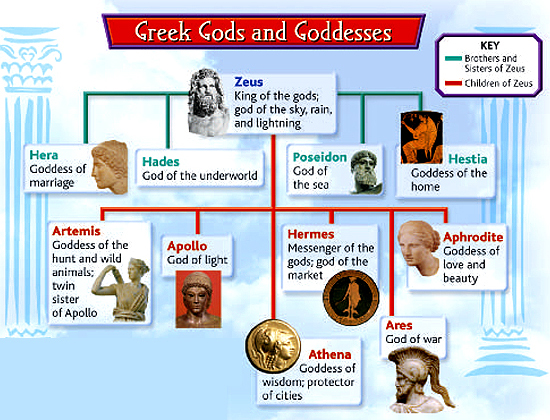
Certain nuts and seeds are “good”; we must avoid others.  With a weakness (addiction) towards sweets (sugar), hold me back from Apple Fritters!  Or chocolate (of any kind)!  Help me avoid anything “white” (hot dog buns? white chocolate, too?)!  Can sheer will power enable me to continue my path of sobriety (scotch and bourbon: sugars)?  Must the gods help?!  Orate pro me!  Mythological Apollo, the Bearer of Truth, is my go-to guy.  He represents the therapeutic healer of mind and body, among other attributes.


gods_goddesses_chart tccl arcc albany edu

[from tccl.arcc.albany.edu]


I’ll take any helps I can get.  That involves diet, exercise, dietary supplementation, stress control, personal qualities (INFJ?), and weight management.

My understanding of my blood type now makes complete sense to me, though I may not always be doing something positive about, say, the exercise regimen or the weight control.  Do I really want to be again that pimply-faced memoriesofatime-kid who went off to college weighing 160 pounds?  180? 210?

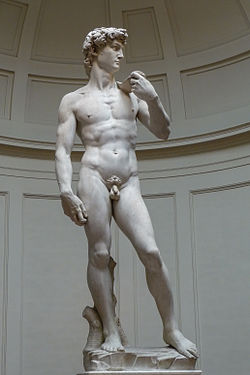
'David'_by_Michelangelo_JBU0001

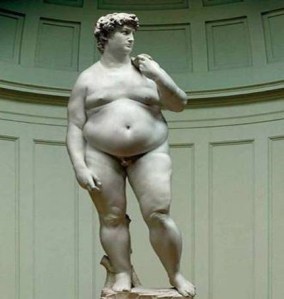
How about 225?  And so forth.  I can never forget I am an evolutionary product, Type O, the oldest and most basic blood type, survivor, hunter, Cro-Magnon, NO FEAR!, meat-eater, mesomorph, Crood! 

It’s Me:

THE BIG O+:  Michelangelo David-Fat

© JAMES F O’NEIL  2018 OCTOBER


“I, TomDickHarryJoeMaryJaneAnnDorothy, do solemnly swear to tell the truth, the whole truth, and nothing but the truth, so help me God.”

WHAT IS TRUTH?

TRUTH

Truth is most often used to mean being in accord with fact or reality, or fidelity to an original or standard.  Truth may also often be used in modern contexts to refer to an idea of “truth to self,” or authenticity, we can find in Wikipedia.

More?  Truth is usually held to be opposite to falsehood, which, correspondingly, can also take on a logical, factual, or ethical meaning.  The concept of truth is discussed and debated in several contexts, including philosophy, art, religion, and science. 

Many human activities depend upon the concept, where its nature as a concept is assumed rather than being a subject of discussion; these include most of the sciences, law, journalism, and everyday life.  Some philosophers view the concept of truth as basic, and unable to be explained in any terms that are more easily understood than the concept of truth itself. 

Various theories and views of truth continue to be debated among scholars, philosophers, and theologians.  Language and words are a means by which humans convey information to one another, and the method used to determine what is a “truth” is termed a criterion of truth.  There are differing claims on such questions as what constitutes truth: what things are truth-bearers capable of being true or false; how to define, identify, and distinguish truth; the roles that faith-based and empirically based knowledge play; and whether truth is subjective or objective, relative or absolute.

So, “Tell the truth now.”

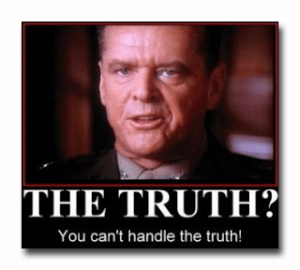
the truth 2

“I repeat.  Are you 100% certain, sure, absolutely positive?”  “100%!”  “Well, I looked him in the eye, and I could tell he was telling the truth, by God!”

The search for truth, write Richard Marius and Melvin Page in a popular textbook A Short Guide to Writing about History (2014) is based on three processes: the search for evidence or SOURCES; the evaluation and ANALYSIS of the evidence; and the PRESENTATION of one’s findings.

PRIMARY sources are NEAREST to any subject or topic of investigation: all kinds of materials written or other communications–including, even, sculpture and architecture, interviews, statistics, geography, military history, videos,

SECONDARY sources are ABOUT sources: books and articles by scholars–or even book reviews, documentaries, biographies. 

THEN: ASSEMBLE sources; EVALUATE sources (who, what, when, where, why); DETERMINE reliability (bias, prejudice, incompleteness). 

Good historians, the authors write, do not implicitly trust their sources, nor do they trust their own first impressions.  They do not either simply ask random questions: they systematically use questioning and make inferences. 

THEN: Historians fit together the evidence to create a story, an explanation, or an argumentation (p.20): the PRESENTATION.  The results of the findings–the “truth of the matter”–come in the form of DESCRIPTION, NARRATION, EXPOSITION, or ARGUMENTATION–the four common modes of communication or expression. 

In the search for the truth, they write (p. 48), “Skepticism is one of the historian’s finest qualities.”

A note about ARGUMENTATION: [Classical definition: “A mode of communication which attempts to convince or persuade by using ethos, logos, or pathos.”]  They state that argument is “a principle of organization that unites facts and observations to present a proposition to the writer” (58); arguments arise “because the evidence can be interpreted in different ways according to the assumptions of the historians themselves” (78).  

© JAMES F. O’NEIL 2018

interrobang