Archive

Author Archives: JAMES F. O'NEIL

“We are what we believe.”  –Mary Hambidge [1885-1973]

A lifelong pursuit of creativity, along with a love of dynamic symmetry and natural beauty, led Mary Hambidge to develop an artist’s community in the foothills of the Blue Ridge Mountains.

Rabun Gap, Georgia: Located in northeastern Georgia where the Blue Ridge and Nantahala Mountain ranges meet.  Hambidge is 100 miles from Atlanta, and 80 miles from Asheville, North Carolina.

Hambidge is the oldest artists’ residency program in the Southeast, and one of the oldest in the nation, founded in 1934, to provide artists and other creative thinkers with the setting, solitude, and time necessary to create,

HAMBIDGE CENTER

Meeting House from search Courtesy of Hambidge House

Mary Crovatt became involved with Jay Hambidge (1867–1924), an artist and writer who achieved fame with his books on design and “dynamic symmetry.”  Though they never married, she took his last name.  After his death, she had envisioned a place in the Georgia mountains where crafts and agriculture could be practiced according to the principles developed by Jay.  She expanded dynamic symmetry and imagined a self-sufficient lifestyle emerging from the practice of balance and proportion.  In his memory, she created the Hambidge Center, believing that creativity can best be nurtured through working closely with nature.

In the early days of Hambidge, she employed local women to create exceptional weavings, but with the industrialization of the 1950s and the availability of steady mill jobs, the weavers slowly disbanded.  Hambidge broadened the scope of the center and invited creative artists and friends to come for extended stays there.  

One landscape architect often brought his son along with him; Eliot Wigginton returned to the Hambidge Center while a teacher in the area in 1966. Discussions with other Hambidge guests inspired him to develop the Foxfire program, in which students explored their local and regional heritage for the magazine that they created under his guidance.   
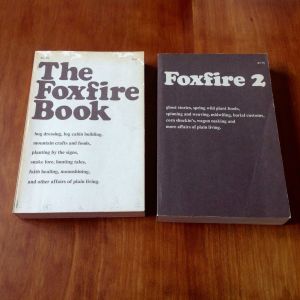
Foxfire books  from eBay“The teacher’s approach put to action John Dewey’s progressive premise that classroom learning should be a form of democratic life in which students actively demonstrate their knowledge and skills by immediately using them to improve society.”  [in Carl Glickman, KAPPAN, Feb. 2016: p. 55]

Foxfire remains alive where it was created.  For others, “it is realistic and imperative to expect that students today can apply what they are learning in English, math, science, history, and the arts to making their communities healthier, more caring, economically viable, and aesthetically better places to live.  That would be the ultimate success for Foxfire and for our country.”  [Glickman, p. 59]

Mary Crovatt Hambidge, from native of coastal Georgia to New York model and actress, to student and creative artist and weaver, to builder and visionary to missionary for the arts, remains in spirit as a driving force at Hambidge today.

. . .

The Hambidge Center has gathered many of her writings and papers and put them together in a book Apprentice in Creation: The Way Is Beauty.

“Work is one form of worship.” 

“I’d rather be one little cog in the wheel of truth than the entire wheel in a machine of lies.”

“What the world needs today is love, not religion.  …psychological love.  Religion comes from love, not love from religion.  The world was created by love, not religion.  Religion is man made.”

“Never have the forces of the world met together with such power.  Shall it be for destruction or creation?  I believe in the divinity of man and the immortality of his soul, therefore I believe that creation will triumph.”

“All life is working towards a state of exaltation.  One does not stay in this state, but by means of it, one is led into that world of beauty where one remains.  Moments of ecstasy come when the divine inner beauty of things, of life, is overpowering.”

“One knows that everything that contributes to this life that goes on, this making of perfection, is important.  Everything we suffer, every shortcoming, every weakness we must struggle against is the result of someone who has gone before who has not conquered it.  If we abandon the fight, it is not only we who suffer but those who come after.”

“I know now that to lose one’s faith in humanity is to lose one’s faith in God.  Humanity is God.  Life only is God, and humanity is the highest expression of Life.”

© The Jay Hambidge Art Foundation Question_mark_(black_on_white)



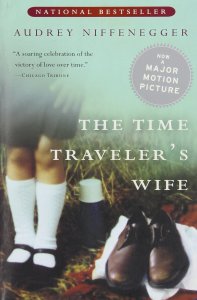
“You can’t tell a book by its cover.”  “Read the book first.”  Really?

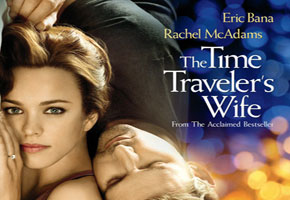
“Time traveling is very confusing.”  –Rachel McAdams

“A movie, for me, is a completely heart-, gut-level experience.  And occasionally, the mind comes into play to sort of engage what’s happening…but mostly movies are not observed in the mind.  And often, when your energy goes into your mind to watch a movie, you disengage from the story, and it takes a little while to get pulled back.” –Bruce Joel Rubin, Screenwriter

“The movie is gonna exist alongside the book.  But I think you can get in trouble if you don’t give the movie a life of its own.  If you don’t have time to tell it in the movie, you can’t assume the audience knows it, because you have to tell your story for people who haven’t read the book, and who are maybe gonna read the book later as well.”  “  Gomez,” Ron Livingston

“You can create the illusion of a novelistic feeling in a film, but it’s not really what film does best, for the most part.  I think films are probably closer to a short story.  Films work toward a single cataclysmic event…most of the time at the end, and that’s a short story: ‘When is it gonna happen?  How is it gonna happen?’”  –Robert Schwentke, Director

“…there is a presence that goes beyond death.  I play with that a lot in the movie Ghost.  I play with it a little bit in Jacob’s Ladder.  It’s a theme I really care about.  The great love stories are always stories that are ultimately about loss…about not being able to have forever, in the physical sense, the one you love. 

“As a writer, I get this enormous joy of knowing I get two hours at any given moment to talk to the world.  But I realized early on that each movie is like a sentence, an idea, one idea.  

“And a career, if you’re lucky to have a career, is a paragraph.  And that’s what I want.  I want to be able to have one paragraph of understanding that I can share with the world.  And all of these films put together, I think, create that paragraph.  And Time Traveler’s Wife fits into that paradigm perfectly for me.

“It’s not a full 100-percent statement of what it means to be free of death, but it is a real intimation of love continuing beyond time.”  –Bruce Joel Rubin

© 2008 Internationale Scarena Film.

Question_mark_(black_on_white)time traveler's book

time traver's wife movie.jpg


“There is no generally agreed upon definition of curriculum.”  [Wikipedia]

Using the statements below, design a curriculum–core, common, or otherwise–that will satisfy at least ONE school board, one school district’s parents, one k-12 faculty, one state board of education, one k-12 regional accrediting agency, or ONE NATIONAL STANDARD. 

Note the following: Curriculum can be envisaged from different perspectives.  What societies envisage as important teaching and learning constitutes the intended curriculum.  Since it is usually presented in official documents, it may be also called the written and/or official curriculum.  

However, at classroom level, this intended curriculum may be altered through a range of complex classroom interactions, and what is actually delivered can be considered the implemented curriculum.

What learners really learn (i.e. what can be assessed and can be demonstrated as learning outcomes/learner competencies) constitutes the achieved or learned curriculum.  In addition, curriculum theory points to a hidden curriculum (i.e. the unintended development of personal values and beliefs of learners, teachers, and communities; unexpected impact of a curriculum; unforeseen aspects of a learning process).

Those who develop the intended curriculum should have all these different dimensions of the curriculum in view.  While the written curriculum does not exhaust the meaning of curriculum, it is important because it represents the vision of the society.  The written curriculum is usually expressed in comprehensive and user-friendly documents, such as curriculum frameworks; subject curricula/syllabuses; and in relevant and helpful learning materials, such as textbooks, teacher guides, and assessment guides. [Wikipedia notes]

BEGIN THE EXERCISE IN YOUR BLUE BOOKS.  YOU HAVE 40 HOURS.

The Naming of the Parts

What I Learned in School Today

Using a Typewriter/Keyboard

Why My Signature Is Important

Righty Tighty, Lefty Loosey

Making Change, Counting Money

My Handwriting Tells about Me

Rules for Capitalization

Cursive to Be Read

How to Take a Bath or Shower

Eating Well So I Don’t Get Fat–or Throw Up

How to Use Crayolas without Breaking Any

Drawing Trees and People–and Showing the Difference

Columbus Was Here–Somewhere

Add, Subtract, Multiply, and Baseball Diamonds

I Know Where Babies Come From–and Why

Is WISK Better Than TIDE?

Coarse or Fine

Hitler, the Pope, and Abraham Lincoln

The WHO Sing Beethoven’s Ninth

Input, Output, Shotput

“O Say Can You See?”

Domes, Arches, and Spires: What’s the Point?

Sometimes a Dictator Helps the World

R&D

When My Food Enters My Stomach

Do Rainbows Matter?

I Turn the Key; the Engine Starts

“The Play’s the Thing,” He Wrote.

Biology.  Reading.  History.  Chemistry.–Just Words?

Who Really Was Bernoulli?

NATO.  USO.  UFO.  CEO.  CFO.  MAYO.

Apples Fall from Trees–on Earth

The Man in the Moon Just Smiled at Me

Sometimes I Can’t Breathe When It’s Cloudy

Under Water Scares Me

Condors, Penguins, and Koalas

“Congress Shall Make No Law….”

Is There a Use for Poetry?

Another Plane Crashed in Russia Yesterday

A Hundred-Yard Universe, a Hundred-Meter Dash

“Mind the Gap!”

Whites, Lights, and Darks

 Question_mark_(black_on_white)


“A critic is one who expresses a reasoned opinion on any matter especially involving a judgment of its value, truth, righteousness, beauty, or technique;  one who engages often professionally in the analysis, evaluation, or appreciation of works of art or artistic performances.”  [standard dictionary definition]

But what gives them the right to say those things?

They have the job!  We do not…

We give them the power over us–or at least over what we read, see, and hear.  Nevertheless, they are also expressing their own opinions–as we have opinions.

Whom to believe?  For the most part, it’s a matter of taste and style.  A good critic likes what we like and hates what we hate, writes the way we would like to and reviews the things we like to read about.  A bad critic doesn’t.

THERE ARE FEW ESTABLISHED RULES IN THE FIELD OF CRITICISM–AND FEWER CRITICS’ TRAINING INSTITUTES.

Yet we can look at training in the field of alleged expertise and the ability to communicate effectively when judging the critics we read or listen to.

And what about their reputation among peers?  the effort they expend?  their “readability”?

We have to decide whether we want to read the work of others.  We must be critical of the critics, though, if we have our own standards.  And standards we MUST have.

BE READY TO BE YOUR OWN CRITIC.

“Every effective…critic sees some facet of…art and develops our awareness with respect to it; but the total vision, or something approximating it, comes only to those who learn how to blend the insights yielded by many critical approaches.”  –David Daiches

GOOD PEDAGOGY: “Tell ‘em what you told ‘em”:  [See https://memoriesofatime.com/category/artistic-ventures/ ] HISTORICAL (H): concerned with historical “facts”; FORMALISM (F): concerned with the text (alone); SOCIO-CULTURAL (S): concerned with the text as social commentary; PSYCHOLOGICAL (P): [FREUD]: studies author/artist, work/characters, reader/viewer; MYTHOPOEIC (M): [JUNG]:  tries to present a work as the verbal aspect of ritual. 

CRITICAL READING SKILLS: Seeing/reading what’s there for sure; understanding what we put there; and what it means to us in the greater scheme of things, the “big” picture.”

Finally, review “Comprehension and Critical Reading”: https://memoriesofatime.com/2015/06/30/comprehension-and-critical-reading/

and

“Critical Reading and Skills”: https://memoriesofatime.com/2015/07/11/critical-reading-and-skills/

Finally,

“The aim of all commentary on art now should be to make works of art–and, by analogy, our own experience–more, rather than less, real to us.  The function of criticism should be to show how it is what it is, even that it is what it is, rather than to show what it means.”  — Susan Sontag
Question_mark_(black_on_white)