

LESLIE FIEDLER 1967 BY JAC. DE NIJS

Leslie A. Fiedler


 “Thomas Mann believed that the best measure of the spiritual health or illness of a culture is its art.”  –Rollo May, The Cry for Myth (1991)

* * *

LESLIE A. FIEDLER (1917-2003) [MA, PhD] Professor of English, lecturer, Fulbright scholar, University of Montana, SUNY Buffalo, Rockefeller Fellow, Guggenheim Fellow, Visiting Professor, Jay B. Hubbell Award in American literature: 1946 and on….  Fiedler’s first critical work appeared in 1948 and came about from his habit of reading American novels to his sons.  The essay appeared in Partisan Review, becoming the subject of much critical debate.  “Come Back to the Raft Ag’in, Huck Honey!” argued that a recurrent theme in American literature was an unspoken or implied homoerotic relationship between men, using Huckleberry Finn and Jim as examples.  Pairs of men flee for wilderness rather than remain in the civilizing and domesticated world of women.  Fiedler also deals with this male bonding in Love and Death in the American Novel (1960), Waiting for the End (1964), and The Return of the Vanishing American (1968).  [Ref. Wikipedia et al.]

* * *

Fiedler’s major work, Love and Death in the American Novel (1960, 1966), offended many critics because of the manner in which he discusses American literary tradition–and reconsiders the concept of the Great American Novel: how it is both derivative of, and separate from, the established European novel forms. 

He believed that literature is “more than what one learns to read in schools and libraries, more even than a grace of life; that it is the record of those elusive moments at which life is alone fully itself, fulfilled in consciousness and form.” 

**“I cannot help feeling that the chief problem of teaching anything in our atomized period lies precisely in the fact that the ordinary student cannot or will not connect the few facts he knows, the slim insights he has previously attained, the chance extensions of sensibility into which he has been once or twice tempted, into a large enough context to make sense of the world he inhabits, or the works of art he encounters.  ONLY CONNECT!  should be the motto of all critics and teachers.”

“Four major sources of indebtedness I feel moved to acknowledge…:  C. S. Lewis The Allegory of Love [taught me the sense in which love is an invention and the poets its inventors] … certain Marxian critics [the class-relations of a culture help determine the shape of its deepest communal fantasies, the obsessive concerns of its literature] … Freud and his followers, and Carl Jung [for the concepts of the conscious and the unconscious, and archetypes] … D. H. Lawrence Studies in Classic American Literature [of all the literary critics who have written about American books, he is the one who has seemed closest to the truth]”

“Anyone who, in full consciousness, surrenders the hope of heaven…for the endurance of hell…has entered into a pact with Satan…writing a gothic novel…devoting a long fiction to terror rather than love…is a Faustian commitment.  …  The primary meaning of the gothic romance … lies in its substitution of terror for love as a central theme of fiction … of sex denied … of vicarious participation in a flirtation with death.”

“Certainly the three novels granted to be our greatest works are gothic in theme and atmosphere: Huckleberry FinnMoby DickThe Scarlet Letter … In each book, the Faustian bargain stands at the focus of action.”

Hawthorne writes The Scarlet Letter “in the form of a love story an elegiac treatise on the death of love, a portrayal of the attenuation of sex in America.  …the first American tragedy.”

“One of the troubling mysteries of our life is that we can only know as adults what we can only feel as children; and Huckleberry Finn [the greatest of all books about childhood] manages to evoke the lost world of boyhood with all the horror and loveliness it once possessed for the child who lived it.  …how truly wonderful it is to remember our childhood; and yet how we cannot recall it without revealing to ourselves the roots of the very terror, which in adulthood has driven us nostalgically to evoke that past.”

Moby Dick can be read not only as an account of a whale hunt, but also as a love story, perhaps the greatest love story in our fiction, cast in the peculiar American form of innocent homosexuality.”

***Fiedler at his best: “Among the assumptions of [the tragic Humanists] Melville and Hawthorne: the world of appearance is at once real and a mask through which we can dimly perceive more ultimate forces at work; Nature is inscrutable, in some sense alien; in man and Nature alike, there is a ‘diabolical’ element, a ‘mystery of iniquity’; it is impossible to know fully God or ourselves, and that our only protection from destructive self-deceit is the pressure and presence of others; that to be alone is, therefore, to be lost; that evil is real and that the thinking man breaks his heart trying to solve its compatibility with the existence of a good God or his own glimmering perceptions of goodness.  The writer’s duty is to say ‘Nay!,’ to deny the easy affirmations by which most men live, and to expose the blackness of life most men try deliberately to ignore.  For tragic Humanists, it is the function of art not to console or sustain, much less to entertain, but to disturb by telling a truth which is always unwelcome; and they consequently find it easy to view themselves in Faustian terms, to think of their dangerous vocations as a bargain with the Devil.”

* * *

In the scheme of Fiedler criticism of characters in the novel, there exist the Dark Lady, the Fair Maiden, the Good Good Girl, the Good Bad Girl, the Bad Girl, the Bad Good Girl; the Good Good Boy, the Good Bad Boy, the Bad Boy, the Bad Good Boy…

 interrobang

“We are such stuff / As dreams are made on, and our little life / Is rounded [completed] with a sleep.”  –Shakespeare.  The Tempest 4.1.156-58

“Those who dream by day are cognizant of many things which escape those who dream only by night.”  –E. A. Poe

“Row, row, row your boat, gently down the stream . . . life is but a dream.”  –Children’s rhyme

“The dream is the small hidden door in the deepest and most intimate sanctum of the soul, which opens into that primeval cosmic night that was soul long before there was a conscious ego and will be soul far beyond what a conscious ego could ever reach.”  –C. G. Jung

[Music: The Everly Brothers, 1958] :  “Drea-ea-ea-ea-eam, dream, dream, dream … Drea-ea-ea-ea-eam, dream, dream, dream … Whenever I want you, all I have to do is / Drea-ea-ea-ea-eam, dream, dream, dream … Anytime night or day / Only trouble is, gee whiz / I’m dreamin’ my life away … Drea-ea-ea-ea-eam, dream, dream, dream…”

“A dream is a personal experience of that deep dark ground that is the support of our conscious lives, and a myth is the society’s dream.  The myth is the public dream and the dream is the private myth.”  –Joseph Campbell, The Power of Myth.

[Music: Man of La Mancha, November 1965] :  “The Impossible Dream” : “To dream the impossible dream / … To bear with unbearable sorrow / … To right the unrightable wrong / To love pure and chaste from afar / To try when your arms are too weary / To reach the unreachable star / This is my quest, to follow that star, / No matter how hopeless, no matter how far / … And the world will be better for this…”  Songwriters: Joe Darion / Mitchell Leigh.  “The Impossible Dream” lyrics © Helena Music Company

“Wishing and hoping come directly out of the function of dreaming and making myths.”  — Rollo May, The Cry for Myth.

[Music: “I Dreamed a Dream” is a song from the musical Les Misérables.  It is a solo that is sung by the character Fantine during the first act.  …  The song is a lament, sung by the anguished Fantine, who has just been fired from her job at the factory and thrown onto the streets.  See Wikipedia for more history and analysis] :  “I Dreamed a Dream”/Anne Hathaway :  “There was a time when men were kind … There was a time when love was blind … And the world was a song … And the song was exciting.  There was a time…  Then it all went wrong.  I dreamed a dream in times gone by / When hope was high and life worth living / I dreamed, that love would never die / I dreamed that God would be forgiving…  I had a dream my life would be / So different from this hell I’m living / So different now from what it seemed / Now life has killed the dream / I dreamed.”  Songwriters: Alain Albert Boublil / Claude Michel Schonberg / Herbert Kretzmer / Jean Marc Natel.  “I Dreamed a Dream” lyrics © Warner/Chappell Music, Inc.

“Dreams are a private application to one’s life of public myths in which we all are participants.”  –Rollo May, The Cry for Myth.

“What happens to a dream deferred?  / Does it dry up / Like a raisin in the sun?  … / Or does it explode?”  –Langston Hughes

LET THE DREAMS BEGIN! 

“Hold fast to dreams / For if dreams die / Life is a broken / winged bird / that cannot fly. . .  Life is a barren field / Frozen with snow.”  –Langston Hughes, “Dreams.”


interrobang

BY: JAMES F. O’NEIL

“A good book is one that, for its time, is wise, sane, and magical, one that clarifies life and tends to improve it.”  –John Gardner, On Moral Fiction (1978)img0000071A

After some forty years in the classroom, teaching about writing and literature, telling THEM about so many greats…  On and on I would go, lecture after great lecture.  Book list and book list.  Reading assignment and reading assignment.  And, of course, test after test–to say nothing of those research papers and thesis projects.  I was the Giver, with all the pearls in the basket to hand out, like so many of my good handouts.  (I wonder how many of those made it home?)

They all supposed or assumed I liked everything we ever read for class.  Often times I was teaching what I was told to teach from the curriculum, not what was my choice, what I “liked.”  (Forbidden to teach The Catcher in the Rye?  Yes.  And I Am the Cheese?  That, too.)  Yet I did have opinions.

Nevertheless, I was doing my job–which included NOT speaking personals in the classroom.  Then as I became older, the classrooms became a bit friendlier (or did I?).  I became more pensive about my own education, recalling my being a student in high school and in college.  I did less professing, more suggesting.  Hah!  It took me only twenty years to “get it.”  These were (some of) the best of times (I admit, I still did get a lousy evaluation occasionally that set me aback).

young professorPicture of Young Professor 1983

So I began to write about reading.  And studying.  I even began to write a blog, this blog, about the importance of reading–

How We Come to Love Books

https://memoriesofatime.blog/2016/08/26/how-important-is-reading/

“Adults like to talk about their reading…to force the mind to recollect forgotten but important memories of how one became a reader.”  –G. Robert Carlsen and Anne Sherrill, Voices of Readers: How We Come to Love Books, 1988.

I had written how I became a follower/reader/addict of the writings of Joseph Joseph EpsteinEpstein whom I began reading so many years ago (more than 35!) who “taught” me about those “boring” books of the “masters” that are better left unread–  “Why I Read”….

http://memoriesofatime.com/2013/05/27/why-i-read/%5D

I questioned my education and whether I was an educated person, recalling my formative years and those who tried to influence my reading habits.  Was I an educated person?  Did my reading Ben-Hur do anything for me?  (That was a book given to me by my eighth grade teacher.)  I read the Bible once completely, the Iliad, the Odyssey, Cervantes, terrible romances, existentialists, Shakespeare.

I was reading what others thought was good for me.  What were my first books?  Spot and Jane.  I began a love life with books and reading: comic books, library books, and Sunday funnies.  My favorite comics (now expensive collectibles) were about war.  I was nine when the Korean War started.  My reading of everything about it (even on bubble gum cards) led to a life-long affair with war history.  By the time I began to baby-sit for the neighbor (whose husband was a former Flying Tiger pilot), I was a sixth grader reading The Junior Classics:junior classics etsy

My mom had bought them all beautifully bound, and had them placed, displayed, in the red-leatherette credenza we had forever.  (She must have paid a fortune for them.)  After I had the babies fed, bathed, and bedded, I went into the living room and read my classic stories: about Camelot, giants, heroes, myths.

Throughout high school, I read from those required lists–but took a charmingly delightful side-trip, with James Joyce, Graham Greene, Mortimer Adler, and others when I joined the Book Club.  Afterwards, the mainstream reading, through college and graduate school, was really more, and more intense, for this “English Major”: Shakespeare and Milton; Whitman and Dickinson; Thoreau and Emerson.  And?  I became a teacher.  One of those teachers…   Some Great Teachers: Growing Up with Reading https://memoriesofatime.blog/2015/12/23/some-great-teachers-growing-up-with-reading/

“You can get help from teachers, but you are going to have to learn a lot by yourself, sitting alone in a room.”  –Dr. Seuss

Yes: On my own I worked myself into Darwin, Chardin, and Eliade.  I have learned.  A Tree Grows in Brooklyn–I return to it, and should more often.  It’s about me, not about some other kid.  And the famous epiphanous beach scene by James Joyce, which moved me for all time, in A Portrait of the Artist as a Young Man.  I read (present).  I read (past).  I have read (present perfect).  I am reading…  I have surrounded myself with books for most of my life.  books surround me 2020And have much around me to read, if I am so moved.  Like Sisyphus, I am happy. 

Until quite recently, rather sedentary.  Now I have to answer some questions.  No slipping away, equivocating, hesitating– “Oh, there is time for the answers, Professor, but I think it would be best if you could write down your answers and get them to me whenever you get some free time.”  I was the reader now, not the teacher, not the blogger, not The Great Professor (but, perhaps, the “confessor” confessing?).  Someone “from out there” asked WHO?  WHAT?  WHY?

WHO is your favorite author and what might be a favorite quotation by that author?  Shakespeare may not be my “favorite” author, but my favorite play is his Othello.  It is the best Shakespeare did–for human weakness, love, lust, tragedy, marriage, evil, friendship, jealousy, treachery–all condensed.  It’s about a soldier who is not promoted, who plots to make his commanding officer jealous.  The quotations from Shakespeare abound.  From this play, one stands out that has surpassed “Chaos has come again!”  jealousy 719907557-OthelloIt’s my favorite: The soldier says, “O, beware, my lord, of jealousy; // It is the green-eyed monster which doth mock // The meat it feeds on…”  Beware the green-eyed monster jealousy!  To me, this is right up there with “Hell hath no fury like a woman scorned!”


 –WHAT is your favorite book and the main theme of that book? PORTRAIT OF AN ARTIST A Portrait of the Artist as a Young Man I first read in high school then much later in graduate school.  The character Stephen Dedalus, a young man, by James Joyce, had to leave family, church, and country to grow into manhood–to question the taught values–then to accept or reject them, but not to take them without question.  I believe I am Dedalus, the Questioner.       

Do you have a favorite quotation?  What does that quotation mean to you and WHY is it your favorite?    John Milton, “On His Blindness” (1655).  “They also serve who only stand and wait.”  WHEN I consider how my light is spent… “Doth God exact day-labour, light denied?” I ask.  God doth not need either man’s work or his own gifts.  Who best bear his mild yoke, they serve him best.  john miltonThousands at his bidding speed and post o’er land and ocean without rest. They also serve who only stand and wait.”  Milton lamented his blindness, and felt that he was not serving God the way he could be were he able to see.  But those are doing their duty, awaiting their assignments, even simply by being around.  I’ve felt that I have not always been able to be a do-er in many aspects of my life, but have been a follower, waiting to be invited or waiting to be told what to told.  In other words, waiting is also a noble office.
So, The Grand Inquisitor Classroom Professor has been inquisited.  No blood has been let.  All proceeded painlessly.  However, the process took time–and much thought, which I gave.  Sometimes easy to say “Best 10” or “Top 5”; but more difficult to announce, “And the Award goes to…”  Therefore, Dear Reader, Please answer the following…

WHO?  WHAT?  WHY?

©  James F. O’Neil 2017

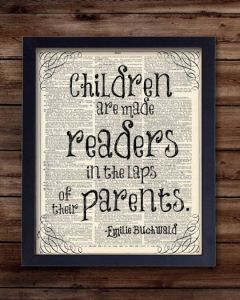
readers and parents

“After all these years, I may have found my own best reader, and he turns out to be me.”  –Joseph Epstein


“The one exclusive sign of thorough knowledge is the power of teaching.” –Aristotle

“Today, class, we are going to answer, What are the three types of Greek columns?”

“Somewhere over the rainbow is, well, not really OVER it but is it, R-O-Y-G-B-I-V–…”

“You must know these three fundamentals before you can pass: love, sex, family; romantic, erotic, familial…”

* * *

Once upon a time, in a land far, far away, Aristotle taught his students a handy method for making presentations to their students, for organizing lessons.  His method was like a show and tell, a method that has been passed down from generations of teachers to generations of teachers: pre-school to Cambridge University History Professors, to executives, to coaches. 

Aristotle said, in his favorite Athenian Greek voice, “My students, three things you need to do when presenting a new topic or lesson or subject:

TELL THEM WHAT YOU ARE GOING TO TELL THEM

TELL THEM

THEN TELL THEM WHAT YOU TOLD THEM.


1–Tell them what you will tell them. What is it nice for them to know, but most importantly What do they NEED to know? What do they NEED to hear?  This is the essence of the lesson.  [“Today we are going to see what makes the prism do what it does.”]

2–Tell them. Aristotle no doubt shouts out in the Lyceum, “THIS IS THE STUFF!”  Here is the raison d’être of the whole operation, our reason for being here, the whole enchilada.  He exhorts, “Here is what my Nicomachean Ethics is all about.”  And he lays it out–of sorts….  [“And so, from this, you can understand what Oliver Cromwell did, some historians aver, was far, far more genocidal than any act done by any Confederate general in the American Civil War.”]

3–Tell them what you just told them. “Thus, as we can see, the fifth element is Aether, that divine substance making up the heavenly spheres and heavenly bodies (stars and planets).” Here is the opportunity for the late-arrivals to catch up on their notes, whispering “WhatdidImiss?” Reiteration.  Re-iter-a-tion: journey again.  Going over it again.  “Are there any questions?”     

Such symmetry in threes…

interrobang

Are there any questions?…